ClinicalResearchasanAlternative
Porto Alegre, November 2016
TheCancerEpidemic
Carlos H. Barrios, M.D.
Hospital do Câncer Mãe de Deus
PUCRS School of Medicine
Latin American Cooperative Group, LACOG
Porto Alegre, Brazil
POTENTIAL CONFLICTS OF INTEREST
• Clinical Research: Pfizer, Novartis, Amgen, AstraZeneca,
Boehringer Ingelheim, GlaxoSmithKline, Roche/Genentech,
Lilly, Sanofi, Taiho Pharmaceutical, Mylan, Merrimack, Merck,
Abbvie, Astellas Pharma, Biomarin, Bristol-Myers Squibb,
Daiichi Sankyo, Abraxis BioScience, AB Science, Asana
Biosciences, Medivation, Daiichi Sankyo, Exelixis, ImClone
Systems, LEO Pharma, Millennium
• Academic Research Projects: CPO, PUCRS, LACOG,
GBECAM, INCA-Brazil.
• Advisory Boards and Consulting: Boehringer-Ingelheim,
GSK, Novartis, Pfizer, Roche/Genentech, Eisai, Bioepis.
• No financial conflicts to declare.
Realidade Epidemiológica
Aumento da incidência de câncer
internacionalmente
Envelhecimento
Aumento da População
Incorporação de Fatores de Risco
Mais da metade dos casos de câncer são
esperados em países em desenvolvimento
Incidência de câncer deve duplicar em 2020
Em 2030 a incidência por câncer deve
aumentar em 78% (África do Sul, China, Índia)
e em 98% em regiões menos desenvolvidas
Mortalidade por Câncer deve superar CV em
2030 (OMS) (já está acontecendo nos US)
World Health Organization, The global burden of disease: 2004 update.
The Lancet Oncology, Early Online Publication, 1 June 2012, doi:10.1016/S1470-2045
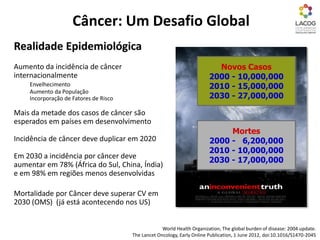
Câncer: Um Desafio Global
Novos Casos
2000 - 10,000,000
2010 - 15,000,000
2030 - 27,000,000
Mortes
2000 - 6,200,000
2010 - 10,000,000
2030 - 17,000,000
• Cancer poses a major threat to public health
worldwide, and incidence rates have increased in most
countries since 1990.
• In 2013, there were 14.9 million new cancer cases and
8.2 million cancer deaths.
• The trend is a particular threat to developing nations
with health systems that are ill-equipped to deal with
complex and expensive cancer treatments.
JAMA Oncol. doi:10.1001/jamaoncol.2015.0735
Published online May 28, 2015.
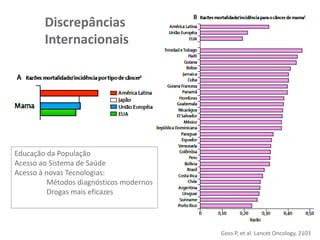
Goss P, et al. Lancet Oncology, 2103
Educação da População
Acesso ao Sistema de Saúde
Acesso à novas Tecnologias:
Métodos diagnósticos modernos
Drogas mais eficazes
Discrepâncias
Internacionais
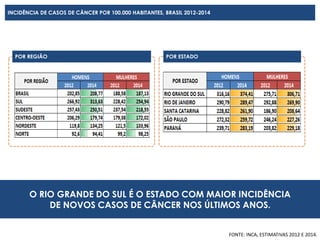
INCIDÊNCIA DE CASOS DE CÂNCER POR 100.000 HABITANTES, BRASIL 2012-2014
POR ESTADO
FONTE: INCA, ESTIMATIVAS 2012 E 2014.
POR REGIÃO
O RIO GRANDE DO SUL É O ESTADO COM MAIOR INCIDÊNCIA
DE NOVOS CASOS DE CÂNCER NOS ÚLTIMOS ANOS.
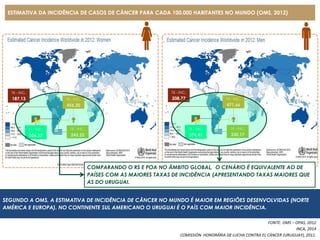
FONTE: OMS – OPAS, 2012
INCA, 2014
COMISSIÓN HONORÁRIA DE LUCHA CONTRA EL CÁNCER (URUGUAY), 2011.
SEGUNDO A OMS, A ESTIMATIVA DE INCIDÊNCIA DE CÂNCER NO MUNDO É MAIOR EM REGIÕES DESENVOLVIDAS (NORTE
AMÉRICA E EUROPA). NO CONTINENTE SUL AMERICANO O URUGUAI É O PAÍS COM MAIOR INCIDÊNCIA.
TX - INC.
243,22
TX - INC.
306,37
TX - INC.
456,20
TX - INC.
187,13
TX - INC.
330,17
TX - INC.
374,41
TX - INC.
471,66
TX - INC.
208,77
COMPARANDO O RS E POA NO ÂMBITO GLOBAL, O CENÁRIO É EQUIVALENTE AO DE
PAÍSES COM AS MAIORES TAXAS DE INCIDÊNCIA (APRESENTANDO TAXAS MAIORES QUE
AS DO URUGUAI.
ESTIMATIVA DA INCIDÊNCIA DE CASOS DE CÂNCER PARA CADA 100.000 HABITANTES NO MUNDO (OMS, 2012)
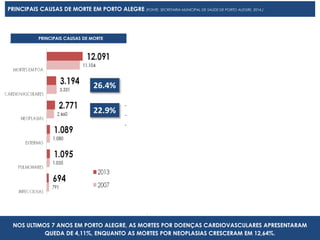
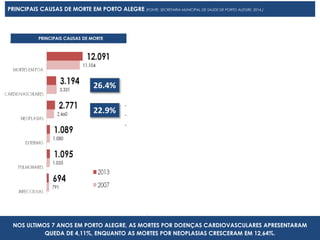
PRINCIPAIS CAUSAS DE MORTE EM PORTO ALEGRE (FONTE: SECRETARIA MUNICIPAL DE SAÚDE DE PORTO ALEGRE, 2014.)
Nº MORTES POR CAUSA DE NEOPLASIAS – ULTIMOS 7 ANOS
PRINCIPAIS CAUSAS DE MORTE
Nº MORTES POR DOENÇAS CARDIOVASCULARES – ULTIMOS 7 ANOS
NOS ULTIMOS 7 ANOS EM PORTO ALEGRE, AS MORTES POR DOENÇAS CARDIOVASCULARES APRESENTARAM
QUEDA DE 4,11%, ENQUANTO AS MORTES POR NEOPLASIAS CRESCERAM EM 12,64%.
26.4%
22.9%
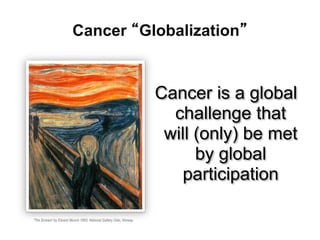
Cancer “Globalization”
Cancer is a global
challenge that
will (only) be met
by global
participation
'The Scream' by Edvard Munch 1893, National Gallery Oslo, Norway
• Consider strategies to address discrepancies
• 15-25% of tumors are related to smoking
• Screening for Breast Cancer, CRC, Prostate?,
Lung?...
• Screening and vaccination for Cervical Cancer
• Addressing the Obesity epidemic
• Vaccination against Hepatitis B
• Vaccination against HPV
• Clinical Research
• Other…
Danaei G et al. Lancet 366: 1784–1793, 2005
Katz IT, et al. N Engl J Med 354: 1110–1112, 2006
Cavalli F. Nature Clin Practice Oncol, 3:582, 2006
Addressing Cancer Globalization…
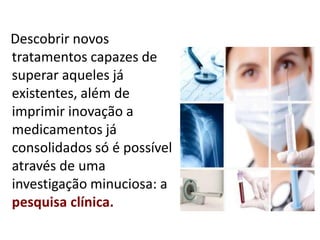
Descobrir novos
tratamentos capazes de
superar aqueles já
existentes, além de
imprimir inovação a
medicamentos já
consolidados só é possível
através de uma
investigação minuciosa: a
pesquisa clínica.
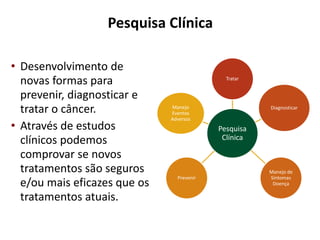
Pesquisa Clínica
• Desenvolvimento de
novas formas para
prevenir, diagnosticar e
tratar o câncer.
• Através de estudos
clínicos podemos
comprovar se novos
tratamentos são seguros
e/ou mais eficazes que os
tratamentos atuais.
Pesquisa
Clínica
Tratar
Diagnosticar
Manejo de
Sintomas
Doença
Prevenir
Manejo
Eventos
Adversos
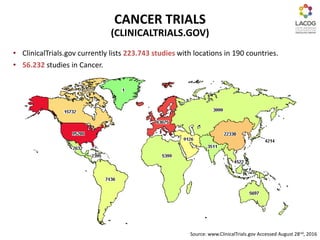
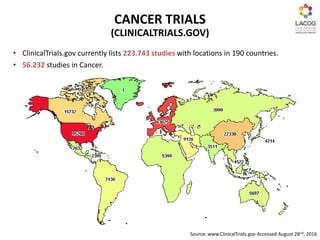
CANCER TRIALS
(CLINICALTRIALS.GOV)
• ClinicalTrials.gov currently lists 223.743 studies with locations in 190 countries.
• 56.232 studies in Cancer.
Source: www.ClinicalTrials.gov Accessed August 28nd, 2016
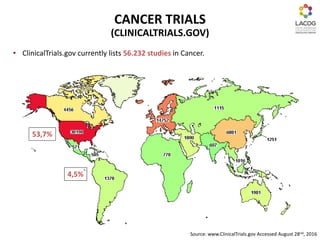
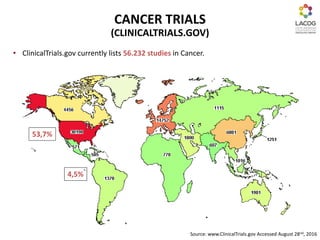
CANCER TRIALS
(CLINICALTRIALS.GOV)
• ClinicalTrials.gov currently lists 56.232 studies in Cancer.
Source: www.ClinicalTrials.gov Accessed August 28nd, 2016
4,5%
53,7%
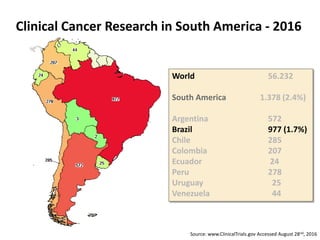
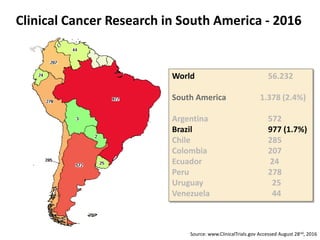
Clinical Cancer Research in South America - 2016
World 56.232
South America 1.378 (2.4%)
Argentina 572
Brazil 977 (1.7%)
Chile 285
Colombia 207
Ecuador 24
Peru 278
Uruguay 25
Venezuela 44
Source: www.ClinicalTrials.gov Accessed August 28nd, 2016
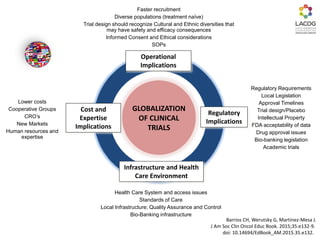
Regulatory Requirements
Local Legislation
Approval Timelines
Trial design/Placebo
Intellectual Property
FDA acceptability of data
Drug approval issues
Bio-banking legislation
Academic trials
Health Care System and access issues
Standards of Care
Local Infrastructure; Quality Assurance and Control
Bio-Banking infrastructure
Faster recruitment
Diverse populations (treatment naïve)
Trial design should recognize Cultural and Ethnic diversities that
may have safety and efficacy consequences
Informed Consent and Ethical considerations
SOPs
Lower costs
Cooperative Groups
CRO’s
New Markets
Human resources and
expertise
GLOBALIZATION
OF CLINICAL
TRIALS
Infrastructure and Health
Care Environment
Cost and
Expertise
Implications
Operational
Implications
Regulatory
Implications
Barrios CH, Werutsky G, Martinez-Mesa J.
J Am Soc Clin Oncol Educ Book. 2015;35:e132-9.
doi: 10.14694/EdBook_AM.2015.35.e132.
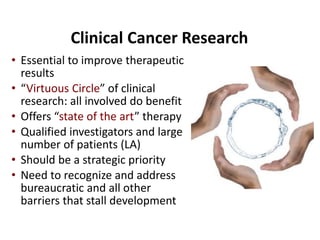
Clinical Cancer Research
• Essential to improve therapeutic
results
• “Virtuous Circle” of clinical
research: all involved do benefit
• Offers “state of the art” therapy
• Qualified investigators and large
number of patients (LA)
• Should be a strategic priority
• Need to recognize and address
bureaucratic and all other
barriers that stall development
Brasil e a Pesquisa Clínica em Oncologia
• Oferece o melhor tratamento disponível “state
of the art” (mesmo para o grupo controle).
• Particularmente significativo para o Brasil onde
o melhor tratamento disponível NÃO esta
disponível para a maior parte da população
(SUS) e participação em pesquisa oferece NO
MÍNIMO o tratamento convencional
ideal/ótimo.
Breast Cancer: Number of Cases/year 57.120
Cases in the public system-SUS (73.7%) 42.097
Stages I/II/III (94%) 39.571
HER2 positive patients (20%) 7.914
Number of deaths avoided by Trastuzumab/y (8.8%) 696
Deaths in HER2 positive women (2005-2012)* 4872
Estimated number of deaths in early HER2 positive patients due
to lack of access to adjuvant Trastuzumab in the public system in
Brazil 2005-2012.
INCA. Câncer de mama. http://www2.inca.gov.br/wps/wcm/connect/tiposdecancer/site/home/mama, Jan 2014.
IBGE. Pesquisa Nacional por Amostra de Domicílios, 2008 [acesso March 2,
2014].http://www.ibge.gov.br/home/estatistica/populacao/panorama_saude_brasil_2003_2008/PNAD_2008_saude.pdfN)
Simon, SD, et al. Projeto Amazona I, GBECAM
Perez E, ate al. J Clin Oncol 32:374, 2014.
* Presumes constant incidence and mortality 2005-2012
Barrios C, et al. JCO, Brazilian Edition, 2015.
Why do Clinical Trials in Latin America?
• The ability to conduct research is essential
to the development of a high quality,
sustainable, health system
• Motivations of each stakeholder may differ
• Government, Institutions, Pharma, Patients,
Physicians, others
• Everyone has something to gain
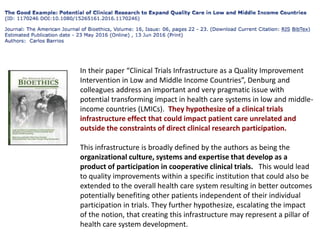
In their paper “Clinical Trials Infrastructure as a Quality Improvement
Intervention in Low and Middle Income Countries”, Denburg and
colleagues address an important and very pragmatic issue with
potential transforming impact in health care systems in low and middle-
income countries (LMICs). They hypothesize of a clinical trials
infrastructure effect that could impact patient care unrelated and
outside the constraints of direct clinical research participation.
This infrastructure is broadly defined by the authors as being the
organizational culture, systems and expertise that develop as a
product of participation in cooperative clinical trials. This would lead
to quality improvements within a specific institution that could also be
extended to the overall health care system resulting in better outcomes
potentially benefiting other patients independent of their individual
participation in trials. They further hypothesize, escalating the impact
of the notion, that creating this infrastructure may represent a pillar of
health care system development.
Why do Clinical Trials in Latin America?
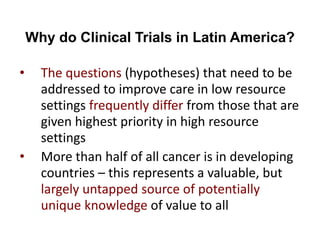
• The questions (hypotheses) that need to be
addressed to improve care in low resource
settings frequently differ from those that are
given highest priority in high resource
settings
• More than half of all cancer is in developing
countries – this represents a valuable, but
largely untapped source of potentially
unique knowledge of value to all
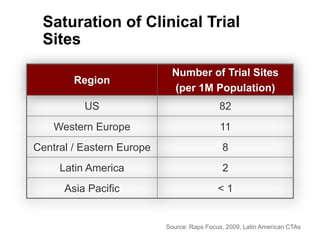
Saturation of Clinical Trial
Sites
Region
Number of Trial Sites
(per 1M Population)
US 82
Western Europe 11
Central / Eastern Europe 8
Latin America 2
Asia Pacific < 1
Source: Raps Focus, 2009, Latin American CTAs
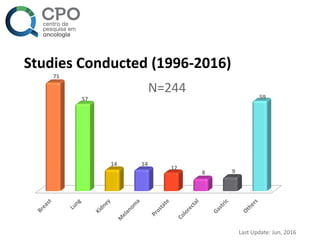
Studies Conducted (1996-2016)
Last Update: Jun, 2016
71
57
14 14
12
8 9
59
N=244
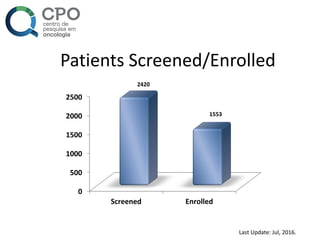
Patients Screened/Enrolled
0
500
1000
1500
2000
2500
Screened Enrolled
2420
1553
Last Update: Jul, 2016.
projetocura.org
lacog.org.br
Faça parte do CURA.
Entre em contato.
Fernanda Schwyter
Fernanda.Schwyter@lacog.org.br
ClinicalResearchasanAlternative
Porto Alegre, November 2016
TheCancerEpidemic
Carlos H. Barrios, M.D.
Hospital do Câncer Mãe de Deus
PUCRS School of Medicine
Latin American Cooperative Group, LACOG
Porto Alegre, Brazil
Why do Clinical Trials in Latin America?
• With Clinical Trials we offer State of the Art
medical management to patients that may
not have any access or the basic resources to
receive even the most basic care.
In their paper “Clinical Trials Infrastructure as a Quality Improvement
Intervention in Low and Middle Income Countries”, Denburg and
colleagues address an important and very pragmatic issue with
potential transforming impact in health care systems in low and middle-
income countries (LMICs). They hypothesize of a clinical trials
infrastructure effect that could impact patient care unrelated and
outside the constraints of direct clinical research participation.
This infrastructure is broadly defined by the authors as being the
organizational culture, systems and expertise that develop as a
product of participation in cooperative clinical trials. This would lead
to quality improvements within a specific institution that could also be
extended to the overall health care system resulting in better outcomes
potentially benefiting other patients independent of their individual
participation in trials. They further hypothesize, escalating the impact
of the notion, that creating this infrastructure may represent a pillar of
health care system development.
Clinical Cancer Research
• Essential to improve therapeutic
results
• “Virtuous Circle” of clinical
research: all involved do benefit
• Offers “state of the art” therapy
• Qualified investigators and large
number of patients (LA)
• Should be a strategic priority
• Need to recognize and address
bureaucratic and all other
barriers that stall development
• Consider strategies to address discrepancies
• 15-25% of tumors are related to smoking
• Screening for Breast Cancer, CRC, Prostate?,
Lung?...
• Screening and vaccination for Cervical Cancer
• Addressing the Obesity epidemic
• Vaccination against Hepatitis B
• Vaccination against HPV
• Clinical Research
• Other… Danaei G et al. Lancet 366: 1784–1793, 2005
Katz IT, et al. N Engl J Med 354: 1110–1112, 2006
Cavalli F. Nature Clin Practice Oncol, 3:582, 2006
Addressing Cancer Globalization…
CANCER TRIALS
(CLINICALTRIALS.GOV)
• ClinicalTrials.gov currently lists 223.743 studies with locations in 190 countries.
• 56.232 studies in Cancer.
Source: www.ClinicalTrials.gov Accessed August 28nd, 2016
CANCER TRIALS
(CLINICALTRIALS.GOV)
• ClinicalTrials.gov currently lists 56.232 studies in Cancer.
Source: www.ClinicalTrials.gov Accessed August 28nd, 2016
4,5%
53,7%
Clinical Cancer Research in South America - 2016
World 56.232
South America 1.378 (2.4%)
Argentina 572
Brazil 977 (1.7%)
Chile 285
Colombia 207
Ecuador 24
Peru 278
Uruguay 25
Venezuela 44
Source: www.ClinicalTrials.gov Accessed August 28nd, 2016
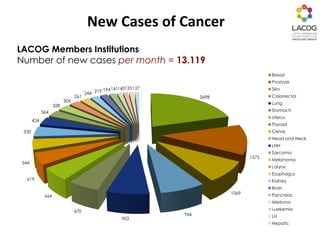
2698
1575
1069
966
903
670
664
619
544
530
424
364
328
306
261
244 219 194141140133127
Breast
Prostate
Skin
Colorrectal
Lung
Stomach
Uterus
Thyroid
Cervix
Head and Neck
LNH
Sarcoma
Melanoma
Larynx
Esophagus
Kidney
Brain
Pancreas
Mieloma
Luekemia
LH
Hepatic
New Cases of Cancer
LACOG Members Institutions
Number of new cases per month = 13.119
ChallengesandPerspectives
Porto Alegre, November 2016
BreastCancerinLatinAmerica
Carlos H. Barrios, M.D.
Hospital do Câncer Mãe de Deus
PUCRS School of Medicine
Latin American Cooperative Group, LACOG
Porto Alegre, Brazil
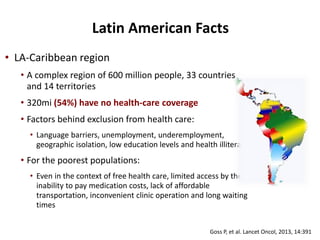
• LA-Caribbean region
• A complex region of 600 million people, 33 countries
and 14 territories
• 320mi (54%) have no health-care coverage
• Factors behind exclusion from health care:
• Language barriers, unemployment, underemployment,
geographic isolation, low education levels and health illiteracy
• For the poorest populations:
• Even in the context of free health care, limited access by the
inability to pay medication costs, lack of affordable
transportation, inconvenient clinic operation and long waiting
times
Goss P, et al. Lancet Oncol, 2013, 14:391
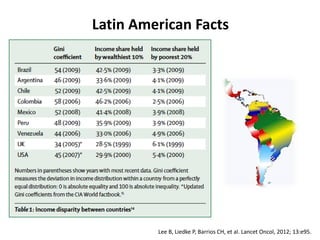
Latin American Facts
Lee B, Liedke P, Barrios CH, et al. Lancet Oncol, 2012; 13:e95.
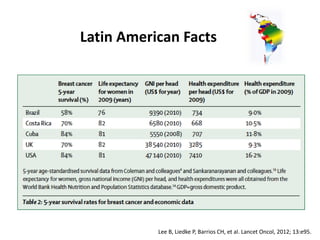
Latin American Facts
Lee B, Liedke P, Barrios CH, et al. Lancet Oncol, 2012; 13:e95.
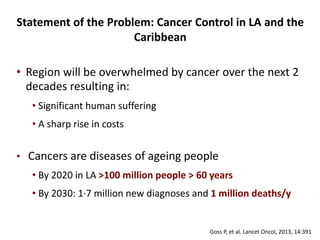
Latin American Facts
• Region will be overwhelmed by cancer over the next 2
decades resulting in:
• Significant human suffering
• A sharp rise in costs
• Cancers are diseases of ageing people
• By 2020 in LA >100 million people > 60 years
• By 2030: 1∙7 million new diagnoses and 1 million deaths/y
Goss P, et al. Lancet Oncol, 2013, 14:391
Statement of the Problem: Cancer Control in LA and the
Caribbean
Statement of the Problem: Cancer Control in LA and the
Caribbean
Projection of Cancer Incidence Burden 2012-2030
Bray F, Piñeros M. Cancer patterns, trends and projections in Latin America and the Caribbean: a global context. Salud Publica Mex 2016;58:104-117.
International Agency for Research on Cancer. WHO Cancer Mortality Database [accessed on November 17, 2015].
Available at: http://wwwdepiarc fr/WHOdb/WHOdb htm 2014.
Public
75%
Public
40%
6.2%
LMIC
Goss P, et al. Lancet Oncol, 2013, 14:391
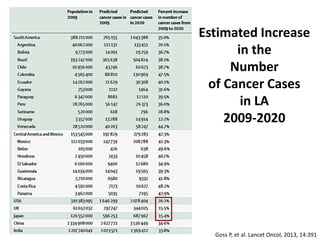
Estimated Increase
in the
Number
of Cancer Cases
in LA
2009-2020
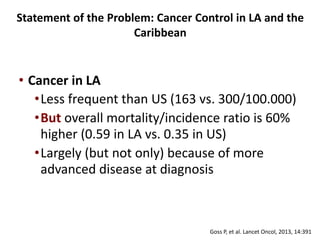
• Cancer in LA
•Less frequent than US (163 vs. 300/100.000)
•But overall mortality/incidence ratio is 60%
higher (0.59 in LA vs. 0.35 in US)
•Largely (but not only) because of more
advanced disease at diagnosis
Statement of the Problem: Cancer Control in LA and the
Caribbean
Goss P, et al. Lancet Oncol, 2013, 14:391
PRINCIPAIS CAUSAS DE MORTE EM PORTO ALEGRE (FONTE: SECRETARIA MUNICIPAL DE SAÚDE DE PORTO ALEGRE, 2014.)
Nº MORTES POR CAUSA DE NEOPLASIAS – ULTIMOS 7 ANOS
PRINCIPAIS CAUSAS DE MORTE
Nº MORTES POR DOENÇAS CARDIOVASCULARES – ULTIMOS 7 ANOS
NOS ULTIMOS 7 ANOS EM PORTO ALEGRE, AS MORTES POR DOENÇAS CARDIOVASCULARES APRESENTARAM
QUEDA DE 4,11%, ENQUANTO AS MORTES POR NEOPLASIAS CRESCERAM EM 12,64%.
26.4%
22.9%
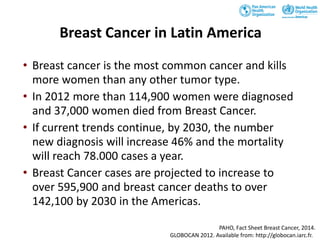
Breast Cancer in Latin America
• Breast cancer is the most common cancer and kills
more women than any other tumor type.
• In 2012 more than 114,900 women were diagnosed
and 37,000 women died from Breast Cancer.
• If current trends continue, by 2030, the number
new diagnosis will increase 46% and the mortality
will reach 78.000 cases a year.
• Breast Cancer cases are projected to increase to
over 595,900 and breast cancer deaths to over
142,100 by 2030 in the Americas.
PAHO, Fact Sheet Breast Cancer, 2014.
GLOBOCAN 2012. Available from: http://globocan.iarc.fr.
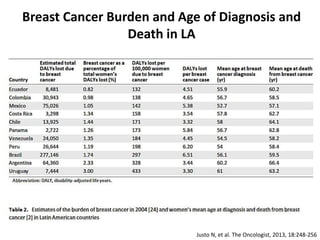
Justo N, et al. The Oncologist, 2013, 18:248-256
Breast Cancer Burden and Age of Diagnosis and
Death in LA
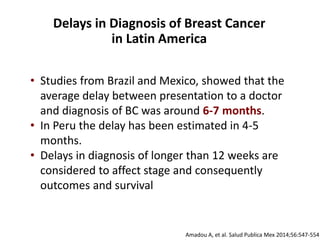
Delays in Diagnosis of Breast Cancer
in Latin America
• Studies from Brazil and Mexico, showed that the
average delay between presentation to a doctor
and diagnosis of BC was around 6-7 months.
• In Peru the delay has been estimated in 4-5
months.
• Delays in diagnosis of longer than 12 weeks are
considered to affect stage and consequently
outcomes and survival
Amadou A, et al. Salud Publica Mex 2014;56:547-554
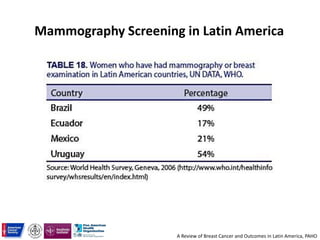
Mammography Screening in Latin America
A Review of Breast Cancer and Outcomes in Latin America, PAHO
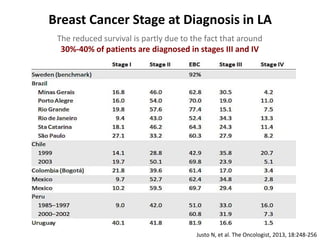
Justo N, et al. The Oncologist, 2013, 18:248-256
Breast Cancer Stage at Diagnosis in LA
The reduced survival is partly due to the fact that around
30%-40% of patients are diagnosed in stages III and IV
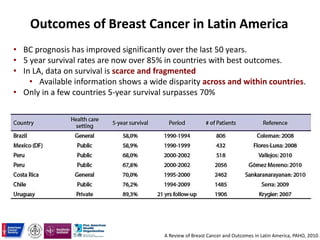
Outcomes of Breast Cancer in Latin America
A Review of Breast Cancer and Outcomes in Latin America, PAHO, 2010.
• BC prognosis has improved significantly over the last 50 years.
• 5 year survival rates are now over 85% in countries with best outcomes.
• In LA, data on survival is scarce and fragmented
• Available information shows a wide disparity across and within countries.
• Only in a few countries 5-year survival surpasses 70%
Bray F, Piñeros M. Cancer patterns, trends and projections in Latin America and the Caribbean: a global context. Salud Publica Mex 2016;58:104-117.
International Agency for Research on Cancer. WHO Cancer Mortality Database [accessed on November 17, 2015].
Available at: http://wwwdepiarc fr/WHOdb/WHOdb htm 2014.
INCIDENCE MORTALITY
Despite the scarcity of cancer registries, we estimate that in most countries, breast cancer
incidence and mortality are increasing.
Trends in BC Incidence and Mortality
ASR per 100.000
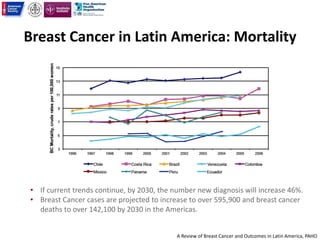
Breast Cancer in Latin America: Mortality
A Review of Breast Cancer and Outcomes in Latin America, PAHO
• If current trends continue, by 2030, the number new diagnosis will increase 46%.
• Breast Cancer cases are projected to increase to over 595,900 and breast cancer
deaths to over 142,100 by 2030 in the Americas.
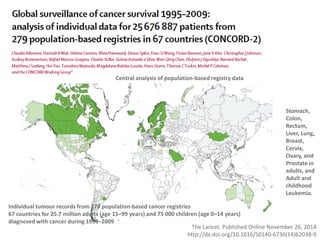
The Lancet. Published Online November 26, 2014
http://dx.doi.org/10.1016/S0140-6736(14)62038-9
Central analysis of population-based registry data
Individual tumour records from 279 population-based cancer registries
67 countries for 25.7 million adults (age 15–99 years) and 75 000 children (age 0–14 years)
diagnosed with cancer during 1995–2009
Stomach,
Colon,
Rectum,
Liver, Lung,
Breast,
Cervix,
Ovary, and
Prostate in
adults, and
Adult and
childhood
Leukemia.
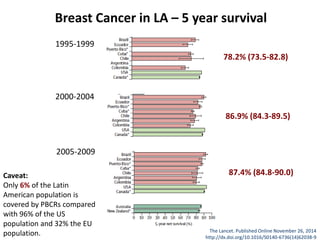
Caveat:
Only 6% of the Latin
American population is
covered by PBCRs compared
with 96% of the US
population and 32% the EU
population. The Lancet. Published Online November 26, 2014
http://dx.doi.org/10.1016/S0140-6736(14)62038-9
1995-1999
2000-2004
2005-2009
78.2% (73.5-82.8)
86.9% (84.3-89.5)
87.4% (84.8-90.0)
Breast Cancer in LA – 5 year survival
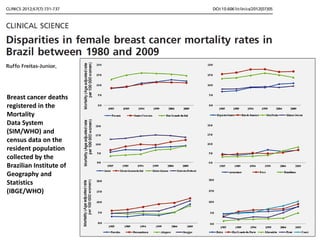
Breast cancer deaths
registered in the
Mortality
Data System
(SIM/WHO) and
census data on the
resident population
collected by the
Brazilian Institute of
Geography and
Statistics
(IBGE/WHO)
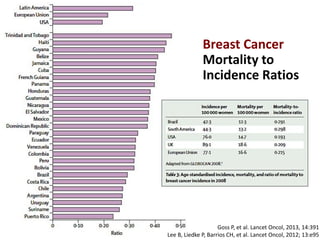
Breast Cancer
Mortality to
Incidence Ratios
Goss P, et al. Lancet Oncol, 2013, 14:391
Lee B, Liedke P, Barrios CH, et al. Lancet Oncol, 2012; 13:e95
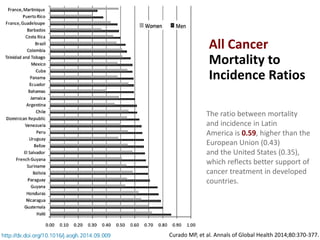
All Cancer
Mortality to
Incidence Ratios
Curado MP, et al. Annals of Global Health 2014;80:370-377.
The ratio between mortality
and incidence in Latin
America is 0.59, higher than the
European Union (0.43)
and the United States (0.35),
which reflects better support of
cancer treatment in developed
countries.
New Technologies/Drugs Uptake
in Latin America
• In Latin America, uptake of new
treatments is slow, almost marginal in
some countries.
• This is related with the health care
systems’ coverage limitations.
A Review of Breast Cancer and Outcomes in Latin America, PAHO
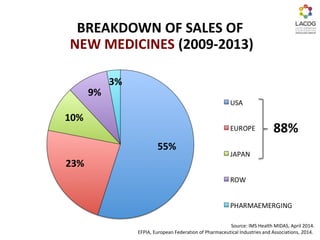
BREAKDOWN OF SALES OF
NEW MEDICINES (2009-2013)
3%
9%
10%
55%
23%
Source: IMS Health MIDAS, April 2014.
EFPIA, European Federation of Pharmaceutical Industries and Associations, 2014.
88%
Breast Cancer in Latin America
• The economic burden of Breast Cancer is significant,
and it can be clearly observed that countries allocate
insufficient resources to tackle the disease.
• Women go undiagnosed, uncared for or treated with
suboptimal therapies; which results in high morbidity
and the associated societal costs.
• Vast inequities exist in access to BC health care in the
region and within countries which translates in
unequal results in BC outcome.
A Review of Breast Cancer and Outcomes in Latin America, PAHO
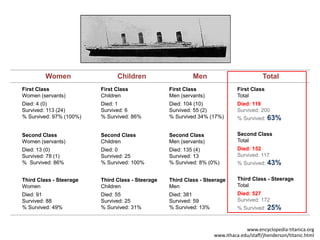
Women Children Men Total
First Class
Women (servants)
Died: 4 (0)
Survived: 113 (24)
% Survived: 97% (100%)
First Class
Children
Died: 1
Survived: 6
% Survived: 86%
First Class
Men (servants)
Died: 104 (10)
Survived: 55 (2)
% Survived 34% (17%)
First Class
Total
Died: 119
Survived: 200
% Survived: 63%
Second Class
Women (servants)
Died: 13 (0)
Survived: 78 (1)
% Survived: 86%
Second Class
Children
Died: 0
Survived: 25
% Survived: 100%
Second Class
Men (servants)
Died: 135 (4)
Survived: 13
% Survived: 8% (0%)
Second Class
Total
Died: 152
Survived: 117
% Survived: 43%
Third Class - Steerage
Women
Died: 91
Survived: 88
% Survived: 49%
Third Class - Steerage
Children
Died: 55
Survived: 25
% Survived: 31%
Third Class - Steerage
Men
Died: 381
Survived: 59
% Survived: 13%
Third Class - Steerage
Total
Died: 527
Survived: 172
% Survived: 25%
www.encyclopedia-titanica.org
www.ithaca.edu/staff/jhenderson/titanic.html
Public
75%
Public
40%
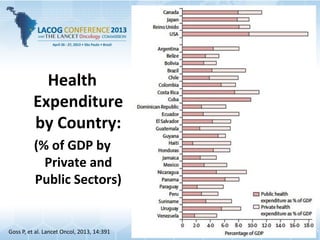
Health
Expenditure
by Country:
(% of GDP by
Private and
Public Sectors)
6.2%
LMIC
Goss P, et al. Lancet Oncol, 2013, 14:391
Low and Middle Income Countries Spend
Less in Cancer Control
Medical Cancer Control spending per new cancer diagnosis
Numbers represent economic burden
per cancer patient in US$ (and as a
percentage of GDP/Capita)
Adapted from:
1. Economist Inteligence Unit. Breakaway: The global burden of cancer— challenges and opportunities [Internet]. 2009. Available de: http://www.livestrong.org/pdfs/GlobalEconomicImpact
2. United Nations. Per capita GNI at current prices [Internet]. 2012. Available de: http://data.un.org/Data.aspx?d=SNAAMA&f=grID%3A101%3BcurrID%3AUSD%3BpcFlag%3A1
3. United Nations. World Population Prospects, the 2010 Revision [Internet]. 2011. Available de: http://esa.un.org/wpp/index.htm
4. Lopes G, et al. Nature Rev Clin Oncol 2013.
Central America
and Mexico
$7.39
Public
75%
Public
40%
6.2%
LMIC
Goss P, et al. Lancet Oncol, 2013, 14:391
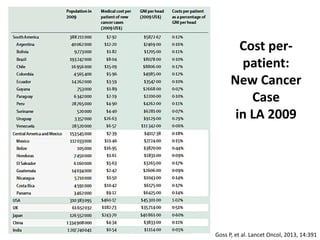
Cost per-
patient:
New Cancer
Case
in LA 2009
• Cancer represents a significant challenge for
all LA and Caribbean countries.
• The evolving epidemiological transition will
inevitably result in overwhelming human and
financial consequences over the next few
years.
Conclusions
Conclusions
• Breast Cancer represents (and will definitely
remain) a significant burden for the region.
• Significant heterogeneity among and within
countries as well as important gaps in
prevention, screening and treatment are
identified in the LA-Caribbean region.
• Outcomes remain insufficient and require the
active engagement of society and medical
professionals.
ChallengesandPerspectives
Porto Alegre, November 2016
BreastCancerinLatinAmerica
Carlos H. Barrios, M.D.
Hospital do Câncer Mãe de Deus
PUCRS School of Medicine
Latin American Cooperative Group, LACOG
Porto Alegre, Brazil
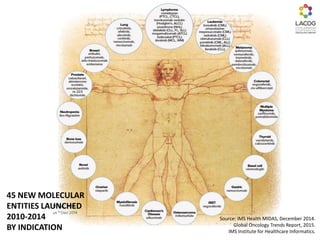
Source: IMS Health MIDAS, December 2014.
Global Oncology Trends Report, 2015.
IMS Institute for Healthcare Informatics.
45 NEW MOLECULAR
ENTITIES LAUNCHED
2010-2014
BY INDICATION
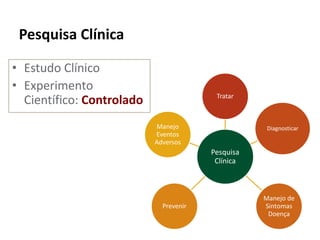
Pesquisa Clínica
Pesquisa
Clínica
Tratar
Diagnosticar
Manejo de
Sintomas
Doença
Prevenir
Manejo
Eventos
Adversos
• Estudo Clínico
• Experimento
Científico: Controlado

Carlos Henrique Barrios

  • 1.
    ClinicalResearchasanAlternative Porto Alegre, November2016 TheCancerEpidemic Carlos H. Barrios, M.D. Hospital do Câncer Mãe de Deus PUCRS School of Medicine Latin American Cooperative Group, LACOG Porto Alegre, Brazil
  • 2.
    POTENTIAL CONFLICTS OFINTEREST • Clinical Research: Pfizer, Novartis, Amgen, AstraZeneca, Boehringer Ingelheim, GlaxoSmithKline, Roche/Genentech, Lilly, Sanofi, Taiho Pharmaceutical, Mylan, Merrimack, Merck, Abbvie, Astellas Pharma, Biomarin, Bristol-Myers Squibb, Daiichi Sankyo, Abraxis BioScience, AB Science, Asana Biosciences, Medivation, Daiichi Sankyo, Exelixis, ImClone Systems, LEO Pharma, Millennium • Academic Research Projects: CPO, PUCRS, LACOG, GBECAM, INCA-Brazil. • Advisory Boards and Consulting: Boehringer-Ingelheim, GSK, Novartis, Pfizer, Roche/Genentech, Eisai, Bioepis. • No financial conflicts to declare.
  • 3.
    Realidade Epidemiológica Aumento daincidência de câncer internacionalmente Envelhecimento Aumento da População Incorporação de Fatores de Risco Mais da metade dos casos de câncer são esperados em países em desenvolvimento Incidência de câncer deve duplicar em 2020 Em 2030 a incidência por câncer deve aumentar em 78% (África do Sul, China, Índia) e em 98% em regiões menos desenvolvidas Mortalidade por Câncer deve superar CV em 2030 (OMS) (já está acontecendo nos US) World Health Organization, The global burden of disease: 2004 update. The Lancet Oncology, Early Online Publication, 1 June 2012, doi:10.1016/S1470-2045 Câncer: Um Desafio Global Novos Casos 2000 - 10,000,000 2010 - 15,000,000 2030 - 27,000,000 Mortes 2000 - 6,200,000 2010 - 10,000,000 2030 - 17,000,000
  • 4.
    • Cancer posesa major threat to public health worldwide, and incidence rates have increased in most countries since 1990. • In 2013, there were 14.9 million new cancer cases and 8.2 million cancer deaths. • The trend is a particular threat to developing nations with health systems that are ill-equipped to deal with complex and expensive cancer treatments. JAMA Oncol. doi:10.1001/jamaoncol.2015.0735 Published online May 28, 2015.
  • 5.
    Goss P, etal. Lancet Oncology, 2103 Educação da População Acesso ao Sistema de Saúde Acesso à novas Tecnologias: Métodos diagnósticos modernos Drogas mais eficazes Discrepâncias Internacionais
  • 6.
    INCIDÊNCIA DE CASOSDE CÂNCER POR 100.000 HABITANTES, BRASIL 2012-2014 POR ESTADO FONTE: INCA, ESTIMATIVAS 2012 E 2014. POR REGIÃO O RIO GRANDE DO SUL É O ESTADO COM MAIOR INCIDÊNCIA DE NOVOS CASOS DE CÂNCER NOS ÚLTIMOS ANOS.
  • 7.
    FONTE: OMS –OPAS, 2012 INCA, 2014 COMISSIÓN HONORÁRIA DE LUCHA CONTRA EL CÁNCER (URUGUAY), 2011. SEGUNDO A OMS, A ESTIMATIVA DE INCIDÊNCIA DE CÂNCER NO MUNDO É MAIOR EM REGIÕES DESENVOLVIDAS (NORTE AMÉRICA E EUROPA). NO CONTINENTE SUL AMERICANO O URUGUAI É O PAÍS COM MAIOR INCIDÊNCIA. TX - INC. 243,22 TX - INC. 306,37 TX - INC. 456,20 TX - INC. 187,13 TX - INC. 330,17 TX - INC. 374,41 TX - INC. 471,66 TX - INC. 208,77 COMPARANDO O RS E POA NO ÂMBITO GLOBAL, O CENÁRIO É EQUIVALENTE AO DE PAÍSES COM AS MAIORES TAXAS DE INCIDÊNCIA (APRESENTANDO TAXAS MAIORES QUE AS DO URUGUAI. ESTIMATIVA DA INCIDÊNCIA DE CASOS DE CÂNCER PARA CADA 100.000 HABITANTES NO MUNDO (OMS, 2012)
  • 8.
    PRINCIPAIS CAUSAS DEMORTE EM PORTO ALEGRE (FONTE: SECRETARIA MUNICIPAL DE SAÚDE DE PORTO ALEGRE, 2014.) Nº MORTES POR CAUSA DE NEOPLASIAS – ULTIMOS 7 ANOS PRINCIPAIS CAUSAS DE MORTE Nº MORTES POR DOENÇAS CARDIOVASCULARES – ULTIMOS 7 ANOS NOS ULTIMOS 7 ANOS EM PORTO ALEGRE, AS MORTES POR DOENÇAS CARDIOVASCULARES APRESENTARAM QUEDA DE 4,11%, ENQUANTO AS MORTES POR NEOPLASIAS CRESCERAM EM 12,64%. 26.4% 22.9%
  • 9.
    Cancer “Globalization” Cancer isa global challenge that will (only) be met by global participation 'The Scream' by Edvard Munch 1893, National Gallery Oslo, Norway
  • 10.
    • Consider strategiesto address discrepancies • 15-25% of tumors are related to smoking • Screening for Breast Cancer, CRC, Prostate?, Lung?... • Screening and vaccination for Cervical Cancer • Addressing the Obesity epidemic • Vaccination against Hepatitis B • Vaccination against HPV • Clinical Research • Other… Danaei G et al. Lancet 366: 1784–1793, 2005 Katz IT, et al. N Engl J Med 354: 1110–1112, 2006 Cavalli F. Nature Clin Practice Oncol, 3:582, 2006 Addressing Cancer Globalization…
  • 11.
    Descobrir novos tratamentos capazesde superar aqueles já existentes, além de imprimir inovação a medicamentos já consolidados só é possível através de uma investigação minuciosa: a pesquisa clínica.
  • 12.
    Pesquisa Clínica • Desenvolvimentode novas formas para prevenir, diagnosticar e tratar o câncer. • Através de estudos clínicos podemos comprovar se novos tratamentos são seguros e/ou mais eficazes que os tratamentos atuais. Pesquisa Clínica Tratar Diagnosticar Manejo de Sintomas Doença Prevenir Manejo Eventos Adversos
  • 13.
    CANCER TRIALS (CLINICALTRIALS.GOV) • ClinicalTrials.govcurrently lists 223.743 studies with locations in 190 countries. • 56.232 studies in Cancer. Source: www.ClinicalTrials.gov Accessed August 28nd, 2016
  • 14.
    CANCER TRIALS (CLINICALTRIALS.GOV) • ClinicalTrials.govcurrently lists 56.232 studies in Cancer. Source: www.ClinicalTrials.gov Accessed August 28nd, 2016 4,5% 53,7%
  • 15.
    Clinical Cancer Researchin South America - 2016 World 56.232 South America 1.378 (2.4%) Argentina 572 Brazil 977 (1.7%) Chile 285 Colombia 207 Ecuador 24 Peru 278 Uruguay 25 Venezuela 44 Source: www.ClinicalTrials.gov Accessed August 28nd, 2016
  • 16.
    Regulatory Requirements Local Legislation ApprovalTimelines Trial design/Placebo Intellectual Property FDA acceptability of data Drug approval issues Bio-banking legislation Academic trials Health Care System and access issues Standards of Care Local Infrastructure; Quality Assurance and Control Bio-Banking infrastructure Faster recruitment Diverse populations (treatment naïve) Trial design should recognize Cultural and Ethnic diversities that may have safety and efficacy consequences Informed Consent and Ethical considerations SOPs Lower costs Cooperative Groups CRO’s New Markets Human resources and expertise GLOBALIZATION OF CLINICAL TRIALS Infrastructure and Health Care Environment Cost and Expertise Implications Operational Implications Regulatory Implications Barrios CH, Werutsky G, Martinez-Mesa J. J Am Soc Clin Oncol Educ Book. 2015;35:e132-9. doi: 10.14694/EdBook_AM.2015.35.e132.
  • 17.
    Clinical Cancer Research •Essential to improve therapeutic results • “Virtuous Circle” of clinical research: all involved do benefit • Offers “state of the art” therapy • Qualified investigators and large number of patients (LA) • Should be a strategic priority • Need to recognize and address bureaucratic and all other barriers that stall development
  • 18.
    Brasil e aPesquisa Clínica em Oncologia • Oferece o melhor tratamento disponível “state of the art” (mesmo para o grupo controle). • Particularmente significativo para o Brasil onde o melhor tratamento disponível NÃO esta disponível para a maior parte da população (SUS) e participação em pesquisa oferece NO MÍNIMO o tratamento convencional ideal/ótimo.
  • 19.
    Breast Cancer: Numberof Cases/year 57.120 Cases in the public system-SUS (73.7%) 42.097 Stages I/II/III (94%) 39.571 HER2 positive patients (20%) 7.914 Number of deaths avoided by Trastuzumab/y (8.8%) 696 Deaths in HER2 positive women (2005-2012)* 4872 Estimated number of deaths in early HER2 positive patients due to lack of access to adjuvant Trastuzumab in the public system in Brazil 2005-2012. INCA. Câncer de mama. http://www2.inca.gov.br/wps/wcm/connect/tiposdecancer/site/home/mama, Jan 2014. IBGE. Pesquisa Nacional por Amostra de Domicílios, 2008 [acesso March 2, 2014].http://www.ibge.gov.br/home/estatistica/populacao/panorama_saude_brasil_2003_2008/PNAD_2008_saude.pdfN) Simon, SD, et al. Projeto Amazona I, GBECAM Perez E, ate al. J Clin Oncol 32:374, 2014. * Presumes constant incidence and mortality 2005-2012 Barrios C, et al. JCO, Brazilian Edition, 2015.
  • 20.
    Why do ClinicalTrials in Latin America? • The ability to conduct research is essential to the development of a high quality, sustainable, health system • Motivations of each stakeholder may differ • Government, Institutions, Pharma, Patients, Physicians, others • Everyone has something to gain
  • 21.
    In their paper“Clinical Trials Infrastructure as a Quality Improvement Intervention in Low and Middle Income Countries”, Denburg and colleagues address an important and very pragmatic issue with potential transforming impact in health care systems in low and middle- income countries (LMICs). They hypothesize of a clinical trials infrastructure effect that could impact patient care unrelated and outside the constraints of direct clinical research participation. This infrastructure is broadly defined by the authors as being the organizational culture, systems and expertise that develop as a product of participation in cooperative clinical trials. This would lead to quality improvements within a specific institution that could also be extended to the overall health care system resulting in better outcomes potentially benefiting other patients independent of their individual participation in trials. They further hypothesize, escalating the impact of the notion, that creating this infrastructure may represent a pillar of health care system development.
  • 22.
    Why do ClinicalTrials in Latin America? • The questions (hypotheses) that need to be addressed to improve care in low resource settings frequently differ from those that are given highest priority in high resource settings • More than half of all cancer is in developing countries – this represents a valuable, but largely untapped source of potentially unique knowledge of value to all
  • 23.
    Saturation of ClinicalTrial Sites Region Number of Trial Sites (per 1M Population) US 82 Western Europe 11 Central / Eastern Europe 8 Latin America 2 Asia Pacific < 1 Source: Raps Focus, 2009, Latin American CTAs
  • 24.
    Studies Conducted (1996-2016) LastUpdate: Jun, 2016 71 57 14 14 12 8 9 59 N=244
  • 25.
  • 28.
    projetocura.org lacog.org.br Faça parte doCURA. Entre em contato. Fernanda Schwyter Fernanda.Schwyter@lacog.org.br
  • 29.
    ClinicalResearchasanAlternative Porto Alegre, November2016 TheCancerEpidemic Carlos H. Barrios, M.D. Hospital do Câncer Mãe de Deus PUCRS School of Medicine Latin American Cooperative Group, LACOG Porto Alegre, Brazil
  • 30.
    Why do ClinicalTrials in Latin America? • With Clinical Trials we offer State of the Art medical management to patients that may not have any access or the basic resources to receive even the most basic care.
  • 31.
    In their paper“Clinical Trials Infrastructure as a Quality Improvement Intervention in Low and Middle Income Countries”, Denburg and colleagues address an important and very pragmatic issue with potential transforming impact in health care systems in low and middle- income countries (LMICs). They hypothesize of a clinical trials infrastructure effect that could impact patient care unrelated and outside the constraints of direct clinical research participation. This infrastructure is broadly defined by the authors as being the organizational culture, systems and expertise that develop as a product of participation in cooperative clinical trials. This would lead to quality improvements within a specific institution that could also be extended to the overall health care system resulting in better outcomes potentially benefiting other patients independent of their individual participation in trials. They further hypothesize, escalating the impact of the notion, that creating this infrastructure may represent a pillar of health care system development.
  • 32.
    Clinical Cancer Research •Essential to improve therapeutic results • “Virtuous Circle” of clinical research: all involved do benefit • Offers “state of the art” therapy • Qualified investigators and large number of patients (LA) • Should be a strategic priority • Need to recognize and address bureaucratic and all other barriers that stall development
  • 33.
    • Consider strategiesto address discrepancies • 15-25% of tumors are related to smoking • Screening for Breast Cancer, CRC, Prostate?, Lung?... • Screening and vaccination for Cervical Cancer • Addressing the Obesity epidemic • Vaccination against Hepatitis B • Vaccination against HPV • Clinical Research • Other… Danaei G et al. Lancet 366: 1784–1793, 2005 Katz IT, et al. N Engl J Med 354: 1110–1112, 2006 Cavalli F. Nature Clin Practice Oncol, 3:582, 2006 Addressing Cancer Globalization…
  • 34.
    CANCER TRIALS (CLINICALTRIALS.GOV) • ClinicalTrials.govcurrently lists 223.743 studies with locations in 190 countries. • 56.232 studies in Cancer. Source: www.ClinicalTrials.gov Accessed August 28nd, 2016
  • 35.
    CANCER TRIALS (CLINICALTRIALS.GOV) • ClinicalTrials.govcurrently lists 56.232 studies in Cancer. Source: www.ClinicalTrials.gov Accessed August 28nd, 2016 4,5% 53,7%
  • 36.
    Clinical Cancer Researchin South America - 2016 World 56.232 South America 1.378 (2.4%) Argentina 572 Brazil 977 (1.7%) Chile 285 Colombia 207 Ecuador 24 Peru 278 Uruguay 25 Venezuela 44 Source: www.ClinicalTrials.gov Accessed August 28nd, 2016
  • 37.
    2698 1575 1069 966 903 670 664 619 544 530 424 364 328 306 261 244 219 194141140133127 Breast Prostate Skin Colorrectal Lung Stomach Uterus Thyroid Cervix Headand Neck LNH Sarcoma Melanoma Larynx Esophagus Kidney Brain Pancreas Mieloma Luekemia LH Hepatic New Cases of Cancer LACOG Members Institutions Number of new cases per month = 13.119
  • 38.
    ChallengesandPerspectives Porto Alegre, November2016 BreastCancerinLatinAmerica Carlos H. Barrios, M.D. Hospital do Câncer Mãe de Deus PUCRS School of Medicine Latin American Cooperative Group, LACOG Porto Alegre, Brazil
  • 39.
    • LA-Caribbean region •A complex region of 600 million people, 33 countries and 14 territories • 320mi (54%) have no health-care coverage • Factors behind exclusion from health care: • Language barriers, unemployment, underemployment, geographic isolation, low education levels and health illiteracy • For the poorest populations: • Even in the context of free health care, limited access by the inability to pay medication costs, lack of affordable transportation, inconvenient clinic operation and long waiting times Goss P, et al. Lancet Oncol, 2013, 14:391 Latin American Facts
  • 40.
    Lee B, LiedkeP, Barrios CH, et al. Lancet Oncol, 2012; 13:e95. Latin American Facts
  • 41.
    Lee B, LiedkeP, Barrios CH, et al. Lancet Oncol, 2012; 13:e95. Latin American Facts
  • 42.
    • Region willbe overwhelmed by cancer over the next 2 decades resulting in: • Significant human suffering • A sharp rise in costs • Cancers are diseases of ageing people • By 2020 in LA >100 million people > 60 years • By 2030: 1∙7 million new diagnoses and 1 million deaths/y Goss P, et al. Lancet Oncol, 2013, 14:391 Statement of the Problem: Cancer Control in LA and the Caribbean
  • 43.
    Statement of theProblem: Cancer Control in LA and the Caribbean Projection of Cancer Incidence Burden 2012-2030 Bray F, Piñeros M. Cancer patterns, trends and projections in Latin America and the Caribbean: a global context. Salud Publica Mex 2016;58:104-117. International Agency for Research on Cancer. WHO Cancer Mortality Database [accessed on November 17, 2015]. Available at: http://wwwdepiarc fr/WHOdb/WHOdb htm 2014.
  • 44.
    Public 75% Public 40% 6.2% LMIC Goss P, etal. Lancet Oncol, 2013, 14:391 Estimated Increase in the Number of Cancer Cases in LA 2009-2020
  • 45.
    • Cancer inLA •Less frequent than US (163 vs. 300/100.000) •But overall mortality/incidence ratio is 60% higher (0.59 in LA vs. 0.35 in US) •Largely (but not only) because of more advanced disease at diagnosis Statement of the Problem: Cancer Control in LA and the Caribbean Goss P, et al. Lancet Oncol, 2013, 14:391
  • 46.
    PRINCIPAIS CAUSAS DEMORTE EM PORTO ALEGRE (FONTE: SECRETARIA MUNICIPAL DE SAÚDE DE PORTO ALEGRE, 2014.) Nº MORTES POR CAUSA DE NEOPLASIAS – ULTIMOS 7 ANOS PRINCIPAIS CAUSAS DE MORTE Nº MORTES POR DOENÇAS CARDIOVASCULARES – ULTIMOS 7 ANOS NOS ULTIMOS 7 ANOS EM PORTO ALEGRE, AS MORTES POR DOENÇAS CARDIOVASCULARES APRESENTARAM QUEDA DE 4,11%, ENQUANTO AS MORTES POR NEOPLASIAS CRESCERAM EM 12,64%. 26.4% 22.9%
  • 47.
    Breast Cancer inLatin America • Breast cancer is the most common cancer and kills more women than any other tumor type. • In 2012 more than 114,900 women were diagnosed and 37,000 women died from Breast Cancer. • If current trends continue, by 2030, the number new diagnosis will increase 46% and the mortality will reach 78.000 cases a year. • Breast Cancer cases are projected to increase to over 595,900 and breast cancer deaths to over 142,100 by 2030 in the Americas. PAHO, Fact Sheet Breast Cancer, 2014. GLOBOCAN 2012. Available from: http://globocan.iarc.fr.
  • 48.
    Justo N, etal. The Oncologist, 2013, 18:248-256 Breast Cancer Burden and Age of Diagnosis and Death in LA
  • 49.
    Delays in Diagnosisof Breast Cancer in Latin America • Studies from Brazil and Mexico, showed that the average delay between presentation to a doctor and diagnosis of BC was around 6-7 months. • In Peru the delay has been estimated in 4-5 months. • Delays in diagnosis of longer than 12 weeks are considered to affect stage and consequently outcomes and survival Amadou A, et al. Salud Publica Mex 2014;56:547-554
  • 50.
    Mammography Screening inLatin America A Review of Breast Cancer and Outcomes in Latin America, PAHO
  • 51.
    Justo N, etal. The Oncologist, 2013, 18:248-256 Breast Cancer Stage at Diagnosis in LA The reduced survival is partly due to the fact that around 30%-40% of patients are diagnosed in stages III and IV
  • 52.
    Outcomes of BreastCancer in Latin America A Review of Breast Cancer and Outcomes in Latin America, PAHO, 2010. • BC prognosis has improved significantly over the last 50 years. • 5 year survival rates are now over 85% in countries with best outcomes. • In LA, data on survival is scarce and fragmented • Available information shows a wide disparity across and within countries. • Only in a few countries 5-year survival surpasses 70%
  • 53.
    Bray F, PiñerosM. Cancer patterns, trends and projections in Latin America and the Caribbean: a global context. Salud Publica Mex 2016;58:104-117. International Agency for Research on Cancer. WHO Cancer Mortality Database [accessed on November 17, 2015]. Available at: http://wwwdepiarc fr/WHOdb/WHOdb htm 2014. INCIDENCE MORTALITY Despite the scarcity of cancer registries, we estimate that in most countries, breast cancer incidence and mortality are increasing. Trends in BC Incidence and Mortality ASR per 100.000
  • 54.
    Breast Cancer inLatin America: Mortality A Review of Breast Cancer and Outcomes in Latin America, PAHO • If current trends continue, by 2030, the number new diagnosis will increase 46%. • Breast Cancer cases are projected to increase to over 595,900 and breast cancer deaths to over 142,100 by 2030 in the Americas.
  • 55.
    The Lancet. PublishedOnline November 26, 2014 http://dx.doi.org/10.1016/S0140-6736(14)62038-9 Central analysis of population-based registry data Individual tumour records from 279 population-based cancer registries 67 countries for 25.7 million adults (age 15–99 years) and 75 000 children (age 0–14 years) diagnosed with cancer during 1995–2009 Stomach, Colon, Rectum, Liver, Lung, Breast, Cervix, Ovary, and Prostate in adults, and Adult and childhood Leukemia.
  • 56.
    Caveat: Only 6% ofthe Latin American population is covered by PBCRs compared with 96% of the US population and 32% the EU population. The Lancet. Published Online November 26, 2014 http://dx.doi.org/10.1016/S0140-6736(14)62038-9 1995-1999 2000-2004 2005-2009 78.2% (73.5-82.8) 86.9% (84.3-89.5) 87.4% (84.8-90.0) Breast Cancer in LA – 5 year survival
  • 57.
    Breast cancer deaths registeredin the Mortality Data System (SIM/WHO) and census data on the resident population collected by the Brazilian Institute of Geography and Statistics (IBGE/WHO)
  • 58.
    Breast Cancer Mortality to IncidenceRatios Goss P, et al. Lancet Oncol, 2013, 14:391 Lee B, Liedke P, Barrios CH, et al. Lancet Oncol, 2012; 13:e95
  • 59.
    All Cancer Mortality to IncidenceRatios Curado MP, et al. Annals of Global Health 2014;80:370-377. The ratio between mortality and incidence in Latin America is 0.59, higher than the European Union (0.43) and the United States (0.35), which reflects better support of cancer treatment in developed countries.
  • 60.
    New Technologies/Drugs Uptake inLatin America • In Latin America, uptake of new treatments is slow, almost marginal in some countries. • This is related with the health care systems’ coverage limitations. A Review of Breast Cancer and Outcomes in Latin America, PAHO
  • 61.
    BREAKDOWN OF SALESOF NEW MEDICINES (2009-2013) 3% 9% 10% 55% 23% Source: IMS Health MIDAS, April 2014. EFPIA, European Federation of Pharmaceutical Industries and Associations, 2014. 88%
  • 62.
    Breast Cancer inLatin America • The economic burden of Breast Cancer is significant, and it can be clearly observed that countries allocate insufficient resources to tackle the disease. • Women go undiagnosed, uncared for or treated with suboptimal therapies; which results in high morbidity and the associated societal costs. • Vast inequities exist in access to BC health care in the region and within countries which translates in unequal results in BC outcome. A Review of Breast Cancer and Outcomes in Latin America, PAHO
  • 63.
    Women Children MenTotal First Class Women (servants) Died: 4 (0) Survived: 113 (24) % Survived: 97% (100%) First Class Children Died: 1 Survived: 6 % Survived: 86% First Class Men (servants) Died: 104 (10) Survived: 55 (2) % Survived 34% (17%) First Class Total Died: 119 Survived: 200 % Survived: 63% Second Class Women (servants) Died: 13 (0) Survived: 78 (1) % Survived: 86% Second Class Children Died: 0 Survived: 25 % Survived: 100% Second Class Men (servants) Died: 135 (4) Survived: 13 % Survived: 8% (0%) Second Class Total Died: 152 Survived: 117 % Survived: 43% Third Class - Steerage Women Died: 91 Survived: 88 % Survived: 49% Third Class - Steerage Children Died: 55 Survived: 25 % Survived: 31% Third Class - Steerage Men Died: 381 Survived: 59 % Survived: 13% Third Class - Steerage Total Died: 527 Survived: 172 % Survived: 25% www.encyclopedia-titanica.org www.ithaca.edu/staff/jhenderson/titanic.html
  • 64.
    Public 75% Public 40% Health Expenditure by Country: (% ofGDP by Private and Public Sectors) 6.2% LMIC Goss P, et al. Lancet Oncol, 2013, 14:391
  • 65.
    Low and MiddleIncome Countries Spend Less in Cancer Control Medical Cancer Control spending per new cancer diagnosis Numbers represent economic burden per cancer patient in US$ (and as a percentage of GDP/Capita) Adapted from: 1. Economist Inteligence Unit. Breakaway: The global burden of cancer— challenges and opportunities [Internet]. 2009. Available de: http://www.livestrong.org/pdfs/GlobalEconomicImpact 2. United Nations. Per capita GNI at current prices [Internet]. 2012. Available de: http://data.un.org/Data.aspx?d=SNAAMA&f=grID%3A101%3BcurrID%3AUSD%3BpcFlag%3A1 3. United Nations. World Population Prospects, the 2010 Revision [Internet]. 2011. Available de: http://esa.un.org/wpp/index.htm 4. Lopes G, et al. Nature Rev Clin Oncol 2013. Central America and Mexico $7.39
  • 66.
    Public 75% Public 40% 6.2% LMIC Goss P, etal. Lancet Oncol, 2013, 14:391 Cost per- patient: New Cancer Case in LA 2009
  • 67.
    • Cancer representsa significant challenge for all LA and Caribbean countries. • The evolving epidemiological transition will inevitably result in overwhelming human and financial consequences over the next few years. Conclusions
  • 68.
    Conclusions • Breast Cancerrepresents (and will definitely remain) a significant burden for the region. • Significant heterogeneity among and within countries as well as important gaps in prevention, screening and treatment are identified in the LA-Caribbean region. • Outcomes remain insufficient and require the active engagement of society and medical professionals.
  • 69.
    ChallengesandPerspectives Porto Alegre, November2016 BreastCancerinLatinAmerica Carlos H. Barrios, M.D. Hospital do Câncer Mãe de Deus PUCRS School of Medicine Latin American Cooperative Group, LACOG Porto Alegre, Brazil
  • 70.
    Source: IMS HealthMIDAS, December 2014. Global Oncology Trends Report, 2015. IMS Institute for Healthcare Informatics. 45 NEW MOLECULAR ENTITIES LAUNCHED 2010-2014 BY INDICATION
  • 71.