Ed Schnipper, M.D
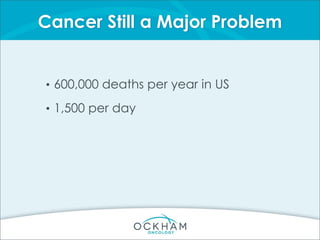
Cancer Still a Major Problem
• 600,000 deaths per year in US
• 1,500 per day
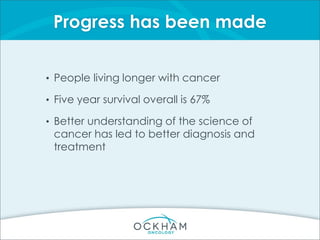
Progress has been made
• People living longer with cancer
• Five year survival overall is 67%
• Better understanding of the science of
cancer has led to better diagnosis and
treatment
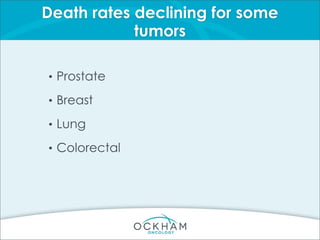
Death rates declining for some
tumors
• Prostate
• Breast
• Lung
• Colorectal
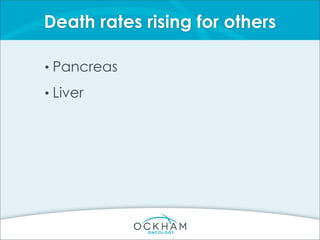
Death rates rising for others
• Pancreas
• Liver
New ways of thinking about
cancer
Old
by site and type of tissue ie
adenocarcinoma of the lung
New
by cellular abnormality ie EGRF mutation
Understanding pathways and
interactions
• Leading to targeted therapies
• Companion diagnostics
• Better understanding of resistance
mechanisms
• Combination approaches
New understanding of factors
external to tumor
• Tumor vasculature and stromal cells
• Immune tolerance
Able to target specific
abnormalities
• More individualized approach
• Companion diagnostics to screen patients
likely to respond
• Better understanding of resistance
mechanisms
Many drugs in trials
• More than a thousand cancer trials
• 47 new cancer drugs approved in last 10
years
Few patients enter trials
• Less than 5% of eligible patients
Many trials /drugs fail
• 5% of drugs that enter trials are approved
• 60% of successful Phase II drugs fail in
Phase III
Causes of trial failure
• Too few patients
• Poor choice of endpoint
Health economics
• Need for differentiation/advantage
• Puts pressure on companies to do larger
more expensive trials
Biotech engine for inovation
• Pharma pipeline cannot keep up with
demand
Biotech model broken
• Over last 10 years 0.8X return to investors
Less money available to
startups
• VC’s more cautious
• Less money invested in biotech
Significant problem for oncology
drugs
Traditionally poor prediction from
animal models
some improvement with
knockout models and patient derived
samples
Trials long and expensive
Pressure for early less expensive
answers
• Biomarkers
• Clever trial design
• Patient enrichment
• Need for “Phase III results from Phase I trial”
Opportunity for Ockham
• Partner of choice to derisk programs early

Cancer is Still a Major Problem

  • 1.
  • 2.
    Cancer Still aMajor Problem • 600,000 deaths per year in US • 1,500 per day
  • 3.
    Progress has beenmade • People living longer with cancer • Five year survival overall is 67% • Better understanding of the science of cancer has led to better diagnosis and treatment
  • 4.
    Death rates decliningfor some tumors • Prostate • Breast • Lung • Colorectal
  • 5.
    Death rates risingfor others • Pancreas • Liver
  • 6.
    New ways ofthinking about cancer Old by site and type of tissue ie adenocarcinoma of the lung New by cellular abnormality ie EGRF mutation
  • 7.
    Understanding pathways and interactions •Leading to targeted therapies • Companion diagnostics • Better understanding of resistance mechanisms • Combination approaches
  • 8.
    New understanding offactors external to tumor • Tumor vasculature and stromal cells • Immune tolerance
  • 9.
    Able to targetspecific abnormalities • More individualized approach • Companion diagnostics to screen patients likely to respond • Better understanding of resistance mechanisms
  • 10.
    Many drugs intrials • More than a thousand cancer trials • 47 new cancer drugs approved in last 10 years
  • 11.
    Few patients entertrials • Less than 5% of eligible patients
  • 12.
    Many trials /drugsfail • 5% of drugs that enter trials are approved • 60% of successful Phase II drugs fail in Phase III
  • 13.
    Causes of trialfailure • Too few patients • Poor choice of endpoint
  • 14.
    Health economics • Needfor differentiation/advantage • Puts pressure on companies to do larger more expensive trials
  • 15.
    Biotech engine forinovation • Pharma pipeline cannot keep up with demand
  • 16.
    Biotech model broken •Over last 10 years 0.8X return to investors
  • 17.
    Less money availableto startups • VC’s more cautious • Less money invested in biotech
  • 18.
    Significant problem foroncology drugs Traditionally poor prediction from animal models some improvement with knockout models and patient derived samples Trials long and expensive
  • 19.
    Pressure for earlyless expensive answers • Biomarkers • Clever trial design • Patient enrichment • Need for “Phase III results from Phase I trial”
  • 20.
    Opportunity for Ockham •Partner of choice to derisk programs early