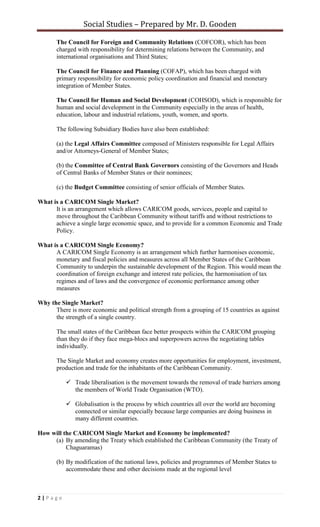
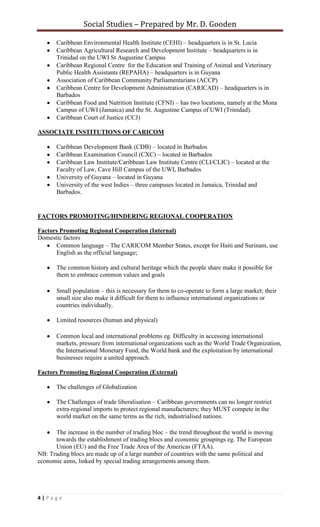
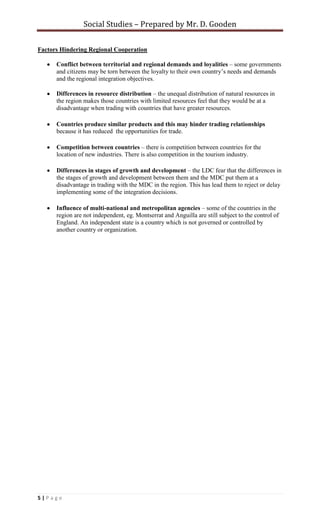
CARICOM – (These notes are to be studied with your textbook)What is the Treaty of Chaguaramas? The Treaty of Chaguaramas is the Treaty which established the Caribbean Community (CARICOM). It was signed at Chaguaramas, Trinidad, on 4 July 1973 When did the Treaty of Chaguaramas enter into force? The Treaty of Chaguaramas which established the Caribbean Community came into force on 1 August 1973 Which countries are members of CARICOM? The CARICOM member states are: Antigua and Barbuda, The Bahamas, Barbados, Belize, Dominica, Grenada, Guyana, Haiti, Jamaica, Montserrat, Saint Lucia, St. Kitts and Nevis, St. Vincent and the Grenadines, Suriname, and Trinidad and Tobago. What are the specific objectives of CARICOM? The Community has the following objectives: (a) improved standards of living and work; (b) full employment of labour and other factors of production; (c) accelerated, co-ordinated and sustained economic development and convergence; (d) expansion of trade and economic relations with third States; (e) enhanced levels of international competitiveness; (f) organisation for increased production and productivity; (g) the achievement of a greater measure of economic leverage and effectiveness of Member States in dealing with third States, groups of States and entities of any description; (h) enhanced co-ordination of Member States' foreign and [foreign] economic policies; and (i) enhanced functional co-operation, including:more efficient operation of common services and activities for the benefit of its peoples;
accelerated promotion of greater understanding among its peoples and the advancement of their social, cultural and technological development;
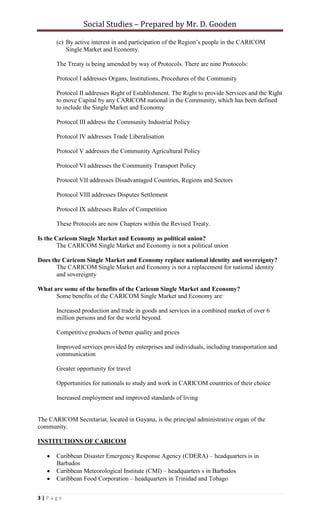
intensified activities in areas such as health, education, ransportation, telecommunications. How does CARICOM work? The meetings of the Heads of Government and of the ministerial Councils, also known as institutions, represent the main means of achieving consensus on regional issues and policies. The Conference of Heads of Government is the highest decision-making forum and the final authority of the Community. It is made up of the Heads of Government of the Member States. Because of the increasing number of issues to be decided and implemented, a subset of the Conference, called the Bureau, was instituted in 1992. The Bureau meets as necessary and reports to the Conference. The Community Council of Ministers is the second highest organ of CARICOM, and consists of Ministers responsible for Community Affairs and any other Minister designated by Member States in their absolute discretion. The Community Council has primary responsibility for the development of Community strategic planning and co-ordination in the areas of economic integration, functional co-operation and external relations. The Community Council also has the responsibility for establishing a system of regional/ national consultations in order to ensure the effectiveness of the decision-making and implementation processes in the Community. The following Ministerial Councils were also established to streamline the functioning of the Community and increase the smooth functioning of the different sectors: The Council for Trade and Economic Development (COTED), which has been charged with the responsibility for the promotion of trade and economic development of the Community; The Council for Foreign and Community Relations (COFCOR), which has been charged with responsibility for determining relations between the Community, and international organisations and Third States; The Council for Finance and Planning (COFAP), which has been charged with primary responsibility for economic policy coordination and financial and monetary integration of Member States. The Council for Human and Social Development (COHSOD), which is responsible for human and social development in the Community especially in the areas of health, education, labour and industrial relations, youth, women, and sports. The following Subsidiary Bodies have also been established: (a) the Legal Affairs Committee composed of Ministers responsible for Legal Affairs and/or Attorneys-General of Member States; (b) the Committee of Central Bank Governors consisting of the Governors and Heads of Central Banks of Member States or their nominees; (c) the Budget Committee consisting of senior officials of Member States. What is a CARICOM Single Market? It is an arrangement which allows CARICOM goods, services, people and capital to move throughout the Caribbean Community without tariffs and without restrictions to achieve a single large economic space, and to provide for a common Economic and Trade Policy. What is a CARICOM Single Economy? A CARICOM Single Economy is an arrangement which further harmonises economic, monetary and fiscal policies and measures across all Member States of the Caribbean Community to underpin the sustainable development of the Region. This would mean the coordination of foreign exchange and interest rate policies, the harmonisation of tax regimes and of laws and the convergence of economic performance among other measures Why the Single Market? There is more economic and political strength from a grouping of 15 countries as against the strength of a single country. The small states of the Caribbean face better prospects within the CARICOM grouping than they do if they face mega-blocs and superpowers across the negotiating tables individually. The Single Market and economy creates more opportunities for employment, investment, production and trade for the inhabitants of the Caribbean Community. Trade liberalisation is the movement towards the removal of trade barriers among the members of World Trade Organisation (WTO).
Globalisation is the process by which countries all over the world are becoming connected or similar especially because large companies are doing business in many different countries.How will the CARICOM Single Market and Economy be implemented? By amending the Treaty which established the Caribbean Community (the Treaty of
Chaguaramas)

Caricom Notes

  • 1.
    CARICOM – (Thesenotes are to be studied with your textbook)What is the Treaty of Chaguaramas? The Treaty of Chaguaramas is the Treaty which established the Caribbean Community (CARICOM). It was signed at Chaguaramas, Trinidad, on 4 July 1973 When did the Treaty of Chaguaramas enter into force? The Treaty of Chaguaramas which established the Caribbean Community came into force on 1 August 1973 Which countries are members of CARICOM? The CARICOM member states are: Antigua and Barbuda, The Bahamas, Barbados, Belize, Dominica, Grenada, Guyana, Haiti, Jamaica, Montserrat, Saint Lucia, St. Kitts and Nevis, St. Vincent and the Grenadines, Suriname, and Trinidad and Tobago. What are the specific objectives of CARICOM? The Community has the following objectives: (a) improved standards of living and work; (b) full employment of labour and other factors of production; (c) accelerated, co-ordinated and sustained economic development and convergence; (d) expansion of trade and economic relations with third States; (e) enhanced levels of international competitiveness; (f) organisation for increased production and productivity; (g) the achievement of a greater measure of economic leverage and effectiveness of Member States in dealing with third States, groups of States and entities of any description; (h) enhanced co-ordination of Member States' foreign and [foreign] economic policies; and (i) enhanced functional co-operation, including:more efficient operation of common services and activities for the benefit of its peoples;
  • 2.
    accelerated promotion ofgreater understanding among its peoples and the advancement of their social, cultural and technological development;
  • 3.
    intensified activities inareas such as health, education, ransportation, telecommunications. How does CARICOM work? The meetings of the Heads of Government and of the ministerial Councils, also known as institutions, represent the main means of achieving consensus on regional issues and policies. The Conference of Heads of Government is the highest decision-making forum and the final authority of the Community. It is made up of the Heads of Government of the Member States. Because of the increasing number of issues to be decided and implemented, a subset of the Conference, called the Bureau, was instituted in 1992. The Bureau meets as necessary and reports to the Conference. The Community Council of Ministers is the second highest organ of CARICOM, and consists of Ministers responsible for Community Affairs and any other Minister designated by Member States in their absolute discretion. The Community Council has primary responsibility for the development of Community strategic planning and co-ordination in the areas of economic integration, functional co-operation and external relations. The Community Council also has the responsibility for establishing a system of regional/ national consultations in order to ensure the effectiveness of the decision-making and implementation processes in the Community. The following Ministerial Councils were also established to streamline the functioning of the Community and increase the smooth functioning of the different sectors: The Council for Trade and Economic Development (COTED), which has been charged with the responsibility for the promotion of trade and economic development of the Community; The Council for Foreign and Community Relations (COFCOR), which has been charged with responsibility for determining relations between the Community, and international organisations and Third States; The Council for Finance and Planning (COFAP), which has been charged with primary responsibility for economic policy coordination and financial and monetary integration of Member States. The Council for Human and Social Development (COHSOD), which is responsible for human and social development in the Community especially in the areas of health, education, labour and industrial relations, youth, women, and sports. The following Subsidiary Bodies have also been established: (a) the Legal Affairs Committee composed of Ministers responsible for Legal Affairs and/or Attorneys-General of Member States; (b) the Committee of Central Bank Governors consisting of the Governors and Heads of Central Banks of Member States or their nominees; (c) the Budget Committee consisting of senior officials of Member States. What is a CARICOM Single Market? It is an arrangement which allows CARICOM goods, services, people and capital to move throughout the Caribbean Community without tariffs and without restrictions to achieve a single large economic space, and to provide for a common Economic and Trade Policy. What is a CARICOM Single Economy? A CARICOM Single Economy is an arrangement which further harmonises economic, monetary and fiscal policies and measures across all Member States of the Caribbean Community to underpin the sustainable development of the Region. This would mean the coordination of foreign exchange and interest rate policies, the harmonisation of tax regimes and of laws and the convergence of economic performance among other measures Why the Single Market? There is more economic and political strength from a grouping of 15 countries as against the strength of a single country. The small states of the Caribbean face better prospects within the CARICOM grouping than they do if they face mega-blocs and superpowers across the negotiating tables individually. The Single Market and economy creates more opportunities for employment, investment, production and trade for the inhabitants of the Caribbean Community. Trade liberalisation is the movement towards the removal of trade barriers among the members of World Trade Organisation (WTO).
  • 4.
    Globalisation is theprocess by which countries all over the world are becoming connected or similar especially because large companies are doing business in many different countries.How will the CARICOM Single Market and Economy be implemented? By amending the Treaty which established the Caribbean Community (the Treaty of
  • 5.