


By
Sandun Perera
CAR CARE
2nd November 2011
Geveo Australasia
FLOW
• Exterior cleaning tips
• Interior cleaning tips
• Hydraulic systems maintenance
• Changing a flat tire
• Head light restoration
• Fuel efficient driving tips
PLEASE WASH ME!!!
• Avoid household detergents as they strip your car's protective surface causing the finish to dry out and age prematurely.
• Avoid washing your car in the sun.
• Do not "dry wipe" your car as it may cause scratching.
• Rinse off as much dirt as possible before washing.
• Clean wheels to eliminate brake dust and road salt corrosion.
• After driving in salty conditions, wash your car to prevent corrosion, fading and rust.
• Use collected water to save water wastage.
• Get a complete detail once a year.
• Don't place grocery bags, luggage or other objects on the car top or trunk.
• Avoid gravel roads, which can cause chipping in the first 30 days.
• Do not park under trees, which drip sap.
• Immediately rinse gasoline, oil, antifreeze, transmission fluid and windshield solvent spills off your finish, but do not wipe.
• Avoid extreme heat and cold by keeping your car parked in the shade or a garage.
HOW DO I LOOK
• Remove leaves from your car as soon as possible to prevent the release of acid that can permanently stain your finish.
• Avoid parking under trees that release sap. To remove sap, use finger nail polish remover on a cotton ball, then apply wax.
• Wash in straight lines with overlapping strokes to reduce the standing water you need to dry off.
• Clean tires first, then the rims to prevent irreversible corrosion caused by brake dust and road salt.
• Rinse dirt from moving parts, such as suspension components.
• Be sure to wash the inside bottom edge of doors, lift gate, hood and trunk to eliminate the trapped dirt and moisture that can
cause premature rusting.
• Never wax your car in direct sunlight to prevent the surface temperature of your car from causing the chemicals in the wax to
damage your finish.
• Look for car wax which contains vegetable wax, which is safe for your car's finish.
• Avoid waxes that promise to remove dirt, oxidized paint or scratches as they are not pure wax and can actually remove paint
from your vehicle.
• Do not "polish" light scratches as new car finishes have a clear coat finish that can be damaged.
• Mask off all textured moldings and bumper parts before rubbing on wax to avoid discoloring or other damage.
CLEAN INTERIOR
• Apply protectant with a rag and avoid spraying directly on the dash.
• Use a vinyl protectant regularly to prevent fading and cracking.
• Once vinyl protectant is applied, it will need to be re-applied regularly to prevent drying and cracking.
• Vinyl dashes can also be cleaned using Lemon Pledge, which leaves a nice smell, too.
• Vacuum regularly to remove dirt, salt, leaves and other items that can damage carpets and mats.
• Leather interiors should be cleaned with leather products, that are designed to penetrate the pores.
• For leather, avoid high-alkaline content which can bleach the color.
• Use only upholstery cleaners designed for cars, not household cleaners.
• Use fresh air, instead of recirculated air, to keep your windows from fogging.
FLUIDS
• Engine oil
• Transmission oil
• Brake oil
• Clutch oil (Brake oil)
• Power steering oil
• Radiator coolant + water
• Windshield sprinkler water
• Air conditioner gas
• Battery
• Gasoline
• Check dashboard indicators and pay attention to them.
CHANGING A FLAT TIRE
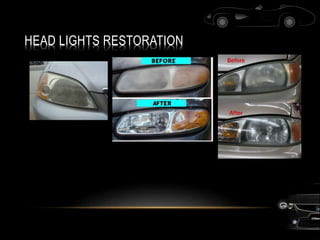
HEAD LIGHTS RESTORATION
FUEL EFFICIENT DRIVING
• Avoid aggressive driving
• Drive smoothly
• Drive steadily at posted speed limits
• Avoid idling your vehicle
• Make sure your tires are properly inflated
• Select the right gear
• Use your air conditioner sparingly on older cars
• Use the cruise control
• Choose the octane fuel which best suits your car
• Service your vehicle regularly
• Monitor power accessories
• Tighten your gas cap to the second click (147 million
gallons of gas evaporate every year)
• Park in shady areas when possible
• Plan your trip
• Don't Speed (Fuel consumption increases significantly over
about 90 km/h. At 110 km/h your car uses up to 25% more
fuel than it would cruising at 90 km/h. If your car is fitted
with cruise control, using it in highway driving will help to
maintain a steadier speed while saving some fuel.)
• Minimize aerodynamic drag (Additional parts on the exterior
of a vehicle such as roof racks and spoilers, or having the
window open, increases air resistance and fuel
consumption, in some cases by over 20% at higher
speeds.)
• Remove unwanted weigh from the car. (heavier sport
goods)
• Make a commitment to drive less (use public transport,
walk, cycling)
REFERENCES
• http://www.carstar.com/Resources/CarCareTips.aspx
• http://www.edmunds.com/how-to/how-to-change-a-flat-tire.html
• http://www.edmunds.com/how-to/how-to-maintain-your-cars-fluid-levels.html
• http://www.wikihow.com/Check-the-Fluids-in-a-Car
• http://www.environment.gov.au/settlements/transport/fuelguide/tips.html
• http://eartheasy.com/move_fuel_efficient_driving.html
• How to change a flat tire - http://www.youtube.com/watch?v=joBmbh0AGSQ
Car care
Car care

Car care

  • 1.
    By Sandun Perera CAR CARE 2ndNovember 2011 Geveo Australasia
  • 2.
    FLOW • Exterior cleaningtips • Interior cleaning tips • Hydraulic systems maintenance • Changing a flat tire • Head light restoration • Fuel efficient driving tips
  • 3.
    PLEASE WASH ME!!! •Avoid household detergents as they strip your car's protective surface causing the finish to dry out and age prematurely. • Avoid washing your car in the sun. • Do not "dry wipe" your car as it may cause scratching. • Rinse off as much dirt as possible before washing. • Clean wheels to eliminate brake dust and road salt corrosion. • After driving in salty conditions, wash your car to prevent corrosion, fading and rust. • Use collected water to save water wastage. • Get a complete detail once a year. • Don't place grocery bags, luggage or other objects on the car top or trunk. • Avoid gravel roads, which can cause chipping in the first 30 days. • Do not park under trees, which drip sap. • Immediately rinse gasoline, oil, antifreeze, transmission fluid and windshield solvent spills off your finish, but do not wipe. • Avoid extreme heat and cold by keeping your car parked in the shade or a garage.
  • 4.
    HOW DO ILOOK • Remove leaves from your car as soon as possible to prevent the release of acid that can permanently stain your finish. • Avoid parking under trees that release sap. To remove sap, use finger nail polish remover on a cotton ball, then apply wax. • Wash in straight lines with overlapping strokes to reduce the standing water you need to dry off. • Clean tires first, then the rims to prevent irreversible corrosion caused by brake dust and road salt. • Rinse dirt from moving parts, such as suspension components. • Be sure to wash the inside bottom edge of doors, lift gate, hood and trunk to eliminate the trapped dirt and moisture that can cause premature rusting. • Never wax your car in direct sunlight to prevent the surface temperature of your car from causing the chemicals in the wax to damage your finish. • Look for car wax which contains vegetable wax, which is safe for your car's finish. • Avoid waxes that promise to remove dirt, oxidized paint or scratches as they are not pure wax and can actually remove paint from your vehicle. • Do not "polish" light scratches as new car finishes have a clear coat finish that can be damaged. • Mask off all textured moldings and bumper parts before rubbing on wax to avoid discoloring or other damage.
  • 5.
    CLEAN INTERIOR • Applyprotectant with a rag and avoid spraying directly on the dash. • Use a vinyl protectant regularly to prevent fading and cracking. • Once vinyl protectant is applied, it will need to be re-applied regularly to prevent drying and cracking. • Vinyl dashes can also be cleaned using Lemon Pledge, which leaves a nice smell, too. • Vacuum regularly to remove dirt, salt, leaves and other items that can damage carpets and mats. • Leather interiors should be cleaned with leather products, that are designed to penetrate the pores. • For leather, avoid high-alkaline content which can bleach the color. • Use only upholstery cleaners designed for cars, not household cleaners. • Use fresh air, instead of recirculated air, to keep your windows from fogging.
  • 7.
    FLUIDS • Engine oil •Transmission oil • Brake oil • Clutch oil (Brake oil) • Power steering oil • Radiator coolant + water • Windshield sprinkler water • Air conditioner gas • Battery • Gasoline • Check dashboard indicators and pay attention to them.
  • 8.
  • 10.
  • 11.
    FUEL EFFICIENT DRIVING •Avoid aggressive driving • Drive smoothly • Drive steadily at posted speed limits • Avoid idling your vehicle • Make sure your tires are properly inflated • Select the right gear • Use your air conditioner sparingly on older cars • Use the cruise control • Choose the octane fuel which best suits your car • Service your vehicle regularly • Monitor power accessories • Tighten your gas cap to the second click (147 million gallons of gas evaporate every year) • Park in shady areas when possible • Plan your trip • Don't Speed (Fuel consumption increases significantly over about 90 km/h. At 110 km/h your car uses up to 25% more fuel than it would cruising at 90 km/h. If your car is fitted with cruise control, using it in highway driving will help to maintain a steadier speed while saving some fuel.) • Minimize aerodynamic drag (Additional parts on the exterior of a vehicle such as roof racks and spoilers, or having the window open, increases air resistance and fuel consumption, in some cases by over 20% at higher speeds.) • Remove unwanted weigh from the car. (heavier sport goods) • Make a commitment to drive less (use public transport, walk, cycling)
  • 12.
    REFERENCES • http://www.carstar.com/Resources/CarCareTips.aspx • http://www.edmunds.com/how-to/how-to-change-a-flat-tire.html •http://www.edmunds.com/how-to/how-to-maintain-your-cars-fluid-levels.html • http://www.wikihow.com/Check-the-Fluids-in-a-Car • http://www.environment.gov.au/settlements/transport/fuelguide/tips.html • http://eartheasy.com/move_fuel_efficient_driving.html • How to change a flat tire - http://www.youtube.com/watch?v=joBmbh0AGSQ