Management
Chapter 4: Planning
Learning outcomes of this chapter:
Explain the fundamental concepts of planning.
Describe the three main steps of the strategic planning process.
Apply the SWOT analysis in practice.
Topics of the chapter
1. Fundamentals of
planning
2. Strategic planning
Fundamentals of planning
Upon completion of the Fundamentals of Planning topic, learners will
be able to achieve the following learning outcomes:
• Explain the nature of planning.
• Explain the importance of planning.
• Explore the different levels and types of planning.
The nature of planning (1)
• Assessing an organization's current state.
• Defining its desired future state.
• Identifying the optimal approach to achieve its goals.
The nature of planning (2)
• Assessing an organization's current state.
Strengths, weaknesses, opportunities, and threats.
• Defining its desired future state.
 Mission, vision, core values, competitive landscape, and market trends.
• Identifying the optimal approach to achieve its goals.
 Devise strategies to propel the organization toward its goals.
The nature of planning (3)
• The uncertain and complex external environment.
 makes planning challenging and risky.
• Planning requires ongoing monitoring and adjustments.
 to adapt to changes in the external environment.
The importance of planning
Planning
• helps organizations achieve their goals.
• reduces uncertainty and ambiguity.
• effectively utilizes resources such as time, money, and manpower.
• keeps organizations focused on their goals.
• plays a crucial role in risk management,
• promotes innovation
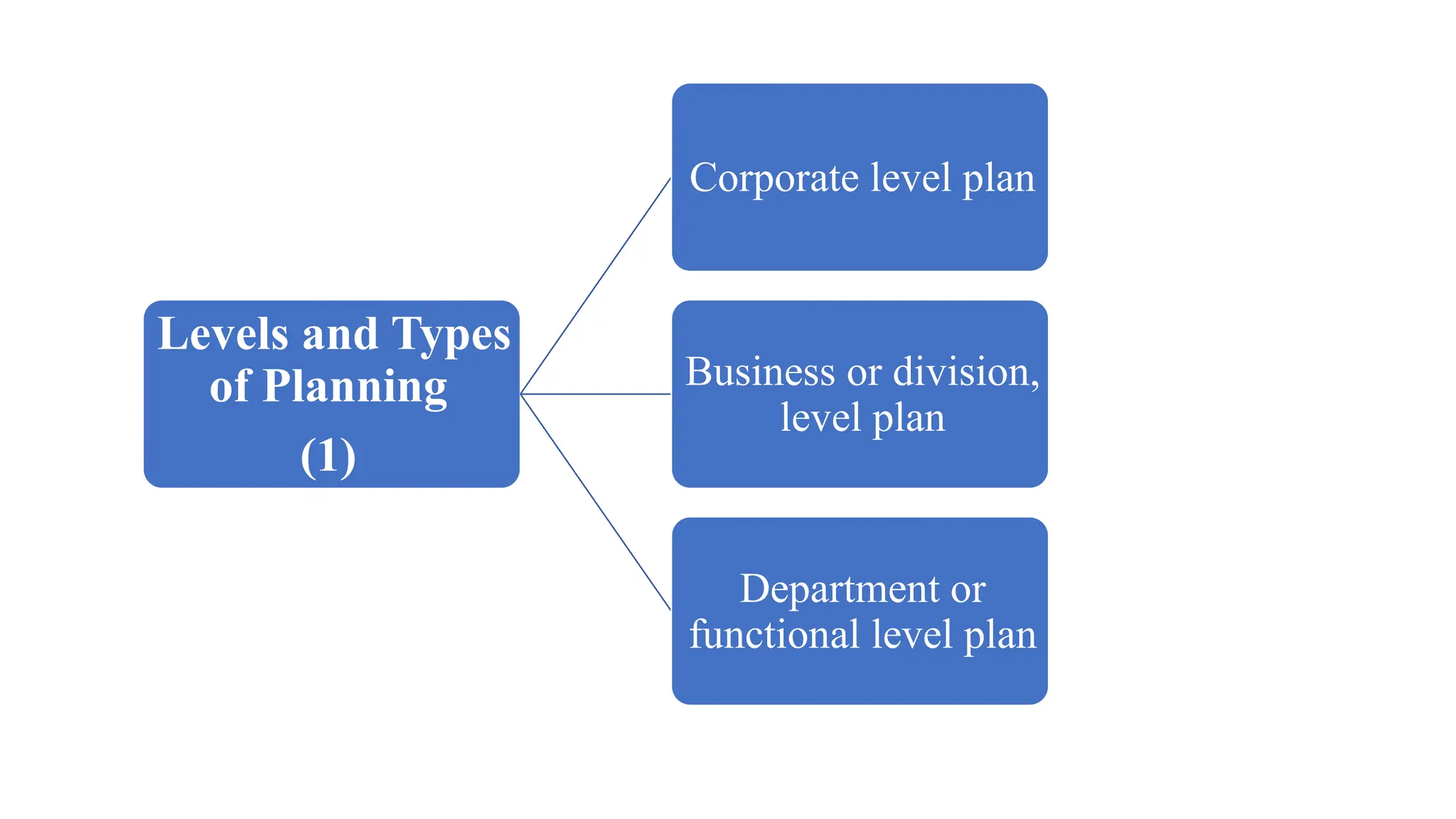
Levels and Types
of Planning
(1)
Corporate level plan
Business or division,
level plan
Department or
functional level plan
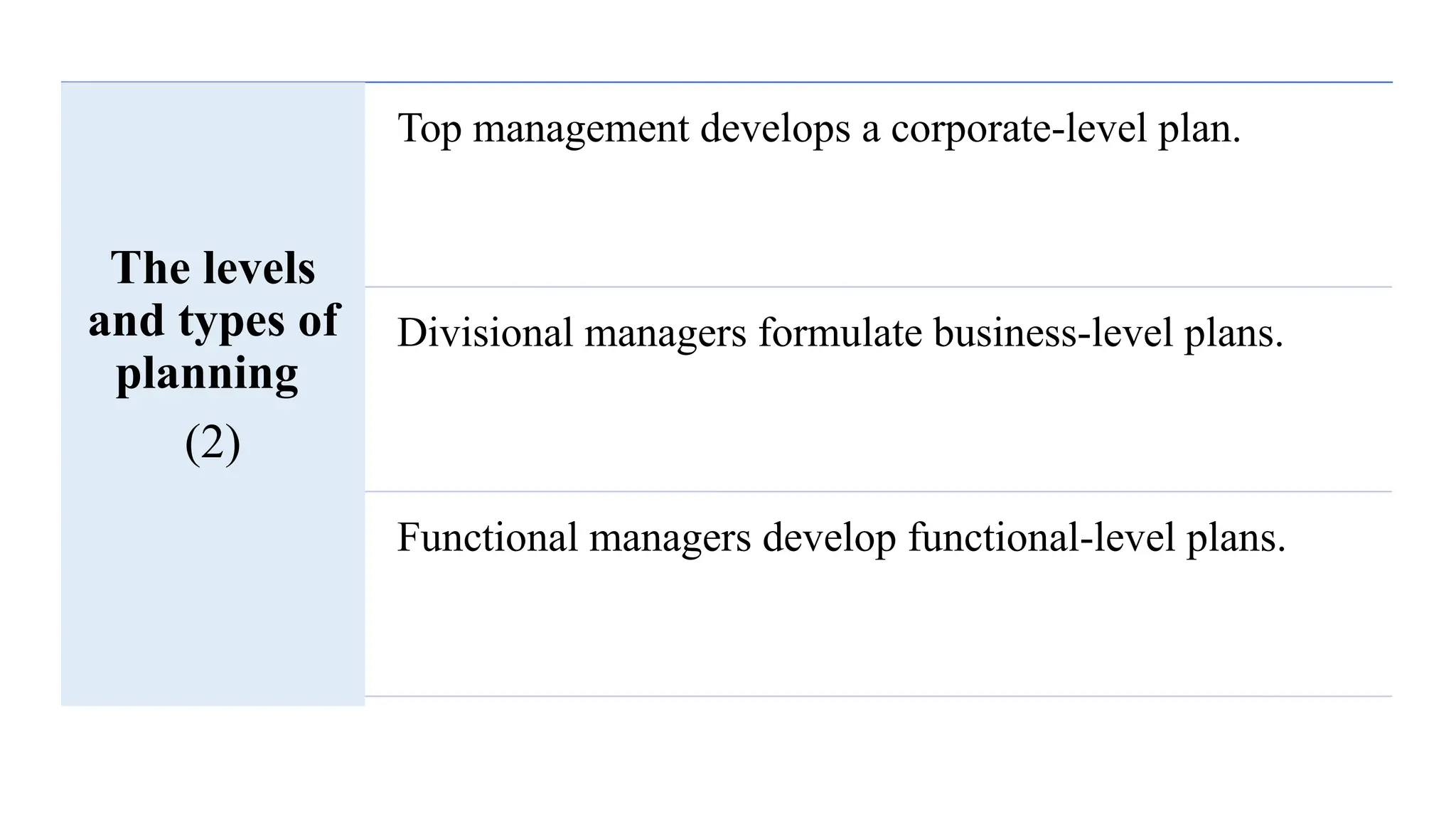
The levels
and types of
planning
(2)
Top management develops a corporate-level plan.
Divisional managers formulate business-level plans.
Functional managers develop functional-level plans.
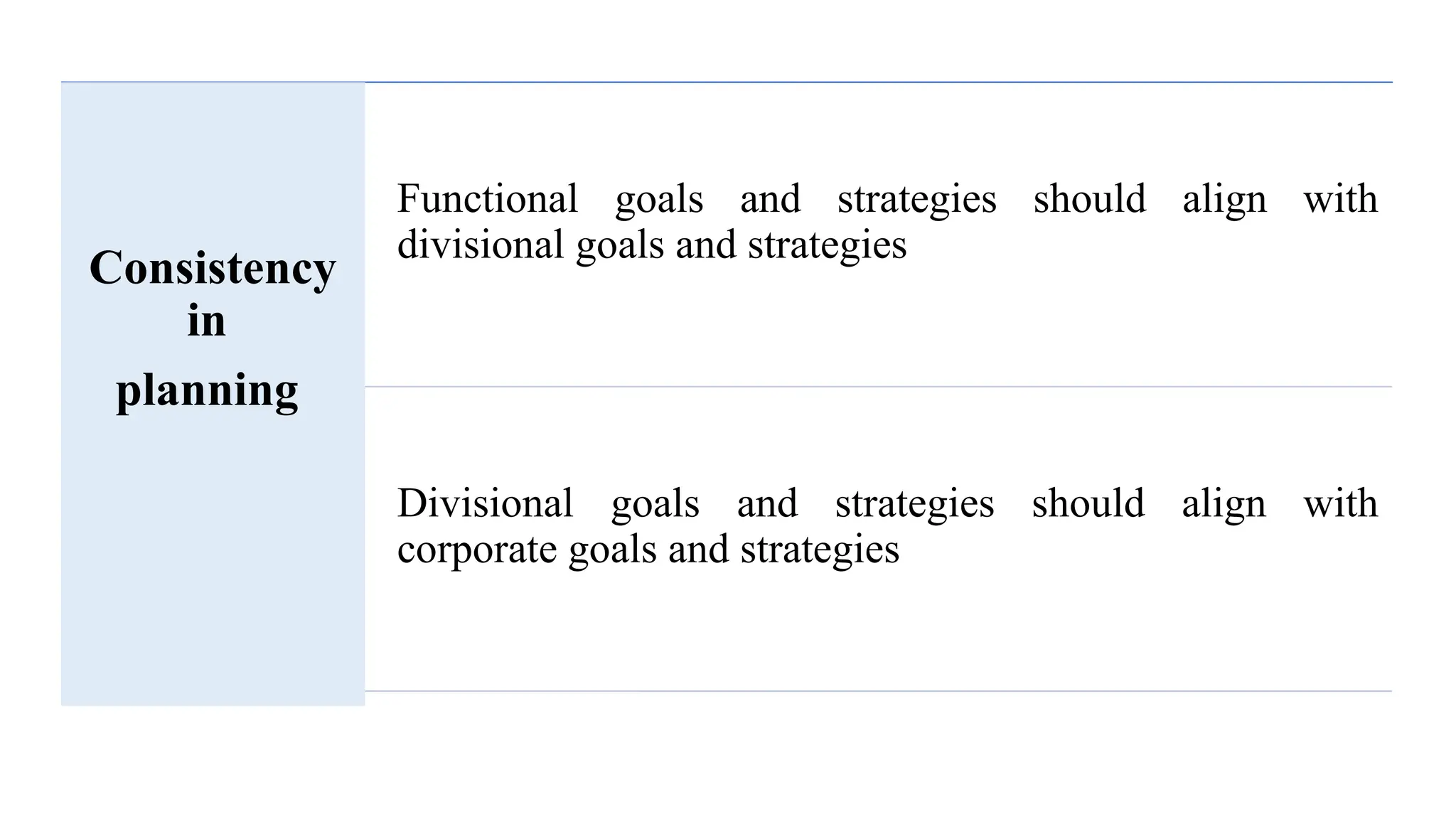
Consistency
in
planning
Functional goals and strategies should align with
divisional goals and strategies
Divisional goals and strategies should align with
corporate goals and strategies
C4_CD4.1_The Fundamentals of Planning.pptx

C4_CD4.1_The Fundamentals of Planning.pptx

  • 1.
  • 2.
    Learning outcomes ofthis chapter: Explain the fundamental concepts of planning. Describe the three main steps of the strategic planning process. Apply the SWOT analysis in practice.
  • 3.
    Topics of thechapter 1. Fundamentals of planning 2. Strategic planning
  • 4.
    Fundamentals of planning Uponcompletion of the Fundamentals of Planning topic, learners will be able to achieve the following learning outcomes: • Explain the nature of planning. • Explain the importance of planning. • Explore the different levels and types of planning.
  • 5.
    The nature ofplanning (1) • Assessing an organization's current state. • Defining its desired future state. • Identifying the optimal approach to achieve its goals.
  • 6.
    The nature ofplanning (2) • Assessing an organization's current state. Strengths, weaknesses, opportunities, and threats. • Defining its desired future state.  Mission, vision, core values, competitive landscape, and market trends. • Identifying the optimal approach to achieve its goals.  Devise strategies to propel the organization toward its goals.
  • 7.
    The nature ofplanning (3) • The uncertain and complex external environment.  makes planning challenging and risky. • Planning requires ongoing monitoring and adjustments.  to adapt to changes in the external environment.
  • 8.
    The importance ofplanning Planning • helps organizations achieve their goals. • reduces uncertainty and ambiguity. • effectively utilizes resources such as time, money, and manpower. • keeps organizations focused on their goals. • plays a crucial role in risk management, • promotes innovation
  • 9.
    Levels and Types ofPlanning (1) Corporate level plan Business or division, level plan Department or functional level plan
  • 10.
    The levels and typesof planning (2) Top management develops a corporate-level plan. Divisional managers formulate business-level plans. Functional managers develop functional-level plans.
  • 11.
    Consistency in planning Functional goals andstrategies should align with divisional goals and strategies Divisional goals and strategies should align with corporate goals and strategies