Commentary
Policies, Guidelines and Consensus Statements: Pharmacologic
Management of Type 2 Diabetese2015 Interim Update
Canadian Diabetes Association Clinical Practice Guidelines Expert Committee
The initial draft of this commentary was prepared by William Harper MD, FRCPC, Maureen Clement MD,
CCFP, Ronald Goldenberg MD, FRCPC, FACE, Amir Hanna MB, BCh, FRCPC, FACP, Andrea Main BScPhm,
CDE, Ravi Retnakaran MD, MSc, FRCPC, Diana Sherifali RN, PhD, CDE, Vincent Woo MD, FRCPC,
Jean-François Yale MD, CSPQ, FRCPC, and Alice Y.Y. Cheng MD, FRCPC on behalf of the Steering
Committee for the Canadian Diabetes Association 2013 Clinical Practice Guidelines for the Prevention
and Management of Diabetes in Canada
a r t i c l e i n f o
Article history:
Received 13 May 2015
Accepted 13 May 2015
The process of the development of the Canadian Diabetes
Association 2013 Clinical Practice Guidelines for the Prevention and
Management of Diabetes in Canada included provisions to update
individual chapters prior to the planned published revision in 2018
(1). An updated literature search that focused on new evidence
published since the development of the 2013 guidelines yielded
1787 citations. After review of these citations, the chapter authors
advised the steering and executive committees that there were no
significant changes in evidence to warrant the formulation of
any new recommendations or the revision of any current
recommendations. As such, it was recommended that a full update
of the chapter be deferred until the planned revision of the entire
Clinical Practice Guidelines in 2018.
However, the steering committee decided it was warranted to
publish an interim commentary addressing the approval, in
Canada, of a new class of antihyperglycemic agentsdsodium-
glucose linked transporter 2 (SGLT2) inhibitorsdfor the
pharmacologic management of diabetes. Two agents from this class
have received notice of compliance by Health Canada since the
publication of the 2013 guidelines: canagliflozin and dapagliflozin
(2). This update was deemed necessary by the steering committee
because the addition of a new class of pharmacologic therapy
represents a significant change in the management options for
diabetes, yet the next complete update of the guidelines is still 3
years away.
SGLT2 inhibitors block glucose transport in the proximal renal
tubule, which results in the urinary excretion of glucose, thereby
lowering blood glucose and body weight (3,4). Network meta-
analyses show that, when added to metformin, SGLT2
inhibitors generally have similar or slightly better efficacy in
lowering glycated hemoglobin levels than do other anti-
hyperglycemic agents (5,6). The incidence of hypoglycemia with
SGLT2 inhibitors is rare unless they are used in combination with
insulin or sulfonylureas (3). Because of the glycosuria resulting
from the use of these agents, there is an increased risk for urinary
tract infections, genital mycotic infections and hypotension
caused by osmotic diuresis (3). Although SGLT2 inhibitors lower
blood pressure (3) and raise high-density lipoprotein cholesterol,
they elevate low-density lipoprotein cholesterol modestly (7,8),
and their cardiovascular safety remains unknown and awaits
long-term clinical trials. An imbalance in bladder cancer was
noted with dapagliflozin in early clinical trials; however, many of
the subjects with bladder cancer had pre-existing hematuria (9).
There have been reported cases of diabetic ketoacidosis, without
the usual elevated blood glucose, in patients with type 2 diabetes
being treated with SGLT2 inhibitors (10e13). These cases are rare
and further details await ongoing reviews. Patients on an SGLT2
inhibitor with symptoms of breathing difficulty, nausea,
vomiting, abdominal pain, confusion or fatigue, even in the
absence of high blood glucose, should be evaluated for ketoaci-
dosis. If the ketoacidosis is confirmed, appropriate measures
should be undertaken to correct the acidosis. The SGLT2
inhibitor therapy should be interrupted and its subsequent long
term use should be reassessed (10,13). Use of SGLT2 inhibitors
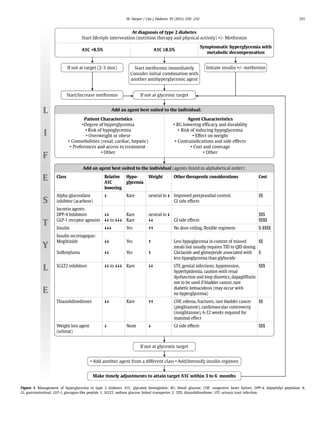
is not currently approved for type 1 diabetes. Figure 1 sum-
marizes the therapeutic considerations for SGLT2 inhibitor
therapy in the management of type 2 diabetes mellitus. The
efficacy of SGLT2 inhibitors with respect to glucose lowering is
Contents lists available at ScienceDirect
Canadian Journal of Diabetes
journal homepage:
www.canadianjournalofdiabetes.com
1499-2671/$ e see front matter Ó 2015 Canadian Diabetes Association
http://dx.doi.org/10.1016/j.jcjd.2015.05.009
Can J Diabetes 39 (2015) 250e252
Figure 1. Management of hyperglycemia in type 2 diabetes. A1C, glycated hemoglobin; BG, blood glucose; CHF, congestive heart failure; DPP-4, dipeptidyl peptidase 4;
GI, gastrointestinal; GLP-1, glucagon-like peptide 1; SGLT2, sodium glucose linked transporter 2; TZD, thiazolidinedione; UTI, urinary tract infection.
W. Harper / Can J Diabetes 39 (2015) 250e252 251
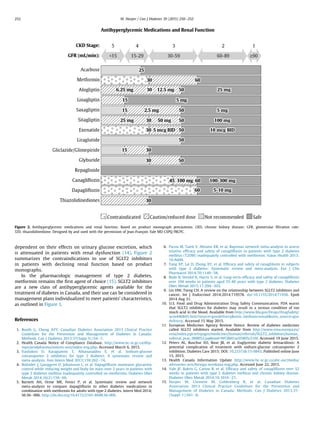
dependent on their effects on urinary glucose excretion, which
is attenuated in patients with renal dysfunction (14). Figure 2
summarizes the contraindications to use of SGLT2 inhibitors
in patients with declining renal function based on product
monographs.
In the pharmacologic management of type 2 diabetes,
metformin remains the first agent of choice (15). SGLT2 inhibitors
are a new class of antihyperglycemic agents available for the
treatment of diabetes in Canada, and their use can be considered in
management plans individualized to meet patients’ characteristics,
as outlined in Figure 1.
References
1. Booth G, Cheng AYY. Canadian Diabetes Association 2013 Clinical Practice
Guidelines for the Prevention and Management of Diabetes in Canada:
Methods. Can J Diabetes 2013;37(Supp l1):S4e7.
2. Health Canada Notice of Compliance Database. http://www.hc-sc.gc.ca/dhp-
mps/prodpharma/notices-avis/index-eng.php. Accessed March 6, 2015.
3. Vasilakou D, Karagiannis T, Athanasiadou E, et al. Sodium-glucose
cotransporter 2 inhibitors for type 2 diabetes. A systematic review and
meta-analysis. Ann Intern Med 2013;159:262e74.
4. Bolinder J, Ljunggren O, Johansson L, et al. Dapagliflozin maintains glycaemic
control while reducing weight and body fat mass over 2 years in patients with
type 2 diabetes mellitus inadequately controlled on metformin. Diabetes Obes
Metab 2014;16(2):159e69.
5. Barnett AH, Orme ME, Fenici P, et al. Systematic review and network
meta-analysis to compare dapagliflozin to other diabetes medications in
combination with metformin for adults with type 2 diabetes. Intern Med 2014;
S6:S6e006. http://dx.doi.org/10.4172/2165-8048.S6-006.
6. Pacou M, Taieb V, Abrams KR, et al. Bayesian network meta-analysis to assess
relative efficacy and safety of canagliflozin in patients with type 2 diabetes
mellitus (T2DM) inadequately controlled with metformin. Value Health 2013;
16:A609.
7. Yang XP, Lai D, Zhong XY, et al. Efficacy and safety of canaglilozin in subjects
with type 2 diabetes: Systematic review and meta-analysis. Eur J Clin
Pharmacol 2014;70:1149e58.
8. Bode B, Stenlof K, Harris S, et al. Long-term efficacy and safety of canagliflozin
over 104 weeks in patients aged 55-80 years with type 2 diabetes. Diabetes
Obes Metab 2015;17:294e303.
9. Lin HW, Tseng CH. A review on the relationship between SGLT2 inhibitors and
cancer. Int J Endocrinol 2014;2014:719578. doi:10.1155/2014/71958. Epub
2014 Aug 31.
10. U.S. Food and Drug Administration Drug Safety Communication. FDA warns
that SGLT2 inhibitors for diabetes may result in a serious condition of too
much acid in the blood. Available from http://www.fda.gov/Drugs/DrugSafety/
ucm446845.htm?source=govdelivery&utm_medium=email&utm_source=gov
delivery. Accessed 15 May 2015.
11. European Medicines Agency Review Notice. Review of diabetes medicines
called SGLT2 inhibitors started. Available from http://www.ema.europa.eu/
ema/index.jspcurl=pages/medicines/human/referrals/SGLT2_inhibitors/human_
referral_prac_000052.jsp&mid=WC0b01ac05805c516f. Accessed 19 June 2015.
12. Peters AL, Buschur EO, Buse JB, et al. Euglycemic diabetic ketoacidosis: A
potential complication of treatment with sodium-glucose cotransporter 2
inhibition. Diabetes Care 2015; DOI: 10.2337/dc15-0843. Published online June
15, 2015.
13. Health Canada Information Update http://www.hc-sc.gc.ca/ahc-asc/media/
advisories-avis/forxiga-invokana-eng.php. Accessed June 22, 2015.
14. Yale JF, Bakris G, Cariou B, et al. Efficacy and safety of canagliflozin over 52
weeks in patients with type 2 diabetes mellitus and chronic kidney disease.
Diabetes Obes Metab 2014;16:1016e27.
15. Harper W, Clement M, Goldenberg R, et al. Canadian Diabetes
Association 2013 Clinical Practice Guidelines for the Prevention and
Management of Diabetes in Canada: Methods. Can J Diabetes 2013;37-
(Suppl 1):S61e8.
Figure 2. Antihyperglycemic medications and renal function. Based on product monograph precautions. CKD, chronic kidney disease; GFR, glomerular filtration rate;
TZD, thiazolidinedione. Designed by and used with the permission of Jean-François Yale MD CSPQ FRCPC.
W. Harper / Can J Diabetes 39 (2015) 250e252252

C1 cda policies, guidelines and consensus statements may 2015

  • 1.
    Commentary Policies, Guidelines andConsensus Statements: Pharmacologic Management of Type 2 Diabetese2015 Interim Update Canadian Diabetes Association Clinical Practice Guidelines Expert Committee The initial draft of this commentary was prepared by William Harper MD, FRCPC, Maureen Clement MD, CCFP, Ronald Goldenberg MD, FRCPC, FACE, Amir Hanna MB, BCh, FRCPC, FACP, Andrea Main BScPhm, CDE, Ravi Retnakaran MD, MSc, FRCPC, Diana Sherifali RN, PhD, CDE, Vincent Woo MD, FRCPC, Jean-François Yale MD, CSPQ, FRCPC, and Alice Y.Y. Cheng MD, FRCPC on behalf of the Steering Committee for the Canadian Diabetes Association 2013 Clinical Practice Guidelines for the Prevention and Management of Diabetes in Canada a r t i c l e i n f o Article history: Received 13 May 2015 Accepted 13 May 2015 The process of the development of the Canadian Diabetes Association 2013 Clinical Practice Guidelines for the Prevention and Management of Diabetes in Canada included provisions to update individual chapters prior to the planned published revision in 2018 (1). An updated literature search that focused on new evidence published since the development of the 2013 guidelines yielded 1787 citations. After review of these citations, the chapter authors advised the steering and executive committees that there were no significant changes in evidence to warrant the formulation of any new recommendations or the revision of any current recommendations. As such, it was recommended that a full update of the chapter be deferred until the planned revision of the entire Clinical Practice Guidelines in 2018. However, the steering committee decided it was warranted to publish an interim commentary addressing the approval, in Canada, of a new class of antihyperglycemic agentsdsodium- glucose linked transporter 2 (SGLT2) inhibitorsdfor the pharmacologic management of diabetes. Two agents from this class have received notice of compliance by Health Canada since the publication of the 2013 guidelines: canagliflozin and dapagliflozin (2). This update was deemed necessary by the steering committee because the addition of a new class of pharmacologic therapy represents a significant change in the management options for diabetes, yet the next complete update of the guidelines is still 3 years away. SGLT2 inhibitors block glucose transport in the proximal renal tubule, which results in the urinary excretion of glucose, thereby lowering blood glucose and body weight (3,4). Network meta- analyses show that, when added to metformin, SGLT2 inhibitors generally have similar or slightly better efficacy in lowering glycated hemoglobin levels than do other anti- hyperglycemic agents (5,6). The incidence of hypoglycemia with SGLT2 inhibitors is rare unless they are used in combination with insulin or sulfonylureas (3). Because of the glycosuria resulting from the use of these agents, there is an increased risk for urinary tract infections, genital mycotic infections and hypotension caused by osmotic diuresis (3). Although SGLT2 inhibitors lower blood pressure (3) and raise high-density lipoprotein cholesterol, they elevate low-density lipoprotein cholesterol modestly (7,8), and their cardiovascular safety remains unknown and awaits long-term clinical trials. An imbalance in bladder cancer was noted with dapagliflozin in early clinical trials; however, many of the subjects with bladder cancer had pre-existing hematuria (9). There have been reported cases of diabetic ketoacidosis, without the usual elevated blood glucose, in patients with type 2 diabetes being treated with SGLT2 inhibitors (10e13). These cases are rare and further details await ongoing reviews. Patients on an SGLT2 inhibitor with symptoms of breathing difficulty, nausea, vomiting, abdominal pain, confusion or fatigue, even in the absence of high blood glucose, should be evaluated for ketoaci- dosis. If the ketoacidosis is confirmed, appropriate measures should be undertaken to correct the acidosis. The SGLT2 inhibitor therapy should be interrupted and its subsequent long term use should be reassessed (10,13). Use of SGLT2 inhibitors is not currently approved for type 1 diabetes. Figure 1 sum- marizes the therapeutic considerations for SGLT2 inhibitor therapy in the management of type 2 diabetes mellitus. The efficacy of SGLT2 inhibitors with respect to glucose lowering is Contents lists available at ScienceDirect Canadian Journal of Diabetes journal homepage: www.canadianjournalofdiabetes.com 1499-2671/$ e see front matter Ó 2015 Canadian Diabetes Association http://dx.doi.org/10.1016/j.jcjd.2015.05.009 Can J Diabetes 39 (2015) 250e252
  • 2.
    Figure 1. Managementof hyperglycemia in type 2 diabetes. A1C, glycated hemoglobin; BG, blood glucose; CHF, congestive heart failure; DPP-4, dipeptidyl peptidase 4; GI, gastrointestinal; GLP-1, glucagon-like peptide 1; SGLT2, sodium glucose linked transporter 2; TZD, thiazolidinedione; UTI, urinary tract infection. W. Harper / Can J Diabetes 39 (2015) 250e252 251
  • 3.
    dependent on theireffects on urinary glucose excretion, which is attenuated in patients with renal dysfunction (14). Figure 2 summarizes the contraindications to use of SGLT2 inhibitors in patients with declining renal function based on product monographs. In the pharmacologic management of type 2 diabetes, metformin remains the first agent of choice (15). SGLT2 inhibitors are a new class of antihyperglycemic agents available for the treatment of diabetes in Canada, and their use can be considered in management plans individualized to meet patients’ characteristics, as outlined in Figure 1. References 1. Booth G, Cheng AYY. Canadian Diabetes Association 2013 Clinical Practice Guidelines for the Prevention and Management of Diabetes in Canada: Methods. Can J Diabetes 2013;37(Supp l1):S4e7. 2. Health Canada Notice of Compliance Database. http://www.hc-sc.gc.ca/dhp- mps/prodpharma/notices-avis/index-eng.php. Accessed March 6, 2015. 3. Vasilakou D, Karagiannis T, Athanasiadou E, et al. Sodium-glucose cotransporter 2 inhibitors for type 2 diabetes. A systematic review and meta-analysis. Ann Intern Med 2013;159:262e74. 4. Bolinder J, Ljunggren O, Johansson L, et al. Dapagliflozin maintains glycaemic control while reducing weight and body fat mass over 2 years in patients with type 2 diabetes mellitus inadequately controlled on metformin. Diabetes Obes Metab 2014;16(2):159e69. 5. Barnett AH, Orme ME, Fenici P, et al. Systematic review and network meta-analysis to compare dapagliflozin to other diabetes medications in combination with metformin for adults with type 2 diabetes. Intern Med 2014; S6:S6e006. http://dx.doi.org/10.4172/2165-8048.S6-006. 6. Pacou M, Taieb V, Abrams KR, et al. Bayesian network meta-analysis to assess relative efficacy and safety of canagliflozin in patients with type 2 diabetes mellitus (T2DM) inadequately controlled with metformin. Value Health 2013; 16:A609. 7. Yang XP, Lai D, Zhong XY, et al. Efficacy and safety of canaglilozin in subjects with type 2 diabetes: Systematic review and meta-analysis. Eur J Clin Pharmacol 2014;70:1149e58. 8. Bode B, Stenlof K, Harris S, et al. Long-term efficacy and safety of canagliflozin over 104 weeks in patients aged 55-80 years with type 2 diabetes. Diabetes Obes Metab 2015;17:294e303. 9. Lin HW, Tseng CH. A review on the relationship between SGLT2 inhibitors and cancer. Int J Endocrinol 2014;2014:719578. doi:10.1155/2014/71958. Epub 2014 Aug 31. 10. U.S. Food and Drug Administration Drug Safety Communication. FDA warns that SGLT2 inhibitors for diabetes may result in a serious condition of too much acid in the blood. Available from http://www.fda.gov/Drugs/DrugSafety/ ucm446845.htm?source=govdelivery&utm_medium=email&utm_source=gov delivery. Accessed 15 May 2015. 11. European Medicines Agency Review Notice. Review of diabetes medicines called SGLT2 inhibitors started. Available from http://www.ema.europa.eu/ ema/index.jspcurl=pages/medicines/human/referrals/SGLT2_inhibitors/human_ referral_prac_000052.jsp&mid=WC0b01ac05805c516f. Accessed 19 June 2015. 12. Peters AL, Buschur EO, Buse JB, et al. Euglycemic diabetic ketoacidosis: A potential complication of treatment with sodium-glucose cotransporter 2 inhibition. Diabetes Care 2015; DOI: 10.2337/dc15-0843. Published online June 15, 2015. 13. Health Canada Information Update http://www.hc-sc.gc.ca/ahc-asc/media/ advisories-avis/forxiga-invokana-eng.php. Accessed June 22, 2015. 14. Yale JF, Bakris G, Cariou B, et al. Efficacy and safety of canagliflozin over 52 weeks in patients with type 2 diabetes mellitus and chronic kidney disease. Diabetes Obes Metab 2014;16:1016e27. 15. Harper W, Clement M, Goldenberg R, et al. Canadian Diabetes Association 2013 Clinical Practice Guidelines for the Prevention and Management of Diabetes in Canada: Methods. Can J Diabetes 2013;37- (Suppl 1):S61e8. Figure 2. Antihyperglycemic medications and renal function. Based on product monograph precautions. CKD, chronic kidney disease; GFR, glomerular filtration rate; TZD, thiazolidinedione. Designed by and used with the permission of Jean-François Yale MD CSPQ FRCPC. W. Harper / Can J Diabetes 39 (2015) 250e252252