Introduction to soft drinks.
What is soft drink?
Why soft drinks?
Benefits of soft drinks.
Brix.
Brix concept.
Density.
Specific gravity.
Density vs. specific gravity.
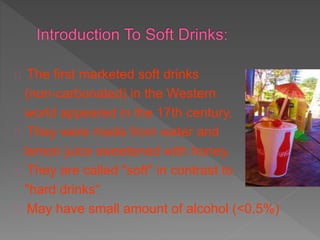
The first marketed soft drinks
(non-carbonated) in the Western
world appeared in the 17th century.
They were made from water and
lemon juice sweetened with honey.
They are called "soft" in contrast to
"hard drinks“
May have small amount of alcohol (<0.5%)
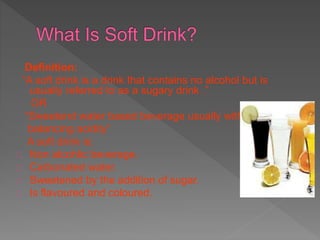
Definition:
“A soft drink is a drink that contains no alcohol but is
usually referred to as a sugary drink .”
OR
“Sweetend water based beverage usually with
balancing acidity”
A soft drink is:
Non alcohlic beverage.
Carbonated water.
Sweetened by the addition of sugar.
Is flavoured and coloured.
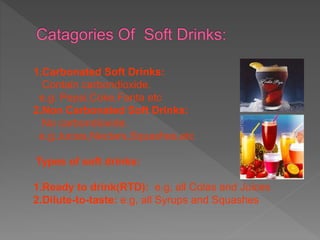
1.Carbonated Soft Drinks:
Contain carbondioxide.
e.g: Pepsi,Coke,Fanta etc
2.Non Carbonated Soft Drinks:
No carbondioxide.
e.g:Juices,Nectars,Squashes,etc
Types of soft drinks:
1.Ready to drink(RTD): e.g, all Colas and Juices
2.Dilute-to-taste: e.g, all Syrups and Squashes
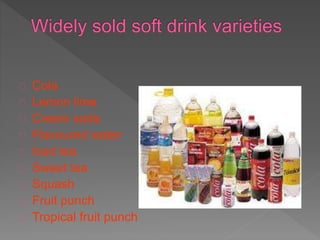
Cola
Lemon lime
Cream soda
Flavoured water
Iced tea
Sweet tea
Squash
Fruit punch
Tropical fruit punch
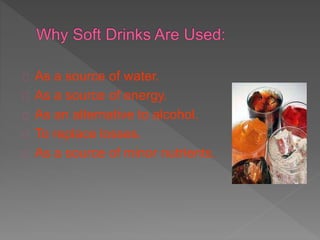
As a source of water.
As a source of energy.
As an alternative to alcohol.
To replace losses.
As a source of minor nutrients.
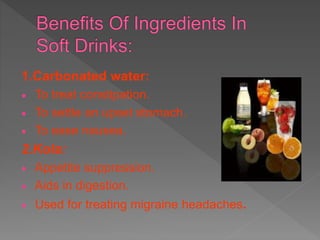
1.Carbonated water:
 To treat constipation.
 To settle an upset stomach.
 To ease nausea.
2.Kola:
 Appetite suppression.
 Aids in digestion.
 Used for treating migraine headaches.
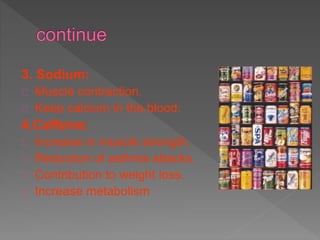
3. Sodium:
Muscle contraction.
Keep calcium in the blood.
4.Caffeine:
Increase in muscle strength.
Reduction of asthma attacks.
Contribution to weight loss.
Increase metabolism
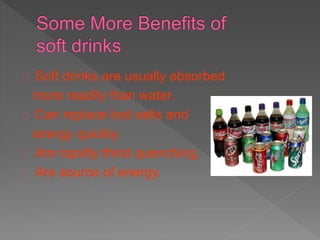
Soft drinks are usually absorbed
more readily than water.
Can replace lost salts and
energy quickly.
Are rapidly thirst quenching.
Are source of energy.
SOURCE :-INTERNET

by madhav chhabra

  • 3.
    Introduction to softdrinks. What is soft drink? Why soft drinks? Benefits of soft drinks. Brix. Brix concept. Density. Specific gravity. Density vs. specific gravity.
  • 4.
    The first marketedsoft drinks (non-carbonated) in the Western world appeared in the 17th century. They were made from water and lemon juice sweetened with honey. They are called "soft" in contrast to "hard drinks“ May have small amount of alcohol (<0.5%)
  • 5.
    Definition: “A soft drinkis a drink that contains no alcohol but is usually referred to as a sugary drink .” OR “Sweetend water based beverage usually with balancing acidity” A soft drink is: Non alcohlic beverage. Carbonated water. Sweetened by the addition of sugar. Is flavoured and coloured.
  • 6.
    1.Carbonated Soft Drinks: Containcarbondioxide. e.g: Pepsi,Coke,Fanta etc 2.Non Carbonated Soft Drinks: No carbondioxide. e.g:Juices,Nectars,Squashes,etc Types of soft drinks: 1.Ready to drink(RTD): e.g, all Colas and Juices 2.Dilute-to-taste: e.g, all Syrups and Squashes
  • 7.
    Cola Lemon lime Cream soda Flavouredwater Iced tea Sweet tea Squash Fruit punch Tropical fruit punch
  • 8.
    As a sourceof water. As a source of energy. As an alternative to alcohol. To replace losses. As a source of minor nutrients.
  • 9.
    1.Carbonated water:  Totreat constipation.  To settle an upset stomach.  To ease nausea. 2.Kola:  Appetite suppression.  Aids in digestion.  Used for treating migraine headaches.
  • 10.
    3. Sodium: Muscle contraction. Keepcalcium in the blood. 4.Caffeine: Increase in muscle strength. Reduction of asthma attacks. Contribution to weight loss. Increase metabolism
  • 11.
    Soft drinks areusually absorbed more readily than water. Can replace lost salts and energy quickly. Are rapidly thirst quenching. Are source of energy.
  • 13.