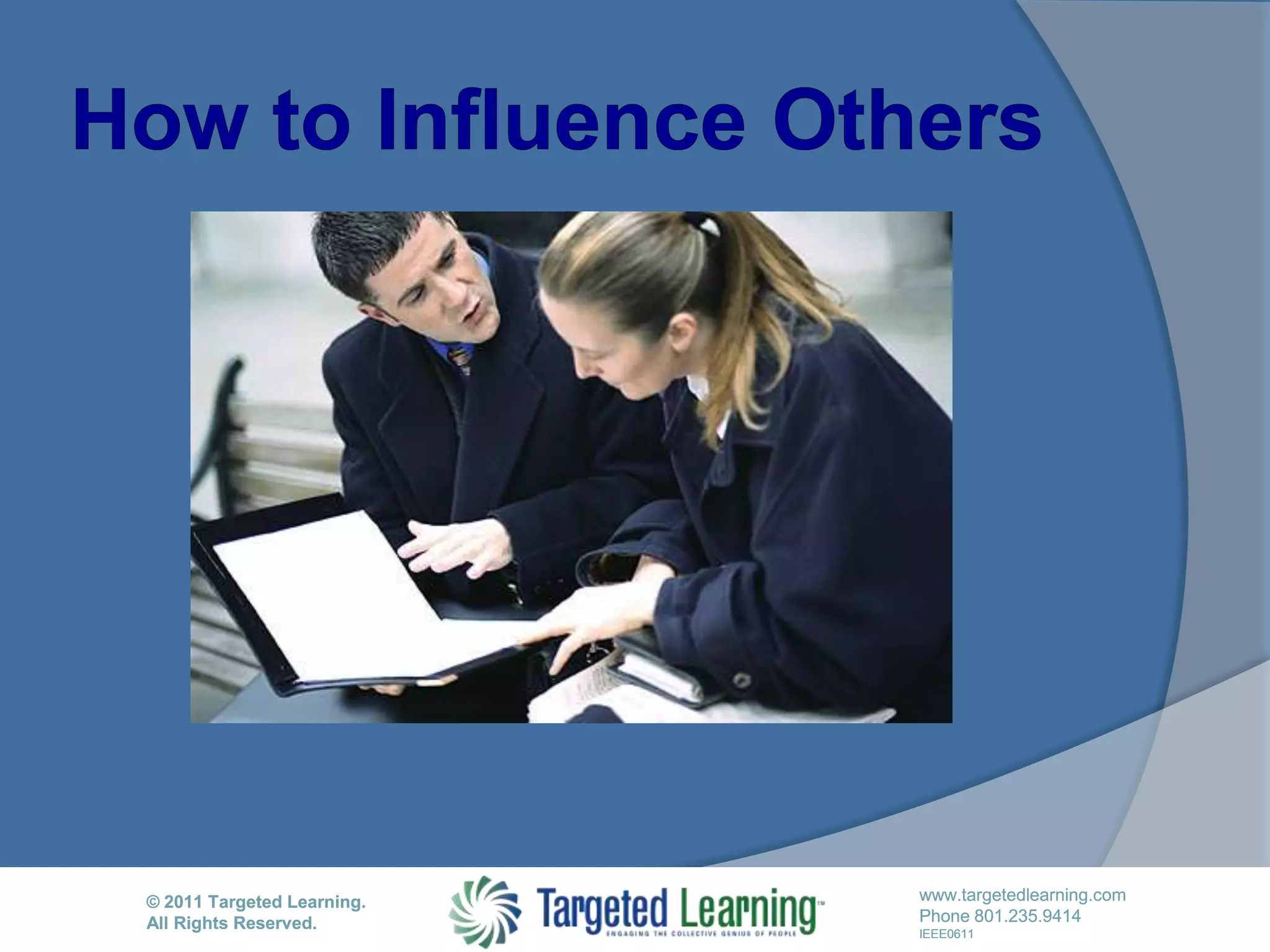
How to Influence Others
The 5 Tactics of InfluencingUse of PowerOvercoming ResistancePitching Your IdeasCreating CollaborationNetworking2
Tactic OnePower and the Art of Influencing Others
Leadership and PowerPower is the ability to mobilize the resources of others to get things done.Positive power is the ability to influence others to willingly support a specific goal or course of action, while preserving or building the group’s capacity to work together on future goals.4
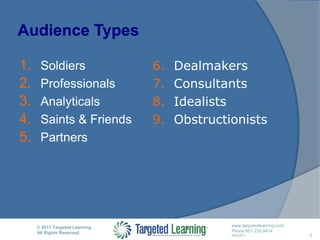
Audience TypesSoldiersProfessionalsAnalyticalsSaints & FriendsPartners5DealmakersConsultantsIdealistsObstructionists
Dealing With and Overcoming ResistanceTactic Two
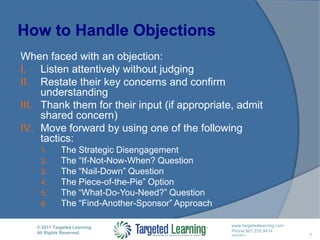
How to Handle Objections7When faced with an objection:Listen attentively without judgingRestate their key concerns and confirm understandingThank them for their input (if appropriate, admit shared concern)Move forward by using one of the following tactics:The Strategic DisengagementThe “If-Not-Now-When? QuestionThe “Nail-Down” QuestionThe Piece-of-the-Pie” OptionThe “What-Do-You-Need?” QuestionThe “Find-Another-Sponsor” Approach
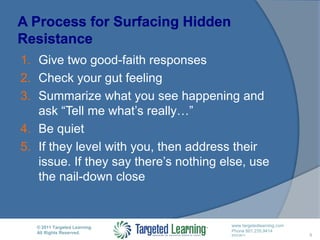
A Process for Surfacing Hidden ResistanceGive two good-faith responsesCheck your gut feelingSummarize what you see happening and ask “Tell me what’s really…”Be quietIf they level with you, then address their issue. If they say there’s nothing else, use the nail-down close8
Pitching Your IdeasTactic Three
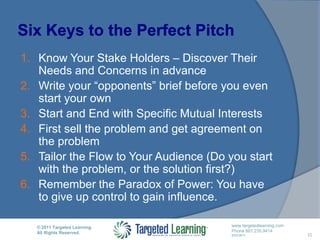
Six Keys to the Perfect PitchKnow Your Stake Holders – Discover Their Needs and Concerns in advanceWrite your “opponents” brief before you even start your ownStart and End with Specific Mutual InterestsFirst sell the problem and get agreement on the problemTailor the Flow to Your Audience (Do you start with the problem, or the solution first?)Remember the Paradox of Power: You have to give up control to gain influence. 10
Tactic FourMoving from Conflict to Collaboration
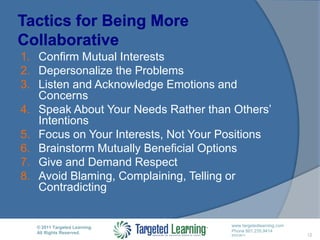
Tactics for Being More CollaborativeConfirm Mutual InterestsDepersonalize the ProblemsListen and Acknowledge Emotions and ConcernsSpeak About Your Needs Rather than Others’ IntentionsFocus on Your Interests, Not Your PositionsBrainstorm Mutually Beneficial OptionsGive and Demand RespectAvoid Blaming, Complaining, Telling or Contradicting12
Building a Support NetworkTactic Five
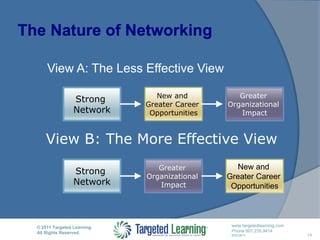
The Nature of NetworkingView A: The Less Effective View14Strong NetworkNew and Greater Career OpportunitiesGreater Organizational ImpactView B: The More Effective ViewStrong NetworkGreater Organizational ImpactNew and Greater Career Opportunities
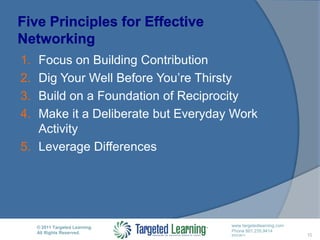
Five Principles for Effective NetworkingFocus on Building ContributionDig Your Well Before You’re ThirstyBuild on a Foundation of ReciprocityMake it a Deliberate but Everyday Work ActivityLeverage Differences15
Your 360 & Development Guide/FYI
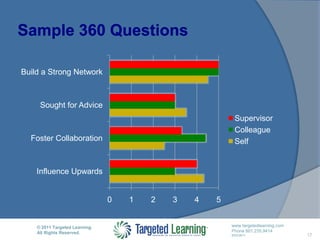
Sample 360 Questions17
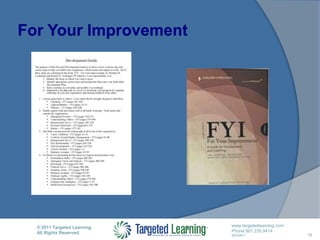
For Your Improvement18
For More Information Contact…Jan Gandyjan.gandy@bwpmlp.comYour ABL or HRBP19Thank You

Boardwalk Influence Webinar

  • 1.
  • 2.
    The 5 Tacticsof InfluencingUse of PowerOvercoming ResistancePitching Your IdeasCreating CollaborationNetworking2
  • 3.
    Tactic OnePower andthe Art of Influencing Others
  • 4.
    Leadership and PowerPoweris the ability to mobilize the resources of others to get things done.Positive power is the ability to influence others to willingly support a specific goal or course of action, while preserving or building the group’s capacity to work together on future goals.4
  • 5.
    Audience TypesSoldiersProfessionalsAnalyticalsSaints &FriendsPartners5DealmakersConsultantsIdealistsObstructionists
  • 6.
    Dealing With andOvercoming ResistanceTactic Two
  • 7.
    How to HandleObjections7When faced with an objection:Listen attentively without judgingRestate their key concerns and confirm understandingThank them for their input (if appropriate, admit shared concern)Move forward by using one of the following tactics:The Strategic DisengagementThe “If-Not-Now-When? QuestionThe “Nail-Down” QuestionThe Piece-of-the-Pie” OptionThe “What-Do-You-Need?” QuestionThe “Find-Another-Sponsor” Approach
  • 8.
    A Process forSurfacing Hidden ResistanceGive two good-faith responsesCheck your gut feelingSummarize what you see happening and ask “Tell me what’s really…”Be quietIf they level with you, then address their issue. If they say there’s nothing else, use the nail-down close8
  • 9.
  • 10.
    Six Keys tothe Perfect PitchKnow Your Stake Holders – Discover Their Needs and Concerns in advanceWrite your “opponents” brief before you even start your ownStart and End with Specific Mutual InterestsFirst sell the problem and get agreement on the problemTailor the Flow to Your Audience (Do you start with the problem, or the solution first?)Remember the Paradox of Power: You have to give up control to gain influence. 10
  • 11.
    Tactic FourMoving fromConflict to Collaboration
  • 12.
    Tactics for BeingMore CollaborativeConfirm Mutual InterestsDepersonalize the ProblemsListen and Acknowledge Emotions and ConcernsSpeak About Your Needs Rather than Others’ IntentionsFocus on Your Interests, Not Your PositionsBrainstorm Mutually Beneficial OptionsGive and Demand RespectAvoid Blaming, Complaining, Telling or Contradicting12
  • 13.
    Building a SupportNetworkTactic Five
  • 14.
    The Nature ofNetworkingView A: The Less Effective View14Strong NetworkNew and Greater Career OpportunitiesGreater Organizational ImpactView B: The More Effective ViewStrong NetworkGreater Organizational ImpactNew and Greater Career Opportunities
  • 15.
    Five Principles forEffective NetworkingFocus on Building ContributionDig Your Well Before You’re ThirstyBuild on a Foundation of ReciprocityMake it a Deliberate but Everyday Work ActivityLeverage Differences15
  • 16.
    Your 360 &Development Guide/FYI
  • 17.
  • 18.
  • 19.
    For More InformationContact…Jan Gandyjan.gandy@bwpmlp.comYour ABL or HRBP19Thank You