The Burr-Hamilton Duel
Aaron Burr
• Aaron Burr was born in New Jersey in 1756, the son of the second
  president of Princeton and the grandson of the well-known theologian
  Jonathan Edwards. Both of Burrs parents died when he was very young
  and he was put into the care of relatives until he entered Princeton at the
  age of 13. He graduated from Princeton three years later with a degree in
  law.
• In 1775 Burr began his military career when he volunteered for Benedict
  Arnold’s “March to Quebec.” Burr spent the majority of the revolution in
  New York as the commander of a regiment of troops which saw action at
  the battle of Monmouth. He retired from military service in 1779 to
  continue to pursue his study of law. Burr married Theodosia Bartow
  Prevost in 1782 and they had one daughter; Theodosia. As an attorney
  Burr was very successful (He shared a practice with Hamilton for a time)
  and in 1789 the political career which he had so long desired was
  launched when he was made Attorney General of New York. Riding the
  wave of his success, Burr garnered a seat in the Senate in 1791. He would
  serve for six years before losing his seat and being elected to New York’s
  state legislature.
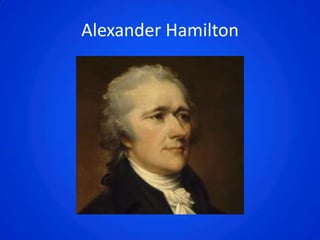
Alexander Hamilton
• Hamilton was born on the West Indian island of Nevis in 1757. He father
  was absent for his childhood, forced to remain in Scotland due to a debt
  he held. Because of this, his mother was somewhat dependent on friends
  and relatives for financial support. When Hamilton was about the age of
  ten his mother passed away. Hamilton who, although he had no formal
  schooling, was a gifted writer and when he published a description of a
  sermon in a local newspaper, the article garnered so much attention that a
  group of readers agreed to pay his way to American to receive a formal
  education.
• During his time at King’s College Hamilton was surrounded by talk of
  revolution. As war appeared to become ever more inevitable, Hamilton
  immersed himself in the study artillery tactics and mobility. In 1776 he
  joined the New York Artillery, of which he was soon made captain.
  Hamilton earned quite a reputation during the war for his heroism and
  gallantry and before its conclusion he would be a Major General.
Rivalry
• The rivalry between Hamilton and Burr had its roots a 1791 Senate
  race where Burr defeated Hamilton’s father-in-law, Phillip Schuyler.
  Schuyler, a staunch federalist, would have supported policies
  proposed by Washington’s administration (and especially those
  proposed by Hamilton). The next major bout came during the
  election of 1800. Thomas Jefferson was running against the
  incumbent John Adams with vice presidential candidate Aaron Burr.
  When the votes came in Jefferson and Burr were both tied at 73
  electoral votes. While Hamilton favored neither candidate, he
  preferred Jefferson to Burr and used in political influence into New
  York to secure Jefferson the position of President. The final straw
  that would trigger the final confrontation between the two men
  was election for the seat of Governor of New York, for which Burr
  was a candidate. Burr lost the general election in a landslide and he
  blamed (with questionable legitimacy) Hamilton for his loss and
  challenged him to a duel. Hamilton reluctantly accepted.
The Duel
• The duel took place on July 11th 1804 at
  Weehawken Heights, New Jersey. At
  approximately 7:00 a.m. both parties agreed up
  on the number of paces that would be taken, that
  number being ten. Both men were given a pistol
  with a single shot and could fire after the word
  “present” was stated by one of the men’s
  seconds. Hamilton kept his word and threw away
  his shot, firing into the air. Burr took aim and
  fired, his bullet penetrating Hamilton’s abdomen.
  Hamilton would die of his wounds the following
  day.
The Aftermath
• The duel, in addition to ending the life of one
  of the most significant players in American
  History, also seemed to be applicable to the
  life of the Federalist Party. After the duel the
  Federalist would continue to lose political
  influence until they fell out of relevance
  entirely. Aaron Burr was tried and convicted of
  murder, and though he was later
  pardoned, the duel was an indelible black
  mark on his political record.

Burr hamilton duel

  • 1.
  • 2.
  • 3.
    • Aaron Burrwas born in New Jersey in 1756, the son of the second president of Princeton and the grandson of the well-known theologian Jonathan Edwards. Both of Burrs parents died when he was very young and he was put into the care of relatives until he entered Princeton at the age of 13. He graduated from Princeton three years later with a degree in law. • In 1775 Burr began his military career when he volunteered for Benedict Arnold’s “March to Quebec.” Burr spent the majority of the revolution in New York as the commander of a regiment of troops which saw action at the battle of Monmouth. He retired from military service in 1779 to continue to pursue his study of law. Burr married Theodosia Bartow Prevost in 1782 and they had one daughter; Theodosia. As an attorney Burr was very successful (He shared a practice with Hamilton for a time) and in 1789 the political career which he had so long desired was launched when he was made Attorney General of New York. Riding the wave of his success, Burr garnered a seat in the Senate in 1791. He would serve for six years before losing his seat and being elected to New York’s state legislature.
  • 4.
  • 5.
    • Hamilton wasborn on the West Indian island of Nevis in 1757. He father was absent for his childhood, forced to remain in Scotland due to a debt he held. Because of this, his mother was somewhat dependent on friends and relatives for financial support. When Hamilton was about the age of ten his mother passed away. Hamilton who, although he had no formal schooling, was a gifted writer and when he published a description of a sermon in a local newspaper, the article garnered so much attention that a group of readers agreed to pay his way to American to receive a formal education. • During his time at King’s College Hamilton was surrounded by talk of revolution. As war appeared to become ever more inevitable, Hamilton immersed himself in the study artillery tactics and mobility. In 1776 he joined the New York Artillery, of which he was soon made captain. Hamilton earned quite a reputation during the war for his heroism and gallantry and before its conclusion he would be a Major General.
  • 6.
    Rivalry • The rivalrybetween Hamilton and Burr had its roots a 1791 Senate race where Burr defeated Hamilton’s father-in-law, Phillip Schuyler. Schuyler, a staunch federalist, would have supported policies proposed by Washington’s administration (and especially those proposed by Hamilton). The next major bout came during the election of 1800. Thomas Jefferson was running against the incumbent John Adams with vice presidential candidate Aaron Burr. When the votes came in Jefferson and Burr were both tied at 73 electoral votes. While Hamilton favored neither candidate, he preferred Jefferson to Burr and used in political influence into New York to secure Jefferson the position of President. The final straw that would trigger the final confrontation between the two men was election for the seat of Governor of New York, for which Burr was a candidate. Burr lost the general election in a landslide and he blamed (with questionable legitimacy) Hamilton for his loss and challenged him to a duel. Hamilton reluctantly accepted.
  • 7.
    The Duel • Theduel took place on July 11th 1804 at Weehawken Heights, New Jersey. At approximately 7:00 a.m. both parties agreed up on the number of paces that would be taken, that number being ten. Both men were given a pistol with a single shot and could fire after the word “present” was stated by one of the men’s seconds. Hamilton kept his word and threw away his shot, firing into the air. Burr took aim and fired, his bullet penetrating Hamilton’s abdomen. Hamilton would die of his wounds the following day.
  • 8.
    The Aftermath • Theduel, in addition to ending the life of one of the most significant players in American History, also seemed to be applicable to the life of the Federalist Party. After the duel the Federalist would continue to lose political influence until they fell out of relevance entirely. Aaron Burr was tried and convicted of murder, and though he was later pardoned, the duel was an indelible black mark on his political record.