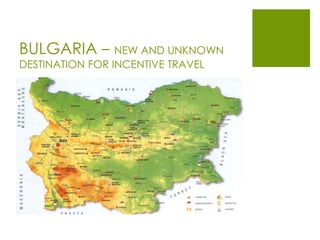
BULGARIA – NEW AND UNKNOWN
DESTINATION FOR INCENTIVE TRAVEL
History
 More than 1300 years of
history since year 681
 The Thracian civilization
inhabited the lands of current
Bulgaria
 Plovdiv is Europe’s Oldest
Inhabited City, even older
than Athens
 Bulgaria brought the world
the Cyrillic alphabet – which
today is used in Russia and
throughout the Balkans and
other Slavic nations.
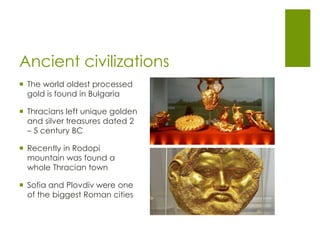
Ancient civilizations
 The world oldest processed
gold is found in Bulgaria
 Thracians left unique golden
and silver treasures dated 2
– 5 century BC
 Recently in Rodopi
mountain was found a
whole Thracian town
 Sofia and Plovdiv were one
of the biggest Roman cities
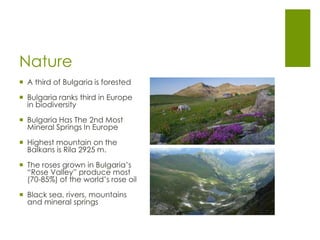
Nature
 A third of Bulgaria is forested
 Bulgaria ranks third in Europe
in biodiversity
 Bulgaria Has The 2nd Most
Mineral Springs In Europe
 Highest mountain on the
Balkans is Rila 2925 m.
 The roses grown in Bulgaria’s
“Rose Valley” produce most
(70-85%) of the world’s rose oil
 Black sea, rivers, mountains
and mineral springs
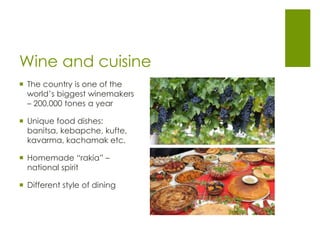
Wine and cuisine
 The country is one of the
world’s biggest winemakers
– 200,000 tones a year
 Unique food dishes:
banitsa, kebapche, kufte,
kavarma, kachamak etc.
 Homemade “rakia” –
national spirit
 Different style of dining
Unique venues
 Museums and galleries for
private events at relatively
cheep rates
 Dolphinarium in Varna
 Palaces in Sofia and Varna
 Antic Roman Theatre in
Plovdiv
 Luxury train of the last
Bulgarian king Boris III from
1938
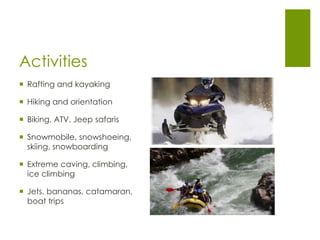
Activities
 Rafting and kayaking
 Hiking and orientation
 Biking, ATV, Jeep safaris
 Snowmobile, snowshoeing,
skiing, snowboarding
 Extreme caving, climbing,
ice climbing
 Jets, bananas, catamaran,
boat trips
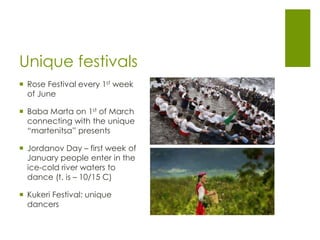
Unique festivals
 Rose Festival every 1st week
of June
 Baba Marta on 1st of March
connecting with the unique
“martenitsa” presents
 Jordanov Day – first week of
January people enter in the
ice-cold river waters to
dance (t. is – 10/15 C)
 Kukeri Festival: unique
dancers
Folklore
 Nestinari – people dancing
with bear foots on hot coals
 Horo – typical Bulgarian
dance
 Unique national music,
costumes and dances
Sofia – the capital
 Sofia “the small Jerusalem”
– you will find in a distance
of 2 sq. km temples of the
four dominant religions in
Europe and Middle East:
Orthodox, Catholic, Muslim,
Jewish
 The history of Sofia trace back
5000 years ago
 When Romulus established
Rome only two of the current
European capitals existed:
Sofia and Athens
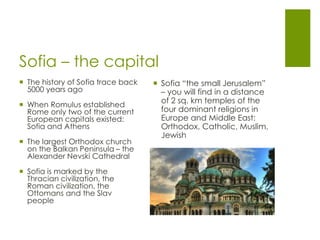
 The largest Orthodox church
on the Balkan Peninsula – the
Alexander Nevski Cathedral
 Sofia is marked by the
Thracian civilization, the
Roman civilization, the
Ottomans and the Slav
people
Unique village architecture
 Unique villages at a close
distance to the main cities
and thus excellent for
excursions
 Different architecture than
rest of the world
 Many villages declared
open museum towns and
architectural reserves

Visit Bulgaria - Lidia Tours

  • 1.
    BULGARIA – NEWAND UNKNOWN DESTINATION FOR INCENTIVE TRAVEL
  • 2.
    History  More than1300 years of history since year 681  The Thracian civilization inhabited the lands of current Bulgaria  Plovdiv is Europe’s Oldest Inhabited City, even older than Athens  Bulgaria brought the world the Cyrillic alphabet – which today is used in Russia and throughout the Balkans and other Slavic nations.
  • 3.
    Ancient civilizations  Theworld oldest processed gold is found in Bulgaria  Thracians left unique golden and silver treasures dated 2 – 5 century BC  Recently in Rodopi mountain was found a whole Thracian town  Sofia and Plovdiv were one of the biggest Roman cities
  • 4.
    Nature  A thirdof Bulgaria is forested  Bulgaria ranks third in Europe in biodiversity  Bulgaria Has The 2nd Most Mineral Springs In Europe  Highest mountain on the Balkans is Rila 2925 m.  The roses grown in Bulgaria’s “Rose Valley” produce most (70-85%) of the world’s rose oil  Black sea, rivers, mountains and mineral springs
  • 5.
    Wine and cuisine The country is one of the world’s biggest winemakers – 200,000 tones a year  Unique food dishes: banitsa, kebapche, kufte, kavarma, kachamak etc.  Homemade “rakia” – national spirit  Different style of dining
  • 6.
    Unique venues  Museumsand galleries for private events at relatively cheep rates  Dolphinarium in Varna  Palaces in Sofia and Varna  Antic Roman Theatre in Plovdiv  Luxury train of the last Bulgarian king Boris III from 1938
  • 7.
    Activities  Rafting andkayaking  Hiking and orientation  Biking, ATV, Jeep safaris  Snowmobile, snowshoeing, skiing, snowboarding  Extreme caving, climbing, ice climbing  Jets, bananas, catamaran, boat trips
  • 8.
    Unique festivals  RoseFestival every 1st week of June  Baba Marta on 1st of March connecting with the unique “martenitsa” presents  Jordanov Day – first week of January people enter in the ice-cold river waters to dance (t. is – 10/15 C)  Kukeri Festival: unique dancers
  • 9.
    Folklore  Nestinari –people dancing with bear foots on hot coals  Horo – typical Bulgarian dance  Unique national music, costumes and dances
  • 10.
    Sofia – thecapital  Sofia “the small Jerusalem” – you will find in a distance of 2 sq. km temples of the four dominant religions in Europe and Middle East: Orthodox, Catholic, Muslim, Jewish  The history of Sofia trace back 5000 years ago  When Romulus established Rome only two of the current European capitals existed: Sofia and Athens  The largest Orthodox church on the Balkan Peninsula – the Alexander Nevski Cathedral  Sofia is marked by the Thracian civilization, the Roman civilization, the Ottomans and the Slav people
  • 11.
    Unique village architecture Unique villages at a close distance to the main cities and thus excellent for excursions  Different architecture than rest of the world  Many villages declared open museum towns and architectural reserves