Building Quantum-Safe
Applications with Open
Source Tools
Paul Schweigert
IBM
psschwei.com
Agenda
1. Understand the Risk
2. Becoming Quantum Safe
3. Protecting Applications
4. Next Steps
1. Understand the Risk
2. Becoming Quantum Safe
3. Protecting Applications
4. Next Steps
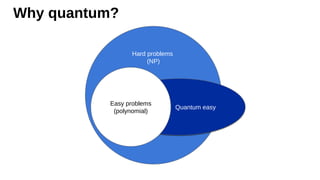
Hard problems
(NP)
Why quantum?
Quantum easy
Quantum easy
Easy problems
(polynomial)
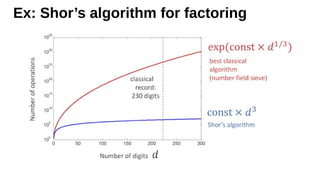
Ex: Shor’s algorithm for factoring
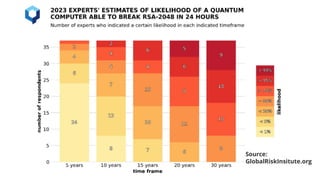
Source:
GlobalRiskInsitute.org
1. Understand the Risk
2. Becoming Quantum Safe
3. Protecting Applications
4. Next Steps
Open Source
https://pqca.org
To advance the adoption of post-
quantum cryptography, by producing
high-assurance software
implementations of standardized
algorithms, and supporting the
continued development and
standardization of new post-quantum
algorithms with software for evaluation
and prototyping.
PQ Code Package
Open Quantum Safe project
Library of many PQ
algorithms
• Main profile: standards-
track algorithms
• Experimental profile:
new algorithms, NIST
signatures on-ramp etc.
Initial Projects Overview
“Kyber” code
package
High-assurance production
source-code implementations of
Kyber
• C, x86_64, ARMv8, …
• Rust, Go, …
• audited/certified/formally
verified
Plus appropriate wrappers /
providers, e.g. Kyber OpenSSL 3
provider
OQS OpenSSL 3
Provider
Integration of PQ + hybrid
algorithms from liboqs into
OpenSSL 3 via OpenSSL
provider interface
• TLS key exchange,
authentication
• X.509
• S/MIME, CMS, CMP
OQS demos
Prototype integrations of
PQ into protocols and
applications to support
experiments,
standardization,
interoperability
Potential Phase 2
projects
• Dilithium
• XMSS, LMS
• SPHINCS+
• Falcon (-> Phase 3?)
Production track: safe for use in production environments, with external audits or certification
Experimental track: primarily for prototyping and experiments, mindful of potential production use
liboqs
Becoming Quantum Safe
Discover: Scan source and object code to locate cryptographic
assets, dependencies, and vulnerabilities. Build a cryptography
bill of materials (CBOM).
Observe: Create a dynamic cryptographic inventory to guide
remediation. Analyze cryptographic posture and compliance to
prioritize risks.
Transform: Learn and apply quantum-safe remediation patterns
in a development environment. Prepare to deploy quantum-safe
solutions to your stack.
1. Understand the Risk
2. Becoming Quantum Safe
3. Protecting Applications
4. Next Steps
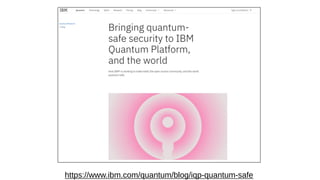
https://www.ibm.com/quantum/blog/iqp-quantum-safe
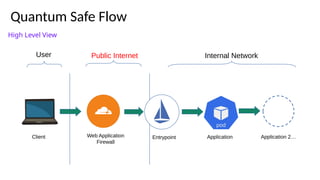
3. Be Prepared
Public Internet
User Internal Network
Client Web Application
Firewall
Entrypoint Application Application 2…
Quantum Safe Flow
High Level View
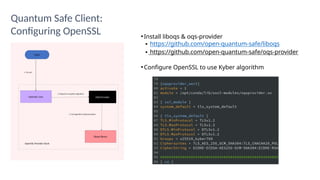
Quantum Safe Client:
Configuring OpenSSL
18
• Install liboqs & oqs-provider
• https://github.com/open-quantum-safe/liboqs
• https://github.com/open-quantum-safe/oqs-provider
• Configure OpenSSL to use Kyber algorithm
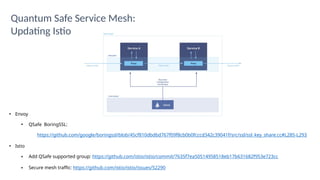
Quantum Safe Service Mesh:
Updating Istio
19
• Envoy
• QSafe BoringSSL:
https://github.com/google/boringssl/blob/45cf810dbdbd767f09f8cb0b0fcccd342c39041f/src/ssl/ssl_key_share.cc#L285-L293
• Istio
• Add QSafe supported group: https://github.com/istio/istio/commit/7635f7ea50514958518eb17b631682f953e723cc
• Secure mesh traffic: https://github.com/istio/istio/issues/52290
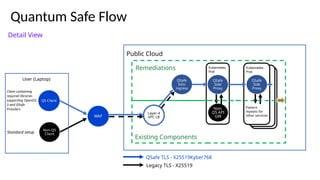
Kubernetes
Pod
Kubernetes
Pod
Quantum Safe Flow
WAF
QS Client
User (Laptop)
Existing Components
Non-
QS API
GW
QSafe TLS - X25519Kyber768
Legacy TLS - X25519
Layer-4
VPC LB
Client containing
required libraries
supporting OpenSSL
3 and QSafe
Providers
Public Cloud
Non-QS
Client
Remediations
Standard setup
QSafe
Istio
ingress
QSafe
Side
Proxy
QSafe
Side
Proxy
Pattern
repeats for
other services
Detail View
1. Understand the Risk
2. Becoming Quantum Safe
3. Protecting Applications
4. Next Steps
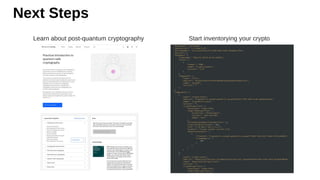
Next Steps
Learn about post-quantum cryptography Start inventorying your crypto
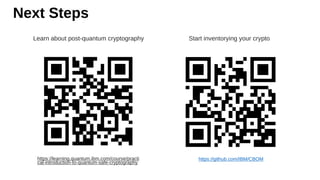
Next Steps
Learn about post-quantum cryptography Start inventorying your crypto
https://learning.quantum.ibm.com/course/practi
cal-introduction-to-quantum-safe-cryptography
https://github.com/IBM/CBOM
Building Quantum-Safe Applications with Open Source Tools

Building Quantum-Safe Applications with Open Source Tools

  • 1.
    Building Quantum-Safe Applications withOpen Source Tools Paul Schweigert IBM psschwei.com
  • 2.
    Agenda 1. Understand theRisk 2. Becoming Quantum Safe 3. Protecting Applications 4. Next Steps
  • 3.
    1. Understand theRisk 2. Becoming Quantum Safe 3. Protecting Applications 4. Next Steps
  • 4.
    Hard problems (NP) Why quantum? Quantumeasy Quantum easy Easy problems (polynomial)
  • 5.
  • 8.
  • 9.
    1. Understand theRisk 2. Becoming Quantum Safe 3. Protecting Applications 4. Next Steps
  • 12.
    Open Source https://pqca.org To advancethe adoption of post- quantum cryptography, by producing high-assurance software implementations of standardized algorithms, and supporting the continued development and standardization of new post-quantum algorithms with software for evaluation and prototyping.
  • 13.
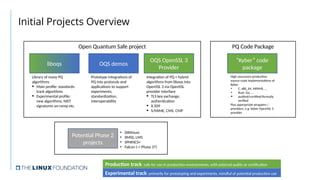
    PQ Code Package OpenQuantum Safe project Library of many PQ algorithms • Main profile: standards- track algorithms • Experimental profile: new algorithms, NIST signatures on-ramp etc. Initial Projects Overview “Kyber” code package High-assurance production source-code implementations of Kyber • C, x86_64, ARMv8, … • Rust, Go, … • audited/certified/formally verified Plus appropriate wrappers / providers, e.g. Kyber OpenSSL 3 provider OQS OpenSSL 3 Provider Integration of PQ + hybrid algorithms from liboqs into OpenSSL 3 via OpenSSL provider interface • TLS key exchange, authentication • X.509 • S/MIME, CMS, CMP OQS demos Prototype integrations of PQ into protocols and applications to support experiments, standardization, interoperability Potential Phase 2 projects • Dilithium • XMSS, LMS • SPHINCS+ • Falcon (-> Phase 3?) Production track: safe for use in production environments, with external audits or certification Experimental track: primarily for prototyping and experiments, mindful of potential production use liboqs
  • 14.
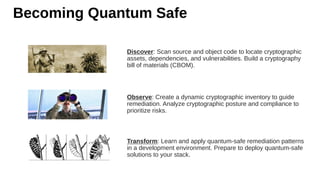
    Becoming Quantum Safe Discover:Scan source and object code to locate cryptographic assets, dependencies, and vulnerabilities. Build a cryptography bill of materials (CBOM). Observe: Create a dynamic cryptographic inventory to guide remediation. Analyze cryptographic posture and compliance to prioritize risks. Transform: Learn and apply quantum-safe remediation patterns in a development environment. Prepare to deploy quantum-safe solutions to your stack.
  • 15.
    1. Understand theRisk 2. Becoming Quantum Safe 3. Protecting Applications 4. Next Steps
  • 16.
  • 17.
    3. Be Prepared PublicInternet User Internal Network Client Web Application Firewall Entrypoint Application Application 2… Quantum Safe Flow High Level View
  • 18.
    Quantum Safe Client: ConfiguringOpenSSL 18 • Install liboqs & oqs-provider • https://github.com/open-quantum-safe/liboqs • https://github.com/open-quantum-safe/oqs-provider • Configure OpenSSL to use Kyber algorithm
  • 19.
    Quantum Safe ServiceMesh: Updating Istio 19 • Envoy • QSafe BoringSSL: https://github.com/google/boringssl/blob/45cf810dbdbd767f09f8cb0b0fcccd342c39041f/src/ssl/ssl_key_share.cc#L285-L293 • Istio • Add QSafe supported group: https://github.com/istio/istio/commit/7635f7ea50514958518eb17b631682f953e723cc • Secure mesh traffic: https://github.com/istio/istio/issues/52290
  • 20.
    Kubernetes Pod Kubernetes Pod Quantum Safe Flow WAF QSClient User (Laptop) Existing Components Non- QS API GW QSafe TLS - X25519Kyber768 Legacy TLS - X25519 Layer-4 VPC LB Client containing required libraries supporting OpenSSL 3 and QSafe Providers Public Cloud Non-QS Client Remediations Standard setup QSafe Istio ingress QSafe Side Proxy QSafe Side Proxy Pattern repeats for other services Detail View
  • 21.
    1. Understand theRisk 2. Becoming Quantum Safe 3. Protecting Applications 4. Next Steps
  • 22.
    Next Steps Learn aboutpost-quantum cryptography Start inventorying your crypto
  • 23.
    Next Steps Learn aboutpost-quantum cryptography Start inventorying your crypto https://learning.quantum.ibm.com/course/practi cal-introduction-to-quantum-safe-cryptography https://github.com/IBM/CBOM