Platform Engineering:
Herding the Electric Sheep
Brett Smith
<bc.smith@sas.com>
20250020
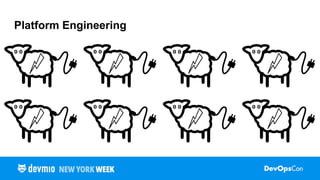
Platform Engineering
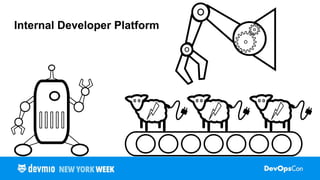
Internal Developer
Platform
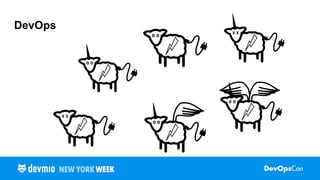
DevOps
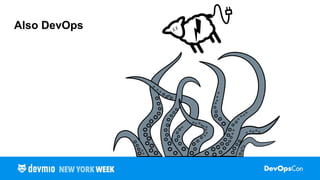
Also DevOps
Platform Engineering
Internal Developer Platform
IDP
How does it benefit the developers?
IDP
How does it benefit the security team?
IDP
How does it benefit the platform team?
IDP
How does it benefit the enterprise?
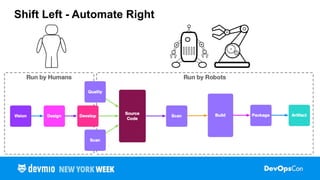
Shift Left - Automate Right
SBOM
Software Bill of Materials
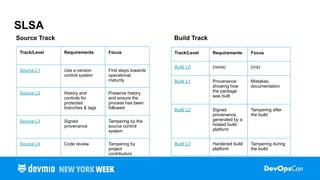
SLSA
Source Track Build Track
Track/Level Requirements Focus
Build L0 (none) (n/a)
Build L1 Provenance
showing how
the package
was built
Mistakes,
documentation
Build L2 Signed
provenance,
generated by a
hosted build
platform
Tampering after
the build
Build L3 Hardened build
platform
Tampering during
the build
Track/Level Requirements Focus
Source L1 Use a version
control system
First steps towards
operational
maturity
Source L2 History and
controls for
protected
branches & tags
Preserve history
and ensure the
process has been
followed
Source L3 Signed
provenance
Tampering by the
source control
system
Source L4 Code review Tampering by
project
contributors
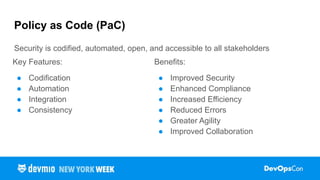
Policy as Code (PaC)
Security is codified, automated, open, and accessible to all stakeholders
Key Features:
● Codification
● Automation
● Integration
● Consistency
Benefits:
● Improved Security
● Enhanced Compliance
● Increased Efficiency
● Reduced Errors
● Greater Agility
● Improved Collaboration
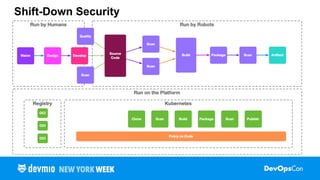
Shift-Down Security
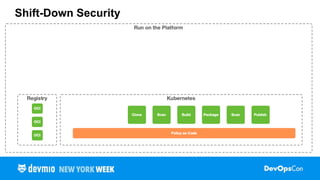
Shift-Down Security
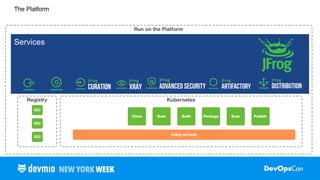
The Platform
Services
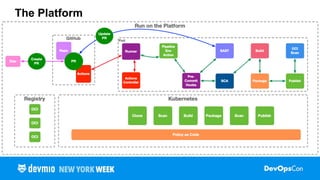
The Platform
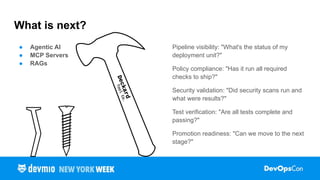
● Agentic AI
● MCP Servers
● RAGs
What is next?
Pipeline visibility: "What's the status of my
deployment unit?"
Policy compliance: "Has it run all required
checks to ship?"
Security validation: "Did security scans run and
what were results?"
Test verification: "Are all tests complete and
passing?"
Promotion readiness: "Can we move to the next
stage?"
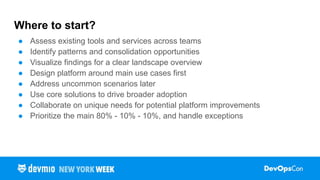
Where to start?
● Assess existing tools and services across teams
● Identify patterns and consolidation opportunities
● Visualize findings for a clear landscape overview
● Design platform around main use cases first
● Address uncommon scenarios later
● Use core solutions to drive broader adoption
● Collaborate on unique needs for potential platform improvements
● Prioritize the main 80% - 10% - 10%, and handle exceptions
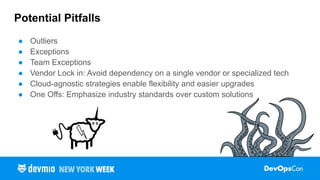
Potential Pitfalls
● Outliers
● Exceptions
● Team Exceptions
● Vendor Lock in: Avoid dependency on a single vendor or specialized tech
● Cloud-agnostic strategies enable flexibility and easier upgrades
● One Offs: Emphasize industry standards over custom solutions
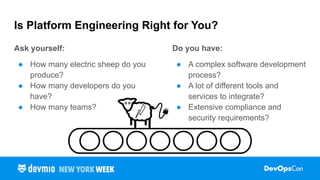
Ask yourself:
● How many electric sheep do you
produce?
● How many developers do you
have?
● How many teams?
Do you have:
● A complex software development
process?
● A lot of different tools and
services to integrate?
● Extensive compliance and
security requirements?
Is Platform Engineering Right for You?
AMA
I am Smitty and I am afraid of robots
Brett Smith
GitHub <https://github.com/xbcsmith>
Supply Chain Robots, Electric Sheep, and SLSA

Supply Chain Robots, Electric Sheep, and SLSA

  • 1.
    Platform Engineering: Herding theElectric Sheep Brett Smith <bc.smith@sas.com> 20250020
  • 2.
  • 3.
  • 4.
  • 5.
  • 6.
  • 7.
  • 8.
    IDP How does itbenefit the developers?
  • 9.
    IDP How does itbenefit the security team?
  • 10.
    IDP How does itbenefit the platform team?
  • 11.
    IDP How does itbenefit the enterprise?
  • 12.
    Shift Left -Automate Right
  • 13.
  • 14.
    SLSA Source Track BuildTrack Track/Level Requirements Focus Build L0 (none) (n/a) Build L1 Provenance showing how the package was built Mistakes, documentation Build L2 Signed provenance, generated by a hosted build platform Tampering after the build Build L3 Hardened build platform Tampering during the build Track/Level Requirements Focus Source L1 Use a version control system First steps towards operational maturity Source L2 History and controls for protected branches & tags Preserve history and ensure the process has been followed Source L3 Signed provenance Tampering by the source control system Source L4 Code review Tampering by project contributors
  • 15.
    Policy as Code(PaC) Security is codified, automated, open, and accessible to all stakeholders Key Features: ● Codification ● Automation ● Integration ● Consistency Benefits: ● Improved Security ● Enhanced Compliance ● Increased Efficiency ● Reduced Errors ● Greater Agility ● Improved Collaboration
  • 16.
  • 17.
  • 18.
  • 19.
  • 20.
    ● Agentic AI ●MCP Servers ● RAGs What is next? Pipeline visibility: "What's the status of my deployment unit?" Policy compliance: "Has it run all required checks to ship?" Security validation: "Did security scans run and what were results?" Test verification: "Are all tests complete and passing?" Promotion readiness: "Can we move to the next stage?"
  • 21.
    Where to start? ●Assess existing tools and services across teams ● Identify patterns and consolidation opportunities ● Visualize findings for a clear landscape overview ● Design platform around main use cases first ● Address uncommon scenarios later ● Use core solutions to drive broader adoption ● Collaborate on unique needs for potential platform improvements ● Prioritize the main 80% - 10% - 10%, and handle exceptions
  • 22.
    Potential Pitfalls ● Outliers ●Exceptions ● Team Exceptions ● Vendor Lock in: Avoid dependency on a single vendor or specialized tech ● Cloud-agnostic strategies enable flexibility and easier upgrades ● One Offs: Emphasize industry standards over custom solutions
  • 23.
    Ask yourself: ● Howmany electric sheep do you produce? ● How many developers do you have? ● How many teams? Do you have: ● A complex software development process? ● A lot of different tools and services to integrate? ● Extensive compliance and security requirements? Is Platform Engineering Right for You?
  • 24.
  • 25.
    I am Smittyand I am afraid of robots Brett Smith GitHub <https://github.com/xbcsmith>