Budgeting
Codie Marillier
Definition of a ‘budget’
• A budget is a statement of planned future results which are expected
to follow from the actions taken by management.
• A budget expresses management plans for the future of the business
in money terms.
Important terms to learn!
• Top down Budgeting – Prepared by the Upper management for the
lower management.
• Bottom up budgeting – prepared by lower management for upper
management.
• Limiting budget factor – Anything which restricts the budget levels of
activity. E.g. limited demand for a product.
• Zero based budgeting – Each item of expenditure must show justify
the benefit gained by it before it will be included in the budget. This is
different from taking last years budget and updating it for inflation.
Important terms!
• Functional operating budgets – Budgets prepared for each
department or function within the business.
• Master Budget – Is a budgeted profit and loss account and balance
sheet, prepared for the operating budgets.
Factors to consider when preparing budgets.
• 1. the long term objectives of the business
• 2. the principle budget (for limiting factors)
• 3. Budgets must be flexible
Uses and benefits of budgets
• Formalize management plans
• Insures all departments of the business are coordinated
• Future shortages of materials and cash can be indicated given time to
prepare plans for these shortages
• Commitment for management in all areas of the business is
improved.
• Ensures responsibility for the managers who prepared the budgets
Preparing functional budgets
• These are budgets set for each department or function within the
business, all these budgets will be governed by the principle budget
factor
Types of functional budgets
• Sales budget
• Production budget
• Purchasing budget
• Expenditure budget
• Cash budget
Why would a business use a budget?
• It is essential that a business prepares a cash budget for the financial
period.
• The cash budget must show all the forecasted cash inflows and cash
outflows for the period.
• The cash budget will show whether the business expects to have a
cash surplus or cash deficit for the financial period
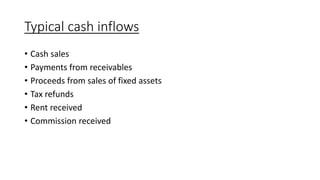
Typical cash inflows
• Cash sales
• Payments from receivables
• Proceeds from sales of fixed assets
• Tax refunds
• Rent received
• Commission received
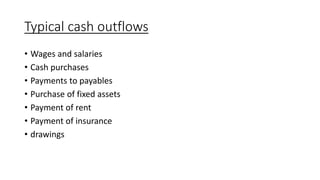
Typical cash outflows
• Wages and salaries
• Cash purchases
• Payments to payables
• Purchase of fixed assets
• Payment of rent
• Payment of insurance
• drawings
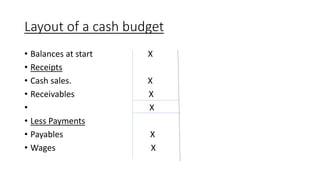
Layout of a cash budget
• Balances at start X
• Receipts
• Cash sales. X
• Receivables X
• X
• Less Payments
• Payables X
• Wages X
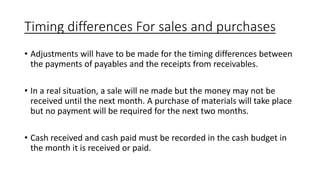
Timing differences For sales and purchases
• Adjustments will have to be made for the timing differences between
the payments of payables and the receipts from receivables.
• In a real situation, a sale will ne made but the money may not be
received until the next month. A purchase of materials will take place
but no payment will be required for the next two months.
• Cash received and cash paid must be recorded in the cash budget in
the month it is received or paid.

Budgets.pptx

  • 1.
  • 2.
    Definition of a‘budget’ • A budget is a statement of planned future results which are expected to follow from the actions taken by management. • A budget expresses management plans for the future of the business in money terms.
  • 3.
    Important terms tolearn! • Top down Budgeting – Prepared by the Upper management for the lower management. • Bottom up budgeting – prepared by lower management for upper management. • Limiting budget factor – Anything which restricts the budget levels of activity. E.g. limited demand for a product. • Zero based budgeting – Each item of expenditure must show justify the benefit gained by it before it will be included in the budget. This is different from taking last years budget and updating it for inflation.
  • 4.
    Important terms! • Functionaloperating budgets – Budgets prepared for each department or function within the business. • Master Budget – Is a budgeted profit and loss account and balance sheet, prepared for the operating budgets.
  • 5.
    Factors to considerwhen preparing budgets. • 1. the long term objectives of the business • 2. the principle budget (for limiting factors) • 3. Budgets must be flexible
  • 6.
    Uses and benefitsof budgets • Formalize management plans • Insures all departments of the business are coordinated • Future shortages of materials and cash can be indicated given time to prepare plans for these shortages • Commitment for management in all areas of the business is improved. • Ensures responsibility for the managers who prepared the budgets
  • 7.
    Preparing functional budgets •These are budgets set for each department or function within the business, all these budgets will be governed by the principle budget factor
  • 8.
    Types of functionalbudgets • Sales budget • Production budget • Purchasing budget • Expenditure budget • Cash budget
  • 9.
    Why would abusiness use a budget? • It is essential that a business prepares a cash budget for the financial period. • The cash budget must show all the forecasted cash inflows and cash outflows for the period. • The cash budget will show whether the business expects to have a cash surplus or cash deficit for the financial period
  • 10.
    Typical cash inflows •Cash sales • Payments from receivables • Proceeds from sales of fixed assets • Tax refunds • Rent received • Commission received
  • 11.
    Typical cash outflows •Wages and salaries • Cash purchases • Payments to payables • Purchase of fixed assets • Payment of rent • Payment of insurance • drawings
  • 12.
    Layout of acash budget • Balances at start X • Receipts • Cash sales. X • Receivables X • X • Less Payments • Payables X • Wages X
  • 13.
    Timing differences Forsales and purchases • Adjustments will have to be made for the timing differences between the payments of payables and the receipts from receivables. • In a real situation, a sale will ne made but the money may not be received until the next month. A purchase of materials will take place but no payment will be required for the next two months. • Cash received and cash paid must be recorded in the cash budget in the month it is received or paid.