A Presentation at the Committee for Economic Development’s Policy Conference
June 15, 2022
Phillip L. Swagel
Director
Budget and Economic Projections
For more information about the conference, see https://tinyurl.com/zpub298x.
1
For details about the outlook, see Congressional Budget Office, The Budget and Economic Outlook: 2022 to 2032 (May 2022), www.cbo.gov/publication/57950.
§ The Budget Outlook
§ Options to Reduce Deficits and Debt
§ The Economic Outlook
Today’s Topics
2
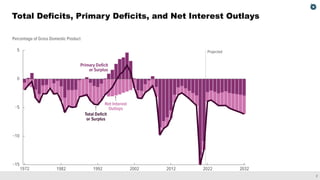
Total Deficits, Primary Deficits, and Net Interest Outlays
3
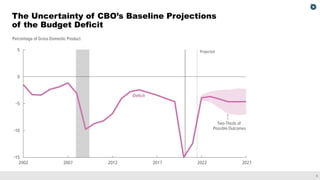
The Uncertainty of CBO’s Baseline Projections
of the Budget Deficit
4
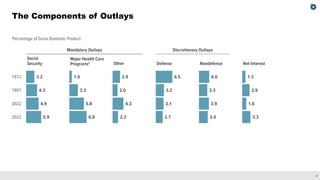
The Components of Outlays
5
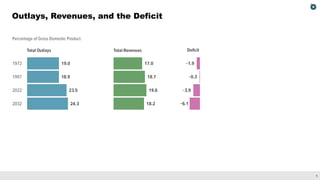
Outlays, Revenues, and the Deficit
6
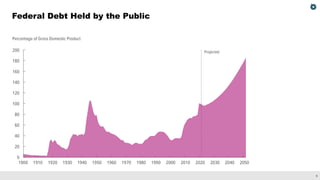
Federal Debt Held by the Public
7
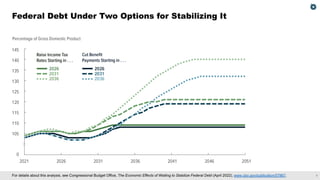
For details about this analysis, see Congressional Budget Office, The Economic Effects of Waiting to Stabilize Federal Debt (April 2022), www.cbo.gov/publication/57867.
Federal Debt Under Two Options for Stabilizing It
8
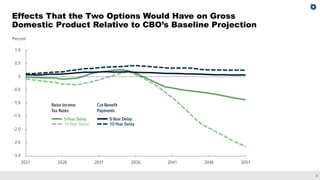
Effects That the Two Options Would Have on Gross
Domestic Product Relative to CBO’s Baseline Projection
9
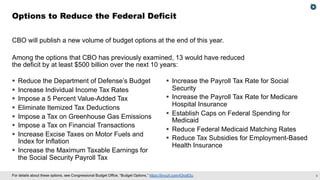
For details about these options, see Congressional Budget Office, “Budget Options,” https://tinyurl.com/43ryj63u.
CBO will publish a new volume of budget options at the end of this year.
Among the options that CBO has previously examined, 13 would have reduced
the deficit by at least $500 billion over the next 10 years:
Options to Reduce the Federal Deficit
§ Reduce the Department of Defense’s Budget
§ Increase Individual Income Tax Rates
§ Impose a 5 Percent Value-Added Tax
§ Eliminate Itemized Tax Deductions
§ Impose a Tax on Greenhouse Gas Emissions
§ Impose a Tax on Financial Transactions
§ Increase Excise Taxes on Motor Fuels and
Index for Inflation
§ Increase the Maximum Taxable Earnings for
the Social Security Payroll Tax
§ Increase the Payroll Tax Rate for Social
Security
§ Increase the Payroll Tax Rate for Medicare
Hospital Insurance
§ Establish Caps on Federal Spending for
Medicaid
§ Reduce Federal Medicaid Matching Rates
§ Reduce Tax Subsidies for Employment-Based
Health Insurance
10
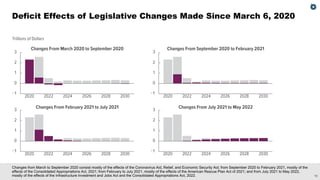
Changes from March to September 2020 consist mostly of the effects of the Coronavirus Aid, Relief, and Economic Security Act; from September 2020 to February 2021, mostly of the
effects of the Consolidated Appropriations Act, 2021; from February to July 2021, mostly of the effects of the American Rescue Plan Act of 2021; and from July 2021 to May 2022,
mostly of the effects of the Infrastructure Investment and Jobs Act and the Consolidated Appropriations Act, 2022.
Deficit Effects of Legislative Changes Made Since March 6, 2020
11
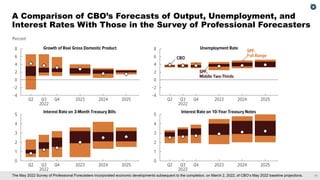
The May 2022 Survey of Professional Forecasters incorporated economic developments subsequent to the completion, on March 2, 2022, of CBO’s May 2022 baseline projections.
A Comparison of CBO’s Forecasts of Output, Unemployment, and
Interest Rates With Those in the Survey of Professional Forecasters
12
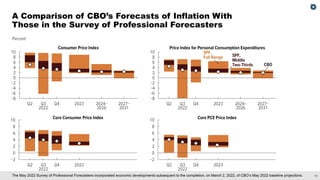
The May 2022 Survey of Professional Forecasters incorporated economic developments subsequent to the completion, on March 2, 2022, of CBO’s May 2022 baseline projections.
A Comparison of CBO’s Forecasts of Inflation With
Those in the Survey of Professional Forecasters
13
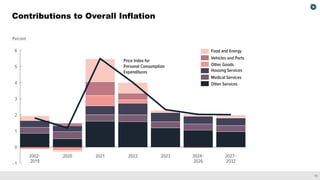
Contributions to Overall Inflation

Budget and Economic Projections

  • 1.
    A Presentation atthe Committee for Economic Development’s Policy Conference June 15, 2022 Phillip L. Swagel Director Budget and Economic Projections For more information about the conference, see https://tinyurl.com/zpub298x.
  • 2.
    1 For details aboutthe outlook, see Congressional Budget Office, The Budget and Economic Outlook: 2022 to 2032 (May 2022), www.cbo.gov/publication/57950. § The Budget Outlook § Options to Reduce Deficits and Debt § The Economic Outlook Today’s Topics
  • 3.
    2 Total Deficits, PrimaryDeficits, and Net Interest Outlays
  • 4.
    3 The Uncertainty ofCBO’s Baseline Projections of the Budget Deficit
  • 5.
  • 6.
  • 7.
    6 Federal Debt Heldby the Public
  • 8.
    7 For details aboutthis analysis, see Congressional Budget Office, The Economic Effects of Waiting to Stabilize Federal Debt (April 2022), www.cbo.gov/publication/57867. Federal Debt Under Two Options for Stabilizing It
  • 9.
    8 Effects That theTwo Options Would Have on Gross Domestic Product Relative to CBO’s Baseline Projection
  • 10.
    9 For details aboutthese options, see Congressional Budget Office, “Budget Options,” https://tinyurl.com/43ryj63u. CBO will publish a new volume of budget options at the end of this year. Among the options that CBO has previously examined, 13 would have reduced the deficit by at least $500 billion over the next 10 years: Options to Reduce the Federal Deficit § Reduce the Department of Defense’s Budget § Increase Individual Income Tax Rates § Impose a 5 Percent Value-Added Tax § Eliminate Itemized Tax Deductions § Impose a Tax on Greenhouse Gas Emissions § Impose a Tax on Financial Transactions § Increase Excise Taxes on Motor Fuels and Index for Inflation § Increase the Maximum Taxable Earnings for the Social Security Payroll Tax § Increase the Payroll Tax Rate for Social Security § Increase the Payroll Tax Rate for Medicare Hospital Insurance § Establish Caps on Federal Spending for Medicaid § Reduce Federal Medicaid Matching Rates § Reduce Tax Subsidies for Employment-Based Health Insurance
  • 11.
    10 Changes from Marchto September 2020 consist mostly of the effects of the Coronavirus Aid, Relief, and Economic Security Act; from September 2020 to February 2021, mostly of the effects of the Consolidated Appropriations Act, 2021; from February to July 2021, mostly of the effects of the American Rescue Plan Act of 2021; and from July 2021 to May 2022, mostly of the effects of the Infrastructure Investment and Jobs Act and the Consolidated Appropriations Act, 2022. Deficit Effects of Legislative Changes Made Since March 6, 2020
  • 12.
    11 The May 2022Survey of Professional Forecasters incorporated economic developments subsequent to the completion, on March 2, 2022, of CBO’s May 2022 baseline projections. A Comparison of CBO’s Forecasts of Output, Unemployment, and Interest Rates With Those in the Survey of Professional Forecasters
  • 13.
    12 The May 2022Survey of Professional Forecasters incorporated economic developments subsequent to the completion, on March 2, 2022, of CBO’s May 2022 baseline projections. A Comparison of CBO’s Forecasts of Inflation With Those in the Survey of Professional Forecasters
  • 14.