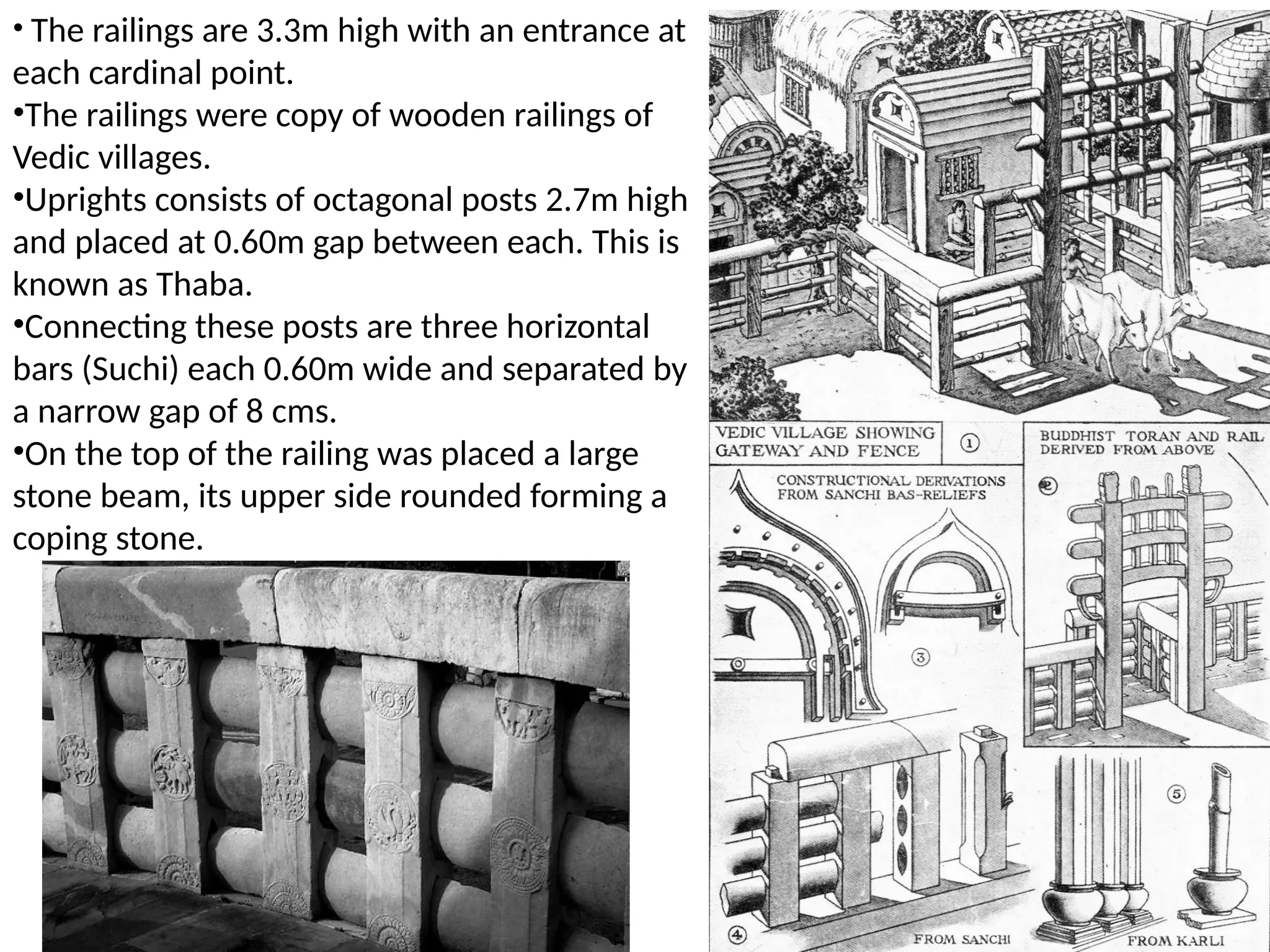
The document discusses Buddhist architecture in India, stressing the importance of viharas (monasteries) and stupas as significant structures for monastic life and religious practice. It outlines the evolution of these architectural forms from simple shelters to elaborate institutions that became centers of education and worship, particularly during the rule of Emperor Ashoka. Key features of these structures include their design based on community needs, integration of cultural influences, and symbolic significance in Buddhism.