SMART Traffic Management
System:A Guide to Success
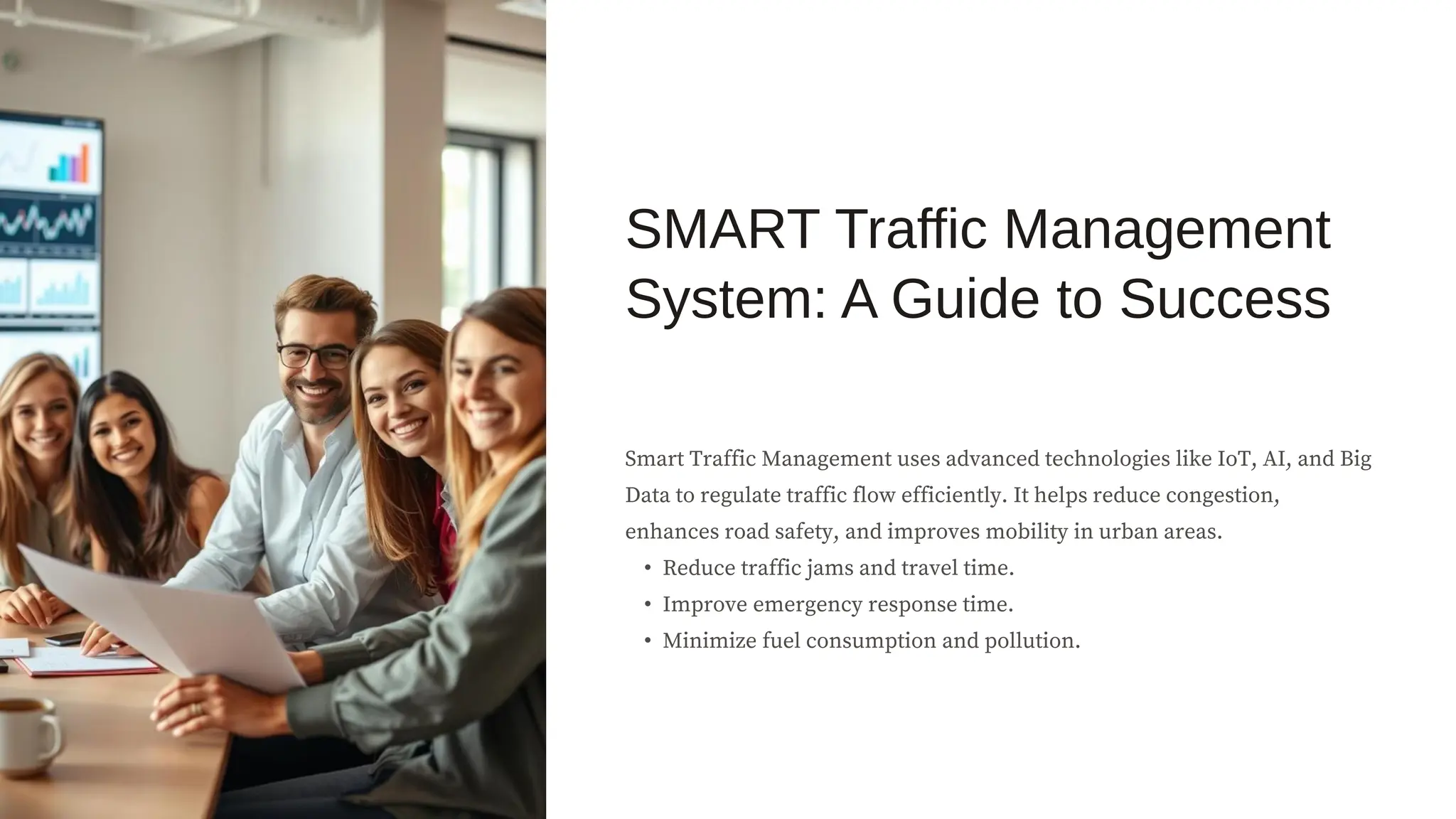
Smart Traffic Management uses advanced technologies like IoT, AI, and Big
Data to regulate traffic flow efficiently. It helps reduce congestion,
enhances road safety, and improves mobility in urban areas.
• Reduce traffic jams and travel time.
• Improve emergency response time.
• Minimize fuel consumption and pollution.
2.
Defining SMART: AFoundation for Success
Specific
Clearly defined objectives
with no ambiguity.
Measurable
Quantifiable goals with clear
metrics for progress.
Achievable
Objectives set within
realistic boundaries.
Relevant
Goals aligned with strategic
priorities and overall vision.
3.
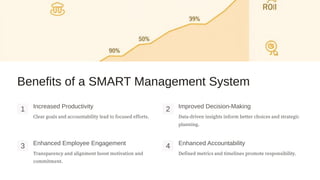
Benefits of aSMART Management System
1 Increased Productivity
Clear goals and accountability lead to focused efforts.
2 Improved Decision-Making
Data-driven insights inform better choices and strategic
planning.
3 Enhanced Employee Engagement
Transparency and alignment boost motivation and
commitment.
4 Enhanced Accountability
Defined metrics and timelines promote responsibility.
4.
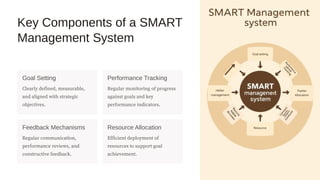
Key Components ofa SMART
Management System
Goal Setting
Clearly defined, measurable,
and aligned with strategic
objectives.
Performance Tracking
Regular monitoring of progress
against goals and key
performance indicators.
Feedback Mechanisms
Regular communication,
performance reviews, and
constructive feedback.
Resource Allocation
Efficient deployment of
resources to support goal
achievement.
5.
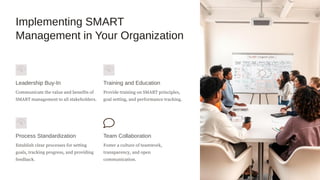
Implementing SMART
Management inYour Organization
Leadership Buy-In
Communicate the value and benefits of
SMART management to all stakeholders.
Training and Education
Provide training on SMART principles,
goal setting, and performance tracking.
Process Standardization
Establish clear processes for setting
goals, tracking progress, and providing
feedback.
Team Collaboration
Foster a culture of teamwork,
transparency, and open
communication.
6.
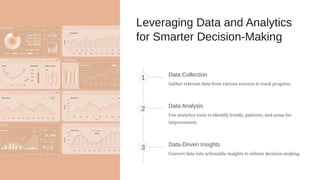
Leveraging Data andAnalytics
for Smarter Decision-Making
1 Data Collection
Gather relevant data from various sources to track progress.
2 Data Analysis
Use analytics tools to identify trends, patterns, and areas for
improvement.
3 Data-Driven Insights
Convert data into actionable insights to inform decision-making.
7.
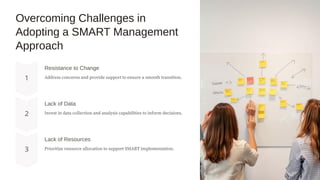
Overcoming Challenges in
Adoptinga SMART Management
Approach
Resistance to Change
Address concerns and provide support to ensure a smooth transition.
Lack of Data
Invest in data collection and analysis capabilities to inform decisions.
Lack of Resources
Prioritize resource allocation to support SMART implementation.
8.
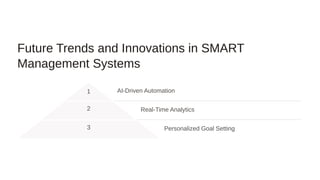
Future Trends andInnovations in SMART
Management Systems
1 AI-Driven Automation
2 Real-Time Analytics
3 Personalized Goal Setting