Broad-spectrum antibiotics
&
Nitrofurantoin
Roll no. 136-150
• Gram Negative Organisms
●Cocci:--[Neisseria meningitidis]
[Neisseria Gonococci ]
●Bacilli:-- E.Coli
Salmonella
Shigella
Klebsiella
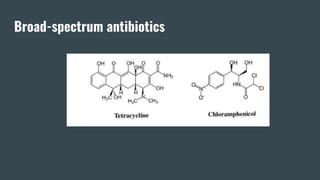
Broad-spectrum antibiotics
Tetracyclines
Pharmacokinetics
● Oral absorption: incomplete; avoid use with milk, iron preparation and anti-acid
drugs.
● Distribution: widely; easy to accumulate in bone and teeth.Excretion: mainly from
bile and urine; exists enterohepatic circulation.
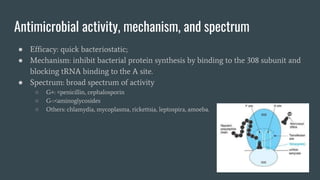
Antimicrobial activity, mechanism, and spectrum
● Efficacy: quick bacteriostatic;
● Mechanism: inhibit bacterial protein synthesis by binding to the 308 subunit and
blocking tRNA binding to the A site.
● Spectrum: broad spectrum of activity
○ G+: <penicillin, cephalosporin
○ G-:<aminoglycosides
○ Others: chlamydia, mycoplasma, rickettsia, leptospira, amoeba.
Therapeutic uses
● Richettsiae infections: ship fever;
● Mycoplasmal pneumonia (first choice);
● Chlamydia infections: cervicitis, urethritis, trachoma.
● G+ and G infections (second line choice) 5. Penicillin-resistant
staphylococcus aureus.
Chloramphenicols
Pharmacokinetics
● Oral absorption: rapidly and completely absorbed;
● Distribution: all tissues and body fluids including CNS;
● Excretion: metabolized and then eliminated from kidney.
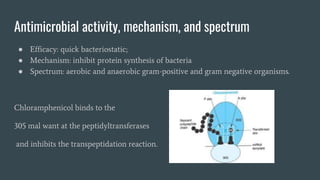
Antimicrobial activity, mechanism, and spectrum
● Efficacy: quick bacteriostatic;
● Mechanism: inhibit protein synthesis of bacteria
● Spectrum: aerobic and anaerobic gram-positive and gram negative organisms.
Chloramphenicol binds to the
305 mal want at the peptidyltransferases
and inhibits the transpeptidation reaction.
Clinical uses
● In general, it is rarely used due to toxicity.
○ Typhoid fever (first choice: third-generation cephalosporins and quinolones);
○ Bacterial meningitis (first choice: third-generation cephalosporins)
○ Anaerobic infections (alternative drugs);
○ Rickettsial diseases (first choice: tetracyclines)
○ Brucellosis (first choice: tetracyclines)
Adverse reaction
● Bone marrow suppression
○ (1) A dose-dependent, reversible depression of erythrocyte, platelet and leucocyte formation that
occurs early in treatment;
○ (2) An idiosyncratic, non-dose related and usually fatal aplastic anemia.
● Grey baby syndrome: circulatory collapse (neonates forbidden, daily
dosage<25mg/kg);
● Secondary infection;
● Hypersensitivity reactions.
Nitrofurantoin
Bacterial Spectrum:
● E. coli
● Some Gm+ cocci are susceptible.
Mechanism of action
Sensitive bacteria reduce the drug to an active agent that inhibits various enzymes →
damage bacterial DNA.
Antibacterial concentration is not attained in blood or tissues
Not to be used with Probenecid, azotemic patients: interferes with tubular secretion of
drug.
Pharmacokinetics
● Absorption is complete after oral use
● Metabolized & excreted rapidly that has no systemic antibacterial action
● Excreted in the urine
● It turns urine brown.
● Must be given with food or milk
● Keep urinary pH below 5.5 (acidic) to enhance drug activity
Therapeutic uses
● As urinary antiseptics (little or no systemic antibacterial effect)
○ Dose: 100 mg (orally four times daily)
○ Not associated with prostatitis
○ Supportive long term therapy
○ Long term porphylaxis
○ Following catheterization, instrumentation, in women with recurrent cystitis
Contraindications
● Patients with G 6P deficiency
● Neonates
● Pregnant women
Adverse effects of nitrofurantoin
● Gastrointestinal Intolerance: Nausea, epigastric pain,diarrhoea
● Hypersensitivity: fever,chills
● Peripheral neuritis and other neurological effects with long termuse
● Hematologic disorders: leukopenia, granulocytopenia, Hemolytic anemia in
G6PD deficientpatients
● Liver damage, pulmonary reaction with fibrosis on chronicuse
THANK YOU

Broad spectrum antibiotics

  • 1.
  • 2.
    • Gram NegativeOrganisms ●Cocci:--[Neisseria meningitidis] [Neisseria Gonococci ] ●Bacilli:-- E.Coli Salmonella Shigella Klebsiella
  • 3.
  • 5.
    Tetracyclines Pharmacokinetics ● Oral absorption:incomplete; avoid use with milk, iron preparation and anti-acid drugs. ● Distribution: widely; easy to accumulate in bone and teeth.Excretion: mainly from bile and urine; exists enterohepatic circulation.
  • 6.
    Antimicrobial activity, mechanism,and spectrum ● Efficacy: quick bacteriostatic; ● Mechanism: inhibit bacterial protein synthesis by binding to the 308 subunit and blocking tRNA binding to the A site. ● Spectrum: broad spectrum of activity ○ G+: <penicillin, cephalosporin ○ G-:<aminoglycosides ○ Others: chlamydia, mycoplasma, rickettsia, leptospira, amoeba.
  • 7.
    Therapeutic uses ● Richettsiaeinfections: ship fever; ● Mycoplasmal pneumonia (first choice); ● Chlamydia infections: cervicitis, urethritis, trachoma. ● G+ and G infections (second line choice) 5. Penicillin-resistant staphylococcus aureus.
  • 8.
    Chloramphenicols Pharmacokinetics ● Oral absorption:rapidly and completely absorbed; ● Distribution: all tissues and body fluids including CNS; ● Excretion: metabolized and then eliminated from kidney.
  • 9.
    Antimicrobial activity, mechanism,and spectrum ● Efficacy: quick bacteriostatic; ● Mechanism: inhibit protein synthesis of bacteria ● Spectrum: aerobic and anaerobic gram-positive and gram negative organisms. Chloramphenicol binds to the 305 mal want at the peptidyltransferases and inhibits the transpeptidation reaction.
  • 10.
    Clinical uses ● Ingeneral, it is rarely used due to toxicity. ○ Typhoid fever (first choice: third-generation cephalosporins and quinolones); ○ Bacterial meningitis (first choice: third-generation cephalosporins) ○ Anaerobic infections (alternative drugs); ○ Rickettsial diseases (first choice: tetracyclines) ○ Brucellosis (first choice: tetracyclines)
  • 11.
    Adverse reaction ● Bonemarrow suppression ○ (1) A dose-dependent, reversible depression of erythrocyte, platelet and leucocyte formation that occurs early in treatment; ○ (2) An idiosyncratic, non-dose related and usually fatal aplastic anemia. ● Grey baby syndrome: circulatory collapse (neonates forbidden, daily dosage<25mg/kg); ● Secondary infection; ● Hypersensitivity reactions.
  • 12.
    Nitrofurantoin Bacterial Spectrum: ● E.coli ● Some Gm+ cocci are susceptible.
  • 13.
    Mechanism of action Sensitivebacteria reduce the drug to an active agent that inhibits various enzymes → damage bacterial DNA. Antibacterial concentration is not attained in blood or tissues Not to be used with Probenecid, azotemic patients: interferes with tubular secretion of drug.
  • 14.
    Pharmacokinetics ● Absorption iscomplete after oral use ● Metabolized & excreted rapidly that has no systemic antibacterial action ● Excreted in the urine ● It turns urine brown. ● Must be given with food or milk ● Keep urinary pH below 5.5 (acidic) to enhance drug activity
  • 15.
    Therapeutic uses ● Asurinary antiseptics (little or no systemic antibacterial effect) ○ Dose: 100 mg (orally four times daily) ○ Not associated with prostatitis ○ Supportive long term therapy ○ Long term porphylaxis ○ Following catheterization, instrumentation, in women with recurrent cystitis
  • 16.
    Contraindications ● Patients withG 6P deficiency ● Neonates ● Pregnant women
  • 17.
    Adverse effects ofnitrofurantoin ● Gastrointestinal Intolerance: Nausea, epigastric pain,diarrhoea ● Hypersensitivity: fever,chills ● Peripheral neuritis and other neurological effects with long termuse ● Hematologic disorders: leukopenia, granulocytopenia, Hemolytic anemia in G6PD deficientpatients ● Liver damage, pulmonary reaction with fibrosis on chronicuse
  • 18.