BRITISH TRADITIONS
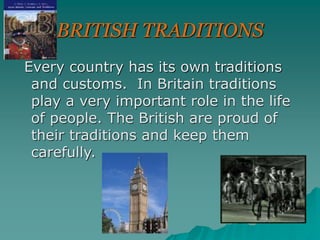
Every country has its own traditions
and customs. In Britain traditions
play a very important role in the life
of people. The British are proud of
their traditions and keep them
carefully.
Britain is full of culture
and traditions which
have been around for
hundreds of years.
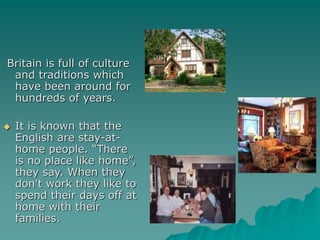
 It is known that the
English are stay-at-
home people. “There
is no place like home”,
they say. When they
don't work they like to
spend their days off at
home with their
families.
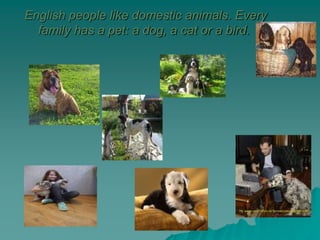
English people like domestic animals. Every
family has a pet: a dog, a cat or a bird.
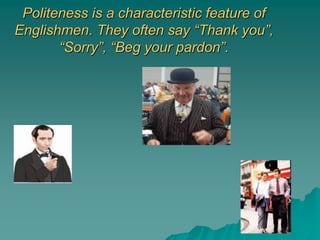
Politeness is a characteristic feature of
Englishmen. They often say “Thank you”,
“Sorry”, “Beg your pardon”.
Englishmen's home
People all over the world
know the saying: “The
Englishmen’s home is
his castle”. They like
to live in small houses
with a small garden. A
typical feature of an
English house is a
fireplace, that's why
many of them prefer
the open fire to
central heating.
English meals
 They say that English
people keep to their
traditions even in meals.
 They eat eggs and bacon
with toasts for breakfast,
pudding or apple pie for
dessert.
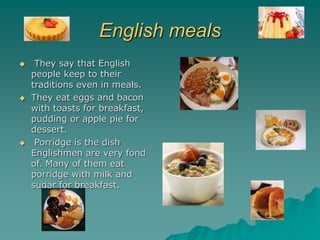
 Porridge is the dish
Englishmen are very fond
of. Many of them eat
porridge with milk and
sugar for breakfast.
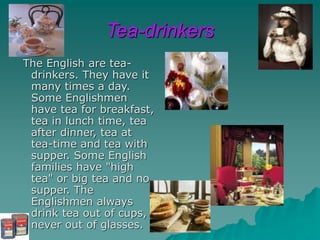
Tea-drinkers
The English are tea-
drinkers. They have it
many times a day.
Some Englishmen
have tea for breakfast,
tea in lunch time, tea
after dinner, tea at
tea-time and tea with
supper. Some English
families have "high
tea" or big tea and no
supper. The
Englishmen always
drink tea out of cups,
never out of glasses.
They have also English and British traditions of sport,
music and many royal occasions.
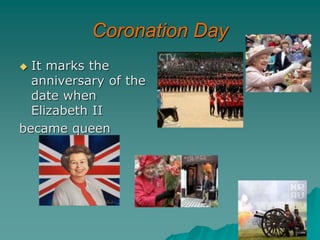
Coronation Day
 It marks the
anniversary of the
date when
Elizabeth II
became queen
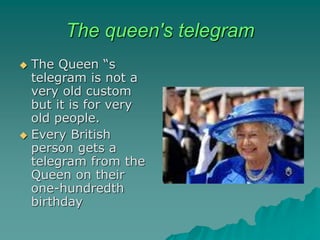
The queen's telegram
 The Queen “s
telegram is not a
very old custom
but it is for very
old people.
 Every British
person gets a
telegram from the
Queen on their
one-hundredth
birthday
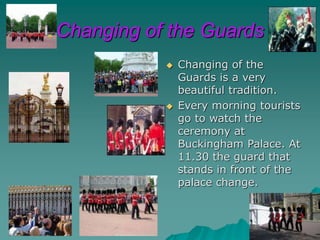
Changing of the Guards
 Changing of the
Guards is a very
beautiful tradition.
 Every morning tourists
go to watch the
ceremony at
Buckingham Palace. At
11.30 the guard that
stands in front of the
palace change.
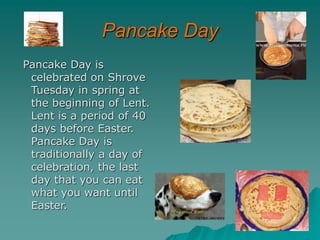
Pancake Day
Pancake Day is
celebrated on Shrove
Tuesday in spring at
the beginning of Lent.
Lent is a period of 40
days before Easter.
Pancake Day is
traditionally a day of
celebration, the last
day that you can eat
what you want until
Easter.
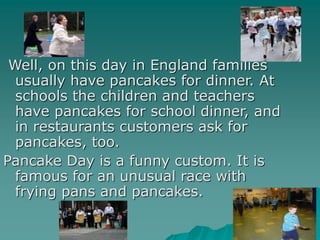
Well, on this day in England families
usually have pancakes for dinner. At
schools the children and teachers
have pancakes for school dinner, and
in restaurants customers ask for
pancakes, too.
Pancake Day is a funny custom. It is
famous for an unusual race with
frying pans and pancakes.
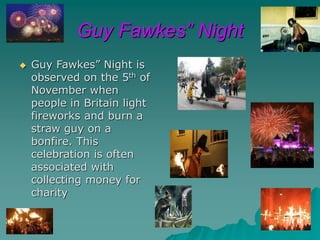
Guy Fawkes” Night
 Guy Fawkes” Night is
observed on the 5th of
November when
people in Britain light
fireworks and burn a
straw guy on a
bonfire. This
celebration is often
associated with
collecting money for
charity

British traditions and customs

  • 1.
    BRITISH TRADITIONS Every countryhas its own traditions and customs. In Britain traditions play a very important role in the life of people. The British are proud of their traditions and keep them carefully.
  • 2.
    Britain is fullof culture and traditions which have been around for hundreds of years.  It is known that the English are stay-at- home people. “There is no place like home”, they say. When they don't work they like to spend their days off at home with their families.
  • 3.
    English people likedomestic animals. Every family has a pet: a dog, a cat or a bird.
  • 4.
    Politeness is acharacteristic feature of Englishmen. They often say “Thank you”, “Sorry”, “Beg your pardon”.
  • 5.
    Englishmen's home People allover the world know the saying: “The Englishmen’s home is his castle”. They like to live in small houses with a small garden. A typical feature of an English house is a fireplace, that's why many of them prefer the open fire to central heating.
  • 6.
    English meals  Theysay that English people keep to their traditions even in meals.  They eat eggs and bacon with toasts for breakfast, pudding or apple pie for dessert.  Porridge is the dish Englishmen are very fond of. Many of them eat porridge with milk and sugar for breakfast.
  • 7.
    Tea-drinkers The English aretea- drinkers. They have it many times a day. Some Englishmen have tea for breakfast, tea in lunch time, tea after dinner, tea at tea-time and tea with supper. Some English families have "high tea" or big tea and no supper. The Englishmen always drink tea out of cups, never out of glasses.
  • 8.
    They have alsoEnglish and British traditions of sport, music and many royal occasions.
  • 9.
    Coronation Day  Itmarks the anniversary of the date when Elizabeth II became queen
  • 10.
    The queen's telegram The Queen “s telegram is not a very old custom but it is for very old people.  Every British person gets a telegram from the Queen on their one-hundredth birthday
  • 11.
    Changing of theGuards  Changing of the Guards is a very beautiful tradition.  Every morning tourists go to watch the ceremony at Buckingham Palace. At 11.30 the guard that stands in front of the palace change.
  • 12.
    Pancake Day Pancake Dayis celebrated on Shrove Tuesday in spring at the beginning of Lent. Lent is a period of 40 days before Easter. Pancake Day is traditionally a day of celebration, the last day that you can eat what you want until Easter.
  • 13.
    Well, on thisday in England families usually have pancakes for dinner. At schools the children and teachers have pancakes for school dinner, and in restaurants customers ask for pancakes, too. Pancake Day is a funny custom. It is famous for an unusual race with frying pans and pancakes.
  • 14.
    Guy Fawkes” Night Guy Fawkes” Night is observed on the 5th of November when people in Britain light fireworks and burn a straw guy on a bonfire. This celebration is often associated with collecting money for charity