Brief Profile
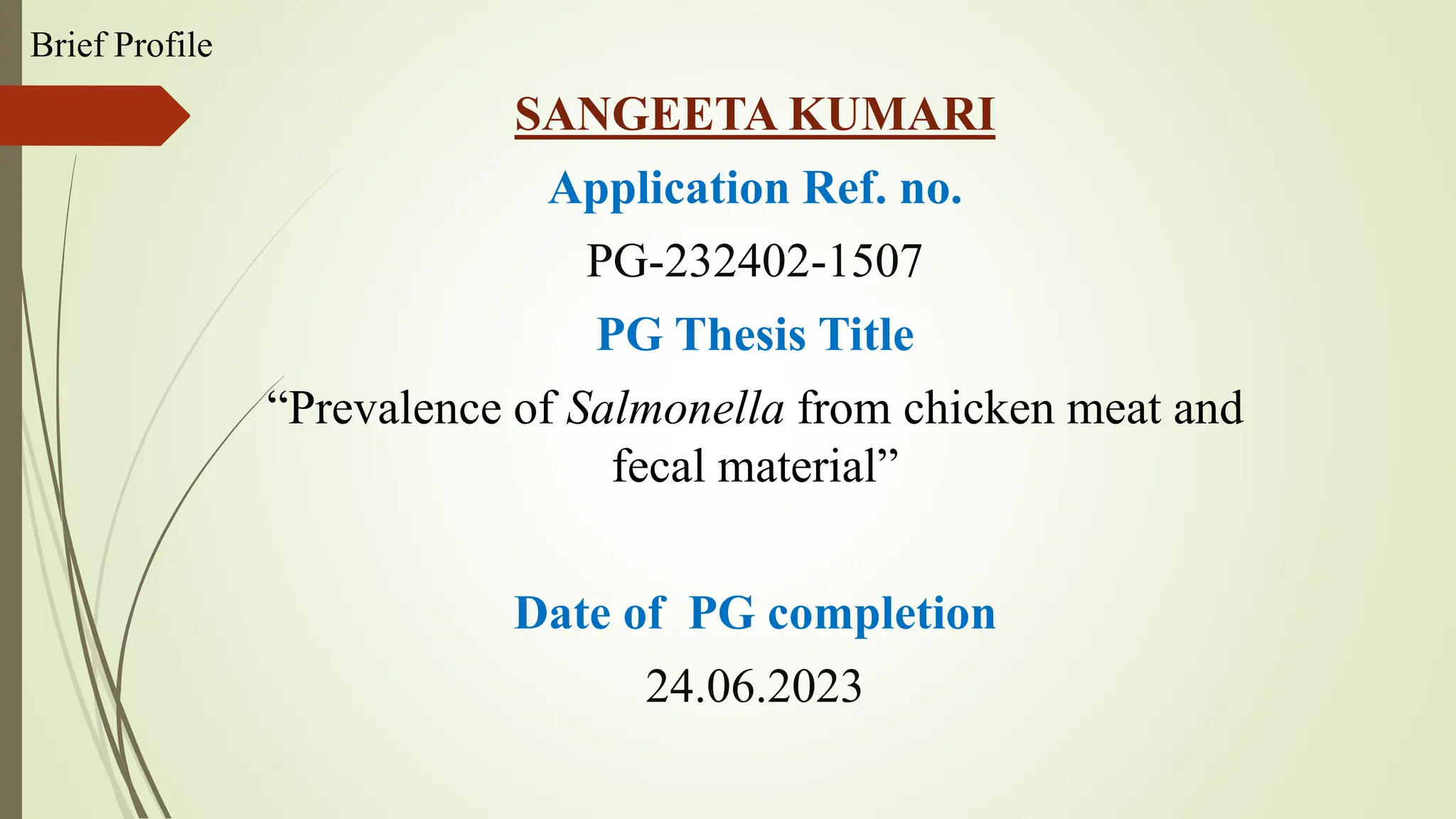
SANGEETA KUMARI
Application Ref. no.
PG-232402-1507
PG Thesis Title
ā€œPrevalence of Salmonella from chicken meat and
fecal materialā€
Date of PG completion
24.06.2023
Career Details
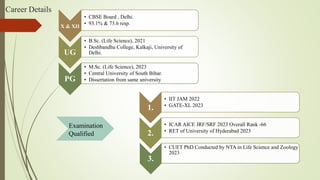
X & XII
• CBSE Board , Delhi.
• 93.1% & 73.6 resp.
UG
• B.Sc. (Life Science), 2021
• Deshbandhu College, Kalkaji, University of
Delhi.
PG
• M.Sc. (Life Science), 2023
• Central University of South Bihar.
• Dissertation from same university
1.
• IIT JAM 2022
• GATE-XL 2023
2.
• ICAR AICE JRF/SRF 2023 Overall Rank -66
• RET of University of Hyderabad 2023
3.
• CUET PhD Conducted by NTA in Life Science and Zoology
2023
Examination
Qualified
Highlights of Dissertation Work
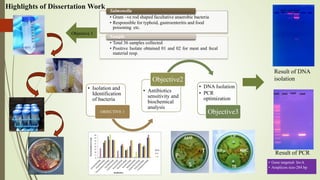
• Isolation and
Identification
of bacteria
OBJECTIVE 1
• Antibiotics
sensitivity and
biochemical
analysis
Objective2
• DNA Isolation
• PCR
optimization
Objective3
AMP
T
S
P
AMC
CIP
RIF
TR
Result of DNA
isolation
Result of PCR
• Gram –ve rod shaped facultative anaerobic bacteria
• Responsible for typhoid, gastroenteritis and food
poisoning etc.
Salmonella
• Total 36 samples collected
• Positive Isolate obtained 01 and 02 for meat and fecal
material resp.
Sample
• Gene targeted- InvA
• Amplicon size-284 bp
Objective 1
Proposed Plan:-Sustainable agriculture for Soil Health
and Food Security
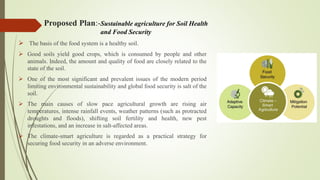
 The basis of the food system is a healthy soil.
 Good soils yield good crops, which is consumed by people and other
animals. Indeed, the amount and quality of food are closely related to the
state of the soil.
 One of the most significant and prevalent issues of the modern period
limiting environmental sustainability and global food security is salt of the
soil.
 The main causes of slow pace agricultural growth are rising air
temperatures, intense rainfall events, weather patterns (such as protracted
droughts and floods), shifting soil fertility and health, new pest
infestations, and an increase in salt-affected areas.
 The climate-smart agriculture is regarded as a practical strategy for
securing food security in an adverse environment.
Ideal Sustainable Agriculture System
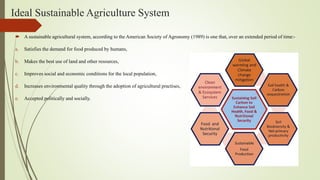
ļ‚“ A sustainable agricultural system, according to the American Society of Agronomy (1989) is one that, over an extended period of time:-
a. Satisfies the demand for food produced by humans,
b. Makes the best use of land and other resources,
c. Improves social and economic conditions for the local population,
d. Increases environmental quality through the adoption of agricultural practises,
e. Accepted politically and socially.
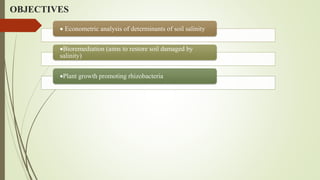
OBJECTIVES
ļ‚· Econometric analysis of determinants of soil salinity
ļ‚·Bioremediation (aims to restore soil damaged by
salinity)
ļ‚·Plant growth promoting rhizobacteria
Research questions
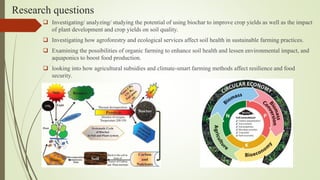
 Investigating/ analyzing/ studying the potential of using biochar to improve crop yields as well as the impact
of plant development and crop yields on soil quality.
 Investigating how agroforestry and ecological services affect soil health in sustainable farming practices.
 Examining the possibilities of organic farming to enhance soil health and lessen environmental impact, and
aquaponics to boost food production.
 looking into how agricultural subsidies and climate-smart farming methods affect resilience and food
security.

Brief presentation for an interview of PhD

  • 1.
    Brief Profile SANGEETA KUMARI ApplicationRef. no. PG-232402-1507 PG Thesis Title ā€œPrevalence of Salmonella from chicken meat and fecal materialā€ Date of PG completion 24.06.2023
  • 2.
    Career Details X &XII • CBSE Board , Delhi. • 93.1% & 73.6 resp. UG • B.Sc. (Life Science), 2021 • Deshbandhu College, Kalkaji, University of Delhi. PG • M.Sc. (Life Science), 2023 • Central University of South Bihar. • Dissertation from same university 1. • IIT JAM 2022 • GATE-XL 2023 2. • ICAR AICE JRF/SRF 2023 Overall Rank -66 • RET of University of Hyderabad 2023 3. • CUET PhD Conducted by NTA in Life Science and Zoology 2023 Examination Qualified
  • 3.
    Highlights of DissertationWork • Isolation and Identification of bacteria OBJECTIVE 1 • Antibiotics sensitivity and biochemical analysis Objective2 • DNA Isolation • PCR optimization Objective3 AMP T S P AMC CIP RIF TR Result of DNA isolation Result of PCR • Gram –ve rod shaped facultative anaerobic bacteria • Responsible for typhoid, gastroenteritis and food poisoning etc. Salmonella • Total 36 samples collected • Positive Isolate obtained 01 and 02 for meat and fecal material resp. Sample • Gene targeted- InvA • Amplicon size-284 bp Objective 1
  • 4.
    Proposed Plan:-Sustainable agriculturefor Soil Health and Food Security  The basis of the food system is a healthy soil.  Good soils yield good crops, which is consumed by people and other animals. Indeed, the amount and quality of food are closely related to the state of the soil.  One of the most significant and prevalent issues of the modern period limiting environmental sustainability and global food security is salt of the soil.  The main causes of slow pace agricultural growth are rising air temperatures, intense rainfall events, weather patterns (such as protracted droughts and floods), shifting soil fertility and health, new pest infestations, and an increase in salt-affected areas.  The climate-smart agriculture is regarded as a practical strategy for securing food security in an adverse environment.
  • 5.
    Ideal Sustainable AgricultureSystem ļ‚“ A sustainable agricultural system, according to the American Society of Agronomy (1989) is one that, over an extended period of time:- a. Satisfies the demand for food produced by humans, b. Makes the best use of land and other resources, c. Improves social and economic conditions for the local population, d. Increases environmental quality through the adoption of agricultural practises, e. Accepted politically and socially.
  • 6.
    OBJECTIVES ļ‚· Econometric analysisof determinants of soil salinity ļ‚·Bioremediation (aims to restore soil damaged by salinity) ļ‚·Plant growth promoting rhizobacteria
  • 7.
    Research questions  Investigating/analyzing/ studying the potential of using biochar to improve crop yields as well as the impact of plant development and crop yields on soil quality.  Investigating how agroforestry and ecological services affect soil health in sustainable farming practices.  Examining the possibilities of organic farming to enhance soil health and lessen environmental impact, and aquaponics to boost food production.  looking into how agricultural subsidies and climate-smart farming methods affect resilience and food security.