Brand Guidelines
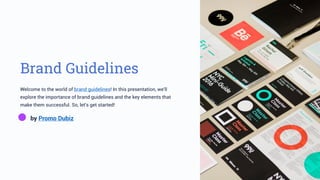
Welcome to the world of brand guidelines! In this presentation, we'll
explore the importance of brand guidelines and the key elements that
make them successful. So, let's get started!
by Promo Dubiz
What are Brand Guidelines?
Definition
Brand guidelines are a set of rules and instructions that explain how a company’s
brand identity should be portrayed across different channels.
Purpose
They ensure consistency, help build trust with customers, and create a distinctive and
memorable brand.
Components
A typical set of brand guidelines includes design and typography guidelines, color
palettes, logo usage, and implementation guidelines for different channels and
mediums.
Why are Brand Guidelines Important?
Clarity
Clear brand guidelines help to
establish expectations and
provide direction on how to
create and maintain a consistent
brand identity.
Loyalty
Consistent brand presentation helps
to build customer trust, which in turn
increases loyalty towards the brand.
Growth
Effective brand guidelines provide
room for innovation and growth,
allowing the brand to evolve without
losing its core identity.
Design and Typography Guidelines
1 Typography
Choose a font family that reflects the
brand’s personality and make sure it’s
easily readable across all mediums. Also,
establish rules for font size, hierarchy, and
spacing.
2 Design Elements
Create guidelines for design elements,
such as imagery, shapes, icons, patterns,
and textures, that reflect the brand’s
identity and differentiate it from
competitors.
Key Elements of Brand Guidelines
• Design and typography guidelines
• Color palette and brand imagery
• Logo usage and placement
• Implementation in different channels and mediums
Color Palette and Brand Imagery
Mood Board
Create a mood board to choose a color palette
that reflects the brand’s personality and
resonates with the audience. This palette should
be consistent across all mediums.
Brand Imagery
Choose photography, illustrations, and other
visuals that represent the brand’s identity and
are consistent with the style, tone, and mood of
the brand.
Logo Usage and Placement
1 Logo Variations
Establish guidelines for different variations of the logo, such as the color, orientation,
and size of the logo. Make sure they're consistent with the brand identity.
2 Clear Space and Placement
Specify the amount of clear space required around the logo and determine the ideal
placement of the logo on various media or applications, such as business cards,
websites, and social media profiles.
3 Improper Usage and Prohibited Actions
Clearly define prohibited actions that might jeopardize the consistency or integrity of
the logo and brand identity, and announce the consequences of those actions.
Implementing Brand Guidelines on
Different Channels
Print Media
Create a set of guidelines to
ensure proper color, size, and
placement of the logo on
print ads, brochures,
business cards, and
letterheads. Be consistent
with the brand identity.
Social Media
Provide social media
guidelines that include
instructions on how the logo
should be displayed on
different social media
platforms. Also provide
instructions on how to create
a social media post with a
consistent look and feel.
Website
Define the brand’s visual
presence and guidelines for
website architecture,
including menu design, page
layouts, and imagery. Also
include instructions on how
to create a consistent look
and feel for product pages
and other pages linked to the
homepage.
Contact us

Brand-Guidelines.pdf

  • 1.
    Brand Guidelines Welcome tothe world of brand guidelines! In this presentation, we'll explore the importance of brand guidelines and the key elements that make them successful. So, let's get started! by Promo Dubiz
  • 2.
    What are BrandGuidelines? Definition Brand guidelines are a set of rules and instructions that explain how a company’s brand identity should be portrayed across different channels. Purpose They ensure consistency, help build trust with customers, and create a distinctive and memorable brand. Components A typical set of brand guidelines includes design and typography guidelines, color palettes, logo usage, and implementation guidelines for different channels and mediums.
  • 3.
    Why are BrandGuidelines Important? Clarity Clear brand guidelines help to establish expectations and provide direction on how to create and maintain a consistent brand identity. Loyalty Consistent brand presentation helps to build customer trust, which in turn increases loyalty towards the brand. Growth Effective brand guidelines provide room for innovation and growth, allowing the brand to evolve without losing its core identity.
  • 4.
    Design and TypographyGuidelines 1 Typography Choose a font family that reflects the brand’s personality and make sure it’s easily readable across all mediums. Also, establish rules for font size, hierarchy, and spacing. 2 Design Elements Create guidelines for design elements, such as imagery, shapes, icons, patterns, and textures, that reflect the brand’s identity and differentiate it from competitors. Key Elements of Brand Guidelines • Design and typography guidelines • Color palette and brand imagery • Logo usage and placement • Implementation in different channels and mediums
  • 5.
    Color Palette andBrand Imagery Mood Board Create a mood board to choose a color palette that reflects the brand’s personality and resonates with the audience. This palette should be consistent across all mediums. Brand Imagery Choose photography, illustrations, and other visuals that represent the brand’s identity and are consistent with the style, tone, and mood of the brand.
  • 6.
    Logo Usage andPlacement 1 Logo Variations Establish guidelines for different variations of the logo, such as the color, orientation, and size of the logo. Make sure they're consistent with the brand identity. 2 Clear Space and Placement Specify the amount of clear space required around the logo and determine the ideal placement of the logo on various media or applications, such as business cards, websites, and social media profiles. 3 Improper Usage and Prohibited Actions Clearly define prohibited actions that might jeopardize the consistency or integrity of the logo and brand identity, and announce the consequences of those actions.
  • 7.
    Implementing Brand Guidelineson Different Channels Print Media Create a set of guidelines to ensure proper color, size, and placement of the logo on print ads, brochures, business cards, and letterheads. Be consistent with the brand identity. Social Media Provide social media guidelines that include instructions on how the logo should be displayed on different social media platforms. Also provide instructions on how to create a social media post with a consistent look and feel. Website Define the brand’s visual presence and guidelines for website architecture, including menu design, page layouts, and imagery. Also include instructions on how to create a consistent look and feel for product pages and other pages linked to the homepage.
  • 8.