Brainstorming!!!
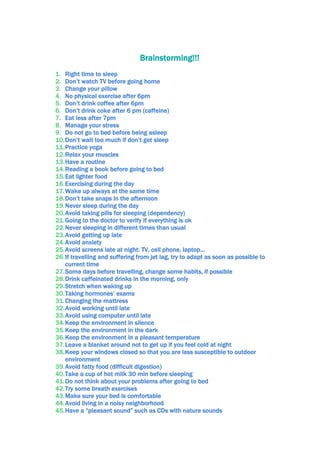
1. Right time to sleep
2. Don’t watch TV before going home
3. Change your pillow
4. No physical exercise after 6pm
5. Don’t drink coffee after 6pm
6. Don’t drink coke after 6 pm (caffeine)
7. Eat less after 7pm
8. Manage your stress
9. Do not go to bed before being asleep
10. Don’t wait too much if don’t get sleep
11. Practice yoga
12. Relax your muscles
13. Have a routine
14. Reading a book before going to bed
15. Eat lighter food
16. Exercising during the day
17. Wake up always at the same time
18. Don’t take snaps in the afternoon
19. Never sleep during the day
20. Avoid taking pills for sleeping (dependency)
21. Going to the doctor to verify if everything is ok
22. Never sleeping in different times than usual
23. Avoid getting up late
24. Avoid anxiety
25. Avoid screens late at night: TV, cell phone, laptop…
26. If travelling and suffering from jet lag, try to adapt as soon as possible to
    current time
27. Some days before travelling, change some habits, if possible
28. Drink caffeinated drinks in the morning, only
29. Stretch when waking up
30. Taking hormones’ exams
31. Changing the mattress
32. Avoid working until late
33. Avoid using computer until late
34. Keep the environment in silence
35. Keep the environment in the dark
36. Keep the environment in a pleasant temperature
37. Leave a blanket around not to get up if you feel cold at night
38. Keep your windows closed so that you are less susceptible to outdoor
    environment
39. Avoid fatty food (difficult digestion)
40. Take a cup of hot milk 30 min before sleeping
41. Do not think about your problems after going to bed
42. Try some breath exercises
43. Make sure your bed is comfortable
44. Avoid living in a noisy neighborhood
45. Have a “pleasant sound” such as CDs with nature sounds
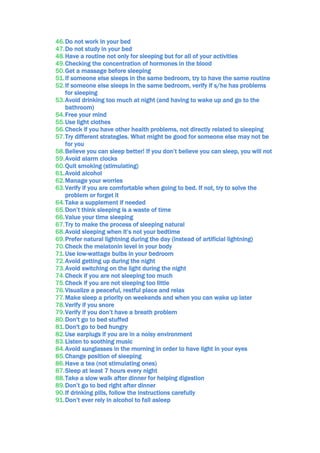
46. Do not work in your bed
47. Do not study in your bed
48. Have a routine not only for sleeping but for all of your activities
49. Checking the concentration of hormones in the blood
50. Get a massage before sleeping
51. If someone else sleeps in the same bedroom, try to have the same routine
52. If someone else sleeps in the same bedroom, verify if s/he has problems
    for sleeping
53. Avoid drinking too much at night (and having to wake up and go to the
    bathroom)
54. Free your mind
55. Use light clothes
56. Check if you have other health problems, not directly related to sleeping
57. Try different strategies. What might be good for someone else may not be
    for you
58. Believe you can sleep better! If you don’t believe you can sleep, you will not
59. Avoid alarm clocks
60. Quit smoking (stimulating)
61. Avoid alcohol
62. Manage your worries
63. Verify if you are comfortable when going to bed. If not, try to solve the
    problem or forget it
64. Take a supplement if needed
65. Don’t think sleeping is a waste of time
66. Value your time sleeping
67. Try to make the process of sleeping natural
68. Avoid sleeping when it’s not your bedtime
69. Prefer natural lightning during the day (instead of artificial lightning)
70. Check the melatonin level in your body
71. Use low-wattage bulbs in your bedroom
72. Avoid getting up during the night
73. Avoid switching on the light during the night
74. Check if you are not sleeping too much
75. Check if you are not sleeping too little
76. Visualize a peaceful, restful place and relax
77. Make sleep a priority on weekends and when you can wake up later
78. Verify if you snore
79. Verify if you don’t have a breath problem
80. Don't go to bed stuffed
81. Don't go to bed hungry
82. Use earplugs if you are in a noisy environment
83. Listen to soothing music
84. Avoid sunglasses in the morning in order to have light in your eyes
85. Change position of sleeping
86. Have a tea (not stimulating ones)
87. Sleep at least 7 hours every night
88. Take a slow walk after dinner for helping digestion
89. Don’t go to bed right after dinner
90. If drinking pills, follow the instructions carefully
91. Don’t ever rely in alcohol to fall asleep
92. Check if you are taking any medicine that makes it more difficult to fall
    asleep
93. Move bedroom clocks out of you view
94. Be healthy in your everyday life
95. Use iPhone apps such as Sleep Cycle and ElectricSleep
96. Try Phillips Wake up Lights in order to wake up better
97. Realise what’s better for your style and body: how much sleep is necessary,
    what works better for you
98. Organise your bedroom
99. Wake up in the same time on weekdays and weekends
100.       Practice physical exercise in the morning
101.       Don’t leave tv or music overnight
102.       Don’t sleep too long

Brainstorming

  • 1.
    Brainstorming!!! 1. Right timeto sleep 2. Don’t watch TV before going home 3. Change your pillow 4. No physical exercise after 6pm 5. Don’t drink coffee after 6pm 6. Don’t drink coke after 6 pm (caffeine) 7. Eat less after 7pm 8. Manage your stress 9. Do not go to bed before being asleep 10. Don’t wait too much if don’t get sleep 11. Practice yoga 12. Relax your muscles 13. Have a routine 14. Reading a book before going to bed 15. Eat lighter food 16. Exercising during the day 17. Wake up always at the same time 18. Don’t take snaps in the afternoon 19. Never sleep during the day 20. Avoid taking pills for sleeping (dependency) 21. Going to the doctor to verify if everything is ok 22. Never sleeping in different times than usual 23. Avoid getting up late 24. Avoid anxiety 25. Avoid screens late at night: TV, cell phone, laptop… 26. If travelling and suffering from jet lag, try to adapt as soon as possible to current time 27. Some days before travelling, change some habits, if possible 28. Drink caffeinated drinks in the morning, only 29. Stretch when waking up 30. Taking hormones’ exams 31. Changing the mattress 32. Avoid working until late 33. Avoid using computer until late 34. Keep the environment in silence 35. Keep the environment in the dark 36. Keep the environment in a pleasant temperature 37. Leave a blanket around not to get up if you feel cold at night 38. Keep your windows closed so that you are less susceptible to outdoor environment 39. Avoid fatty food (difficult digestion) 40. Take a cup of hot milk 30 min before sleeping 41. Do not think about your problems after going to bed 42. Try some breath exercises 43. Make sure your bed is comfortable 44. Avoid living in a noisy neighborhood 45. Have a “pleasant sound” such as CDs with nature sounds
  • 2.
    46. Do notwork in your bed 47. Do not study in your bed 48. Have a routine not only for sleeping but for all of your activities 49. Checking the concentration of hormones in the blood 50. Get a massage before sleeping 51. If someone else sleeps in the same bedroom, try to have the same routine 52. If someone else sleeps in the same bedroom, verify if s/he has problems for sleeping 53. Avoid drinking too much at night (and having to wake up and go to the bathroom) 54. Free your mind 55. Use light clothes 56. Check if you have other health problems, not directly related to sleeping 57. Try different strategies. What might be good for someone else may not be for you 58. Believe you can sleep better! If you don’t believe you can sleep, you will not 59. Avoid alarm clocks 60. Quit smoking (stimulating) 61. Avoid alcohol 62. Manage your worries 63. Verify if you are comfortable when going to bed. If not, try to solve the problem or forget it 64. Take a supplement if needed 65. Don’t think sleeping is a waste of time 66. Value your time sleeping 67. Try to make the process of sleeping natural 68. Avoid sleeping when it’s not your bedtime 69. Prefer natural lightning during the day (instead of artificial lightning) 70. Check the melatonin level in your body 71. Use low-wattage bulbs in your bedroom 72. Avoid getting up during the night 73. Avoid switching on the light during the night 74. Check if you are not sleeping too much 75. Check if you are not sleeping too little 76. Visualize a peaceful, restful place and relax 77. Make sleep a priority on weekends and when you can wake up later 78. Verify if you snore 79. Verify if you don’t have a breath problem 80. Don't go to bed stuffed 81. Don't go to bed hungry 82. Use earplugs if you are in a noisy environment 83. Listen to soothing music 84. Avoid sunglasses in the morning in order to have light in your eyes 85. Change position of sleeping 86. Have a tea (not stimulating ones) 87. Sleep at least 7 hours every night 88. Take a slow walk after dinner for helping digestion 89. Don’t go to bed right after dinner 90. If drinking pills, follow the instructions carefully 91. Don’t ever rely in alcohol to fall asleep
  • 3.
    92. Check ifyou are taking any medicine that makes it more difficult to fall asleep 93. Move bedroom clocks out of you view 94. Be healthy in your everyday life 95. Use iPhone apps such as Sleep Cycle and ElectricSleep 96. Try Phillips Wake up Lights in order to wake up better 97. Realise what’s better for your style and body: how much sleep is necessary, what works better for you 98. Organise your bedroom 99. Wake up in the same time on weekdays and weekends 100. Practice physical exercise in the morning 101. Don’t leave tv or music overnight 102. Don’t sleep too long