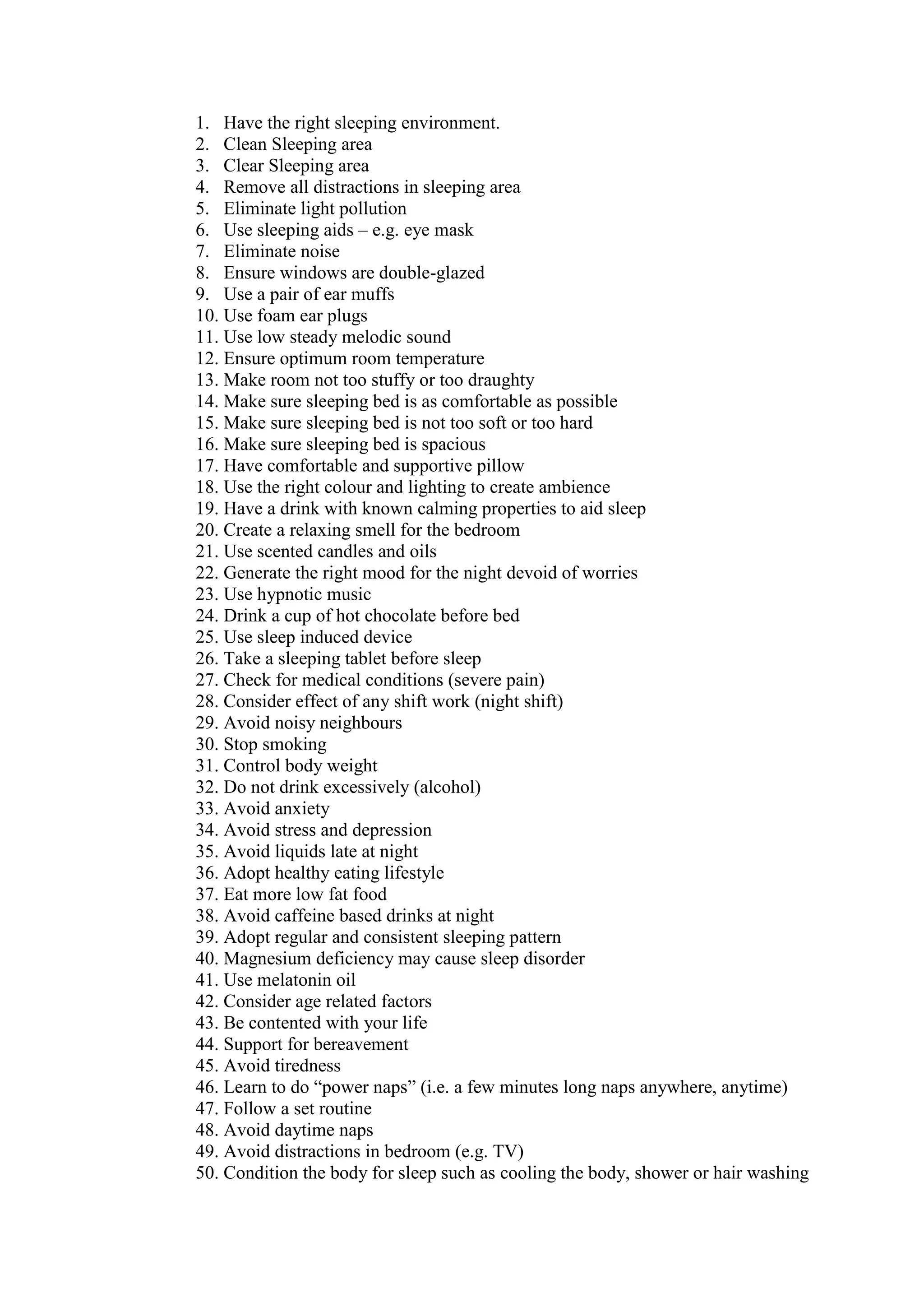
1. Have the right sleeping environment.
2. Clean Sleeping area
3. Clear Sleeping area
4. Remove all distractions in sleeping area
5. Eliminate light pollution
6. Use sleeping aids – e.g. eye mask
7. Eliminate noise
8. Ensure windows are double-glazed
9. Use a pair of ear muffs
10. Use foam ear plugs
11. Use low steady melodic sound
12. Ensure optimum room temperature
13. Make room not too stuffy or too draughty
14. Make sure sleeping bed is as comfortable as possible
15. Make sure sleeping bed is not too soft or too hard
16. Make sure sleeping bed is spacious
17. Have comfortable and supportive pillow
18. Use the right colour and lighting to create ambience
19. Have a drink with known calming properties to aid sleep
20. Create a relaxing smell for the bedroom
21. Use scented candles and oils
22. Generate the right mood for the night devoid of worries
23. Use hypnotic music
24. Drink a cup of hot chocolate before bed
25. Use sleep induced device
26. Take a sleeping tablet before sleep
27. Check for medical conditions (severe pain)
28. Consider effect of any shift work (night shift)
29. Avoid noisy neighbours
30. Stop smoking
31. Control body weight
32. Do not drink excessively (alcohol)
33. Avoid anxiety
34. Avoid stress and depression
35. Avoid liquids late at night
36. Adopt healthy eating lifestyle
37. Eat more low fat food
38. Avoid caffeine based drinks at night
39. Adopt regular and consistent sleeping pattern
40. Magnesium deficiency may cause sleep disorder
41. Use melatonin oil
42. Consider age related factors
43. Be contented with your life
44. Support for bereavement
45. Avoid tiredness
46. Learn to do “power naps” (i.e. a few minutes long naps anywhere, anytime)
47. Follow a set routine
48. Avoid daytime naps
49. Avoid distractions in bedroom (e.g. TV)
50. Condition the body for sleep such as cooling the body, shower or hair washing
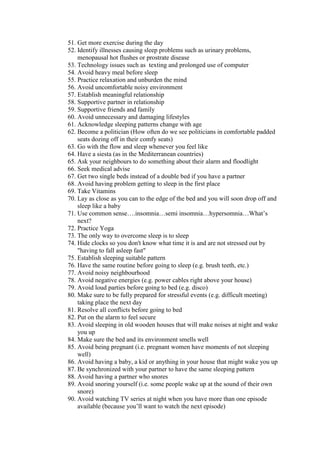
51. Get more exercise during the day
52. Identify illnesses causing sleep problems such as urinary problems,
    menopausal hot flushes or prostrate disease
53. Technology issues such as texting and prolonged use of computer
54. Avoid heavy meal before sleep
55. Practice relaxation and unburden the mind
56. Avoid uncomfortable noisy environment
57. Establish meaningful relationship
58. Supportive partner in relationship
59. Supportive friends and family
60. Avoid unnecessary and damaging lifestyles
61. Acknowledge sleeping patterns change with age
62. Become a politician (How often do we see politicians in comfortable padded
    seats dozing off in their comfy seats)
63. Go with the flow and sleep whenever you feel like
64. Have a siesta (as in the Mediterranean countries)
65. Ask your neighbours to do something about their alarm and floodlight
66. Seek medical advise
67. Get two single beds instead of a double bed if you have a partner
68. Avoid having problem getting to sleep in the first place
69. Take Vitamins
70. Lay as close as you can to the edge of the bed and you will soon drop off and
    sleep like a baby
71. Use common sense….insomnia…semi insomnia…hypersomnia…What’s
    next?
72. Practice Yoga
73. The only way to overcome sleep is to sleep
74. Hide clocks so you don't know what time it is and are not stressed out by
    "having to fall asleep fast"
75. Establish sleeping suitable pattern
76. Have the same routine before going to sleep (e.g. brush teeth, etc.)
77. Avoid noisy neighbourhood
78. Avoid negative energies (e.g. power cables right above your house)
79. Avoid loud parties before going to bed (e.g. disco)
80. Make sure to be fully prepared for stressful events (e.g. difficult meeting)
    taking place the next day
81. Resolve all conflicts before going to bed
82. Put on the alarm to feel secure
83. Avoid sleeping in old wooden houses that will make noises at night and wake
    you up
84. Make sure the bed and its environment smells well
85. Avoid being pregnant (i.e. pregnant women have moments of not sleeping
    well)
86. Avoid having a baby, a kid or anything in your house that might wake you up
87. Be synchronized with your partner to have the same sleeping pattern
88. Avoid having a partner who snores
89. Avoid snoring yourself (i.e. some people wake up at the sound of their own
    snore)
90. Avoid watching TV series at night when you have more than one episode
    available (because you’ll want to watch the next episode)
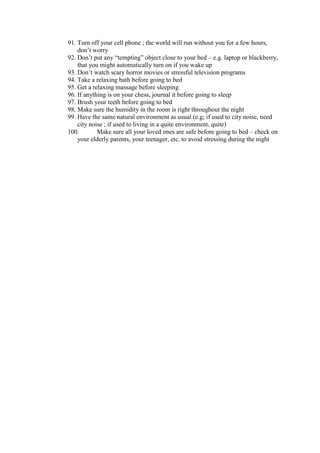
91. Turn off your cell phone ; the world will run without you for a few hours,
    don’t worry
92. Don’t put any “tempting” object close to your bed – e.g. laptop or blackberry,
    that you might automatically turn on if you wake up
93. Don’t watch scary horror movies or stressful television programs
94. Take a relaxing bath before going to bed
95. Get a relaxing massage before sleeping
96. If anything is on your chess, journal it before going to sleep
97. Brush your teeth before going to bed
98. Make sure the humidity in the room is right throughout the night
99. Have the same natural environment as usual (e.g; if used to city noise, need
    city noise ; if used to living in a quite environment, quite)
100.        Make sure all your loved ones are safe before going to bed – check on
    your elderly parents, your teenager, etc. to avoid stressing during the night

Challenge assumptions 2 maxmill team

  • 1.
    1. Have theright sleeping environment. 2. Clean Sleeping area 3. Clear Sleeping area 4. Remove all distractions in sleeping area 5. Eliminate light pollution 6. Use sleeping aids – e.g. eye mask 7. Eliminate noise 8. Ensure windows are double-glazed 9. Use a pair of ear muffs 10. Use foam ear plugs 11. Use low steady melodic sound 12. Ensure optimum room temperature 13. Make room not too stuffy or too draughty 14. Make sure sleeping bed is as comfortable as possible 15. Make sure sleeping bed is not too soft or too hard 16. Make sure sleeping bed is spacious 17. Have comfortable and supportive pillow 18. Use the right colour and lighting to create ambience 19. Have a drink with known calming properties to aid sleep 20. Create a relaxing smell for the bedroom 21. Use scented candles and oils 22. Generate the right mood for the night devoid of worries 23. Use hypnotic music 24. Drink a cup of hot chocolate before bed 25. Use sleep induced device 26. Take a sleeping tablet before sleep 27. Check for medical conditions (severe pain) 28. Consider effect of any shift work (night shift) 29. Avoid noisy neighbours 30. Stop smoking 31. Control body weight 32. Do not drink excessively (alcohol) 33. Avoid anxiety 34. Avoid stress and depression 35. Avoid liquids late at night 36. Adopt healthy eating lifestyle 37. Eat more low fat food 38. Avoid caffeine based drinks at night 39. Adopt regular and consistent sleeping pattern 40. Magnesium deficiency may cause sleep disorder 41. Use melatonin oil 42. Consider age related factors 43. Be contented with your life 44. Support for bereavement 45. Avoid tiredness 46. Learn to do “power naps” (i.e. a few minutes long naps anywhere, anytime) 47. Follow a set routine 48. Avoid daytime naps 49. Avoid distractions in bedroom (e.g. TV) 50. Condition the body for sleep such as cooling the body, shower or hair washing
  • 2.
    51. Get moreexercise during the day 52. Identify illnesses causing sleep problems such as urinary problems, menopausal hot flushes or prostrate disease 53. Technology issues such as texting and prolonged use of computer 54. Avoid heavy meal before sleep 55. Practice relaxation and unburden the mind 56. Avoid uncomfortable noisy environment 57. Establish meaningful relationship 58. Supportive partner in relationship 59. Supportive friends and family 60. Avoid unnecessary and damaging lifestyles 61. Acknowledge sleeping patterns change with age 62. Become a politician (How often do we see politicians in comfortable padded seats dozing off in their comfy seats) 63. Go with the flow and sleep whenever you feel like 64. Have a siesta (as in the Mediterranean countries) 65. Ask your neighbours to do something about their alarm and floodlight 66. Seek medical advise 67. Get two single beds instead of a double bed if you have a partner 68. Avoid having problem getting to sleep in the first place 69. Take Vitamins 70. Lay as close as you can to the edge of the bed and you will soon drop off and sleep like a baby 71. Use common sense….insomnia…semi insomnia…hypersomnia…What’s next? 72. Practice Yoga 73. The only way to overcome sleep is to sleep 74. Hide clocks so you don't know what time it is and are not stressed out by "having to fall asleep fast" 75. Establish sleeping suitable pattern 76. Have the same routine before going to sleep (e.g. brush teeth, etc.) 77. Avoid noisy neighbourhood 78. Avoid negative energies (e.g. power cables right above your house) 79. Avoid loud parties before going to bed (e.g. disco) 80. Make sure to be fully prepared for stressful events (e.g. difficult meeting) taking place the next day 81. Resolve all conflicts before going to bed 82. Put on the alarm to feel secure 83. Avoid sleeping in old wooden houses that will make noises at night and wake you up 84. Make sure the bed and its environment smells well 85. Avoid being pregnant (i.e. pregnant women have moments of not sleeping well) 86. Avoid having a baby, a kid or anything in your house that might wake you up 87. Be synchronized with your partner to have the same sleeping pattern 88. Avoid having a partner who snores 89. Avoid snoring yourself (i.e. some people wake up at the sound of their own snore) 90. Avoid watching TV series at night when you have more than one episode available (because you’ll want to watch the next episode)
  • 3.
    91. Turn offyour cell phone ; the world will run without you for a few hours, don’t worry 92. Don’t put any “tempting” object close to your bed – e.g. laptop or blackberry, that you might automatically turn on if you wake up 93. Don’t watch scary horror movies or stressful television programs 94. Take a relaxing bath before going to bed 95. Get a relaxing massage before sleeping 96. If anything is on your chess, journal it before going to sleep 97. Brush your teeth before going to bed 98. Make sure the humidity in the room is right throughout the night 99. Have the same natural environment as usual (e.g; if used to city noise, need city noise ; if used to living in a quite environment, quite) 100. Make sure all your loved ones are safe before going to bed – check on your elderly parents, your teenager, etc. to avoid stressing during the night