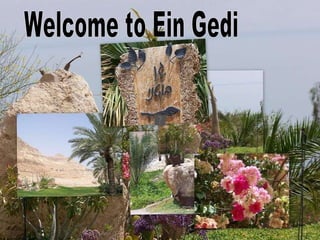
Welcome to Ein Gedi
Kibbutz Ein Gedi was founded in 1956. It is situated on the shore of the Dead Sea – the lowest place on Earth ( - 417m), at the feet of majestic mountains and cliffs.  Ein Gedi oasis was ranked 11th among the world's most interesting and recommended natural sites by "National Geographic" . The botanical garden   Declared a botanical garden in 1994, it is unique in that its some 1,000 plant specimens from five continents are integrated around the living quarters of the kibbutz, making it the world’s only botanical garden in which people live – in this case, a population of 500 . 


קיבוץ עין גדי הוקם ב -1956  סמוך לנחל ערוגות ועלה לגבע הזאת ב - 1959.  הקיבוץ שוכן במקום הכי נמוך בעולם  ( - 417  מ ' ) בתוך מערכת הבקע הסורי – אפריקאי , לחוף ים המלח . נאת המדבר עין גדי דורגה ע " י  " נשיונל ג ' אוגרפיק  "  במקום ה -11  בעולם בין אתרי הטבע המעניינים והמומלצים ביותר לביקור . גן הבוטני שבקיבוץ מוכר בין הגנים הבוטניים בעולם . זהו הגן הבוטני היחידי שמשולב בבתיו של ישוב , ובו כ -1,000  מיני צמחים .


Kibbutz Ein Gedi s-a infiintat în anul 1956 .  Este situat în locul cel mai jos din lume( - 417m )  , pe malul Mării Moarte .  Oaza Ein Gedi a fost  clasată de către  " National Geographic "  pe locul 11 printre cele mai interesante şi recomandate rezervaţii naturale din lume.  Grădina botanică Ein Gedi   Declarată grădină botanică în 1994, este unică prin faptul că cele aproximativ 1000 de specii de plante de pe cinci continente sunt integrate printre casele din  kibbutz. Aceasta este unica grădină botanică din lume în care trăiesc oameni  -  în acest caz, o populaţie de 500 de locuitori.


Calotropis Procera Apple of Sodom The fruit was described by  the Roman Jewish historian Josephus,  who saw it growing near Sodom: "...as well as the ashes growing in their fruits;  which fruits have a color as if they were fit to be eaten, but if you pluck them with your hands, they dissolve into smoke and ashes."  ( Josephus, Jewish Wars, Book IV,8:4 ) “  mărul Sodomei “ – nu este o plantă “ prietenoasă” Este frumoasă afară , dar goală înăuntru.” Carnea” plantei conţine o sevă lăptosă toxică extrem de amară. פתילת המדבר הגדולה שם עממי  :  תפוח סדום


April 10 Music  : Artzenu  Haktantonet Yoram Taher-Lev,Rami Kleinstein Photos  : personal photos taken in April 2010

Botanical garden ein_gedi_sb040510

  • 1.
  • 2.
    Kibbutz Ein Gediwas founded in 1956. It is situated on the shore of the Dead Sea – the lowest place on Earth ( - 417m), at the feet of majestic mountains and cliffs. Ein Gedi oasis was ranked 11th among the world's most interesting and recommended natural sites by "National Geographic" . The botanical garden Declared a botanical garden in 1994, it is unique in that its some 1,000 plant specimens from five continents are integrated around the living quarters of the kibbutz, making it the world’s only botanical garden in which people live – in this case, a population of 500 . 
  • 3.
  • 4.
  • 5.
  • 6.
  • 7.
    קיבוץ עין גדיהוקם ב -1956 סמוך לנחל ערוגות ועלה לגבע הזאת ב - 1959. הקיבוץ שוכן במקום הכי נמוך בעולם ( - 417 מ ' ) בתוך מערכת הבקע הסורי – אפריקאי , לחוף ים המלח . נאת המדבר עין גדי דורגה ע " י " נשיונל ג ' אוגרפיק " במקום ה -11 בעולם בין אתרי הטבע המעניינים והמומלצים ביותר לביקור . גן הבוטני שבקיבוץ מוכר בין הגנים הבוטניים בעולם . זהו הגן הבוטני היחידי שמשולב בבתיו של ישוב , ובו כ -1,000 מיני צמחים .
  • 8.
  • 9.
  • 10.
  • 11.
    Kibbutz Ein Gedis-a infiintat în anul 1956 . Este situat în locul cel mai jos din lume( - 417m ) , pe malul Mării Moarte . Oaza Ein Gedi a fost clasată de către " National Geographic " pe locul 11 printre cele mai interesante şi recomandate rezervaţii naturale din lume. Grădina botanică Ein Gedi Declarată grădină botanică în 1994, este unică prin faptul că cele aproximativ 1000 de specii de plante de pe cinci continente sunt integrate printre casele din kibbutz. Aceasta este unica grădină botanică din lume în care trăiesc oameni - în acest caz, o populaţie de 500 de locuitori.
  • 12.
  • 13.
  • 14.
  • 15.
  • 16.
  • 17.
  • 18.
    Calotropis Procera Appleof Sodom The fruit was described by the Roman Jewish historian Josephus, who saw it growing near Sodom: "...as well as the ashes growing in their fruits; which fruits have a color as if they were fit to be eaten, but if you pluck them with your hands, they dissolve into smoke and ashes." ( Josephus, Jewish Wars, Book IV,8:4 ) “ mărul Sodomei “ – nu este o plantă “ prietenoasă” Este frumoasă afară , dar goală înăuntru.” Carnea” plantei conţine o sevă lăptosă toxică extrem de amară. פתילת המדבר הגדולה שם עממי : תפוח סדום
  • 19.
  • 20.
  • 21.
  • 22.
  • 23.
  • 24.
    April 10 Music : Artzenu Haktantonet Yoram Taher-Lev,Rami Kleinstein Photos : personal photos taken in April 2010