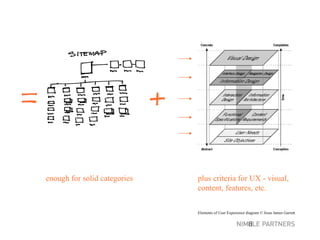

enough for solid categories plus criteria for UX - visual, content, features, etc. Elements of User Experience diagram © Jesse James Garrett
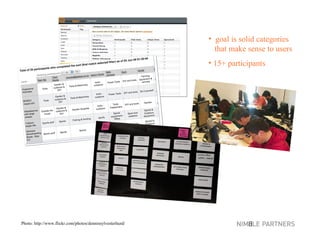
goal is solid categories    that make sense to users 15+ participants Photo: http://www.flickr.com/photos/dennissylvesterhurd/
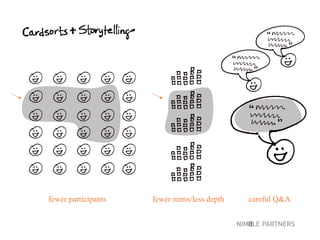
fewer participants fewer items/less depth careful Q&A
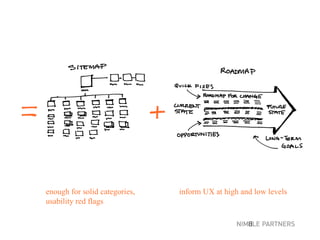
enough for solid categories,  usability red flags inform UX at high and low levels
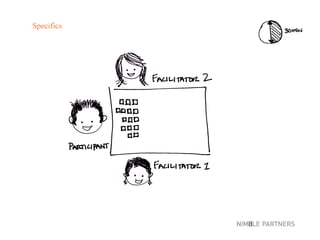
Specifics
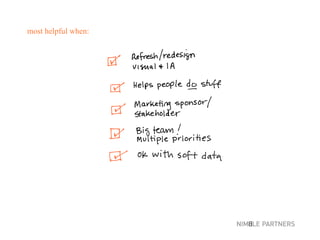
most helpful when:
 
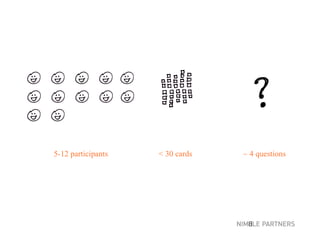
5-12 participants < 30 cards ~ 4 questions
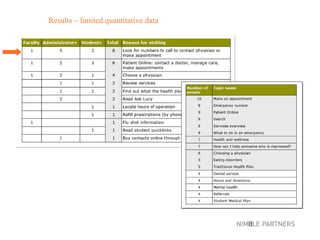
Results – limited quantitative data
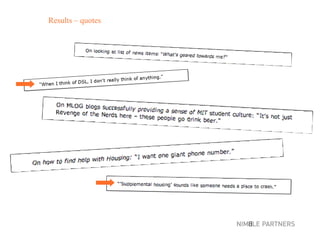
Results – quotes
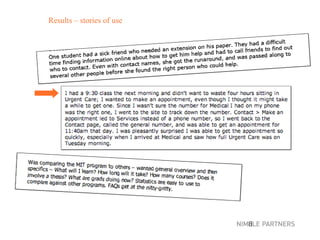
Results – stories of use
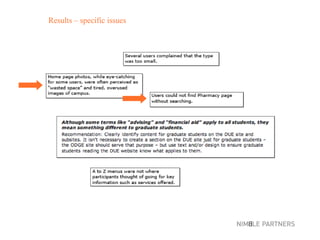
Results – specific issues
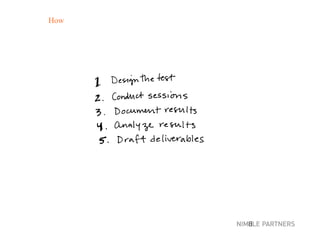
How
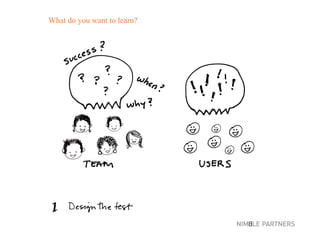
What do you want to learn?
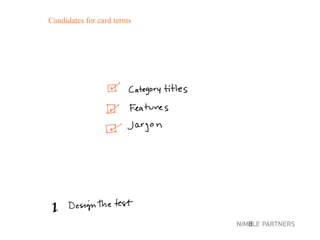
Candidates for card terms
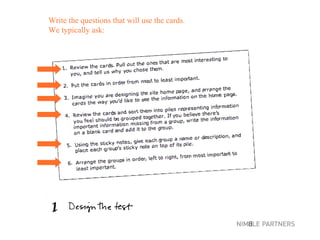
Write the questions that will use the cards.  We typically ask:
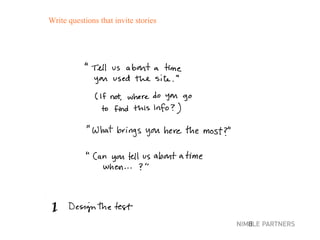
Write questions that invite stories


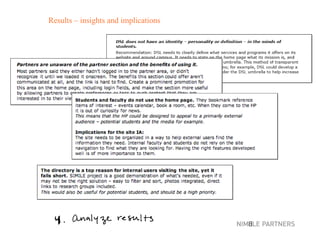
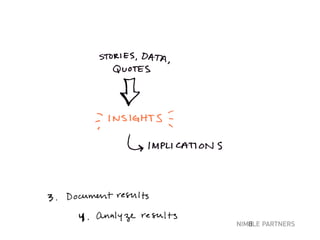
Results – insights and implications
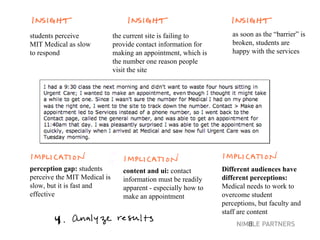
the current site is failing to provide contact information for making an appointment, which is the number one reason people visit the site as soon as the “barrier” is broken, students are happy with the services perception gap:  students perceive the MIT Medical is slow, but it is fast and effective content and ui:  contact information must be readily apparent - especially how to make an appointment Different audiences have different perceptions:  Medical needs to work to overcome student perceptions, but faculty and staff are content students perceive MIT Medical as slow to respond
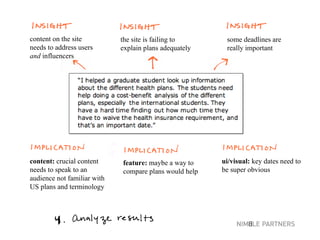
the site is failing to explain plans adequately  some deadlines are  really important content:  crucial content needs to speak to an audience not familiar with US plans and terminology feature:  maybe a way to compare plans would help ui/visual:  key dates need to be super obvious content on the site needs to address users  and  influencers


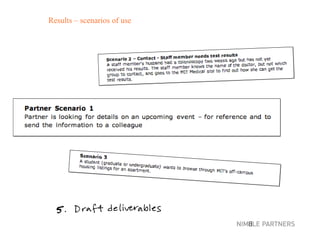
Results – scenarios of use
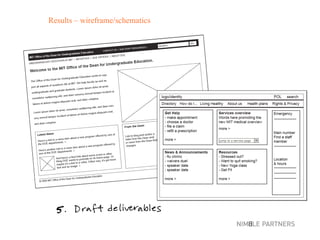
Results – wireframe/schematics
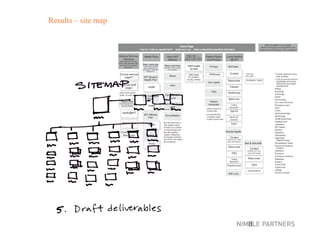
Results – site map
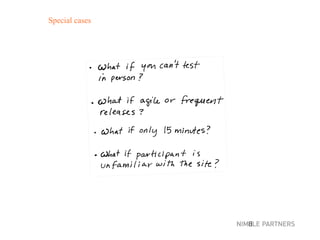
Special cases
Any questions? - Thank you for letting us tell our story! www.nimblepartners.com [email_address] [email_address] A special thank you to Leah Buley at Adaptive Path who inspired us to free  ourselves from the tyranny of PowerPoint bullet slides.

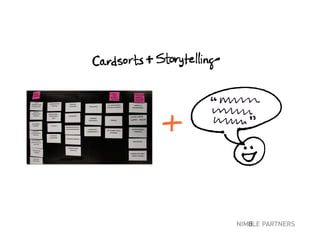
Establishing Qualitative Criteria for IA and UX in One Fell Swoop -- How to Conduct a Card Sort with Storytelling

  • 1.
  • 2.
  • 3.
    enough for solidcategories plus criteria for UX - visual, content, features, etc. Elements of User Experience diagram © Jesse James Garrett
  • 4.
    goal is solidcategories that make sense to users 15+ participants Photo: http://www.flickr.com/photos/dennissylvesterhurd/
  • 5.
    fewer participants feweritems/less depth careful Q&A
  • 6.
    enough for solidcategories, usability red flags inform UX at high and low levels
  • 7.
  • 8.
  • 9.
  • 10.
    5-12 participants <30 cards ~ 4 questions
  • 11.
    Results – limitedquantitative data
  • 12.
  • 13.
  • 14.
  • 15.
  • 16.
    What do youwant to learn?
  • 17.
  • 18.
    Write the questionsthat will use the cards. We typically ask:
  • 19.
    Write questions thatinvite stories
  • 20.
  • 21.
  • 22.
  • 23.
  • 24.
    Results – insightsand implications
  • 25.
    the current siteis failing to provide contact information for making an appointment, which is the number one reason people visit the site as soon as the “barrier” is broken, students are happy with the services perception gap: students perceive the MIT Medical is slow, but it is fast and effective content and ui: contact information must be readily apparent - especially how to make an appointment Different audiences have different perceptions: Medical needs to work to overcome student perceptions, but faculty and staff are content students perceive MIT Medical as slow to respond
  • 26.
    the site isfailing to explain plans adequately some deadlines are really important content: crucial content needs to speak to an audience not familiar with US plans and terminology feature: maybe a way to compare plans would help ui/visual: key dates need to be super obvious content on the site needs to address users and influencers
  • 27.
  • 28.
  • 29.
  • 30.
  • 31.
  • 32.
  • 33.
  • 34.
  • 35.
    Any questions? -Thank you for letting us tell our story! www.nimblepartners.com [email_address] [email_address] A special thank you to Leah Buley at Adaptive Path who inspired us to free ourselves from the tyranny of PowerPoint bullet slides.