Dr. Maya Chanderia
Dept. of Physiology
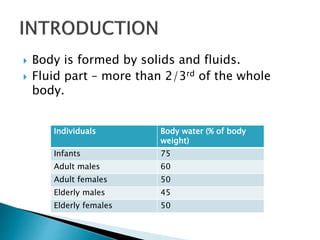
 Body is formed by solids and fluids.
 Fluid part – more than 2/3rd of the whole
body.
Individuals Body water (% of body
weight)
Infants 75
Adult males 60
Adult females 50
Elderly males 45
Elderly females 50
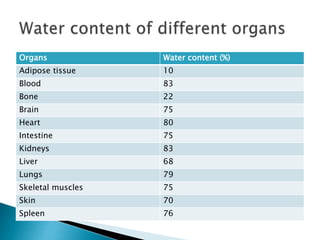
Organs Water content (%)
Adipose tissue 10
Blood 83
Bone 22
Brain 75
Heart 80
Intestine 75
Kidneys 83
Liver 68
Lungs 79
Skeletal muscles 75
Skin 70
Spleen 76
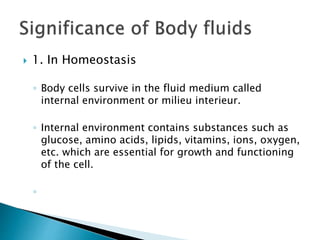
 1. In Homeostasis
◦ Body cells survive in the fluid medium called
internal environment or milieu interieur.
◦ Internal environment contains substances such as
glucose, amino acids, lipids, vitamins, ions, oxygen,
etc. which are essential for growth and functioning
of the cell.
◦
 2. In Transport mechanism
◦ Body water forms the transport medium by which
nutrients and other essential substances enter the
cells; and unwanted substances come out of the
cells.
◦ Water forms an important medium by which various
enzymes, hormones, vitamins, electrolytes and
other substances are carried from one part to
another part of the body.
 3. IN METABOLIC REACTIONS
◦ Water inside the cells forms the medium for various
metabolic reactions, which are necessary for growth
and functional activities of the cells.
 4. IN TEXTURE OF TISSUES
◦ Water inside the cells is necessary for characteristic
form and texture of various tissues.
 5. IN TEMPERATURE REGULATION
◦ Water plays a vital role in the maintenance of
normal body temperature.
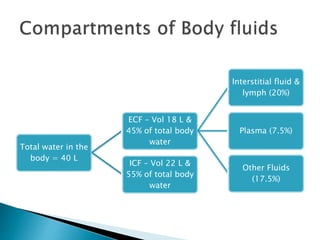
Total water in the
body = 40 L
ECF – Vol 18 L &
45% of total body
water
Interstitial fluid &
lymph (20%)
Plasma (7.5%)
Other Fluids
(17.5%)
ICF – Vol 22 L &
55% of total body
water
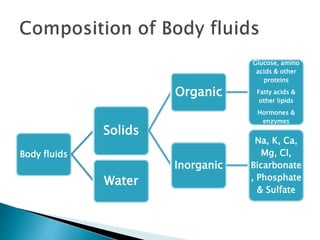
Body fluids
Solids
Organic
Glucose, amino
acids & other
proteins
Fatty acids &
other lipids
Hormones &
enzymes
Inorganic
Na, K, Ca,
Mg, Cl,
Bicarbonate
, Phosphate
& Sulfate
Water
THANK YOU

BODY FLUIDS.pptx

  • 1.
  • 2.
     Body isformed by solids and fluids.  Fluid part – more than 2/3rd of the whole body. Individuals Body water (% of body weight) Infants 75 Adult males 60 Adult females 50 Elderly males 45 Elderly females 50
  • 3.
    Organs Water content(%) Adipose tissue 10 Blood 83 Bone 22 Brain 75 Heart 80 Intestine 75 Kidneys 83 Liver 68 Lungs 79 Skeletal muscles 75 Skin 70 Spleen 76
  • 4.
     1. InHomeostasis ◦ Body cells survive in the fluid medium called internal environment or milieu interieur. ◦ Internal environment contains substances such as glucose, amino acids, lipids, vitamins, ions, oxygen, etc. which are essential for growth and functioning of the cell. ◦
  • 5.
     2. InTransport mechanism ◦ Body water forms the transport medium by which nutrients and other essential substances enter the cells; and unwanted substances come out of the cells. ◦ Water forms an important medium by which various enzymes, hormones, vitamins, electrolytes and other substances are carried from one part to another part of the body.
  • 6.
     3. INMETABOLIC REACTIONS ◦ Water inside the cells forms the medium for various metabolic reactions, which are necessary for growth and functional activities of the cells.  4. IN TEXTURE OF TISSUES ◦ Water inside the cells is necessary for characteristic form and texture of various tissues.  5. IN TEMPERATURE REGULATION ◦ Water plays a vital role in the maintenance of normal body temperature.
  • 7.
    Total water inthe body = 40 L ECF – Vol 18 L & 45% of total body water Interstitial fluid & lymph (20%) Plasma (7.5%) Other Fluids (17.5%) ICF – Vol 22 L & 55% of total body water
  • 8.
    Body fluids Solids Organic Glucose, amino acids& other proteins Fatty acids & other lipids Hormones & enzymes Inorganic Na, K, Ca, Mg, Cl, Bicarbonate , Phosphate & Sulfate Water
  • 9.