BODIES &
BUILDINGS
NYU ITP LECTURE COURSE SPRING 2013
CLASS 2: FEBRUARY 4, 2013
JEN VAN DER MEER @JENVANDERMEER WWW.JENVANDERMEER.COM
LEVERAGE POINTS 
Class assignment for 2/4/2013
Mandatory! Read ALL OF Donella Meadows: 
Leverage Points: Places to Intervene in a System 
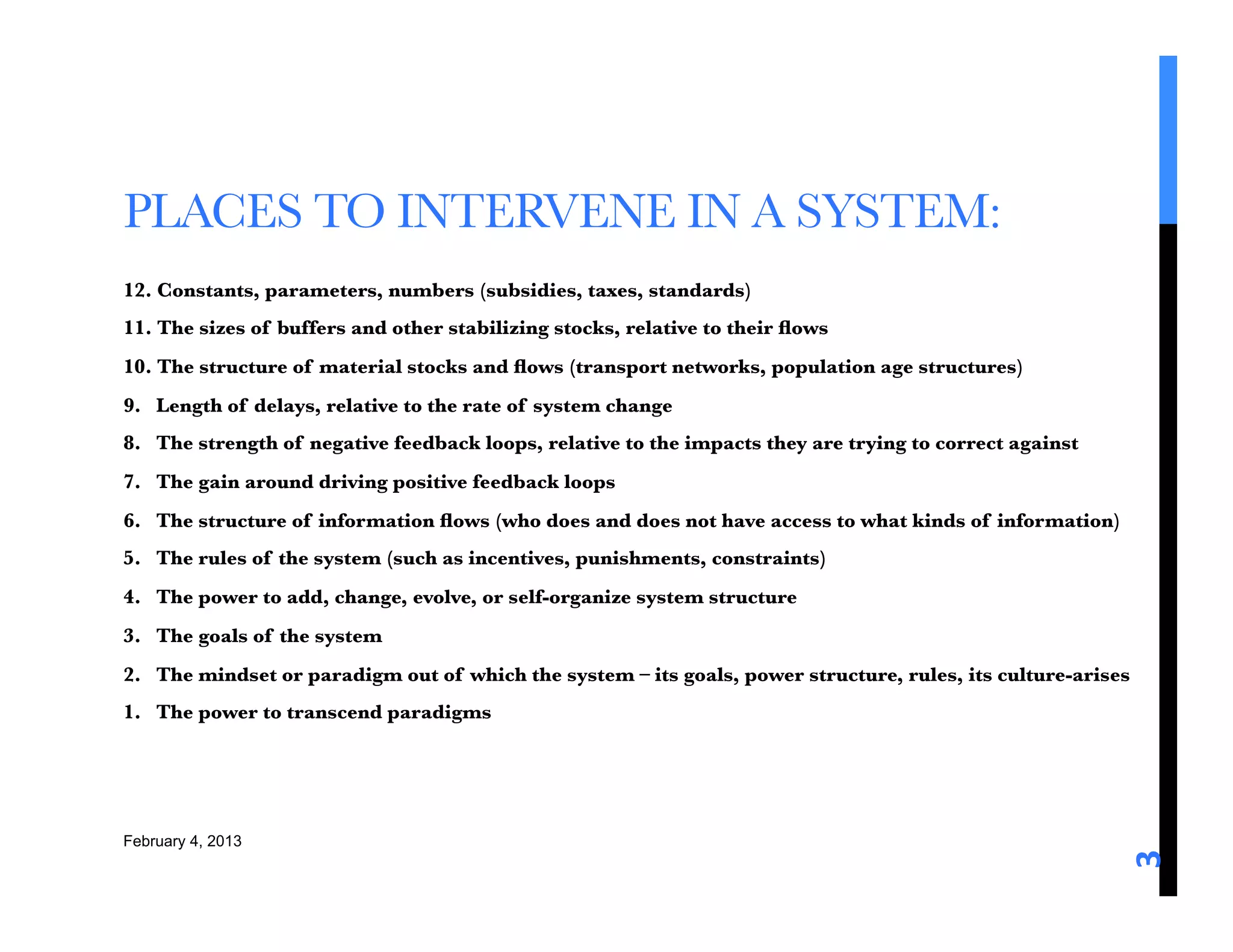
Take leverage points 9, 8, 7. 
Write a 1 page or 500-6000 word essay on the following topic: 
How do mobile apps try to affect leverage points 9, 8, and 7. 
9) The length of delays, relative to the rate of system change
8) The strength of negative feedback loops, relative to impacts they are trying
to correct against
7) The gain around driving positive feedback loops
Give one example and explain how the app is or is not designed to affect each
of these leverage points. How effective do you think this app will be at
changing behavior? 
You will be asked to present your work, so practice rehearsing your in class
presentation at least two times. 

February 4, 2013


                                                                                  2	
  
PLACES TO INTERVENE IN A SYSTEM: 
12. Constants, parameters, numbers (subsidies, taxes, standards)
11. The sizes of buffers and other stabilizing stocks, relative to their flows
10. The structure of material stocks and flows (transport networks, population age structures)
9. Length of delays, relative to the rate of system change
8. The strength of negative feedback loops, relative to the impacts they are trying to correct against
7. The gain around driving positive feedback loops
6. The structure of information flows (who does and does not have access to what kinds of information)
5. The rules of the system (such as incentives, punishments, constraints)
4. The power to add, change, evolve, or self-organize system structure
3. The goals of the system
2. The mindset or paradigm out of which the system – its goals, power structure, rules, its culture-arises
1. The power to transcend paradigms


February 4, 2013


                                                                                                          3	
  
BODIES IN THE NEWS
LabDoor Launches: lets users search for their dietary
supplements and view grades reflecting their clinical efficacy
and ingredient safety.
New HIPAA rules finalized: When a patient is required by a
provider to request records or documents in writing, the request
may be made electronically.
In a video produced for the release of Bill Gates's 2013 Annual
Letter, Swedish academic Hans Rosling explains why common
notions of developing vs. developed countries are no longer
clear-cut.


February 4, 2013


                                                                   4	
  
BODIES: THE
OBESEITY EPIDEMIC

BODIES & BUILDINGS


                      5	
  
BODIES +
We have made huge strides in life expectancy, but we have
reached limits of growth. 


February 4, 2013


                                                            6	
  
NATIONAL OBESITY
CRISIS


February 4, 2013


                   7	
  
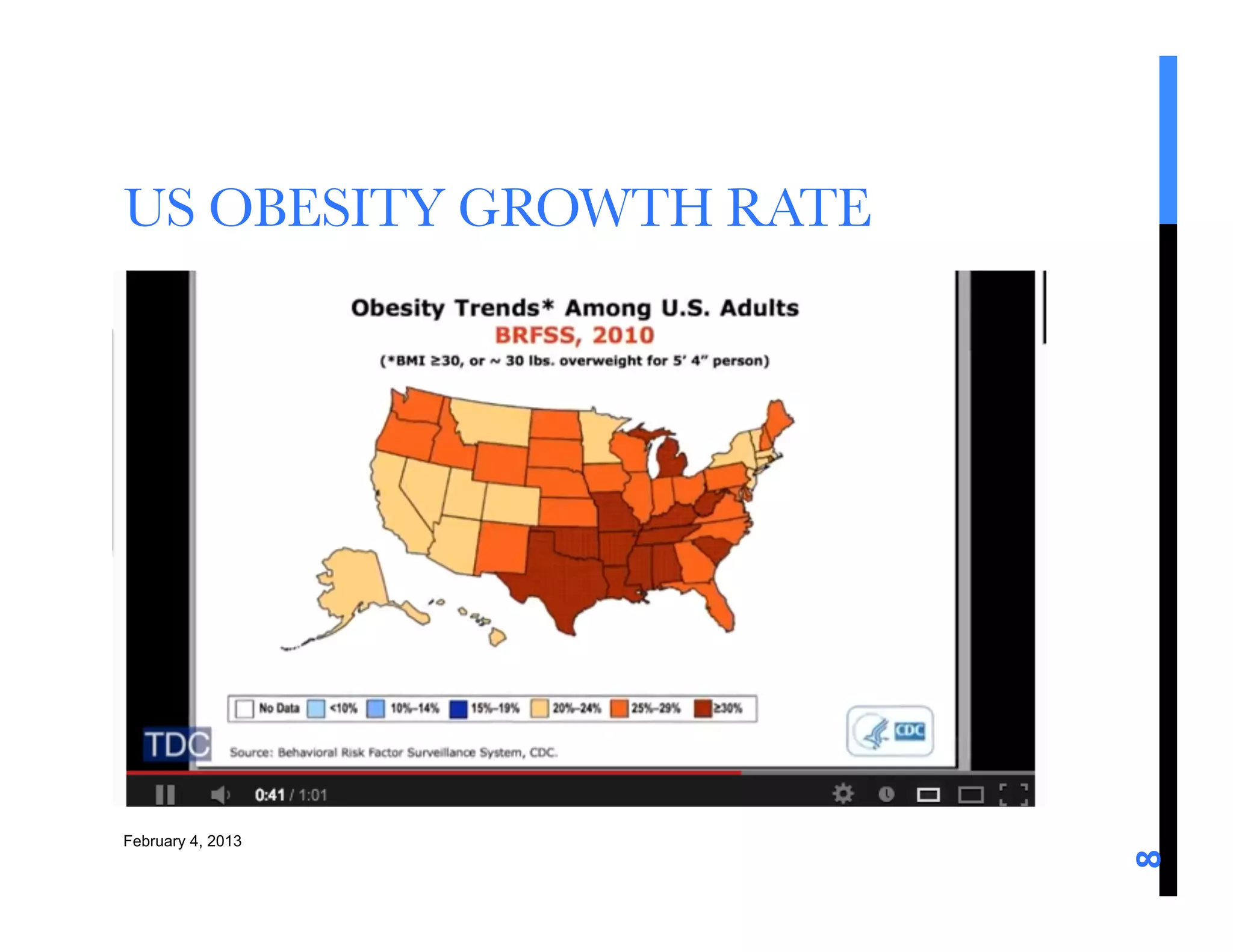
US OBESITY GROWTH RATE


February 4, 2013


                          8	
  
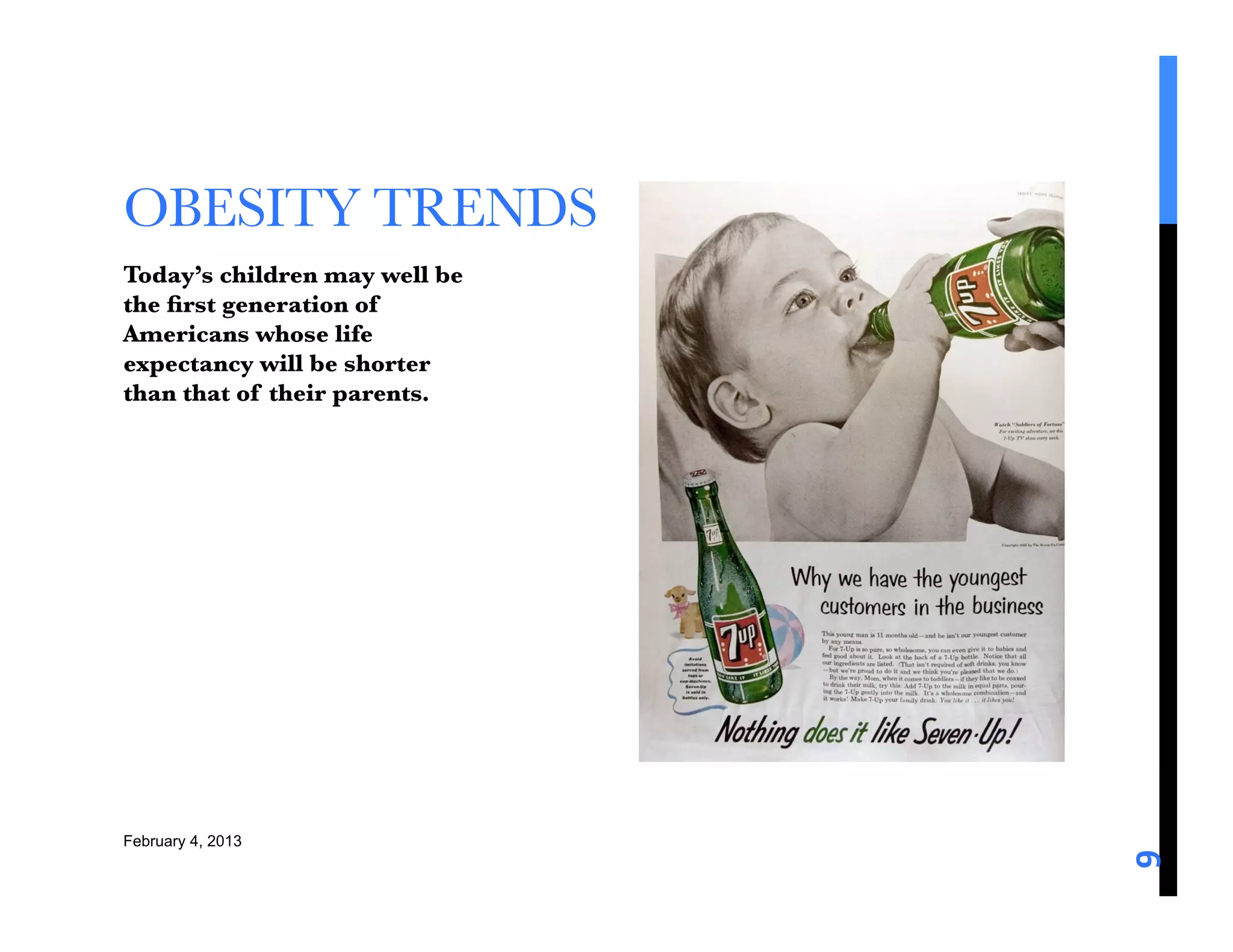
OBESITY TRENDS
Today’s children may well be
the first generation of
Americans whose life
expectancy will be shorter
than that of their parents. 


February 4, 2013


                                9	
  
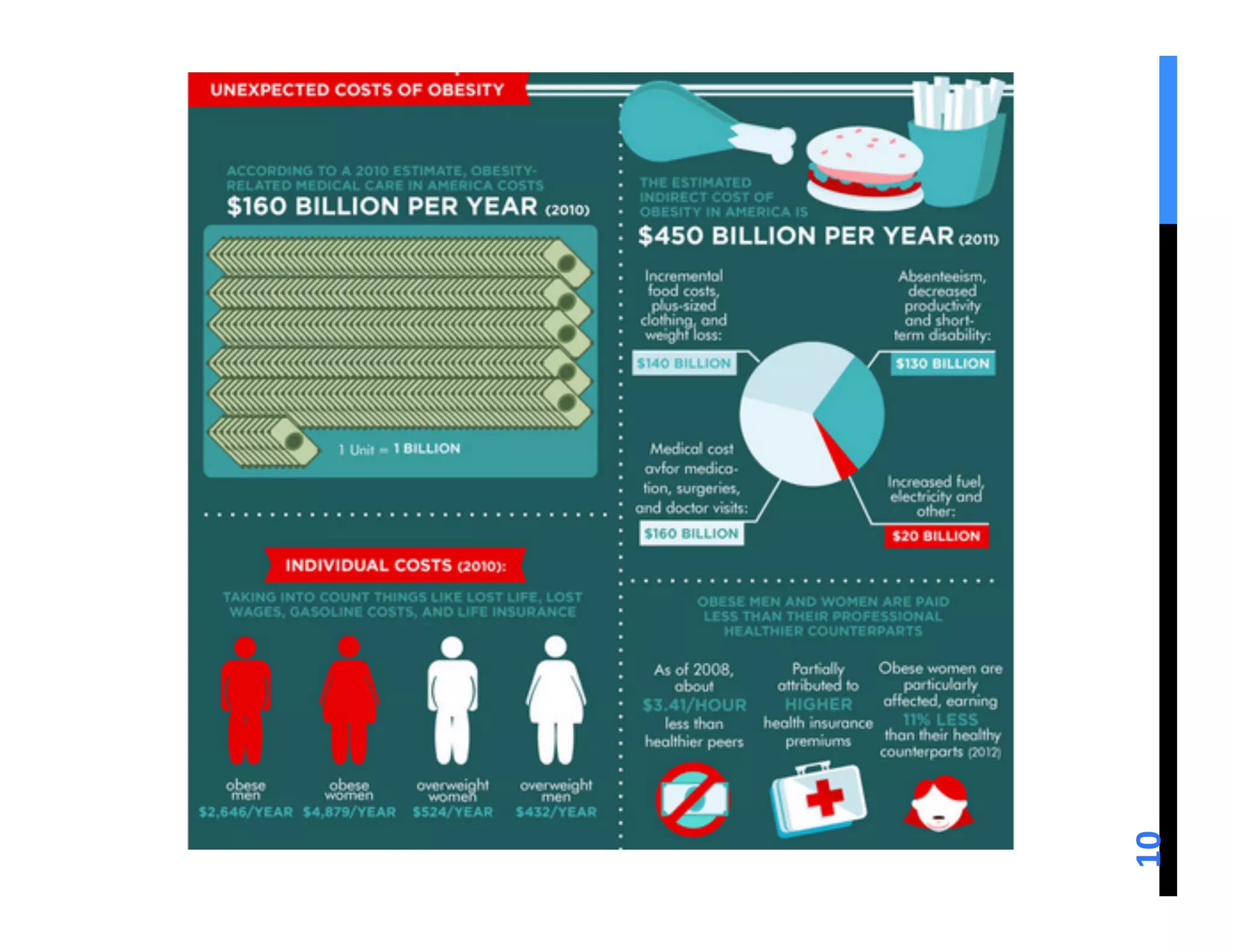
10	
  
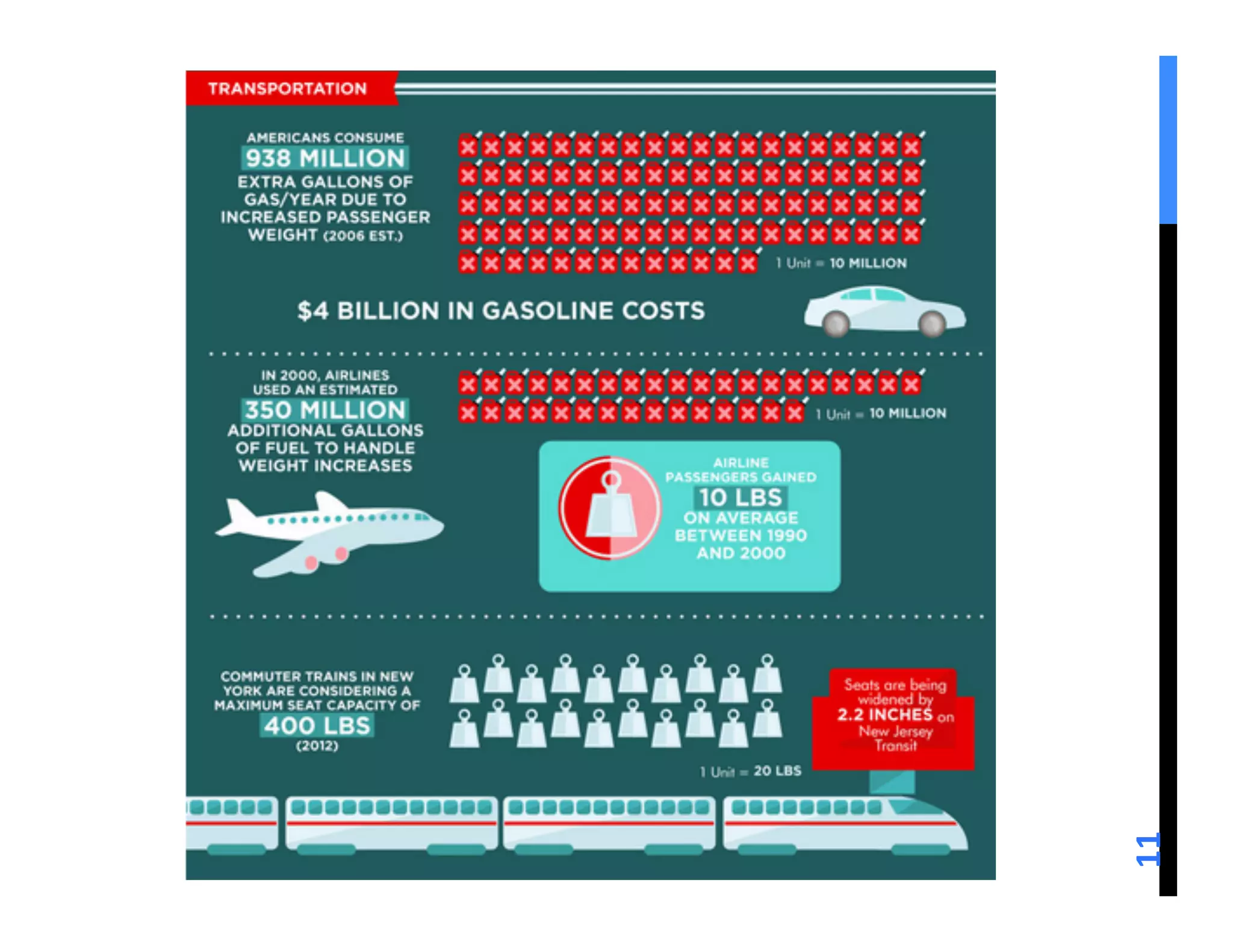
11	
  
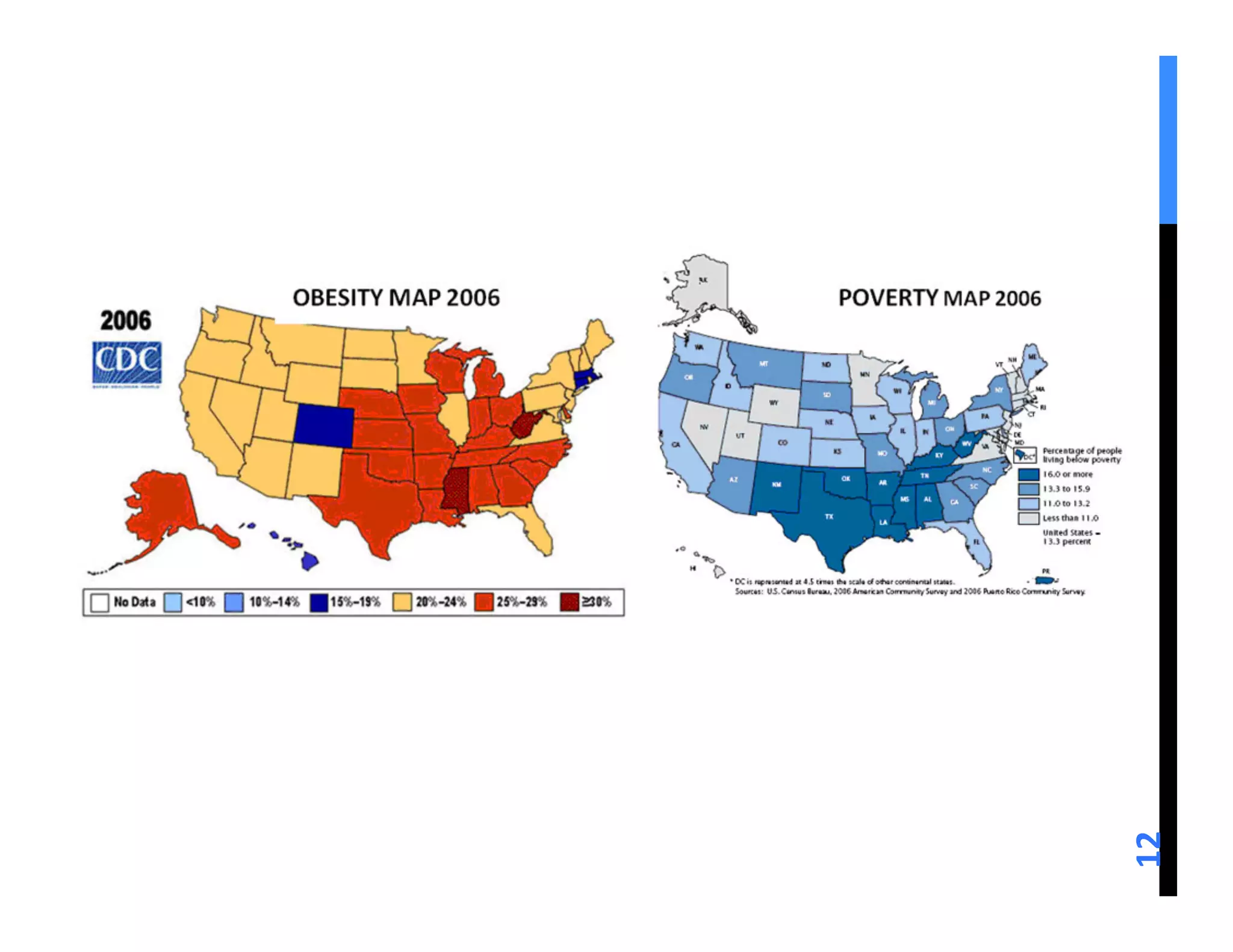
12	
  
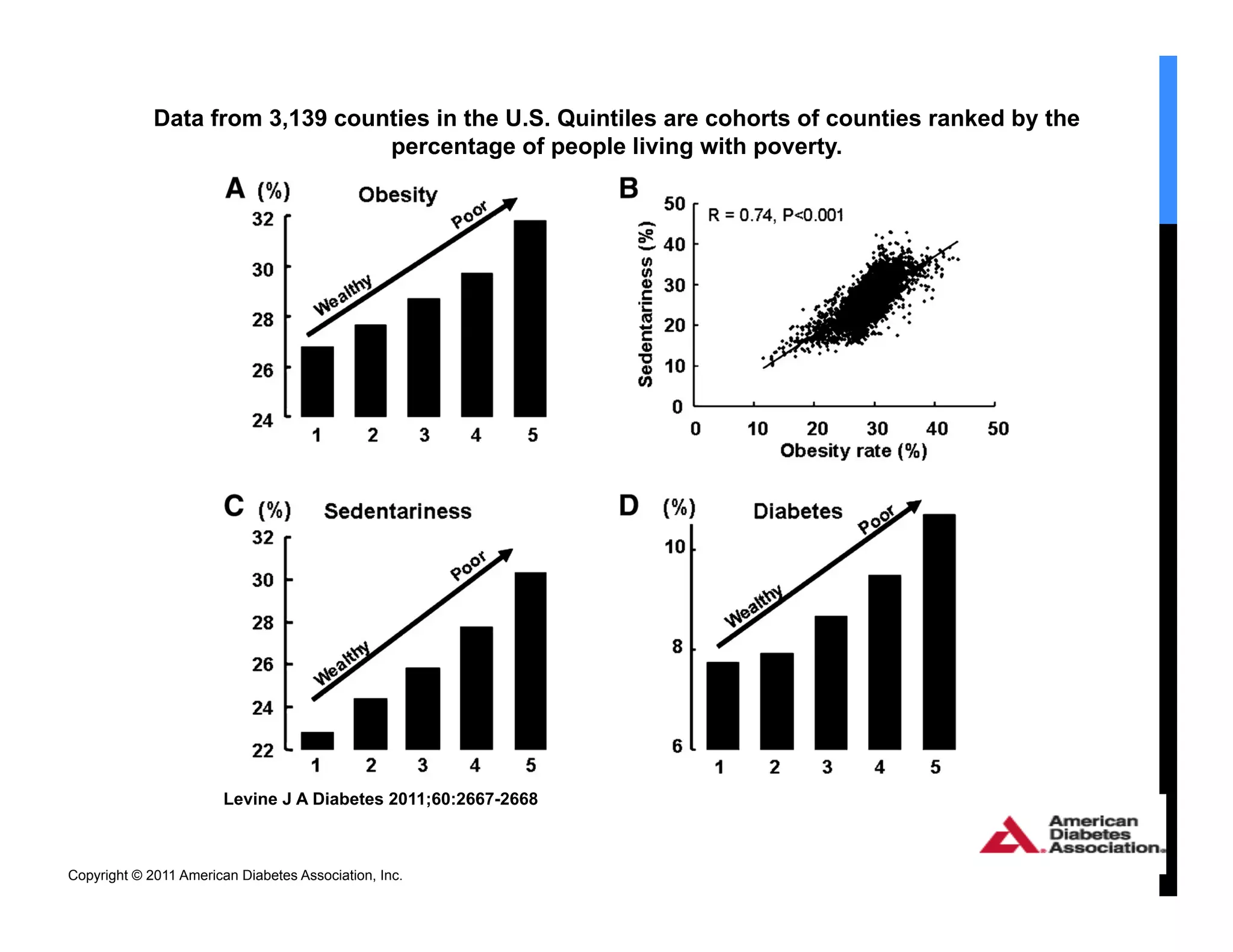
Data from 3,139 counties in the U.S. Quintiles are cohorts of counties ranked by the
                                 percentage of people living with poverty.


                        Levine J A Diabetes 2011;60:2667-2668


Copyright © 2011 American Diabetes Association, Inc.
14	
  
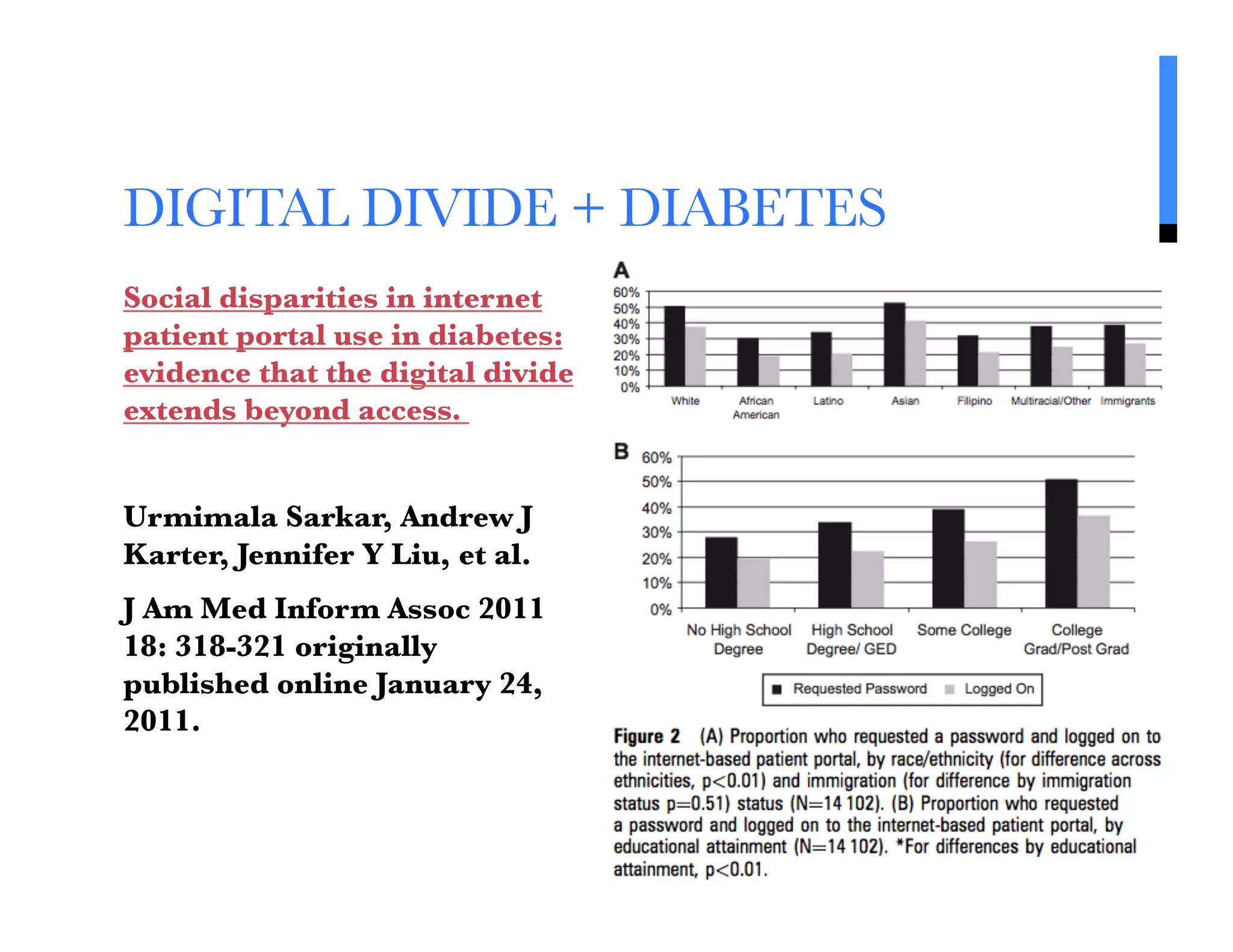
DIGITAL DIVIDE + DIABETES
Social disparities in internet
patient portal use in diabetes:
evidence that the digital divide
extends beyond access. 

Urmimala Sarkar, Andrew J
Karter, Jennifer Y Liu, et al.
J Am Med Inform Assoc 2011
18: 318-321 originally
published online January 24,
2011. 


                                   15	
  
GLOBAL OBESITY
PANDEMIC
“GLOBESITY” 
GLOBAL OBESITY: TRENDS, RISK FACTORS AND POLICY
IMPLICATIONS. VASANTI S. MALIK, WALTER C. WILLETT & FRANK B.
HU. NATURE REVIEWS ENDOCRINOLOGY 9, 13-27 (JANUARY 2013)


                                                               16	
  
February 4, 2013
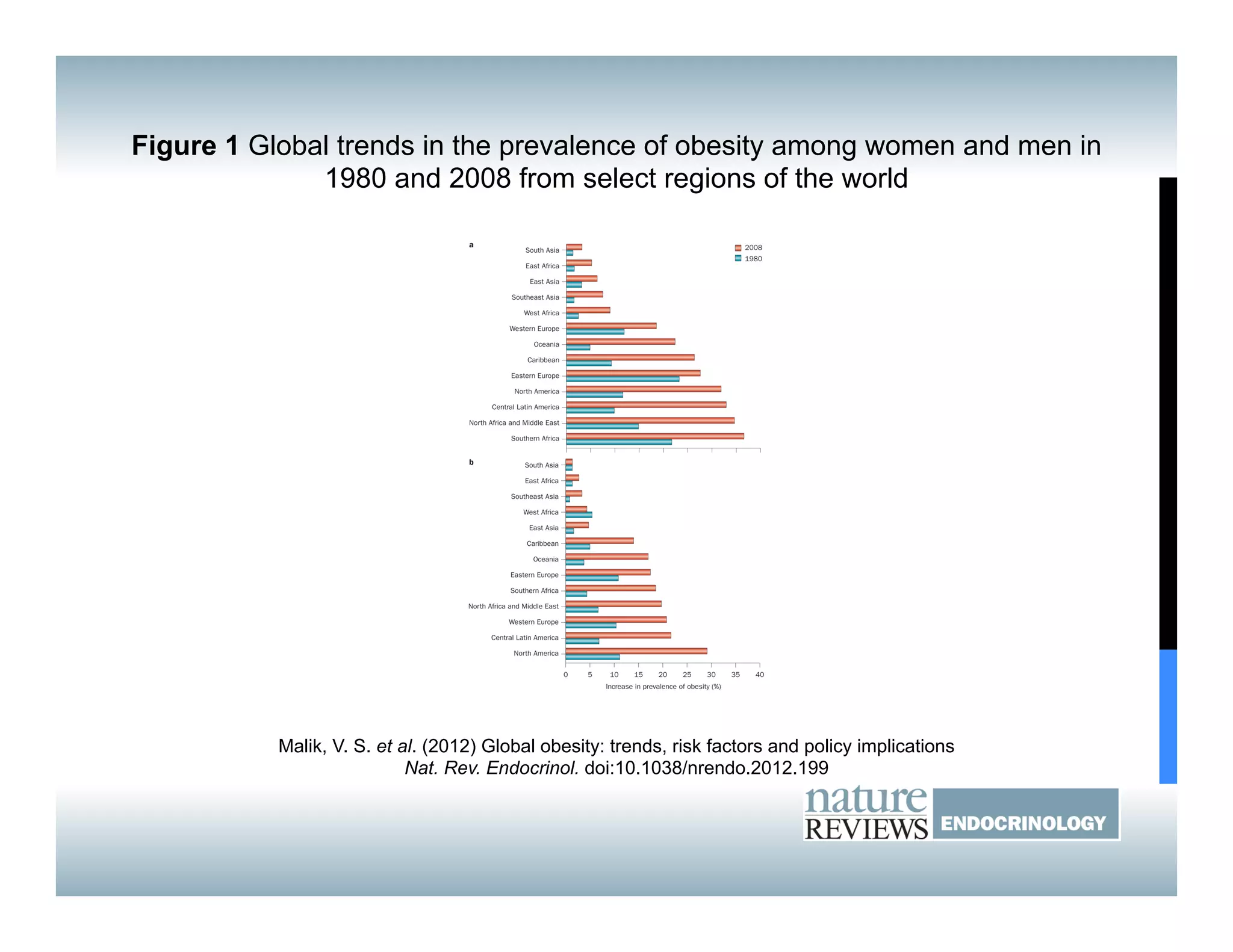
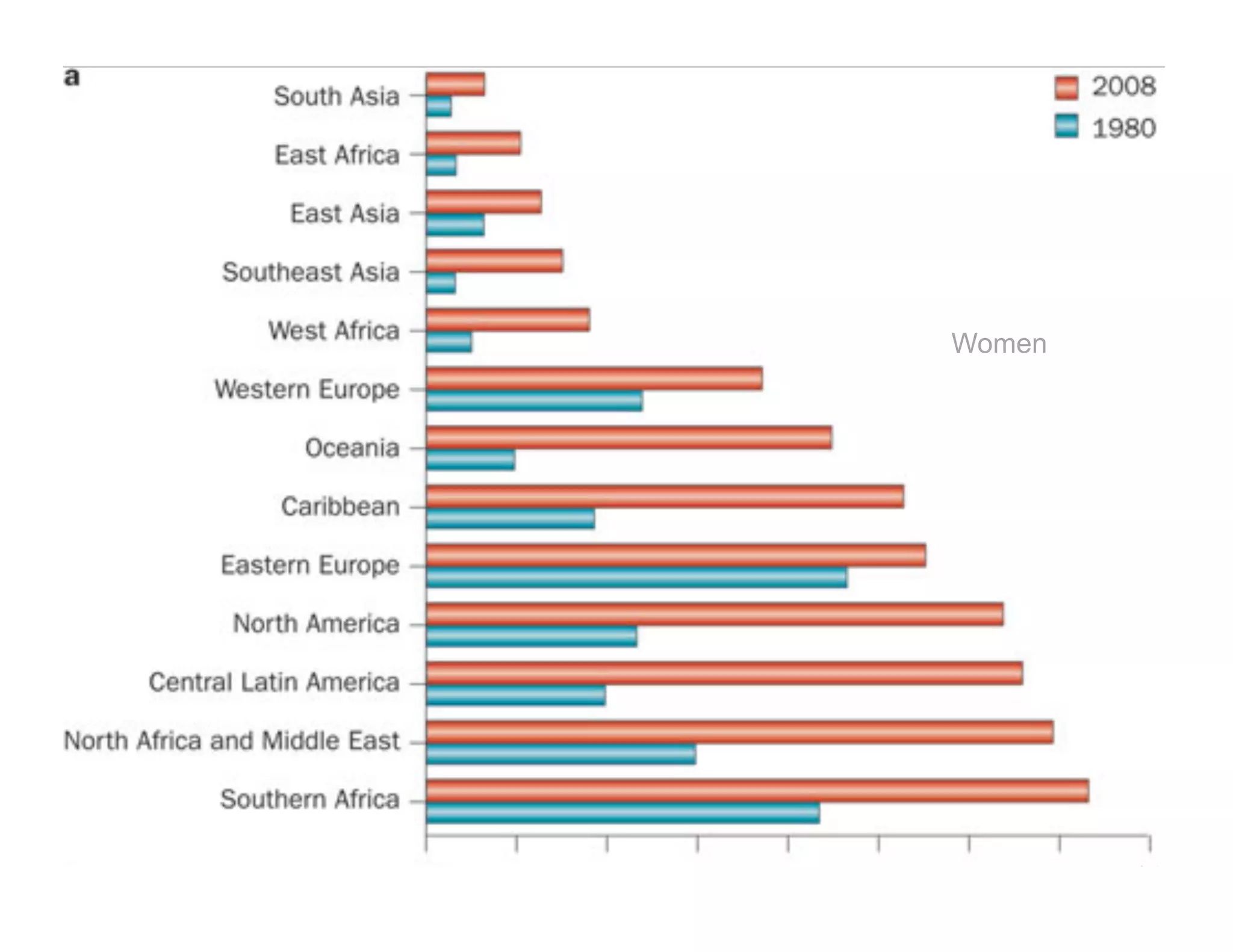
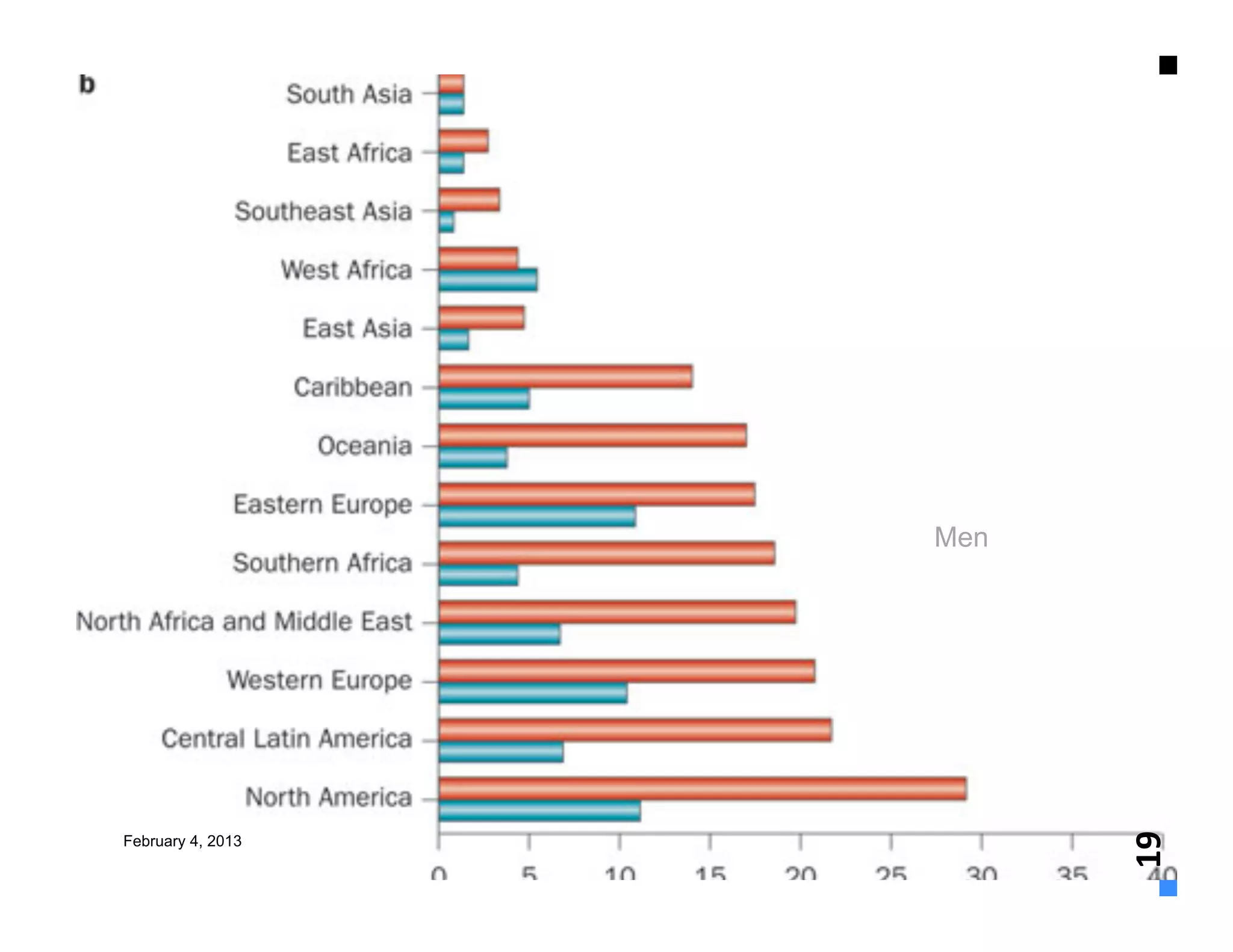
Figure 1 Global trends in the prevalence of obesity among women and men in
              1980 and 2008 from select regions of the world


           Malik, V. S. et al. (2012) Global obesity: trends, risk factors and policy implications
                            Nat. Rev. Endocrinol. doi:10.1038/nrendo.2012.199
Women


18	
  
Men


                         19	
  
February 4, 2013
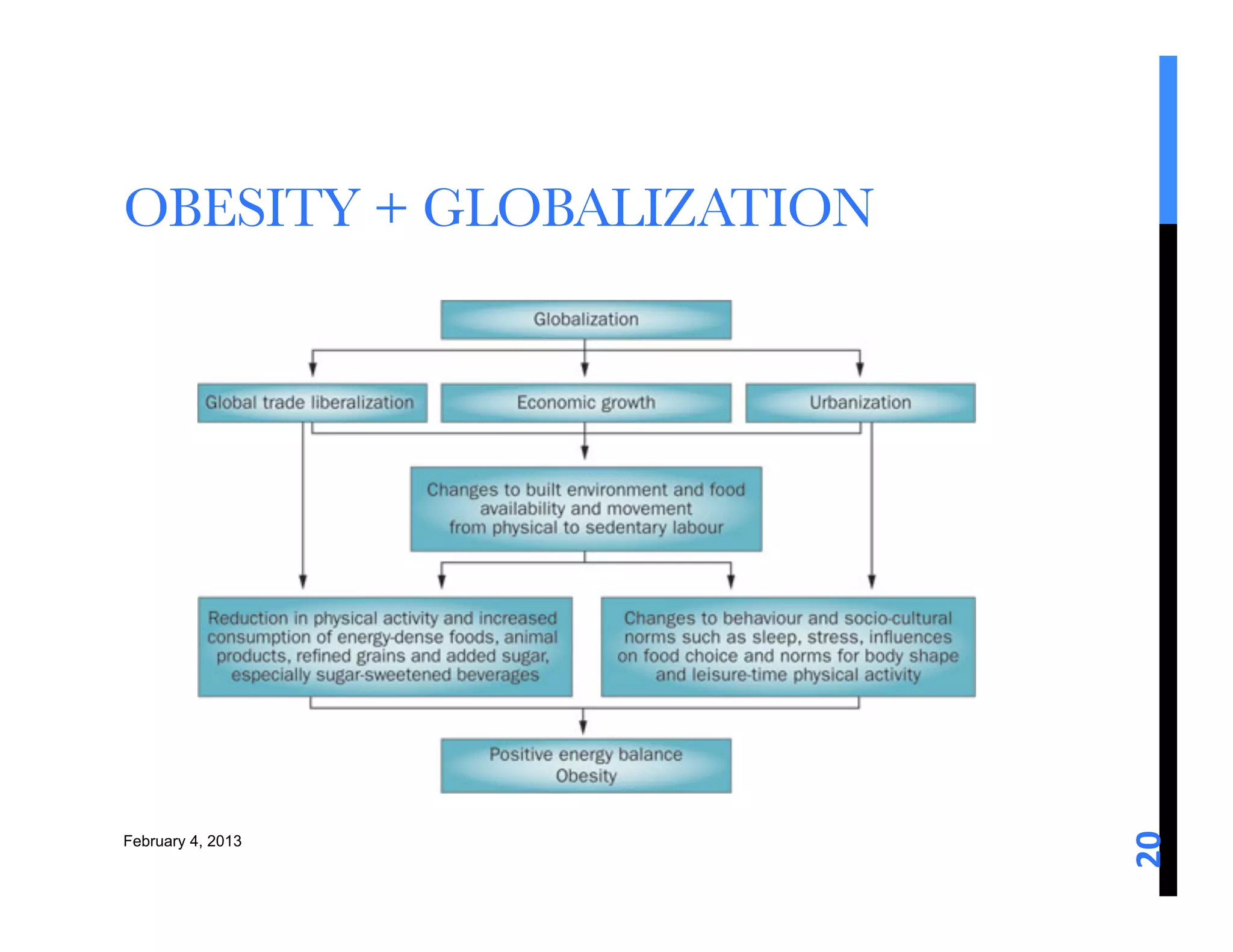
OBESITY + GLOBALIZATION 


                            20	
  
February 4, 2013
THINKING IN
CIRCLES ABOUT
OBESITY
APPLYING SYSTEMS THINKING TO WEIGHT MANAGEMENT. 
TAREK K. A. HABI


                                                    21	
  
February 4, 2013
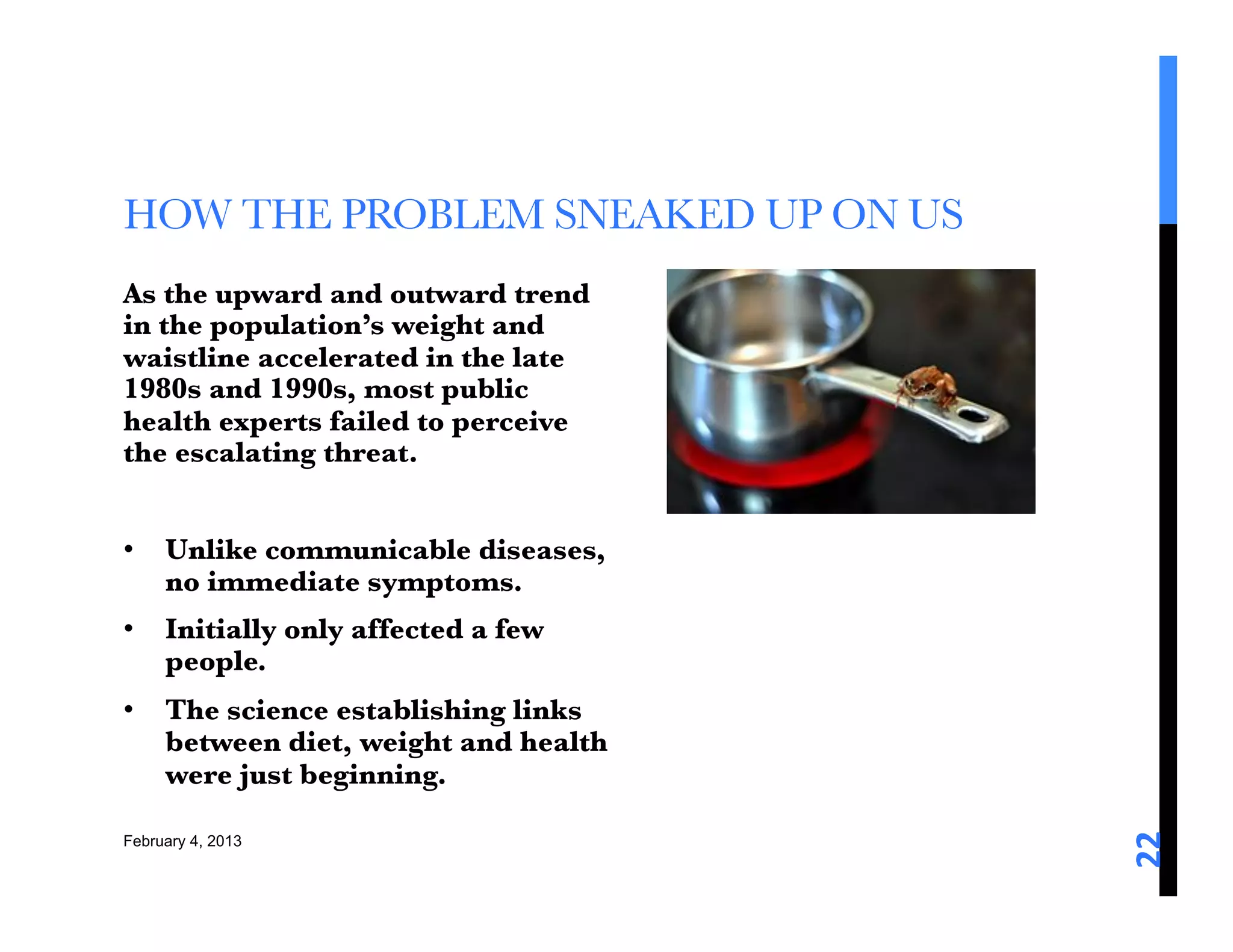
HOW THE PROBLEM SNEAKED UP ON US 
As the upward and outward trend
in the population’s weight and
waistline accelerated in the late
1980s and 1990s, most public
health experts failed to perceive
the escalating threat. 

•  Unlike communicable diseases,
   no immediate symptoms.
•  Initially only affected a few
   people. 
•  The science establishing links
   between diet, weight and health
   were just beginning. 


                                     22	
  
February 4, 2013
HOW MANY CAUSES
CAN WE COUNT? 


                   23	
  
February 4, 2013
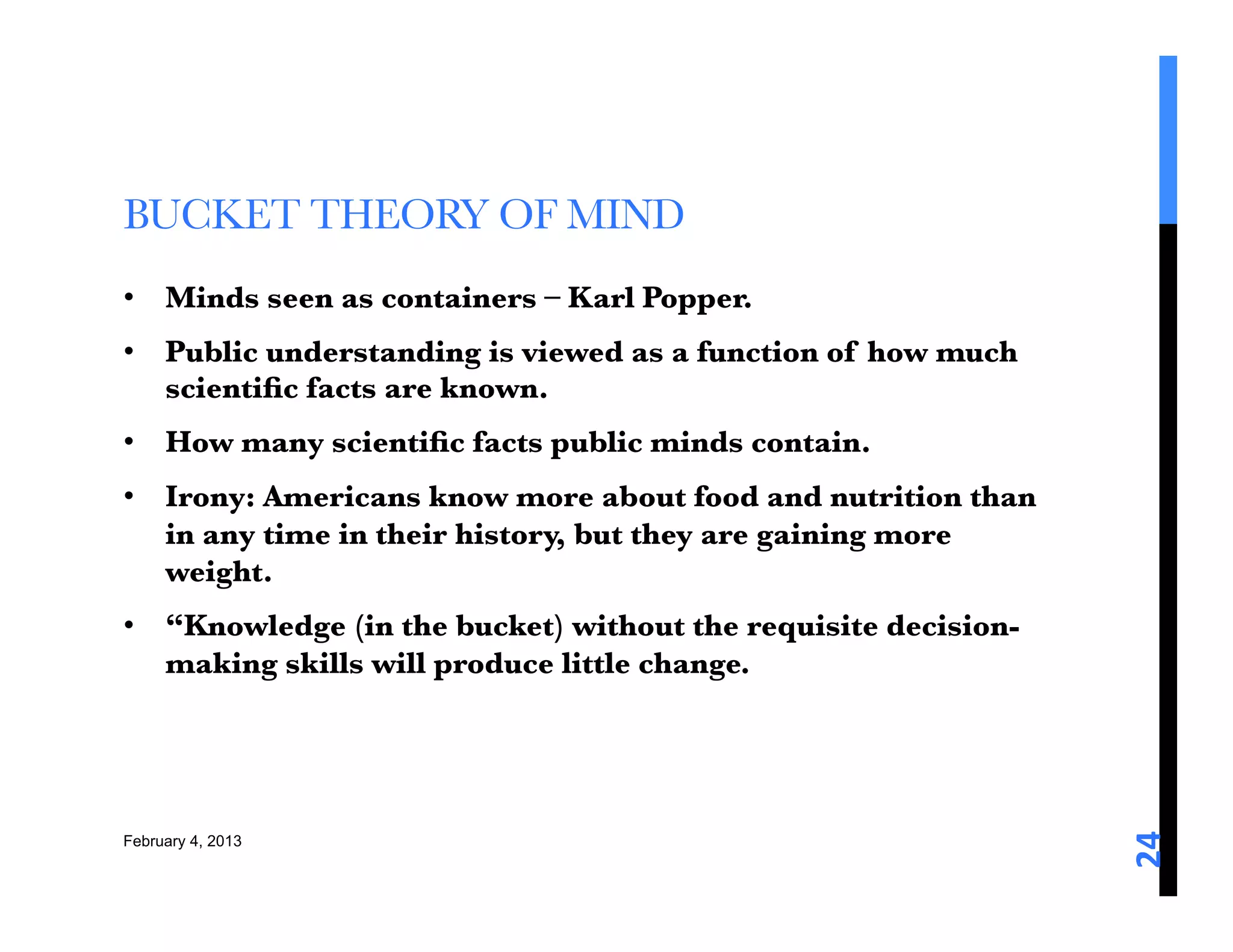
BUCKET THEORY OF MIND
•  Minds seen as containers – Karl Popper. 
•  Public understanding is viewed as a function of how much
   scientific facts are known. 
•  How many scientific facts public minds contain. 
•  Irony: Americans know more about food and nutrition than
   in any time in their history, but they are gaining more
   weight. 
•  “Knowledge (in the bucket) without the requisite decision-
   making skills will produce little change. 


                                                                24	
  
February 4, 2013
THE LEVERAGE (OR THE IMPEDIMENT) IS
WITH THE PEOPLE 


•    In the US, most obese individuals attempting to lose weight do so
     themselves, without seeking professional help. 
•    Weight has been seen as an individual, personal problem. 
•    The wellness movement is rooted in the concept of personal control. 


                                                                             25	
  
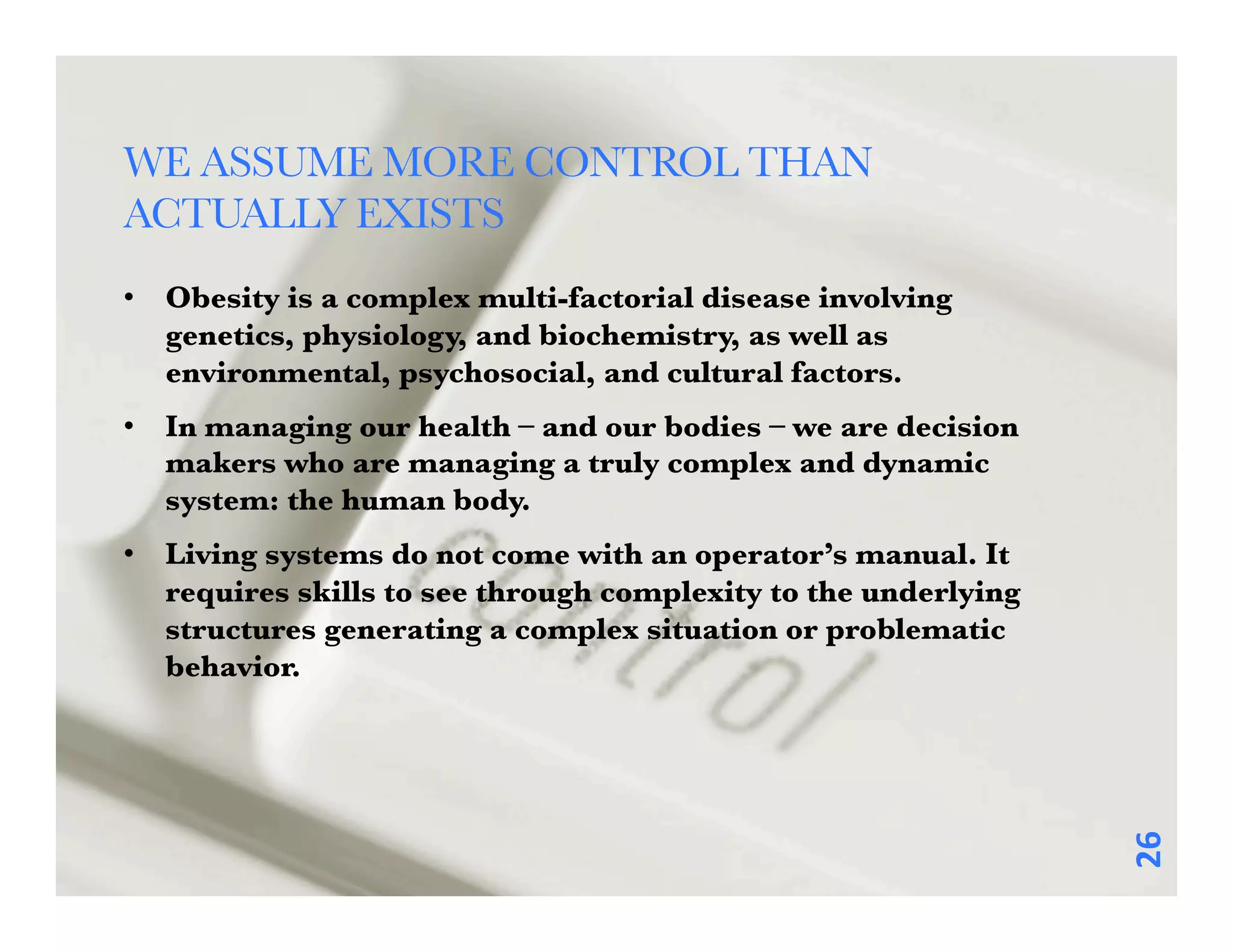
WE ASSUME MORE CONTROL THAN
ACTUALLY EXISTS 
•  Obesity is a complex multi-factorial disease involving
   genetics, physiology, and biochemistry, as well as
   environmental, psychosocial, and cultural factors. 
•  In managing our health – and our bodies – we are decision
   makers who are managing a truly complex and dynamic
   system: the human body. 
•  Living systems do not come with an operator’s manual. It
   requires skills to see through complexity to the underlying
   structures generating a complex situation or problematic
   behavior. 


                                                                 26	
  
IT’S SO EASY
CALORIES IN. CALORIES OUT. 


                               27	
  
February 4, 2013
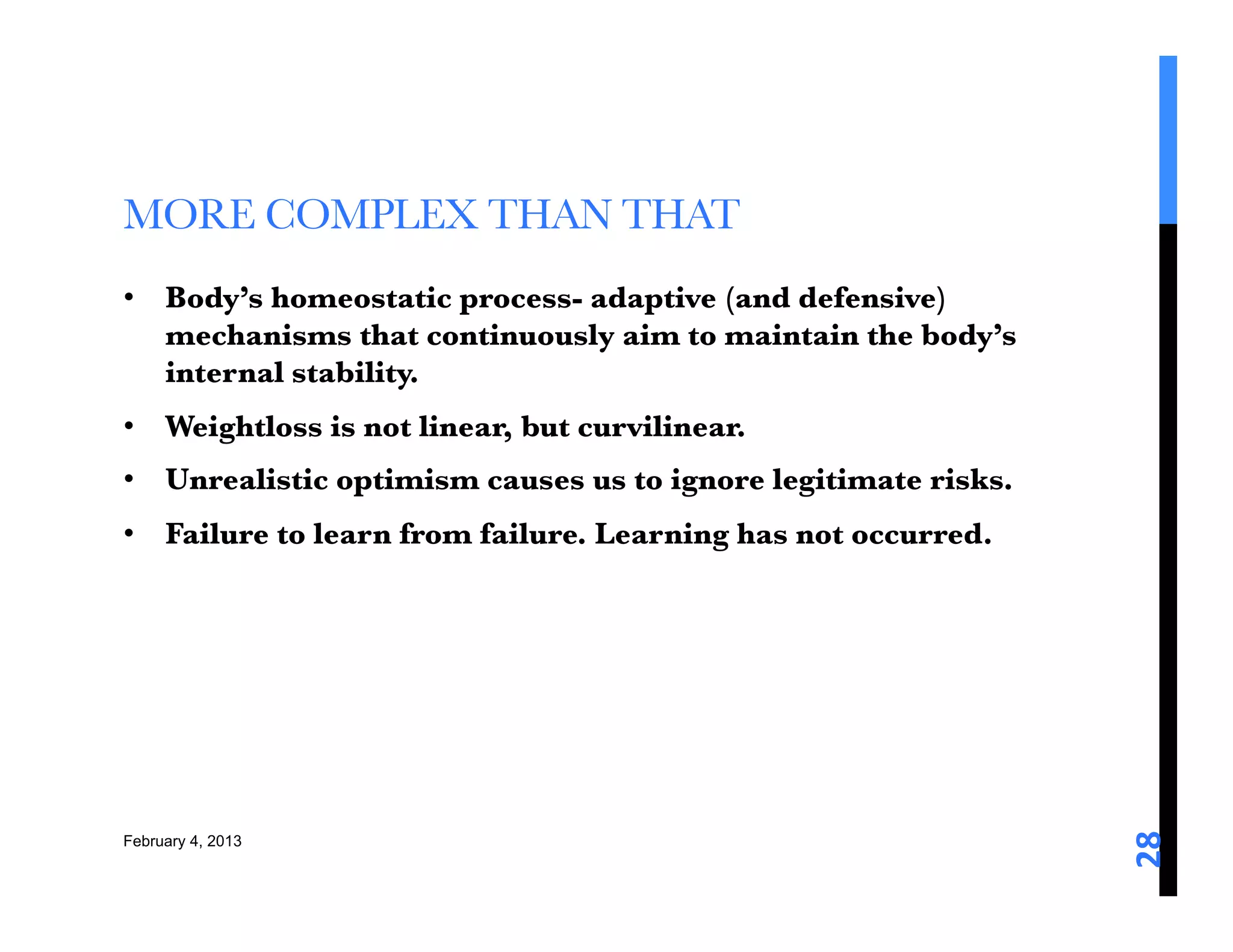
MORE COMPLEX THAN THAT 
•  Body’s homeostatic process- adaptive (and defensive)
   mechanisms that continuously aim to maintain the body’s
   internal stability. 
•  Weightloss is not linear, but curvilinear. 
•  Unrealistic optimism causes us to ignore legitimate risks. 
•  Failure to learn from failure. Learning has not occurred. 


                                                                  28	
  
February 4, 2013
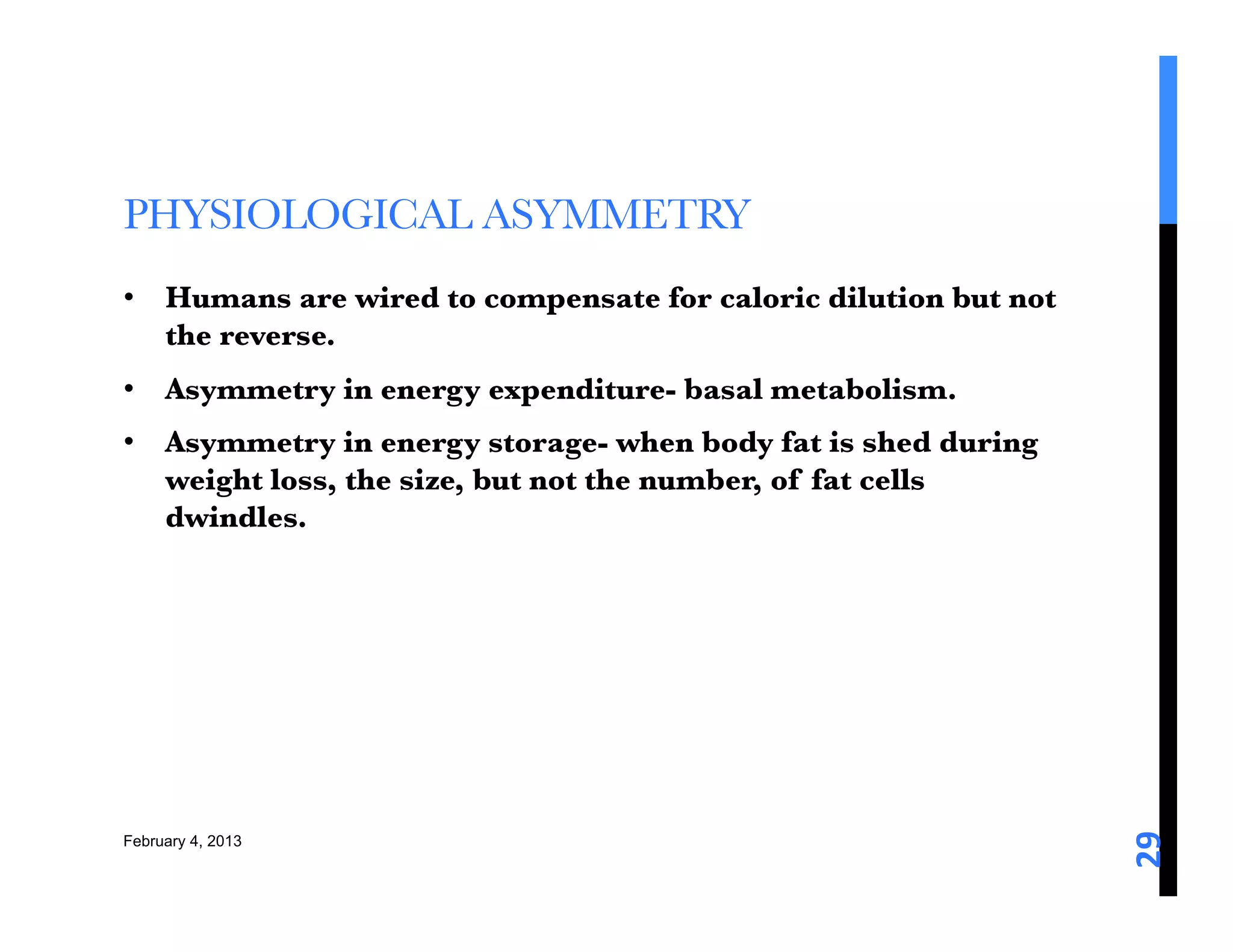
PHYSIOLOGICAL ASYMMETRY
•  Humans are wired to compensate for caloric dilution but not
   the reverse. 
•  Asymmetry in energy expenditure- basal metabolism. 
•  Asymmetry in energy storage- when body fat is shed during
   weight loss, the size, but not the number, of fat cells
   dwindles. 


                                                                 29	
  
February 4, 2013
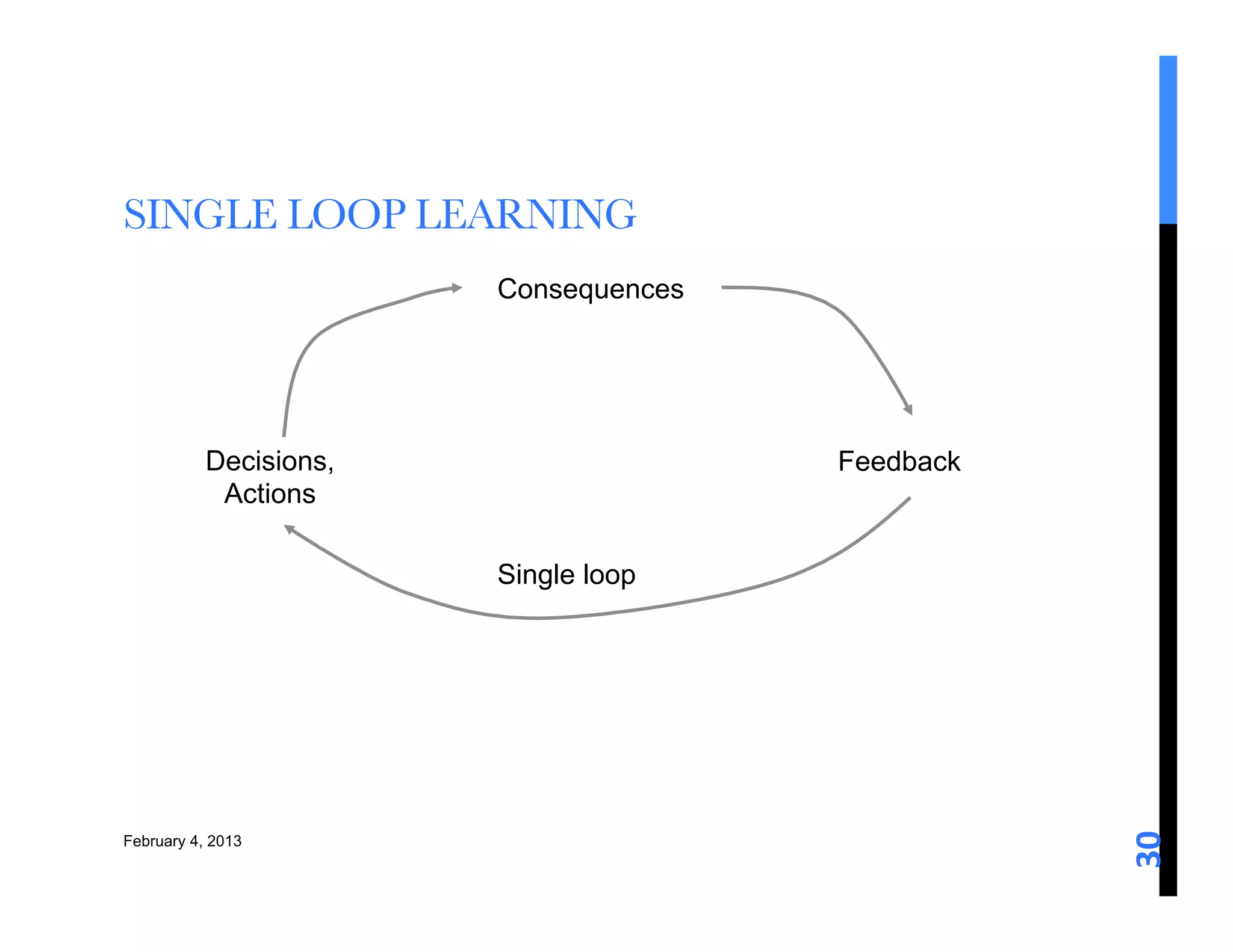
SINGLE LOOP LEARNING 
                        Consequences


           Decisions,                  Feedback
            Actions

                        Single loop


                                                  30	
  
February 4, 2013
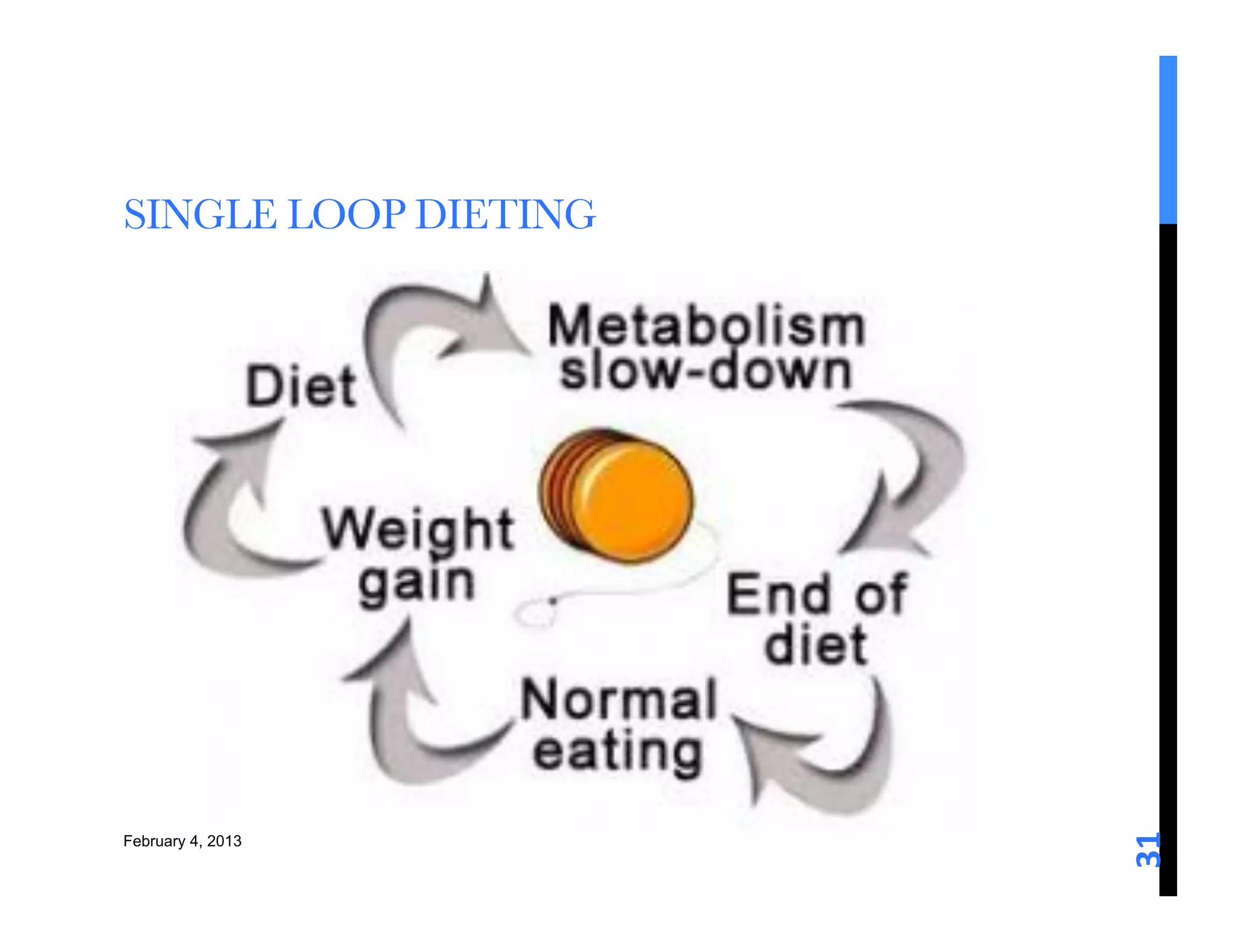
SINGLE LOOP DIETING 


                        31	
  
February 4, 2013
SINGLE LOOP LEARNING 
•  Often we find ways to move closer to our desired state
   without changing our mental model. 
•  Learning to use life’s raw experiences to adjust our
   entrenched worldviews is hard and, therefore, uncommon. 
•  Experience, after all, provides only data, the raw ingredients
   for learning, not knowledge. 
•  Single loop: we learn to tweak our decisions without altering
   our mental models or their associated decision rules. 
•  (A thermostat that sense when it is too hot or cold). 


                                                                    32	
  
February 4, 2013
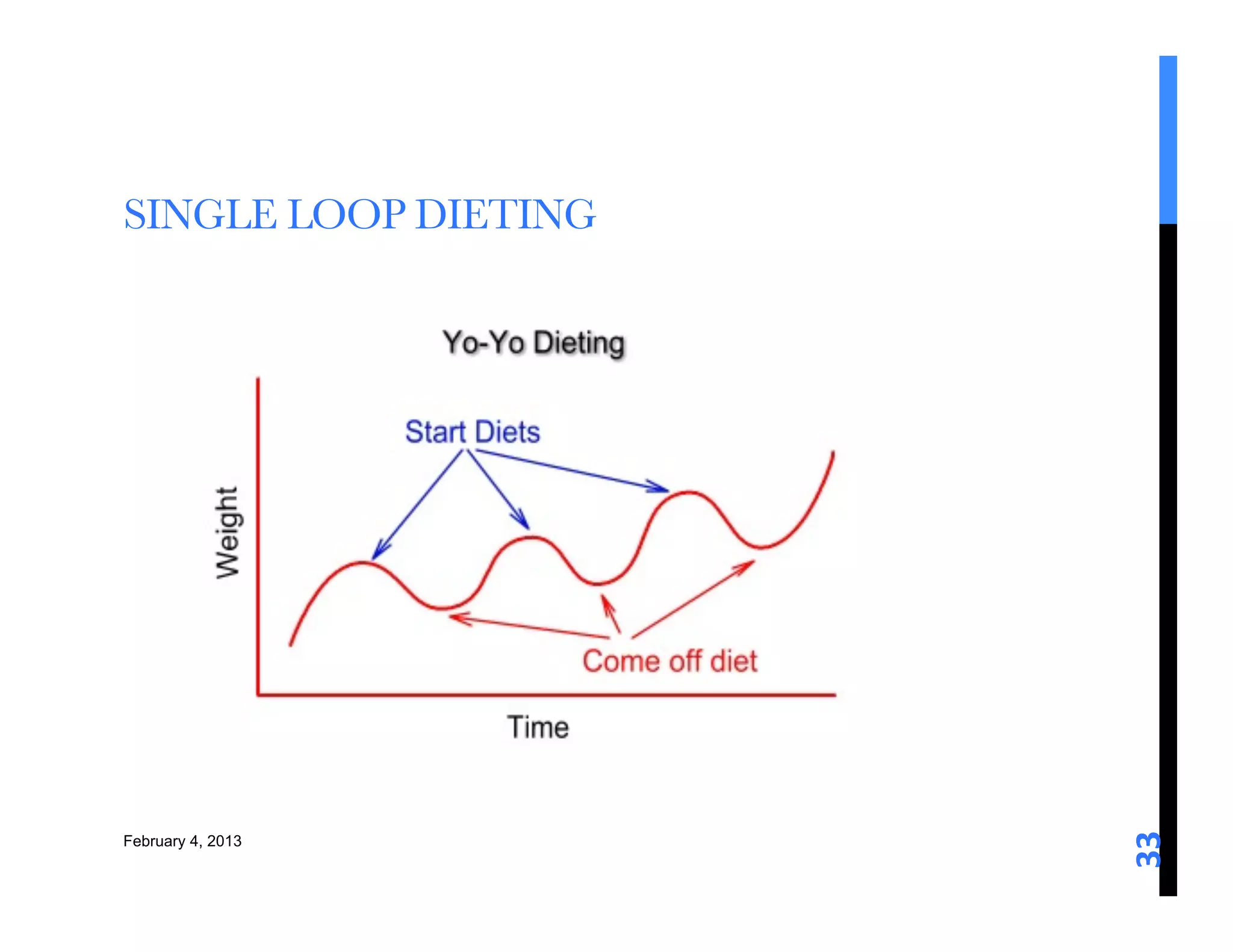
SINGLE LOOP DIETING 


                        33	
  
February 4, 2013
WHAT IS TO BE
DONE

CHALLENGE INGRAINED ASSUMPTIONS 


                                    34	
  
February 4, 2013
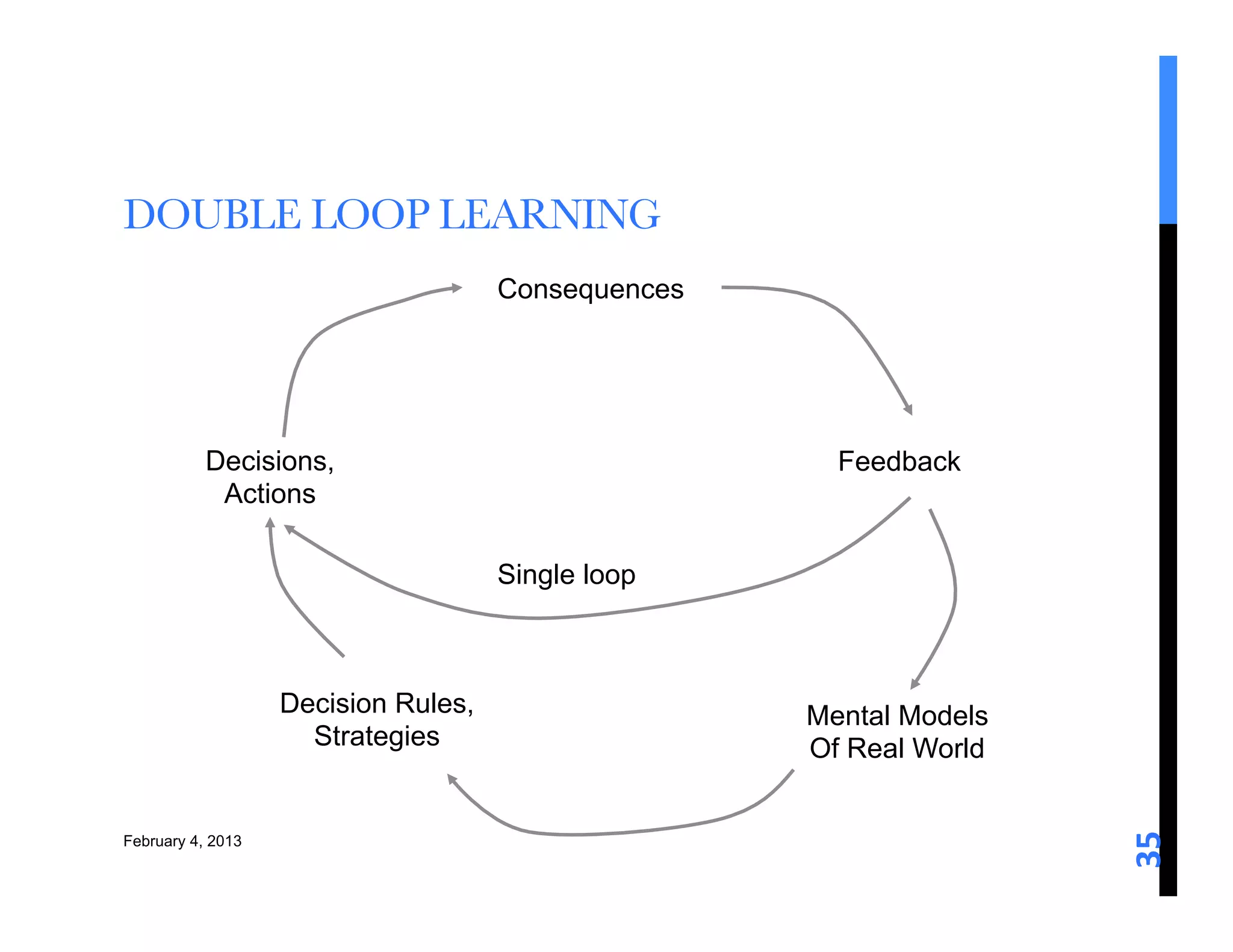
DOUBLE LOOP LEARNING 
                                     Consequences


           Decisions,                                 Feedback
            Actions

                                     Single loop


                   Decision Rules,                  Mental Models
                     Strategies                     Of Real World


                                                                    35	
  
February 4, 2013
DOUBLE LOOP LEARNING 
•  Learning that occurs when we use the feedback information
   to enhance our fundamental understanding of the decision
   task. 
•  Learning is discovery of mental maps and decision rules
   that are better aligned with the decision task at hand. 


                                                               36	
  
February 4, 2013
SHIFT IN PUBLIC POLICY
•  From: stuff buckets with nutritional guidelines/scare into
   good health 
•  To: challenge people’s deeply ingrained assumptions.
   Provide them with the conceptual skills to JUMP. 
•  From: attention on the separate mechanisms of human
   weight and energy regulation. 
•  To: the hole bioenergetics systems as an integrated
   operating system. 


                                                                37	
  
February 4, 2013
FRAGMENTIC ANALYSIS LENS
•  Nutrition out of the context of lifestyle
•  Biology out of the context of behavior
•  Behavior out of the context of environment 


“The performance of any system (whether it is an oil refinery,
an economy, or the human body) obviously depends on the
performance of its parts, but a system’s performance is never
equal to the sum of the actions of its parts taken separately. 

Rather it is a function of their interactions.”


                                                                   38	
  
February 4, 2013
SHIFT IN CULTURAL UNDESTANDING 
•  From: solely individual interventions. A sole focus on the
   obese person and how to help them gain control. 
•  To: Why is society obese. How can we help society. 


                                                                39	
  
February 4, 2013
SHIFT HEALTHCARE PRACTICE


                             40	
  
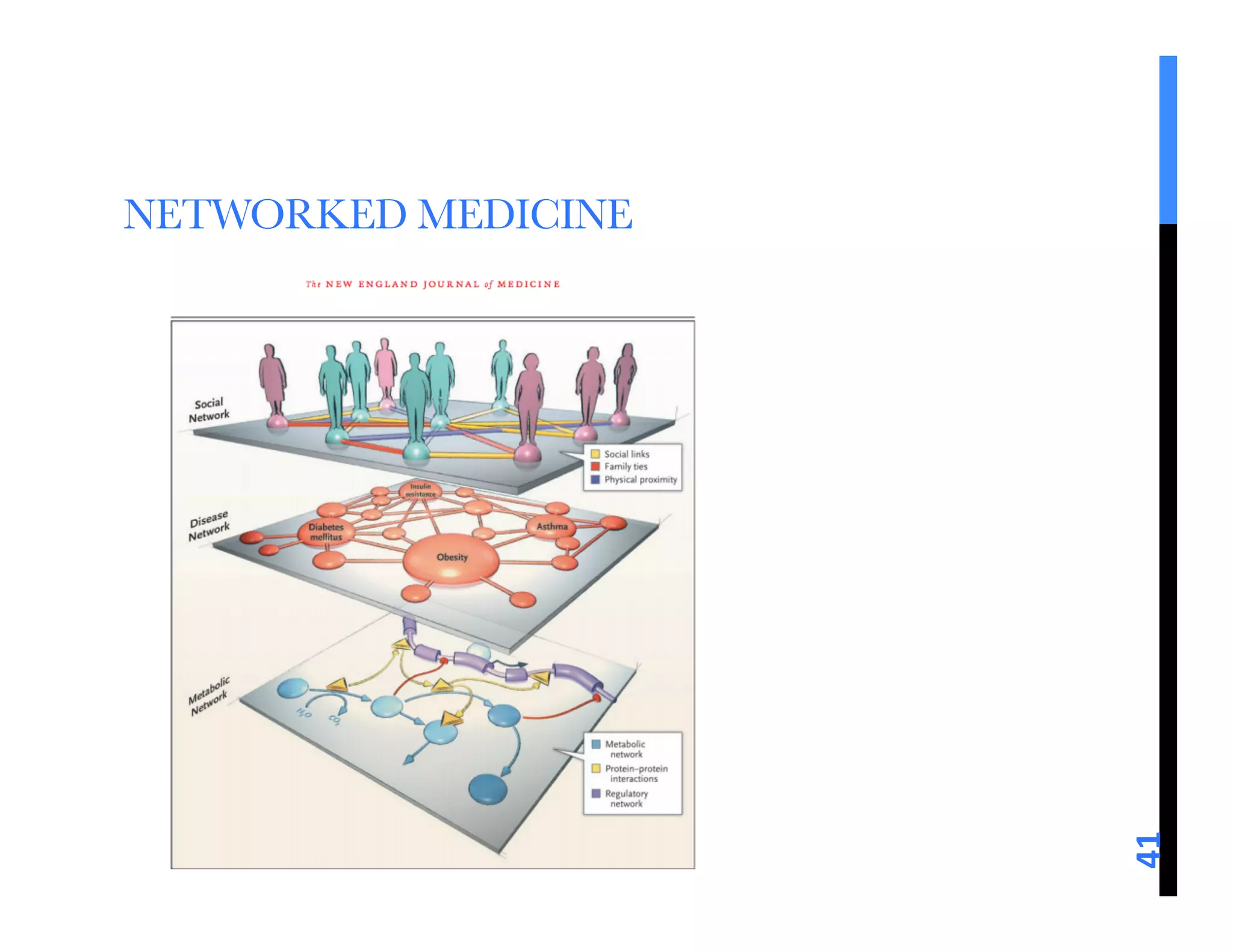
NETWORKED MEDICINE


                      41	
  
ASSIGNMENT:
FEBRUARY 11


                   42	
  
February 4, 2013
READING 
Read: Networked Medicine: From m Obesity to the “Diseasome”. Editorial
by Albert-László Barabási, Ph.D. NEJM. July 26, 2007. 

Optional: 
Deeper Reading: 
Original Study by Christakis and Fowler:
The Spread of Obesity in a Large Social Network over 32 Years. NEJM. July
26, 2007. 
Critique of this study: Lyons. 
The Spread of Evidence-Poor Medicine via Flawed Social-Network Analysis.
Statistics, Politics, and Policy: (2011) Vol. 2 : Iss. 1, Article 2. Last revised 5
May 2011
Watch:
Catherine Kerr on Cortical Measures in Mindfulness Meditation at
Quantified Self. 
Personal account of Weight Watchers by Laura Beck at Jezebel. 


                                                                                      43	
  

February 4, 2013
ASSIGMENT
When developing ideas and concepts for our student projects,
and future projects, business ideas, and save-the-world ideas, we
often start by designing for ourselves.

For this assignment, research a part of the world at a local level
(city, state, province, county) that has a problem with obesity.
The only requirement: pick somewhere that you have never been.

In a one page essay, describe the social, cultural, technological,
economic, and other conditions of this region that may be
contributing to a growth in the prevalence of obesity. You may
choose to write a non-fiction account or take this as a creative
writing assignment – imagining a first person day-in-the-life
account of what it feels like to live here. 


                                                                     44	
  
February 4, 2013
LINKS AND PRESENTATION 
Today’s class presentation is available 
http://jenvandermeer.com/2013/02/bodies-buildings-
class-2-february-4/
And Links from this presentation are available here at
Annotary. 
https://annotary.com/collections/9149/bodies-and-
buildings-class-2-nyu-itp 


                                                         45	
  
February 4, 2013

Bodies and buildings nyu itp 2 4 13

  • 1.
    BODIES & BUILDINGS NYU ITPLECTURE COURSE SPRING 2013 CLASS 2: FEBRUARY 4, 2013 JEN VAN DER MEER @JENVANDERMEER WWW.JENVANDERMEER.COM
  • 2.
    LEVERAGE POINTS Classassignment for 2/4/2013 Mandatory! Read ALL OF Donella Meadows: Leverage Points: Places to Intervene in a System Take leverage points 9, 8, 7. Write a 1 page or 500-6000 word essay on the following topic: How do mobile apps try to affect leverage points 9, 8, and 7. 9) The length of delays, relative to the rate of system change 8) The strength of negative feedback loops, relative to impacts they are trying to correct against 7) The gain around driving positive feedback loops Give one example and explain how the app is or is not designed to affect each of these leverage points. How effective do you think this app will be at changing behavior? You will be asked to present your work, so practice rehearsing your in class presentation at least two times. February 4, 2013 2  
  • 3.
    PLACES TO INTERVENEIN A SYSTEM: 12. Constants, parameters, numbers (subsidies, taxes, standards) 11. The sizes of buffers and other stabilizing stocks, relative to their flows 10. The structure of material stocks and flows (transport networks, population age structures) 9. Length of delays, relative to the rate of system change 8. The strength of negative feedback loops, relative to the impacts they are trying to correct against 7. The gain around driving positive feedback loops 6. The structure of information flows (who does and does not have access to what kinds of information) 5. The rules of the system (such as incentives, punishments, constraints) 4. The power to add, change, evolve, or self-organize system structure 3. The goals of the system 2. The mindset or paradigm out of which the system – its goals, power structure, rules, its culture-arises 1. The power to transcend paradigms February 4, 2013 3  
  • 4.
    BODIES IN THENEWS LabDoor Launches: lets users search for their dietary supplements and view grades reflecting their clinical efficacy and ingredient safety. New HIPAA rules finalized: When a patient is required by a provider to request records or documents in writing, the request may be made electronically. In a video produced for the release of Bill Gates's 2013 Annual Letter, Swedish academic Hans Rosling explains why common notions of developing vs. developed countries are no longer clear-cut. February 4, 2013 4  
  • 5.
  • 6.
    BODIES + We havemade huge strides in life expectancy, but we have reached limits of growth. February 4, 2013 6  
  • 7.
  • 8.
    US OBESITY GROWTHRATE February 4, 2013 8  
  • 9.
    OBESITY TRENDS Today’s childrenmay well be the first generation of Americans whose life expectancy will be shorter than that of their parents. February 4, 2013 9  
  • 10.
  • 11.
  • 12.
  • 13.
    Data from 3,139counties in the U.S. Quintiles are cohorts of counties ranked by the percentage of people living with poverty. Levine J A Diabetes 2011;60:2667-2668 Copyright © 2011 American Diabetes Association, Inc.
  • 14.
  • 15.
    DIGITAL DIVIDE +DIABETES Social disparities in internet patient portal use in diabetes: evidence that the digital divide extends beyond access. Urmimala Sarkar, Andrew J Karter, Jennifer Y Liu, et al. J Am Med Inform Assoc 2011 18: 318-321 originally published online January 24, 2011. 15  
  • 16.
    GLOBAL OBESITY PANDEMIC “GLOBESITY” GLOBALOBESITY: TRENDS, RISK FACTORS AND POLICY IMPLICATIONS. VASANTI S. MALIK, WALTER C. WILLETT & FRANK B. HU. NATURE REVIEWS ENDOCRINOLOGY 9, 13-27 (JANUARY 2013) 16   February 4, 2013
  • 17.
    Figure 1 Globaltrends in the prevalence of obesity among women and men in 1980 and 2008 from select regions of the world Malik, V. S. et al. (2012) Global obesity: trends, risk factors and policy implications Nat. Rev. Endocrinol. doi:10.1038/nrendo.2012.199
  • 18.
  • 19.
    Men 19   February 4, 2013
  • 20.
    OBESITY + GLOBALIZATION 20   February 4, 2013
  • 21.
    THINKING IN CIRCLES ABOUT OBESITY APPLYINGSYSTEMS THINKING TO WEIGHT MANAGEMENT. TAREK K. A. HABI 21   February 4, 2013
  • 22.
    HOW THE PROBLEMSNEAKED UP ON US As the upward and outward trend in the population’s weight and waistline accelerated in the late 1980s and 1990s, most public health experts failed to perceive the escalating threat. •  Unlike communicable diseases, no immediate symptoms. •  Initially only affected a few people. •  The science establishing links between diet, weight and health were just beginning. 22   February 4, 2013
  • 23.
    HOW MANY CAUSES CANWE COUNT? 23   February 4, 2013
  • 24.
    BUCKET THEORY OFMIND •  Minds seen as containers – Karl Popper. •  Public understanding is viewed as a function of how much scientific facts are known. •  How many scientific facts public minds contain. •  Irony: Americans know more about food and nutrition than in any time in their history, but they are gaining more weight. •  “Knowledge (in the bucket) without the requisite decision- making skills will produce little change. 24   February 4, 2013
  • 25.
    THE LEVERAGE (ORTHE IMPEDIMENT) IS WITH THE PEOPLE •  In the US, most obese individuals attempting to lose weight do so themselves, without seeking professional help. •  Weight has been seen as an individual, personal problem. •  The wellness movement is rooted in the concept of personal control. 25  
  • 26.
    WE ASSUME MORECONTROL THAN ACTUALLY EXISTS •  Obesity is a complex multi-factorial disease involving genetics, physiology, and biochemistry, as well as environmental, psychosocial, and cultural factors. •  In managing our health – and our bodies – we are decision makers who are managing a truly complex and dynamic system: the human body. •  Living systems do not come with an operator’s manual. It requires skills to see through complexity to the underlying structures generating a complex situation or problematic behavior. 26  
  • 27.
    IT’S SO EASY CALORIESIN. CALORIES OUT. 27   February 4, 2013
  • 28.
    MORE COMPLEX THANTHAT •  Body’s homeostatic process- adaptive (and defensive) mechanisms that continuously aim to maintain the body’s internal stability. •  Weightloss is not linear, but curvilinear. •  Unrealistic optimism causes us to ignore legitimate risks. •  Failure to learn from failure. Learning has not occurred. 28   February 4, 2013
  • 29.
    PHYSIOLOGICAL ASYMMETRY •  Humansare wired to compensate for caloric dilution but not the reverse. •  Asymmetry in energy expenditure- basal metabolism. •  Asymmetry in energy storage- when body fat is shed during weight loss, the size, but not the number, of fat cells dwindles. 29   February 4, 2013
  • 30.
    SINGLE LOOP LEARNING Consequences Decisions, Feedback Actions Single loop 30   February 4, 2013
  • 31.
    SINGLE LOOP DIETING 31   February 4, 2013
  • 32.
    SINGLE LOOP LEARNING •  Often we find ways to move closer to our desired state without changing our mental model. •  Learning to use life’s raw experiences to adjust our entrenched worldviews is hard and, therefore, uncommon. •  Experience, after all, provides only data, the raw ingredients for learning, not knowledge. •  Single loop: we learn to tweak our decisions without altering our mental models or their associated decision rules. •  (A thermostat that sense when it is too hot or cold). 32   February 4, 2013
  • 33.
    SINGLE LOOP DIETING 33   February 4, 2013
  • 34.
    WHAT IS TOBE DONE CHALLENGE INGRAINED ASSUMPTIONS 34   February 4, 2013
  • 35.
    DOUBLE LOOP LEARNING Consequences Decisions, Feedback Actions Single loop Decision Rules, Mental Models Strategies Of Real World 35   February 4, 2013
  • 36.
    DOUBLE LOOP LEARNING •  Learning that occurs when we use the feedback information to enhance our fundamental understanding of the decision task. •  Learning is discovery of mental maps and decision rules that are better aligned with the decision task at hand. 36   February 4, 2013
  • 37.
    SHIFT IN PUBLICPOLICY •  From: stuff buckets with nutritional guidelines/scare into good health •  To: challenge people’s deeply ingrained assumptions. Provide them with the conceptual skills to JUMP. •  From: attention on the separate mechanisms of human weight and energy regulation. •  To: the hole bioenergetics systems as an integrated operating system. 37   February 4, 2013
  • 38.
    FRAGMENTIC ANALYSIS LENS • Nutrition out of the context of lifestyle •  Biology out of the context of behavior •  Behavior out of the context of environment “The performance of any system (whether it is an oil refinery, an economy, or the human body) obviously depends on the performance of its parts, but a system’s performance is never equal to the sum of the actions of its parts taken separately. Rather it is a function of their interactions.” 38   February 4, 2013
  • 39.
    SHIFT IN CULTURALUNDESTANDING •  From: solely individual interventions. A sole focus on the obese person and how to help them gain control. •  To: Why is society obese. How can we help society. 39   February 4, 2013
  • 40.
  • 41.
  • 42.
    ASSIGNMENT: FEBRUARY 11 42   February 4, 2013
  • 43.
    READING Read: NetworkedMedicine: From m Obesity to the “Diseasome”. Editorial by Albert-László Barabási, Ph.D. NEJM. July 26, 2007. Optional: Deeper Reading: Original Study by Christakis and Fowler: The Spread of Obesity in a Large Social Network over 32 Years. NEJM. July 26, 2007. Critique of this study: Lyons. The Spread of Evidence-Poor Medicine via Flawed Social-Network Analysis. Statistics, Politics, and Policy: (2011) Vol. 2 : Iss. 1, Article 2. Last revised 5 May 2011 Watch: Catherine Kerr on Cortical Measures in Mindfulness Meditation at Quantified Self. Personal account of Weight Watchers by Laura Beck at Jezebel. 43   February 4, 2013
  • 44.
    ASSIGMENT When developing ideasand concepts for our student projects, and future projects, business ideas, and save-the-world ideas, we often start by designing for ourselves. For this assignment, research a part of the world at a local level (city, state, province, county) that has a problem with obesity. The only requirement: pick somewhere that you have never been. In a one page essay, describe the social, cultural, technological, economic, and other conditions of this region that may be contributing to a growth in the prevalence of obesity. You may choose to write a non-fiction account or take this as a creative writing assignment – imagining a first person day-in-the-life account of what it feels like to live here. 44   February 4, 2013
  • 45.
    LINKS AND PRESENTATION Today’s class presentation is available http://jenvandermeer.com/2013/02/bodies-buildings- class-2-february-4/ And Links from this presentation are available here at Annotary. https://annotary.com/collections/9149/bodies-and- buildings-class-2-nyu-itp 45   February 4, 2013