D D O S AT TAC K
NAME P CHAKRADHAR
REGD NO. 2101204037
22.11.2024
A Distributed Denial of Service (DDoS) attack is an attempt to make an online service
unavailable by overwhelming it with traffice from multiple source
DDos Duration: not defined
Targets: Game industries, banks, news websites
WHAT IS
DISTRIBUTED DENIAL OF SERVICE ATTACKS
The average DDoS attack is about 50 gbps
Multiple Systems and Botnets:
• Botnets: Attackers control a network of compromised devices
(botnets) to generate massive amounts of traffic.
• Sources: These devices can include computers, IoT devices, and
even mobile phones infected with malware.
Attack Vectors:
• Volumetric Attacks: Overwhelm the target’s bandwidth with high-
volume traffic (e.g., UDP floods).
• Protocol Attacks: Exploit weaknesses in network protocols to
exhaust server resources (e.g., SYN floods).
• Application Layer Attacks: Target the application layer by sending
overwhelming numbers of requests, often with HTTP floods.
HOW DDOS ATTACKS
WORK
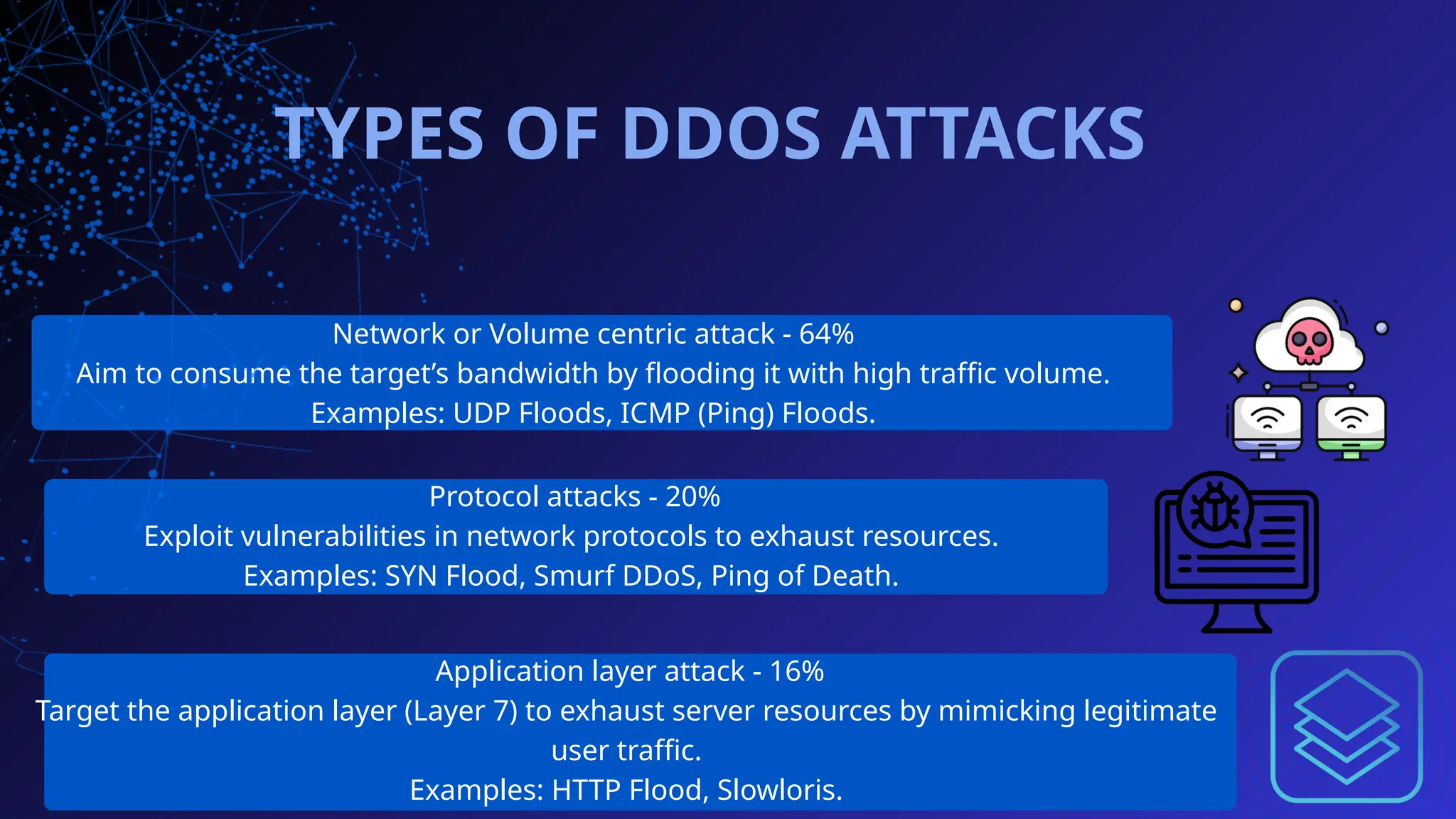
Network or Volume centric attack - 64%
Aim to consume the target’s bandwidth by flooding it with high traffic volume.
Examples: UDP Floods, ICMP (Ping) Floods.
TYPES OF DDOS ATTACKS
Protocol attacks - 20%
Exploit vulnerabilities in network protocols to exhaust resources.
Examples: SYN Flood, Smurf DDoS, Ping of Death.
Application layer attack - 16%
Target the application layer (Layer 7) to exhaust server resources by mimicking legitimate
user traffic.
Examples: HTTP Flood, Slowloris.
1.Large Corporations:
• Targets include financial institutions and large e-commerce platforms.
• Impact: Financial losses and service disruptions affecting thousands of users.
2. Government and Public Sector Websites:
• Often targeted by hacktivists to disrupt public services or make political statements.
• Impact: Loss of citizen services and public trust.
3.Gaming Servers:
• Online multiplayer games and gaming platforms are frequent DDoS targets.
• Impact: Service interruptions for players, reputation damage, and financial losses for gaming
companies.
4.Small Businesses:
• Smaller organizations are increasingly targeted, often because of weaker defenses.
• Impact: Financial and reputational damage, potential data breaches.
COMMON TARGETS OF
DDOS ATTACKS
1.Service Disruption:
• DDoS attacks can cause websites and services to go offline, making them inaccessible to
legitimate users.
• Example: A popular e-commerce site experiencing downtime during a major sale.
2. Financial Losses:
• Downtime leads to lost revenue and additional costs for mitigation.
• Example: Financial institutions may lose thousands of dollars per minute of downtime.
3.Increased Security Costs:
• Organizations may need to invest heavily in stronger defenses, including advanced security
infrastructure and third-party services.
• Example: Using cloud-based DDoS protection services incurs ongoing costs.
IMPACT OF DDOS ATTACKS
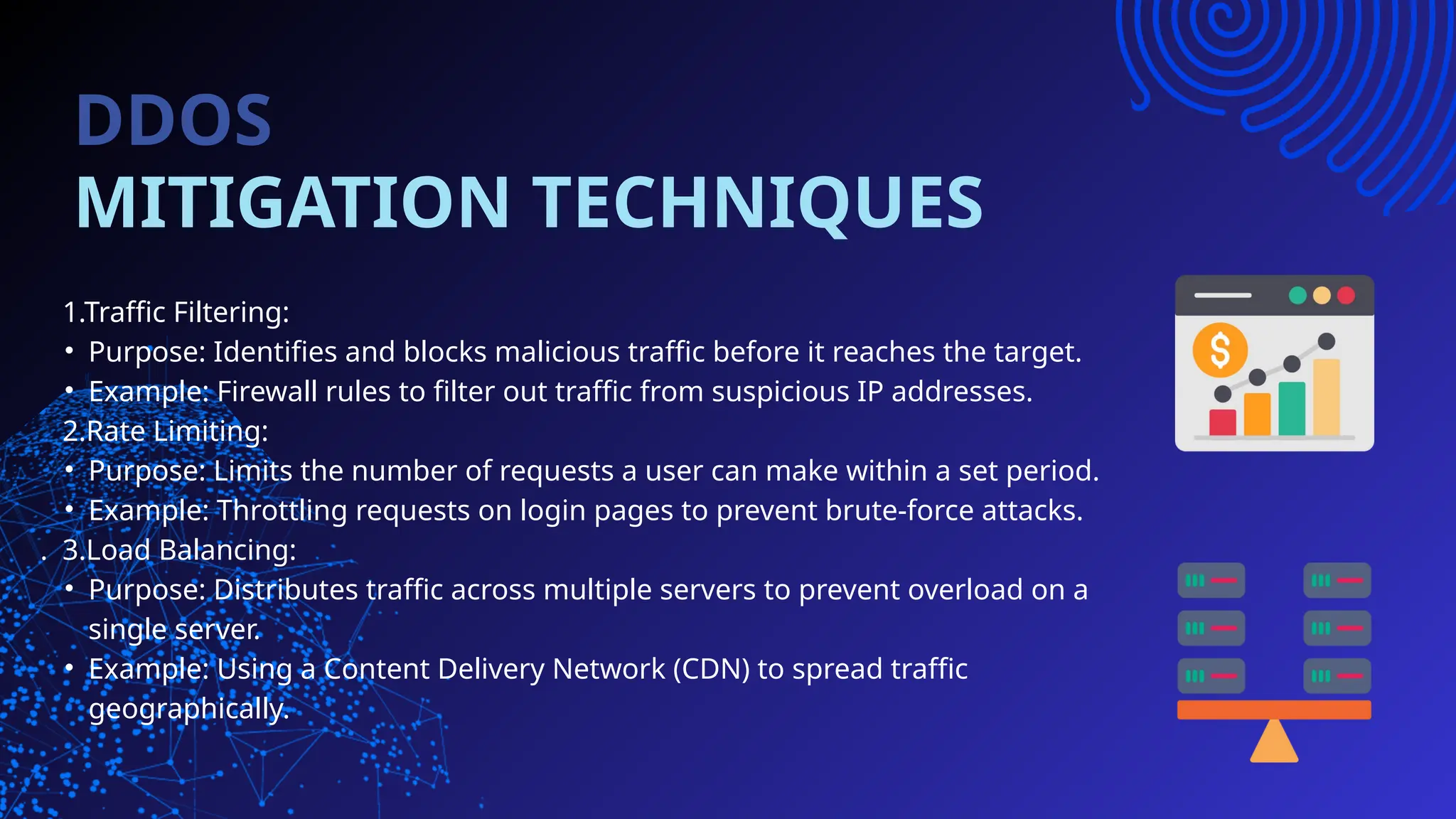
1.Traffic Filtering:
• Purpose: Identifies and blocks malicious traffic before it reaches the target.
• Example: Firewall rules to filter out traffic from suspicious IP addresses.
2.Rate Limiting:
• Purpose: Limits the number of requests a user can make within a set period.
• Example: Throttling requests on login pages to prevent brute-force attacks.
. 3.Load Balancing:
• Purpose: Distributes traffic across multiple servers to prevent overload on a
single server.
• Example: Using a Content Delivery Network (CDN) to spread traffic
geographically.
MITIGATION TECHNIQUES
DDOS
LEGAL AND ETHICAL
CONSIDERATIONS
Legality of DDoS Attacks:
• Cybercrime: DDoS attacks are illegal in most countries,
treated as cybercrimes.
• Criminal Penalties: Offenders may face significant fines,
imprisonment, or both, depending on the severity and
jurisdiction.
Ethical Issues:
• Hacktivism: DDoS attacks are sometimes used by
activists to make political or social statements,
raising debates over ethics versus legality.
• Corporate Espionage: Competing businesses may
use DDoS attacks to harm each other, making ethics
a crucial point.
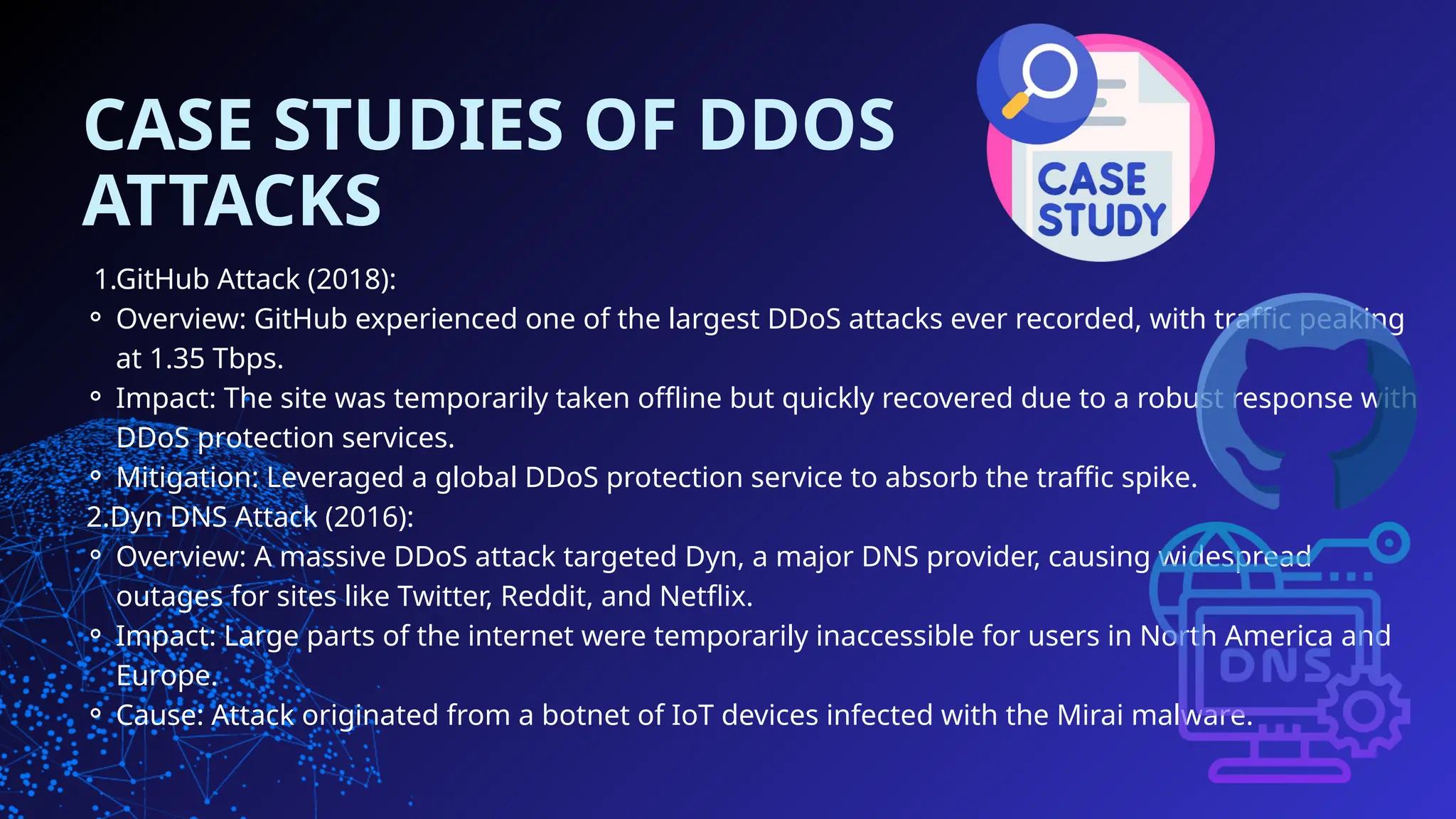
1.GitHub Attack (2018):
⚬ Overview: GitHub experienced one of the largest DDoS attacks ever recorded, with traffic peaking
at 1.35 Tbps.
⚬ Impact: The site was temporarily taken offline but quickly recovered due to a robust response with
DDoS protection services.
⚬ Mitigation: Leveraged a global DDoS protection service to absorb the traffic spike.
2.Dyn DNS Attack (2016):
⚬ Overview: A massive DDoS attack targeted Dyn, a major DNS provider, causing widespread
outages for sites like Twitter, Reddit, and Netflix.
⚬ Impact: Large parts of the internet were temporarily inaccessible for users in North America and
Europe.
⚬ Cause: Attack originated from a botnet of IoT devices infected with the Mirai malware.
CASE STUDIES OF DDOS
ATTACKS
1.Summary of DDoS Attacks:
• DDoS attacks are a major cybersecurity threat that can disrupt services, cause financial losses, and
harm reputations.
• Understanding the different types and impacts of DDoS attacks is crucial for effective prevention and
response.
2.Importance of Preparedness:
• Organizations must invest in proactive defenses, including traffic filtering, rate limiting, and anomaly
detection.
• Being prepared can minimize damage and ensure continuity of services during an attack.
3.Future Outlook:
• With the growth of connected devices, the potential for DDoS attacks will continue to increase.
• Ongoing developments in cybersecurity, including AI-driven detection and cloud protection, are
essential to combat future threats.
CONCLUSION
THANK
YOU

Blue Modern Futuristic Cyber Security Presentation (1).pptx

  • 1.
    D D OS AT TAC K NAME P CHAKRADHAR REGD NO. 2101204037 22.11.2024
  • 2.
    A Distributed Denialof Service (DDoS) attack is an attempt to make an online service unavailable by overwhelming it with traffice from multiple source DDos Duration: not defined Targets: Game industries, banks, news websites WHAT IS DISTRIBUTED DENIAL OF SERVICE ATTACKS The average DDoS attack is about 50 gbps
  • 3.
    Multiple Systems andBotnets: • Botnets: Attackers control a network of compromised devices (botnets) to generate massive amounts of traffic. • Sources: These devices can include computers, IoT devices, and even mobile phones infected with malware. Attack Vectors: • Volumetric Attacks: Overwhelm the target’s bandwidth with high- volume traffic (e.g., UDP floods). • Protocol Attacks: Exploit weaknesses in network protocols to exhaust server resources (e.g., SYN floods). • Application Layer Attacks: Target the application layer by sending overwhelming numbers of requests, often with HTTP floods. HOW DDOS ATTACKS WORK
  • 4.
    Network or Volumecentric attack - 64% Aim to consume the target’s bandwidth by flooding it with high traffic volume. Examples: UDP Floods, ICMP (Ping) Floods. TYPES OF DDOS ATTACKS Protocol attacks - 20% Exploit vulnerabilities in network protocols to exhaust resources. Examples: SYN Flood, Smurf DDoS, Ping of Death. Application layer attack - 16% Target the application layer (Layer 7) to exhaust server resources by mimicking legitimate user traffic. Examples: HTTP Flood, Slowloris.
  • 5.
    1.Large Corporations: • Targetsinclude financial institutions and large e-commerce platforms. • Impact: Financial losses and service disruptions affecting thousands of users. 2. Government and Public Sector Websites: • Often targeted by hacktivists to disrupt public services or make political statements. • Impact: Loss of citizen services and public trust. 3.Gaming Servers: • Online multiplayer games and gaming platforms are frequent DDoS targets. • Impact: Service interruptions for players, reputation damage, and financial losses for gaming companies. 4.Small Businesses: • Smaller organizations are increasingly targeted, often because of weaker defenses. • Impact: Financial and reputational damage, potential data breaches. COMMON TARGETS OF DDOS ATTACKS
  • 6.
    1.Service Disruption: • DDoSattacks can cause websites and services to go offline, making them inaccessible to legitimate users. • Example: A popular e-commerce site experiencing downtime during a major sale. 2. Financial Losses: • Downtime leads to lost revenue and additional costs for mitigation. • Example: Financial institutions may lose thousands of dollars per minute of downtime. 3.Increased Security Costs: • Organizations may need to invest heavily in stronger defenses, including advanced security infrastructure and third-party services. • Example: Using cloud-based DDoS protection services incurs ongoing costs. IMPACT OF DDOS ATTACKS
  • 7.
    1.Traffic Filtering: • Purpose:Identifies and blocks malicious traffic before it reaches the target. • Example: Firewall rules to filter out traffic from suspicious IP addresses. 2.Rate Limiting: • Purpose: Limits the number of requests a user can make within a set period. • Example: Throttling requests on login pages to prevent brute-force attacks. . 3.Load Balancing: • Purpose: Distributes traffic across multiple servers to prevent overload on a single server. • Example: Using a Content Delivery Network (CDN) to spread traffic geographically. MITIGATION TECHNIQUES DDOS
  • 8.
    LEGAL AND ETHICAL CONSIDERATIONS Legalityof DDoS Attacks: • Cybercrime: DDoS attacks are illegal in most countries, treated as cybercrimes. • Criminal Penalties: Offenders may face significant fines, imprisonment, or both, depending on the severity and jurisdiction. Ethical Issues: • Hacktivism: DDoS attacks are sometimes used by activists to make political or social statements, raising debates over ethics versus legality. • Corporate Espionage: Competing businesses may use DDoS attacks to harm each other, making ethics a crucial point.
  • 9.
    1.GitHub Attack (2018): ⚬Overview: GitHub experienced one of the largest DDoS attacks ever recorded, with traffic peaking at 1.35 Tbps. ⚬ Impact: The site was temporarily taken offline but quickly recovered due to a robust response with DDoS protection services. ⚬ Mitigation: Leveraged a global DDoS protection service to absorb the traffic spike. 2.Dyn DNS Attack (2016): ⚬ Overview: A massive DDoS attack targeted Dyn, a major DNS provider, causing widespread outages for sites like Twitter, Reddit, and Netflix. ⚬ Impact: Large parts of the internet were temporarily inaccessible for users in North America and Europe. ⚬ Cause: Attack originated from a botnet of IoT devices infected with the Mirai malware. CASE STUDIES OF DDOS ATTACKS
  • 10.
    1.Summary of DDoSAttacks: • DDoS attacks are a major cybersecurity threat that can disrupt services, cause financial losses, and harm reputations. • Understanding the different types and impacts of DDoS attacks is crucial for effective prevention and response. 2.Importance of Preparedness: • Organizations must invest in proactive defenses, including traffic filtering, rate limiting, and anomaly detection. • Being prepared can minimize damage and ensure continuity of services during an attack. 3.Future Outlook: • With the growth of connected devices, the potential for DDoS attacks will continue to increase. • Ongoing developments in cybersecurity, including AI-driven detection and cloud protection, are essential to combat future threats. CONCLUSION
  • 11.