NUEVA, TALJA, PURTO
THE BLOOD
ANAPHY
REPORTING
THE OBJECTIVES
Composition and
Functions
Components
Plasma
Physical Characteristics
and Volume
Formed Elements
01 02 03
04 05
Blood Cell Formation
06
THE OBJECTIVES
Hemostasis
Blood groups and
Transfusion
Blood Typings
Human Blood Groups
07 08 09
10
THE
COMPOSITION
AND
FUNCTIONS OF
THE BLOOD
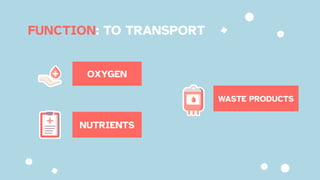
FUNCTION: TO TRANSPORT
OXYGEN
WASTE PRODUCTS
NUTRIENTS
Blood
is a special type of
fluid connective tissue
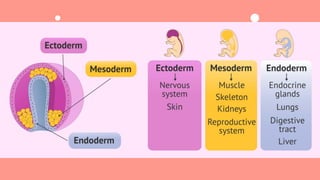
Derived from the
Mesoderm
01
ABOUT US
You can enter a subtitle
here if you need it
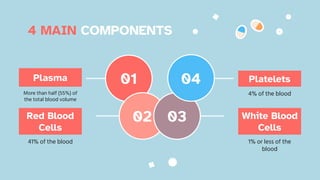
4 MAIN COMPONENTS
Platelets
4% of the blood
01
02 03
04
41% of the blood
Red Blood
Cells
Plasma
More than half (55%) of
the total blood volume
1% or less of the
blood
White Blood
Cells
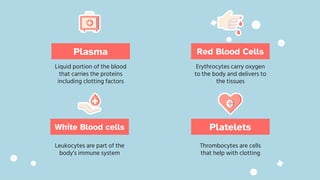
Plasma
Liquid portion of the blood
that carries the proteins
including clotting factors
White Blood cells
Leukocytes are part of the
body’s immune system
Red Blood Cells
Erythrocytes carry oxygen
to the body and delivers to
the tissues
Platelets
Thrombocytes are cells
that help with clotting
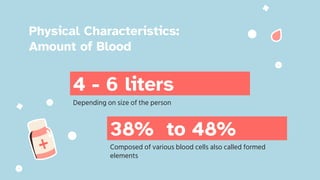
4 - 6 liters
Depending on size of the person
38% to 48%
Composed of various blood cells also called formed
elements
Physical Characteristics:
Amount of Blood
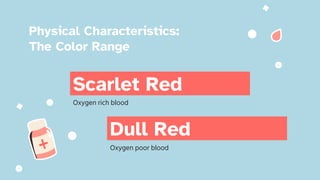
Scarlet Red
Oxygen rich blood
Dull Red
Oxygen poor blood
Physical Characteristics:
The Color Range
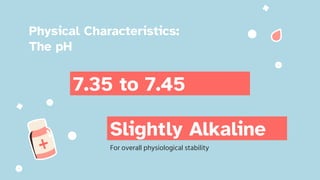
7.35 to 7.45
Slightly Alkaline
For overall physiological stability
Physical Characteristics:
The pH
3-5 times thicker
Viscosity high
Due to the presence of blood cells and plasma proteins
Physical Characteristics:
The Viscosity
Than water
PLASMA
Pale-yellow fluid consisting
91% water, 7% proteins and
2% other substances such as
ions, nutrients, gases, waste
products and regulatory
substances
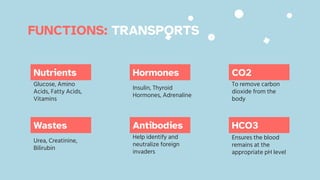
To remove carbon
dioxide from the
body
Ensures the blood
remains at the
appropriate pH level
CO2
HCO3
FUNCTIONS: TRANSPORTS
Nutrients
Glucose, Amino
Acids, Fatty Acids,
Vitamins
Hormones
Insulin, Thyroid
Hormones, Adrenaline
Wastes
Urea, Creatinine,
Bilirubin
Antibodies
Help identify and
neutralize foreign
invaders
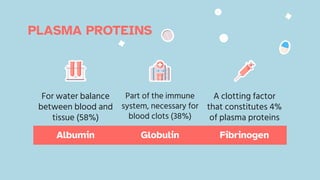
PLASMA PROTEINS
For water balance
between blood and
tissue (58%)
Part of the immune
system, necessary for
blood clots (38%)
A clotting factor
that constitutes 4%
of plasma proteins
Albumin Globulin Fibrinogen
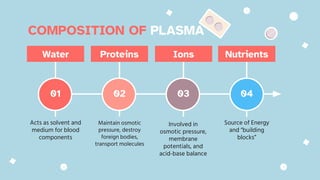
COMPOSITION OF PLASMA
Water
Acts as solvent and
medium for blood
components
Proteins
Maintain osmotic
pressure, destroy
foreign bodies,
transport molecules
Ions
Involved in
osmotic pressure,
membrane
potentials, and
acid-base balance
Nutrients
Source of Energy
and “building
blocks”
01 02 03 04
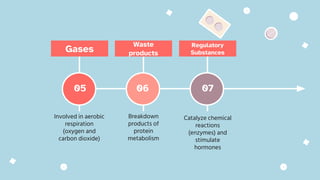
Gases
Involved in aerobic
respiration
(oxygen and
carbon dioxide)
Waste
products
Breakdown
products of
protein
metabolism
Regulatory
Substances
Catalyze chemical
reactions
(enzymes) and
stimulate
hormones
05 06 07
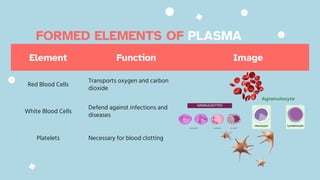
FORMED ELEMENTS OF PLASMA
Element Function Image
Red Blood Cells
Transports oxygen and carbon
dioxide
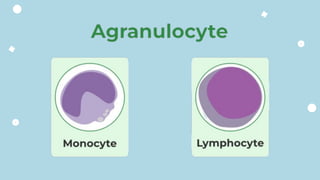
White Blood Cells
Defend against infections and
diseases
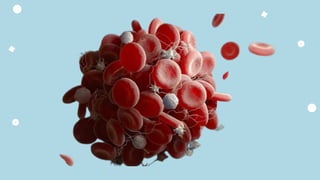
Platelets Necessary for blood clotting
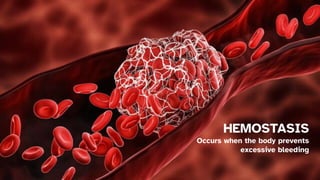
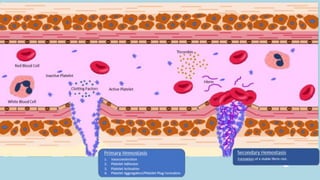
HEMOSTASIS
Occurs when the body prevents
excessive bleeding
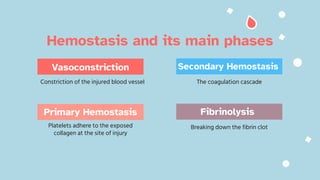
Hemostasis and its main phases
Vasoconstriction
Constriction of the injured blood vessel
Primary Hemostasis
Platelets adhere to the exposed
collagen at the site of injury
Secondary Hemostasis
The coagulation cascade
Fibrinolysis
Breaking down the fibrin clot
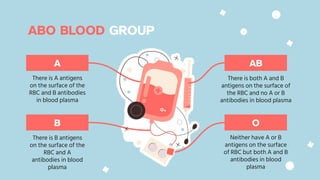
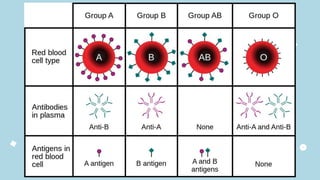
ABO BLOOD GROUP
AB
There is both A and B
antigens on the surface of
the RBC and no A or B
antibodies in blood plasma
O
Neither have A or B
antigens on the surface
of RBC but both A and B
antibodies in blood
plasma
A
There is A antigens
on the surface of the
RBC and B antibodies
in blood plasma
B
There is B antigens
on the surface of the
RBC and A
antibodies in blood
plasma
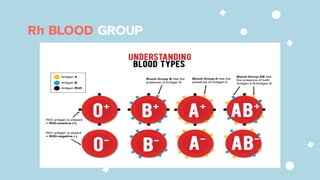
Rh BLOOD GROUP
BLOOD
TRANSFUSIONS
Transfer of blood or blood
components from one
individual to another
IF LARGE QUANTITIES
OF BLOOD IS LOST
A person can go into shock
and die unless a transfusion
or infusion (introduction of
fluid other than blood such as
saline or glucose) is
performed.
BLOOD TYPING
Determines the ABO and Rh
blood groups of a blood
sample.
Thank you! :)

Blood-1.pdf

  • 1.
    NUEVA, TALJA, PURTO THEBLOOD ANAPHY REPORTING
  • 2.
    THE OBJECTIVES Composition and Functions Components Plasma PhysicalCharacteristics and Volume Formed Elements 01 02 03 04 05 Blood Cell Formation 06
  • 3.
    THE OBJECTIVES Hemostasis Blood groupsand Transfusion Blood Typings Human Blood Groups 07 08 09 10
  • 4.
  • 5.
  • 6.
    Blood is a specialtype of fluid connective tissue Derived from the Mesoderm
  • 7.
    01 ABOUT US You canenter a subtitle here if you need it
  • 8.
    4 MAIN COMPONENTS Platelets 4%of the blood 01 02 03 04 41% of the blood Red Blood Cells Plasma More than half (55%) of the total blood volume 1% or less of the blood White Blood Cells
  • 9.
    Plasma Liquid portion ofthe blood that carries the proteins including clotting factors White Blood cells Leukocytes are part of the body’s immune system Red Blood Cells Erythrocytes carry oxygen to the body and delivers to the tissues Platelets Thrombocytes are cells that help with clotting
  • 10.
    4 - 6liters Depending on size of the person 38% to 48% Composed of various blood cells also called formed elements Physical Characteristics: Amount of Blood
  • 11.
    Scarlet Red Oxygen richblood Dull Red Oxygen poor blood Physical Characteristics: The Color Range
  • 12.
    7.35 to 7.45 SlightlyAlkaline For overall physiological stability Physical Characteristics: The pH
  • 13.
    3-5 times thicker Viscosityhigh Due to the presence of blood cells and plasma proteins Physical Characteristics: The Viscosity Than water
  • 14.
    PLASMA Pale-yellow fluid consisting 91%water, 7% proteins and 2% other substances such as ions, nutrients, gases, waste products and regulatory substances
  • 15.
    To remove carbon dioxidefrom the body Ensures the blood remains at the appropriate pH level CO2 HCO3 FUNCTIONS: TRANSPORTS Nutrients Glucose, Amino Acids, Fatty Acids, Vitamins Hormones Insulin, Thyroid Hormones, Adrenaline Wastes Urea, Creatinine, Bilirubin Antibodies Help identify and neutralize foreign invaders
  • 16.
    PLASMA PROTEINS For waterbalance between blood and tissue (58%) Part of the immune system, necessary for blood clots (38%) A clotting factor that constitutes 4% of plasma proteins Albumin Globulin Fibrinogen
  • 17.
    COMPOSITION OF PLASMA Water Actsas solvent and medium for blood components Proteins Maintain osmotic pressure, destroy foreign bodies, transport molecules Ions Involved in osmotic pressure, membrane potentials, and acid-base balance Nutrients Source of Energy and “building blocks” 01 02 03 04
  • 18.
    Gases Involved in aerobic respiration (oxygenand carbon dioxide) Waste products Breakdown products of protein metabolism Regulatory Substances Catalyze chemical reactions (enzymes) and stimulate hormones 05 06 07
  • 19.
    FORMED ELEMENTS OFPLASMA Element Function Image Red Blood Cells Transports oxygen and carbon dioxide White Blood Cells Defend against infections and diseases Platelets Necessary for blood clotting
  • 23.
    HEMOSTASIS Occurs when thebody prevents excessive bleeding
  • 24.
    Hemostasis and itsmain phases Vasoconstriction Constriction of the injured blood vessel Primary Hemostasis Platelets adhere to the exposed collagen at the site of injury Secondary Hemostasis The coagulation cascade Fibrinolysis Breaking down the fibrin clot
  • 26.
    ABO BLOOD GROUP AB Thereis both A and B antigens on the surface of the RBC and no A or B antibodies in blood plasma O Neither have A or B antigens on the surface of RBC but both A and B antibodies in blood plasma A There is A antigens on the surface of the RBC and B antibodies in blood plasma B There is B antigens on the surface of the RBC and A antibodies in blood plasma
  • 28.
  • 29.
    BLOOD TRANSFUSIONS Transfer of bloodor blood components from one individual to another
  • 30.
    IF LARGE QUANTITIES OFBLOOD IS LOST A person can go into shock and die unless a transfusion or infusion (introduction of fluid other than blood such as saline or glucose) is performed.
  • 31.
    BLOOD TYPING Determines theABO and Rh blood groups of a blood sample.
  • 32.