BLOG
BY: ISHAN
Definition: A blog is a regularly updated
website or web page, typically run by
an individual or small group, that is
written in an informal or conversational
style.
Purpose: Share ideas, opinions, and
information; engage with an audience;
build an online presence.
INTRODUCTION
HISTORY
OF BLOGS :
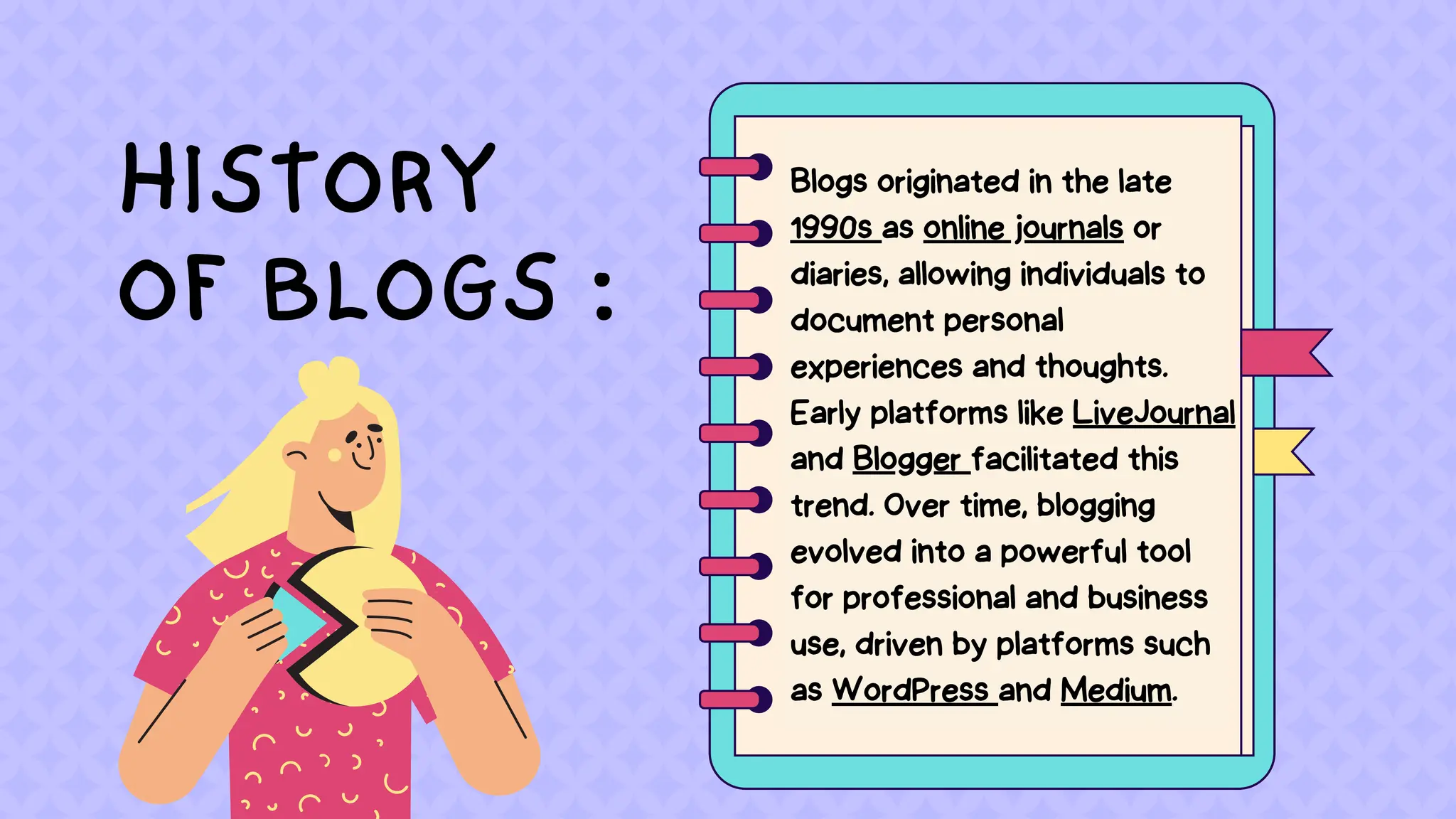
Blogs originated in the late
1990s as online journals or
diaries, allowing individuals to
document personal
experiences and thoughts.
Early platforms like LiveJournal
and Blogger facilitated this
trend. Over time, blogging
evolved into a powerful tool
for professional and business
use, driven by platforms such
as WordPress and Medium.
WHY BLOG
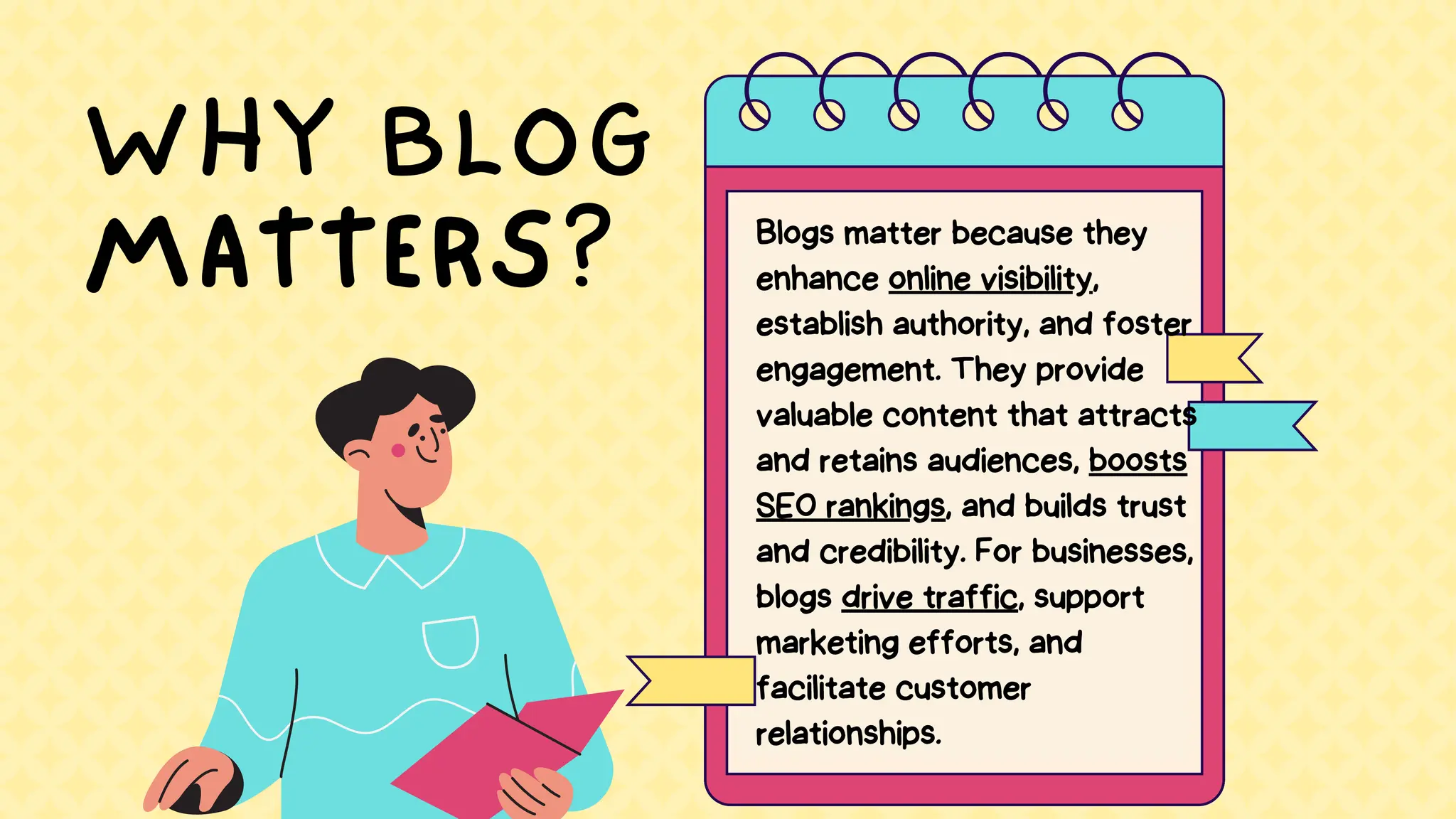
MATTERS? Blogs matter because they
enhance online visibility,
establish authority, and foster
engagement. They provide
valuable content that attracts
and retains audiences, boosts
SEO rankings, and builds trust
and credibility. For businesses,
blogs drive traffic, support
marketing efforts, and
facilitate customer
relationships.
TYPES OF BLOGS
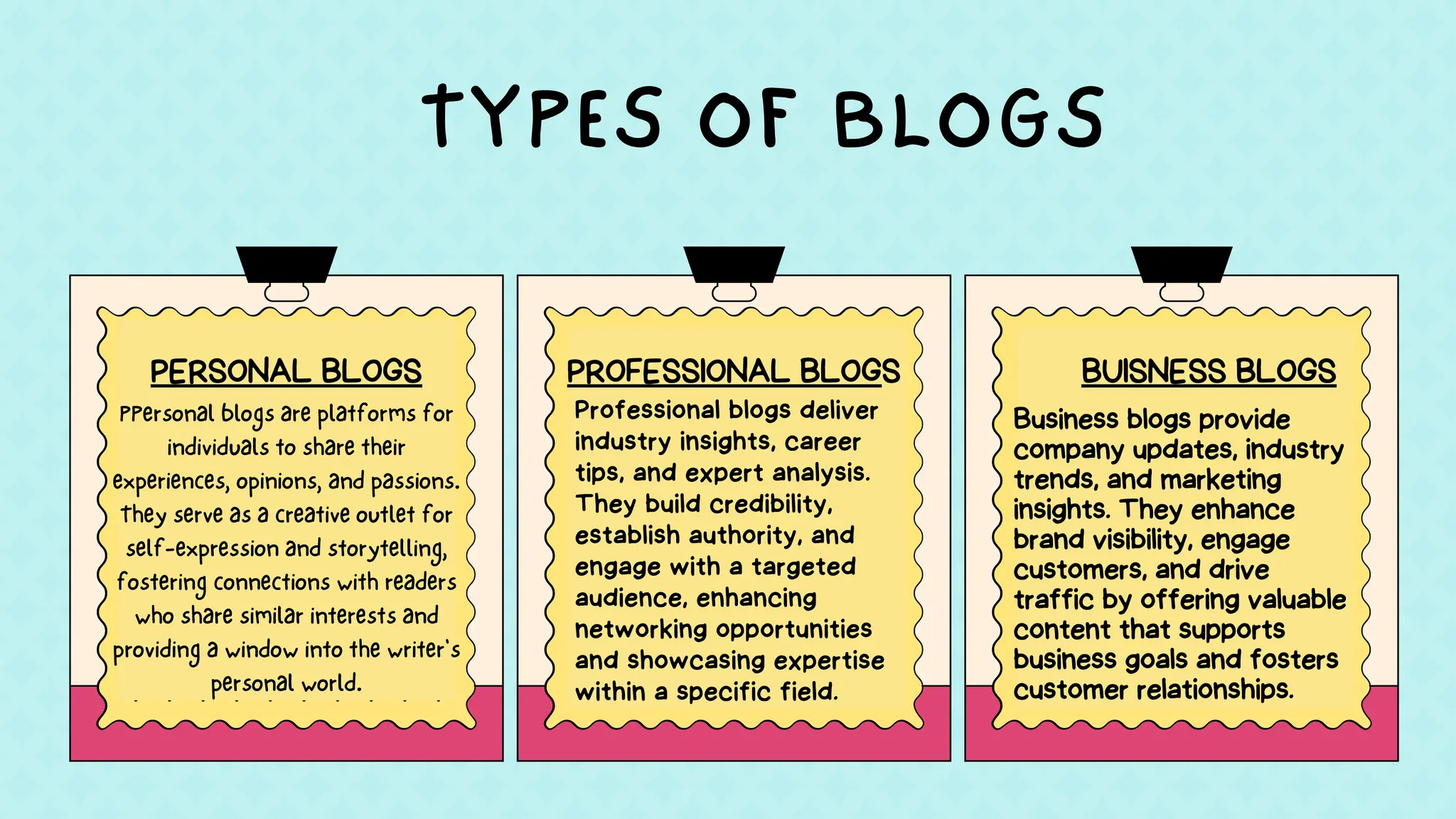
PERSONAL BLOGS PROFESSIONAL BLOGS
Professional blogs deliver
industry insights, career
tips, and expert analysis.
They build credibility,
establish authority, and
engage with a targeted
audience, enhancing
networking opportunities
and showcasing expertise
within a specific field.
BUISNESS BLOGS
Business blogs provide
company updates, industry
trends, and marketing
insights. They enhance
brand visibility, engage
customers, and drive
traffic by offering valuable
content that supports
business goals and fosters
customer relationships.
PPersonal blogs are platforms for
individuals to share their
experiences, opinions, and passions.
They serve as a creative outlet for
self-expression and storytelling,
fostering connections with readers
who share similar interests and
providing a window into the writer's
personal world.
ELEMENTS OF
SUCCESSFUL
BLOG:
1. Quality Content: Valuable, well-written posts that
engage and inform readers.
2. Consistency: Regular updates to keep the audience
interested and improve SEO.
3. Visual Appeal: Attractive design with relevant images
and an easy-to-navigate layout.
4. SEO Optimization: Effective use of keywords and meta
descriptions to enhance search visibility.
5. Engagement Tools: Comments, social sharing options,
and clear calls-to-action to foster interaction.
BLOGGING PLATFORMS
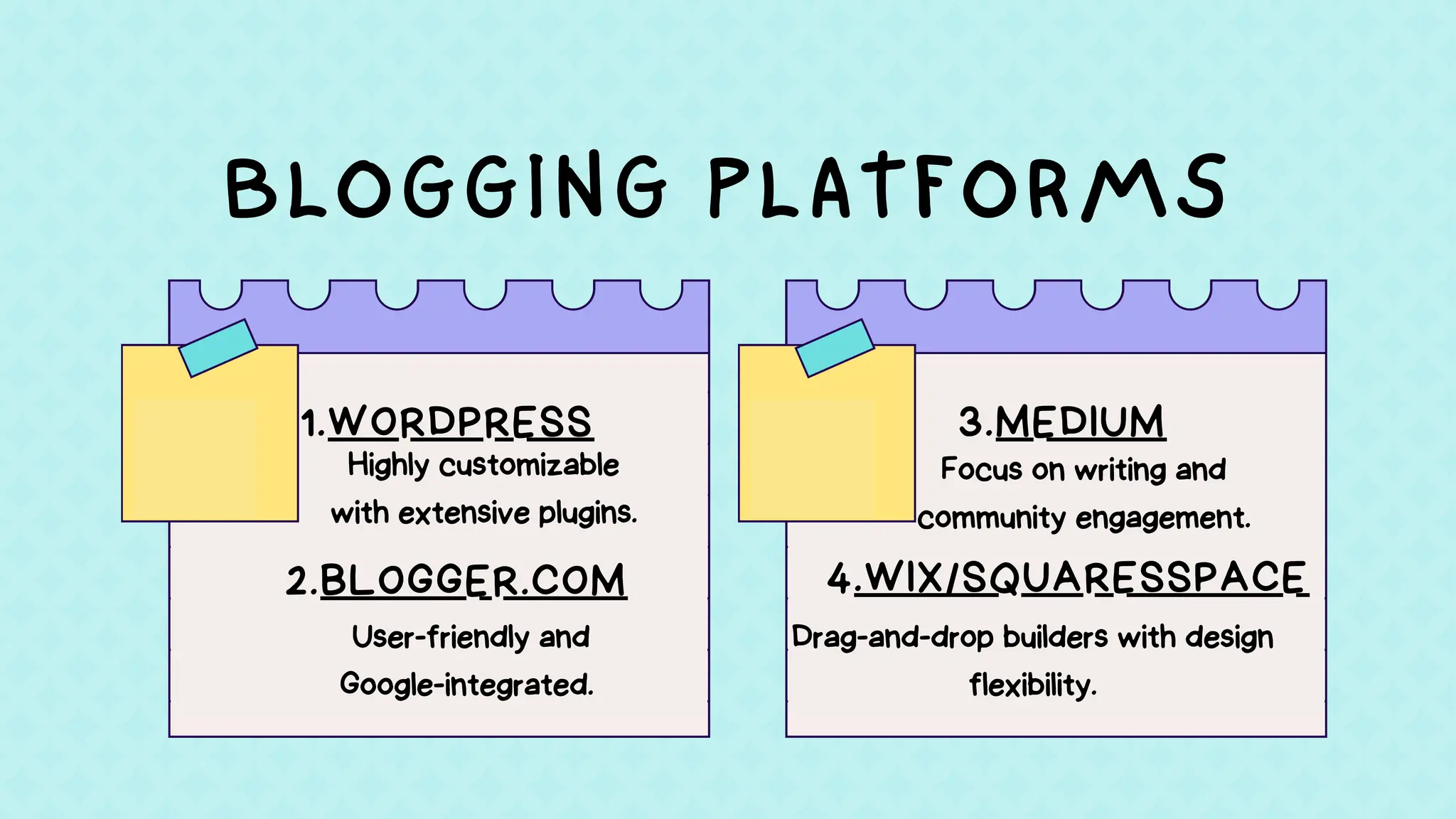
1.WORDPRESS
4.WIX/SQUARESSPACE
2.BLOGGER.COM
3.MEDIUM
Highly customizable
with extensive plugins.
Focus on writing and
community engagement.
Drag-and-drop builders with design
flexibility.
User-friendly and
Google-integrated.
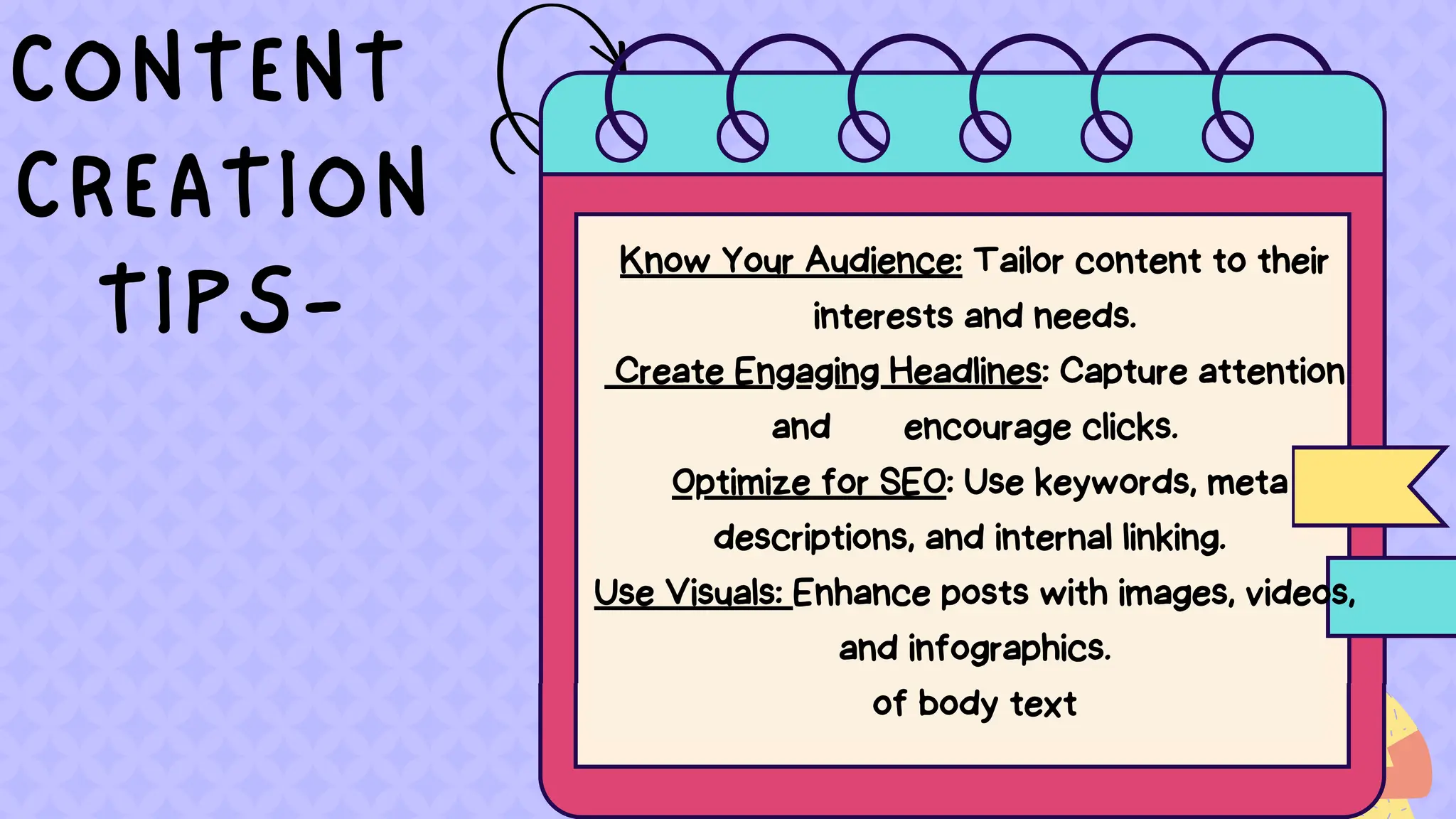
CONTENT
CREATION
TIPS-
Know Your Audience: Tailor content to their
interests and needs.
Create Engaging Headlines: Capture attention
and encourage clicks.
Optimize for SEO: Use keywords, meta
descriptions, and internal linking.
Use Visuals: Enhance posts with images, videos,
and infographics.
of body text
PROMOTING
YOUR BLOG
Social Media: Share posts on platforms like
Twitter, Facebook, and LinkedIn.
Email Marketing: Build a mailing list and
send newsletters.
Networking: Collaborate with other
bloggers and influencers.
Paid Advertising: Use Google Ads or
social media ads for targeted reach.
FUTURE TRENDS
IN
BLOGGING
Video Integration: Rise of
vlogs and video content.
AI and Automation: Enhanced
content creation and
personalization.
Interactive Content: Quizzes,
polls, and live streams.
Voice Search Optimization:
Adapting content for voice-
activated searches.
Thank you!
ladisaini163gmail.com

blogs Presentation 15 july 2024.pdf blogs

  • 1.
  • 2.
    Definition: A blogis a regularly updated website or web page, typically run by an individual or small group, that is written in an informal or conversational style. Purpose: Share ideas, opinions, and information; engage with an audience; build an online presence. INTRODUCTION
  • 3.
    HISTORY OF BLOGS : Blogsoriginated in the late 1990s as online journals or diaries, allowing individuals to document personal experiences and thoughts. Early platforms like LiveJournal and Blogger facilitated this trend. Over time, blogging evolved into a powerful tool for professional and business use, driven by platforms such as WordPress and Medium.
  • 4.
    WHY BLOG MATTERS? Blogsmatter because they enhance online visibility, establish authority, and foster engagement. They provide valuable content that attracts and retains audiences, boosts SEO rankings, and builds trust and credibility. For businesses, blogs drive traffic, support marketing efforts, and facilitate customer relationships.
  • 5.
    TYPES OF BLOGS PERSONALBLOGS PROFESSIONAL BLOGS Professional blogs deliver industry insights, career tips, and expert analysis. They build credibility, establish authority, and engage with a targeted audience, enhancing networking opportunities and showcasing expertise within a specific field. BUISNESS BLOGS Business blogs provide company updates, industry trends, and marketing insights. They enhance brand visibility, engage customers, and drive traffic by offering valuable content that supports business goals and fosters customer relationships. PPersonal blogs are platforms for individuals to share their experiences, opinions, and passions. They serve as a creative outlet for self-expression and storytelling, fostering connections with readers who share similar interests and providing a window into the writer's personal world.
  • 6.
    ELEMENTS OF SUCCESSFUL BLOG: 1. QualityContent: Valuable, well-written posts that engage and inform readers. 2. Consistency: Regular updates to keep the audience interested and improve SEO. 3. Visual Appeal: Attractive design with relevant images and an easy-to-navigate layout. 4. SEO Optimization: Effective use of keywords and meta descriptions to enhance search visibility. 5. Engagement Tools: Comments, social sharing options, and clear calls-to-action to foster interaction.
  • 7.
    BLOGGING PLATFORMS 1.WORDPRESS 4.WIX/SQUARESSPACE 2.BLOGGER.COM 3.MEDIUM Highly customizable withextensive plugins. Focus on writing and community engagement. Drag-and-drop builders with design flexibility. User-friendly and Google-integrated.
  • 8.
    CONTENT CREATION TIPS- Know Your Audience:Tailor content to their interests and needs. Create Engaging Headlines: Capture attention and encourage clicks. Optimize for SEO: Use keywords, meta descriptions, and internal linking. Use Visuals: Enhance posts with images, videos, and infographics. of body text
  • 9.
    PROMOTING YOUR BLOG Social Media:Share posts on platforms like Twitter, Facebook, and LinkedIn. Email Marketing: Build a mailing list and send newsletters. Networking: Collaborate with other bloggers and influencers. Paid Advertising: Use Google Ads or social media ads for targeted reach.
  • 10.
    FUTURE TRENDS IN BLOGGING Video Integration:Rise of vlogs and video content. AI and Automation: Enhanced content creation and personalization. Interactive Content: Quizzes, polls, and live streams. Voice Search Optimization: Adapting content for voice- activated searches.
  • 11.