The SM Paper Trail Rides Again
HowTo Document Almost Anything
Laurie Kincman
Erin Joy Swank
OVERVIEW
• Paperwork Philosophy
• Samples throughout the Show
• More Resources
http://rmusitt.org/resources/stagemanagers
FACILITATING 101
• What does your show need?
• What are the resources of the SM team?
• When can you do it?
• What is the best way to organize it all?
• How and when are people reading what you send?
GENERAL THOUGHTS ON FORMAT
• Make sure everyone can open it
• Spell check and proofread
• Is there a key? And a date?
• Who is reading this and what do they need to be
able to do with it?
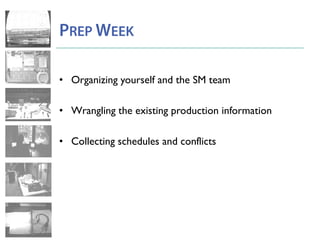
PREP WEEK
• Organizing yourself and the SM team
• Wrangling the existing production information
• Collecting schedules and conflicts
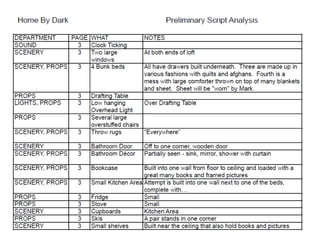
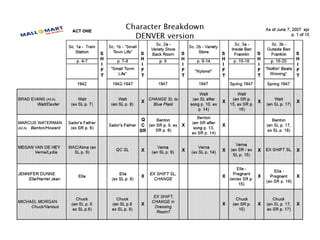
PRODUCTION ANALYSIS
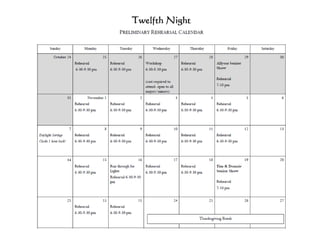
MORE ABOUT PREP
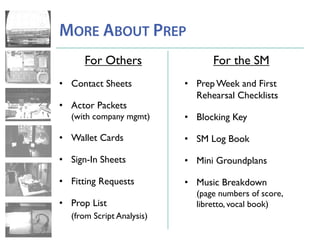
For Others
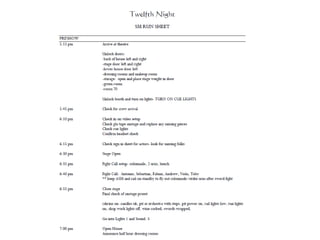
• Contact Sheets
• Actor Packets
(with company mgmt)
• Wallet Cards
• Sign-In Sheets
• Fitting Requests
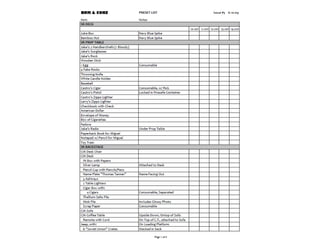
• Prop List
(from Script Analysis)
For the SM
• Prep Week and First
Rehearsal Checklists
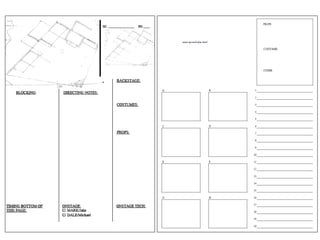
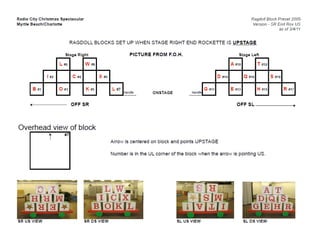
• Blocking Key
• SM Log Book
• Mini Groundplans
• Music Breakdown
(page numbers of score,
libretto, vocal book)
DURING REHEARSALS
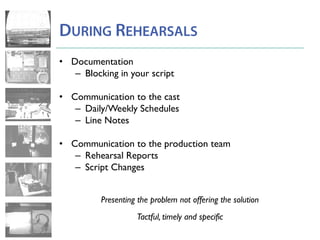
• Documentation
– Blocking in your script
• Communication to the cast
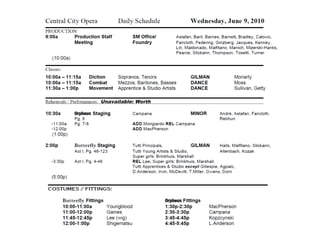
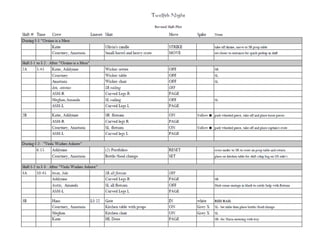
– Daily/Weekly Schedules
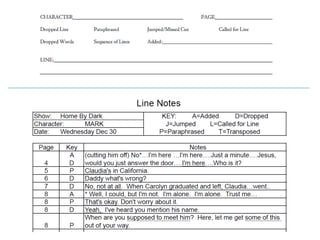
– Line Notes
• Communication to the production team
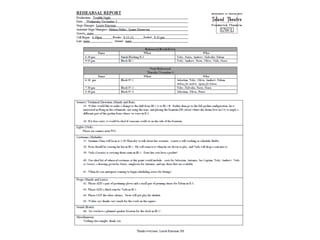
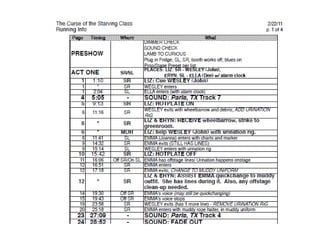
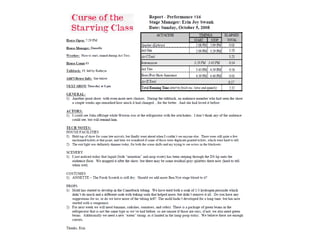
– Rehearsal Reports
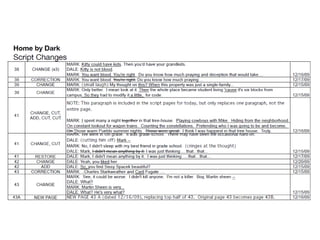
– Script Changes
Presenting the problem not offering the solution
Tactful, timely and specific
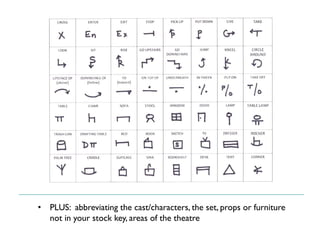
• PLUS: abbreviating the cast/characters, the set, props or furniture
not in your stock key, areas of the theatre
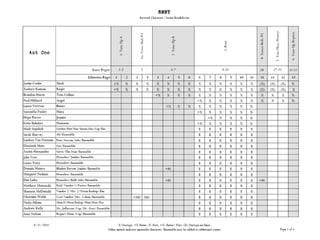
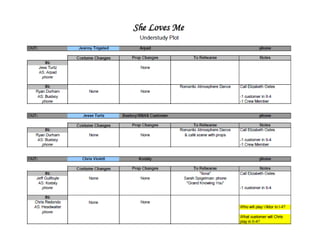
REHEARSAL CONSIDERATIONS
• How often do you update?
• Is it clear what you have added or changed?
• Who needs updates? How often?
• What do you need in rehearsal to efficiently move
scene to scene (not necessarily in order)
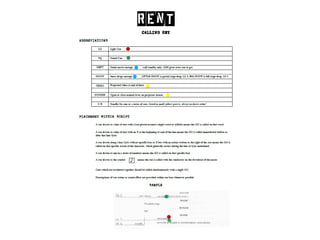
THE TECH PROCESS
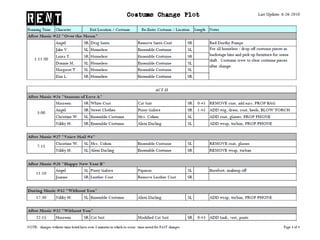
• Crew Paperwork
• Cues in your script
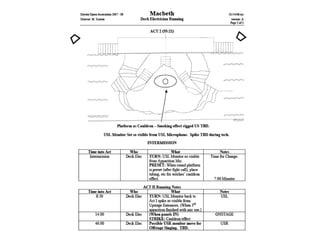
PERFORMANCES
• Adding new recipients to reports- and new details
• Making sure you are “bus proof”
• Planning for emergencies
FINAL THOUGHTS
• Be open to what your show needs, not just what
you’ve done before
• Work smart
• Collect samples, accept suggestions, embrace
technology
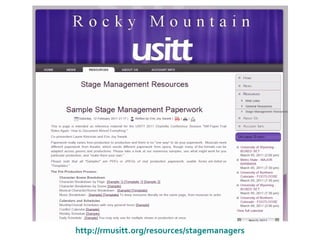
• And for more from us…
http://rmusitt.org/resources/stagemanagers

Blocking guide for director and stage manager.pdf

  • 1.
    The SM PaperTrail Rides Again HowTo Document Almost Anything Laurie Kincman Erin Joy Swank
  • 2.
    OVERVIEW • Paperwork Philosophy •Samples throughout the Show • More Resources http://rmusitt.org/resources/stagemanagers
  • 3.
    FACILITATING 101 • Whatdoes your show need? • What are the resources of the SM team? • When can you do it? • What is the best way to organize it all? • How and when are people reading what you send?
  • 4.
    GENERAL THOUGHTS ONFORMAT • Make sure everyone can open it • Spell check and proofread • Is there a key? And a date? • Who is reading this and what do they need to be able to do with it?
  • 5.
    PREP WEEK • Organizingyourself and the SM team • Wrangling the existing production information • Collecting schedules and conflicts
  • 6.
  • 10.
    MORE ABOUT PREP ForOthers • Contact Sheets • Actor Packets (with company mgmt) • Wallet Cards • Sign-In Sheets • Fitting Requests • Prop List (from Script Analysis) For the SM • Prep Week and First Rehearsal Checklists • Blocking Key • SM Log Book • Mini Groundplans • Music Breakdown (page numbers of score, libretto, vocal book)
  • 11.
    DURING REHEARSALS • Documentation –Blocking in your script • Communication to the cast – Daily/Weekly Schedules – Line Notes • Communication to the production team – Rehearsal Reports – Script Changes Presenting the problem not offering the solution Tactful, timely and specific
  • 12.
    • PLUS: abbreviatingthe cast/characters, the set, props or furniture not in your stock key, areas of the theatre
  • 18.
    REHEARSAL CONSIDERATIONS • Howoften do you update? • Is it clear what you have added or changed? • Who needs updates? How often? • What do you need in rehearsal to efficiently move scene to scene (not necessarily in order)
  • 19.
    THE TECH PROCESS •Crew Paperwork • Cues in your script
  • 27.
    PERFORMANCES • Adding newrecipients to reports- and new details • Making sure you are “bus proof” • Planning for emergencies
  • 31.
    FINAL THOUGHTS • Beopen to what your show needs, not just what you’ve done before • Work smart • Collect samples, accept suggestions, embrace technology • And for more from us…
  • 32.