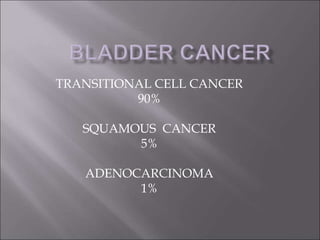
TRANSITIONAL CELL CANCER
90%
SQUAMOUS CANCER
5%
ADENOCARCINOMA
1%
 CAUSES
 STAGING
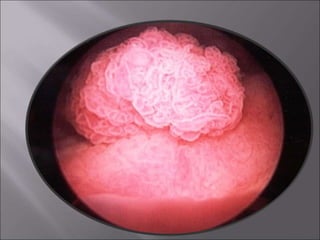
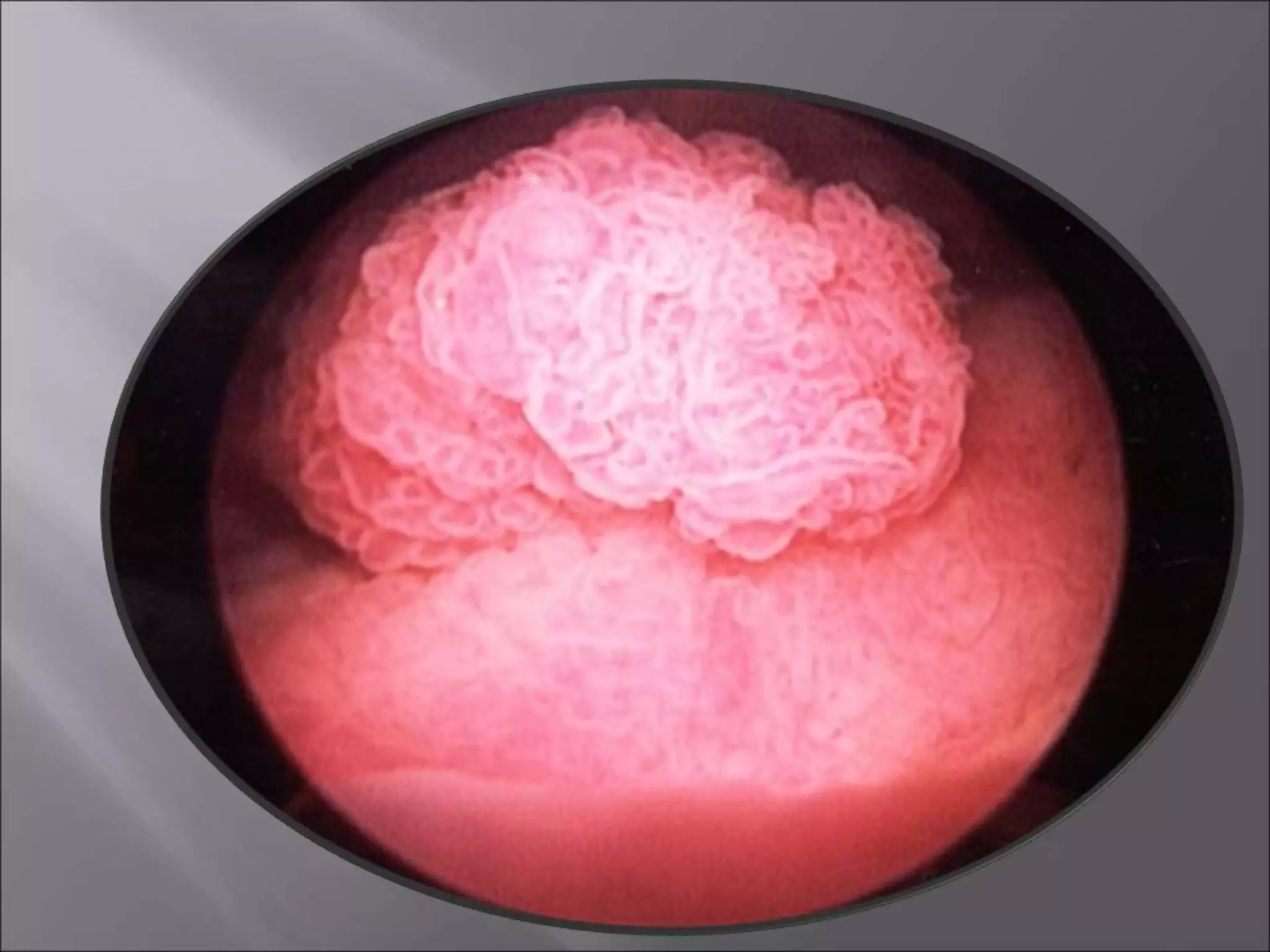
 TYPES OF BLADDER TUMOUR
 BEHAVIOUR
 SYMPTOMS
 INVESTIGATIONS
 TREATMENT
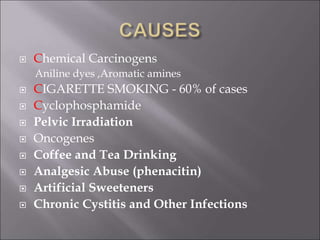
 Chemical Carcinogens
Aniline dyes ,Aromatic amines
 CIGARETTE SMOKING - 60% of cases
 Cyclophosphamide
 Pelvic Irradiation
 Oncogenes
 Coffee and Tea Drinking
 Analgesic Abuse (phenacitin)
 Artificial Sweeteners
 Chronic Cystitis and Other Infections
2-naphthylamine, 4-aminobiphenyl, 4-nitrobiphenyl,
4-4-diaminobiphenyl (benzidine), and
2-amino-1-naphthol
 rubber and textile industries
 autoworker,
 painter,
 truck driver,
 leather worker,
 metal worker,
 dry cleaner,
 paper manufacturer,
 dental technician,
 barber or beautician,
 ▪ Bladder cancer is nearly three times more
common in men than in women,
 ▪ Bladder cancer is rare in persons younger
than the age of 50, with median ages at
diagnosis of around 70 years for each
gender.
 ▪ Bladder cancer is almost never found
incidentally at autopsy,
 ▪ Inactivation of several tumor suppressor
genes is important in the development and
progression of bladder cancer.
 ▪ The important tumor suppressor genes
associated with bladder cancer include TP53 and
cell cycle inhibitors RB, P21, P27, and P16.
 ▪ Oncogenes associated with bladder cancer is
RAS, a membrane-bound, mitogenic, signal
transduction molecule.
 ▪ Overexpression of normal genes including
those for the receptor of EGF (ERBB1) and ERBB2
occur in most bladder cancers and facilitate
cancer development and progression
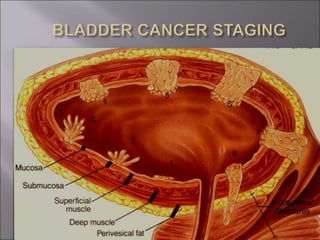
 TNM STAGING
 NON MUSCLE INVASIVE
 MUSCLE INVASIVE
AJCC-UICC, TNM Staging
Ta
Papillary, epithelium confined
Tis
Flat carcinoma in situ
T1
Lamina propria invasion
T2a
Superficial muscularis propria
invasion
T2b
Deep muscularis propria
invasion
T3a
Microscopic extension into
perivesical fat
T3b
Macroscopic extension into
perivesical fat
T4a
Cancer invading pelvic viscera
(e.g., prostatic stroma, vaginal
wall, rectum, uterus)
T4b
Extension to pelvic sidewalls,
abdominal walls, or bony pelvis
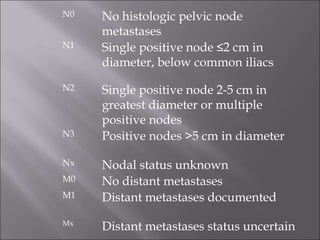
N0 No histologic pelvic node
metastases
N1 Single positive node ≤2 cm in
diameter, below common iliacs
N2 Single positive node 2-5 cm in
greatest diameter or multiple
positive nodes
N3 Positive nodes >5 cm in diameter
Nx Nodal status unknown
M0 No distant metastases
M1 Distant metastases documented
Mx
Distant metastases status uncertain
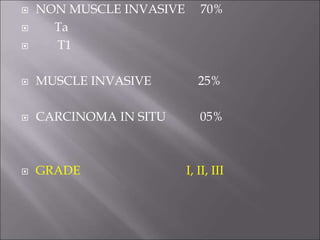
 NON MUSCLE INVASIVE 70%
 Ta
 T1
 MUSCLE INVASIVE 25%
 CARCINOMA IN SITU 05%
 GRADE I, II, III
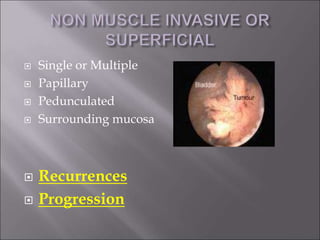
 Single or Multiple
 Papillary
 Pedunculated
 Surrounding mucosa
 Recurrences
 Progression
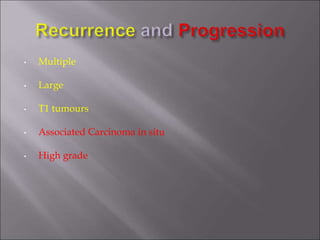
• Multiple
• Large
• T1 tumours
• Associated Carcinoma in situ
• High grade
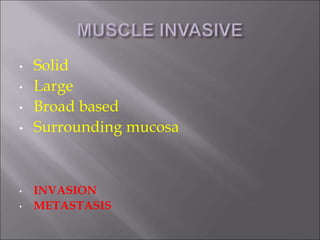
• Solid
• Large
• Broad based
• Surrounding mucosa
• INVASION
• METASTASIS
• Male / Female 3 : 1
• PAINLESS GROSS HAEMATURIA
• CLOTS AND CLOT RETENTION
• IRRITATIVE VOIDING
• PAIN
• SYMPTOMS OF METASTASIS (LATE)
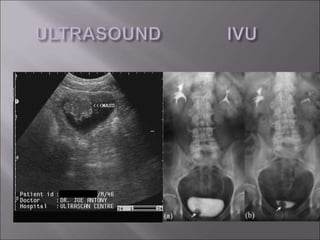
 ULTRASOUND
 INTRAVENOUS UROGRAM
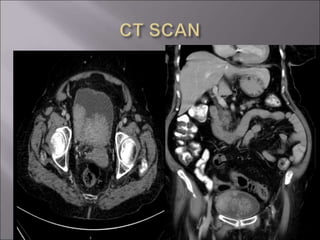
 CT SCAN
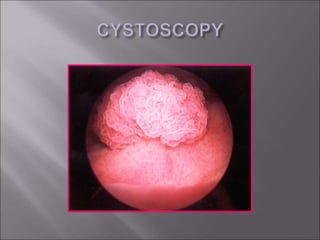
 CYSTOSCOPY
 URINE CYTOLOGY
 ROUTINE INVESTIGATIONS
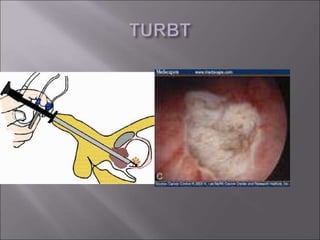
 SUPERFICIAL BLADDER TUMOURS
TURBT
BASE BIOPSY
 CHECK CYSTOSCOPY
 INTRAVESICAL BCG IF NEEDED
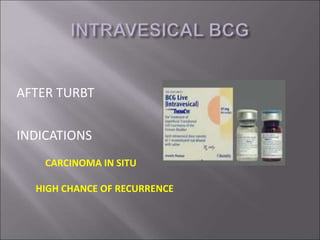
AFTER TURBT
INDICATIONS
CARCINOMA IN SITU
HIGH CHANCE OF RECURRENCE
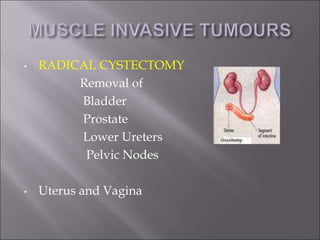
• RADICAL CYSTECTOMY
Removal of
Bladder
Prostate
Lower Ureters
Pelvic Nodes
• Uterus and Vagina
 Partial cystectomy
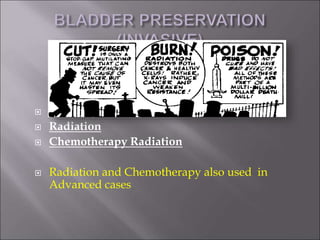
 Radiation
 Chemotherapy Radiation
 Radiation and Chemotherapy also used in
Advanced cases
 Painless Haematuria
 Cystoscopy, TURBT
 SUPERFICIAL TURBT
Followup
Intra vesical BCG
 INVASIVE Radical Cystectomy
BLADDER CANCER .ppt

BLADDER CANCER .ppt

  • 2.
    TRANSITIONAL CELL CANCER 90% SQUAMOUSCANCER 5% ADENOCARCINOMA 1%
  • 3.
     CAUSES  STAGING TYPES OF BLADDER TUMOUR  BEHAVIOUR  SYMPTOMS  INVESTIGATIONS  TREATMENT
  • 4.
     Chemical Carcinogens Anilinedyes ,Aromatic amines  CIGARETTE SMOKING - 60% of cases  Cyclophosphamide  Pelvic Irradiation  Oncogenes  Coffee and Tea Drinking  Analgesic Abuse (phenacitin)  Artificial Sweeteners  Chronic Cystitis and Other Infections
  • 6.
    2-naphthylamine, 4-aminobiphenyl, 4-nitrobiphenyl, 4-4-diaminobiphenyl(benzidine), and 2-amino-1-naphthol  rubber and textile industries  autoworker,  painter,  truck driver,  leather worker,  metal worker,  dry cleaner,  paper manufacturer,  dental technician,  barber or beautician,
  • 7.
     ▪ Bladdercancer is nearly three times more common in men than in women,  ▪ Bladder cancer is rare in persons younger than the age of 50, with median ages at diagnosis of around 70 years for each gender.  ▪ Bladder cancer is almost never found incidentally at autopsy,
  • 8.
     ▪ Inactivationof several tumor suppressor genes is important in the development and progression of bladder cancer.  ▪ The important tumor suppressor genes associated with bladder cancer include TP53 and cell cycle inhibitors RB, P21, P27, and P16.  ▪ Oncogenes associated with bladder cancer is RAS, a membrane-bound, mitogenic, signal transduction molecule.  ▪ Overexpression of normal genes including those for the receptor of EGF (ERBB1) and ERBB2 occur in most bladder cancers and facilitate cancer development and progression
  • 9.
     TNM STAGING NON MUSCLE INVASIVE  MUSCLE INVASIVE
  • 11.
    AJCC-UICC, TNM Staging Ta Papillary,epithelium confined Tis Flat carcinoma in situ T1 Lamina propria invasion T2a Superficial muscularis propria invasion T2b Deep muscularis propria invasion T3a Microscopic extension into perivesical fat T3b Macroscopic extension into perivesical fat T4a Cancer invading pelvic viscera (e.g., prostatic stroma, vaginal wall, rectum, uterus) T4b Extension to pelvic sidewalls, abdominal walls, or bony pelvis
  • 12.
    N0 No histologicpelvic node metastases N1 Single positive node ≤2 cm in diameter, below common iliacs N2 Single positive node 2-5 cm in greatest diameter or multiple positive nodes N3 Positive nodes >5 cm in diameter Nx Nodal status unknown M0 No distant metastases M1 Distant metastases documented Mx Distant metastases status uncertain
  • 13.
     NON MUSCLEINVASIVE 70%  Ta  T1  MUSCLE INVASIVE 25%  CARCINOMA IN SITU 05%  GRADE I, II, III
  • 14.
     Single orMultiple  Papillary  Pedunculated  Surrounding mucosa  Recurrences  Progression
  • 15.
    • Multiple • Large •T1 tumours • Associated Carcinoma in situ • High grade
  • 16.
    • Solid • Large •Broad based • Surrounding mucosa • INVASION • METASTASIS
  • 17.
    • Male /Female 3 : 1 • PAINLESS GROSS HAEMATURIA • CLOTS AND CLOT RETENTION • IRRITATIVE VOIDING • PAIN • SYMPTOMS OF METASTASIS (LATE)
  • 18.
     ULTRASOUND  INTRAVENOUSUROGRAM  CT SCAN  CYSTOSCOPY  URINE CYTOLOGY  ROUTINE INVESTIGATIONS
  • 22.
     SUPERFICIAL BLADDERTUMOURS TURBT BASE BIOPSY  CHECK CYSTOSCOPY  INTRAVESICAL BCG IF NEEDED
  • 24.
    AFTER TURBT INDICATIONS CARCINOMA INSITU HIGH CHANCE OF RECURRENCE
  • 25.
    • RADICAL CYSTECTOMY Removalof Bladder Prostate Lower Ureters Pelvic Nodes • Uterus and Vagina
  • 26.
     Partial cystectomy Radiation  Chemotherapy Radiation  Radiation and Chemotherapy also used in Advanced cases
  • 27.
     Painless Haematuria Cystoscopy, TURBT  SUPERFICIAL TURBT Followup Intra vesical BCG  INVASIVE Radical Cystectomy