Biotechnology
BSA – ANSC 3 and CS 3
The Meaning of Biotechnology
The term “biotechnology” was first coined by a
Hungarian engineer Karl Ereky, in 1919, to refer to the
science and methods that permit products to be
produced from raw materials with the aid of living
organisms.
is a multidisciplinary field that involves the integration
of natural sciences and engineering sciences in order to
achieve the application of organisms and parts thereof
for products and services (Wikipidia).
Biotechnology
the use of biology to solve problems and make useful products.
The most prominent area of biotechnology is the production of
therapeutic proteins and other drugs through genetic engineering
(Britannica).
biotechnology is technology based on biology - biotechnology
harnesses cellular and biomolecular processes to develop
technologies and products that help improve our lives and the
health of our planet. We have used the biological processes of
microorganisms for more than 6,000 years to make useful food
products, such as bread and cheese, and to preserve dairy
products.
Major Applications of Biotechnology
Biotechnology in health care (RED)
Agricultural biotechnology (GREEN)
Environmental biotechnology
Industrial biotechnology (WHITE)
Marine biotechnology (BLUE)
Food Biotechnology
Recombinant DNA Technology
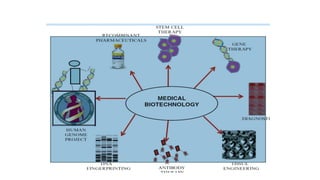
Health Care (Medical Biotechnology)
develop diagnostic tools, therapies, and vaccines for
human diseases. It encompasses various techniques,
including genetic engineering, recombinant DNA
technology, and cell culture. Healthcare biotechnology has
been instrumental in developing new treatments for various
diseases, including cancer, genetic disorders, and infectious
diseases
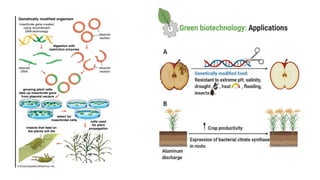
Agriculture (Plant Biotechnologies)
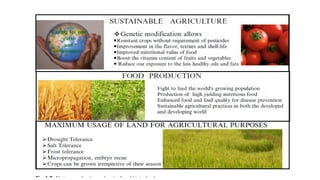
Used in agriculture improves crop productivity, with the global goal of food
security and sustainability. The technology used includes genetic
engineering, molecular breeding, and marker-assisted selection techniques.
Examples of agricultural biotechnology include the development of
genetically modified (GM) crops that are resistant to herbicides, insects,
and viruses and the use of marker-assisted breeding to develop crops with
improved yield and nutritional content. Biotechnology has also been used to
develop crops that can grow in challenging environmental conditions, such
as drought or salinity, which can help farmers in areas with limited water
resources.
Another significant application of agricultural biotechnology is in improving
food safety. Biotechnology can be used to reduce the presence of harmful
pathogens in food, such as Salmonella and E. coli, and to improve the
nutritional content of food, such as by increasing the number of vitamins or
proteins.
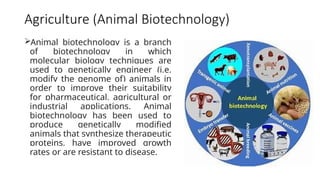
Agriculture (Animal Biotechnology)
Animal biotechnology is a branch
of biotechnology in which
molecular biology techniques are
used to genetically engineer (i.e.
modify the genome of) animals in
order to improve their suitability
for pharmaceutical, agricultural or
industrial applications. Animal
biotechnology has been used to
produce genetically modified
animals that synthesize therapeutic
proteins, have improved growth
rates or are resistant to disease.
Environmental Biotechnology
used to address environmental challenges, such as waste
management, pollution control, and renewable energy
production. It includes techniques such as bioremediation,
bioaugmentation, and phytoremediation.
Example:
1. Breakdown of pollutants in soil and water
2. Production of biogas from organic waste materials
3. Using plants to remove contaminants from soil and water
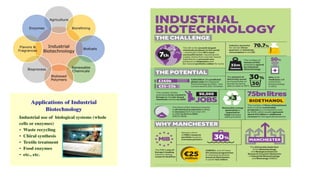
Industrial Biotechnology
used in manufacturing involves producing biofuels,
bioplastics, and other sustainable products. It includes
techniques such as metabolic engineering, synthetic
biology, and fermentation.
Example:
1. Production of biofuels (ethanol and biodiesel)
2. Bioplastics (polylactic acid PLA)
3. Production of enzymes and other specialty chemicals
using microorganisms
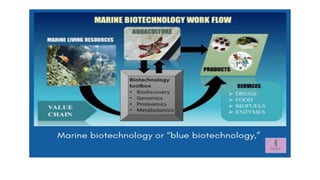
Marine Biotechnology
Marine biotechnology is the creation of products and processes from
marine organisms through the application of biotechnology, molecular
and cell biology, and bioinformatics. It is the field of science that deals
with ocean exploration for development of new pharmaceutical drugs,
chemical products, enzymes, and other products and processes. It also
deals with the advancement of aquaculture and seafood safety,
bioremediation, biofuels, among others.
Example:
1. Reproduction
2. Nutrition
3. Health management
4. Growth promotion
Food Technology
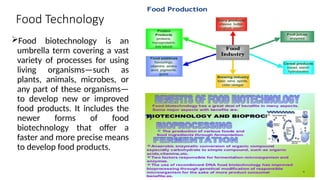
Food biotechnology is an
umbrella term covering a vast
variety of processes for using
living organisms—such as
plants, animals, microbes, or
any part of these organisms—
to develop new or improved
food products. It includes the
newer forms of food
biotechnology that offer a
faster and more precise means
to develop food products.

Biotechnology: Definitions and its Applications

  • 1.
  • 2.
    The Meaning ofBiotechnology The term “biotechnology” was first coined by a Hungarian engineer Karl Ereky, in 1919, to refer to the science and methods that permit products to be produced from raw materials with the aid of living organisms. is a multidisciplinary field that involves the integration of natural sciences and engineering sciences in order to achieve the application of organisms and parts thereof for products and services (Wikipidia).
  • 3.
    Biotechnology the use ofbiology to solve problems and make useful products. The most prominent area of biotechnology is the production of therapeutic proteins and other drugs through genetic engineering (Britannica). biotechnology is technology based on biology - biotechnology harnesses cellular and biomolecular processes to develop technologies and products that help improve our lives and the health of our planet. We have used the biological processes of microorganisms for more than 6,000 years to make useful food products, such as bread and cheese, and to preserve dairy products.
  • 5.
    Major Applications ofBiotechnology Biotechnology in health care (RED) Agricultural biotechnology (GREEN) Environmental biotechnology Industrial biotechnology (WHITE) Marine biotechnology (BLUE) Food Biotechnology Recombinant DNA Technology
  • 6.
    Health Care (MedicalBiotechnology) develop diagnostic tools, therapies, and vaccines for human diseases. It encompasses various techniques, including genetic engineering, recombinant DNA technology, and cell culture. Healthcare biotechnology has been instrumental in developing new treatments for various diseases, including cancer, genetic disorders, and infectious diseases
  • 8.
    Agriculture (Plant Biotechnologies) Usedin agriculture improves crop productivity, with the global goal of food security and sustainability. The technology used includes genetic engineering, molecular breeding, and marker-assisted selection techniques. Examples of agricultural biotechnology include the development of genetically modified (GM) crops that are resistant to herbicides, insects, and viruses and the use of marker-assisted breeding to develop crops with improved yield and nutritional content. Biotechnology has also been used to develop crops that can grow in challenging environmental conditions, such as drought or salinity, which can help farmers in areas with limited water resources. Another significant application of agricultural biotechnology is in improving food safety. Biotechnology can be used to reduce the presence of harmful pathogens in food, such as Salmonella and E. coli, and to improve the nutritional content of food, such as by increasing the number of vitamins or proteins.
  • 11.
    Agriculture (Animal Biotechnology) Animalbiotechnology is a branch of biotechnology in which molecular biology techniques are used to genetically engineer (i.e. modify the genome of) animals in order to improve their suitability for pharmaceutical, agricultural or industrial applications. Animal biotechnology has been used to produce genetically modified animals that synthesize therapeutic proteins, have improved growth rates or are resistant to disease.
  • 12.
    Environmental Biotechnology used toaddress environmental challenges, such as waste management, pollution control, and renewable energy production. It includes techniques such as bioremediation, bioaugmentation, and phytoremediation. Example: 1. Breakdown of pollutants in soil and water 2. Production of biogas from organic waste materials 3. Using plants to remove contaminants from soil and water
  • 14.
    Industrial Biotechnology used inmanufacturing involves producing biofuels, bioplastics, and other sustainable products. It includes techniques such as metabolic engineering, synthetic biology, and fermentation. Example: 1. Production of biofuels (ethanol and biodiesel) 2. Bioplastics (polylactic acid PLA) 3. Production of enzymes and other specialty chemicals using microorganisms
  • 16.
    Marine Biotechnology Marine biotechnologyis the creation of products and processes from marine organisms through the application of biotechnology, molecular and cell biology, and bioinformatics. It is the field of science that deals with ocean exploration for development of new pharmaceutical drugs, chemical products, enzymes, and other products and processes. It also deals with the advancement of aquaculture and seafood safety, bioremediation, biofuels, among others. Example: 1. Reproduction 2. Nutrition 3. Health management 4. Growth promotion
  • 18.
    Food Technology Food biotechnologyis an umbrella term covering a vast variety of processes for using living organisms—such as plants, animals, microbes, or any part of these organisms— to develop new or improved food products. It includes the newer forms of food biotechnology that offer a faster and more precise means to develop food products.