Phylum
Chordata
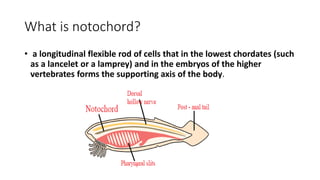
What is notochord?
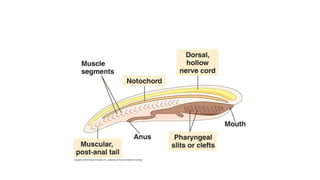
• a longitudinal flexible rod of cells that in the lowest chordates (such
as a lancelet or a lamprey) and in the embryos of the higher
vertebrates forms the supporting axis of the body.
Dorsal,hollow,Single nerve cord located dorsal
to the notochord
• The dorsal hollow nerve cord originates from an ectoderm that rolls
into a hollow tube throughout development. In chordates, it lies
dorsally (at the top of the animal) to the notochord.
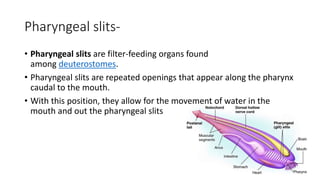
Pharyngeal slits-
• Pharyngeal slits are filter-feeding organs found
among deuterostomes.
• Pharyngeal slits are repeated openings that appear along the pharynx
caudal to the mouth.
• With this position, they allow for the movement of water in the
mouth and out the pharyngeal slits
A muscular tail-
• A muscular tail that extends backwards
behind the anus. In some chordates such
as humans, this is only present in the
embryonic stage.
Characteristic features of Chordata-
• Notochord
• Nerve cord
• Pharyngeal sits
• Nuscular tail
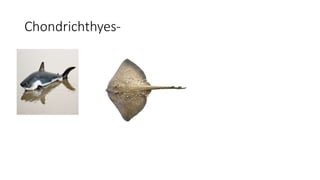
Chondrichthyes-
Chondrichthyes -
• Chondrichthyes is a class that contains the
cartilaginous fishes that have skeletons primarily
composed of cartilage
• Aquatic
• Having Fins
• Caudal fin heterocercal
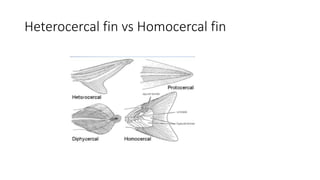
• heterocercal fin - a tail fin with unequal lobes in which the vertebral
column turns upward into the larger lobe as in sharks
• caudal fin, tail fin - the tail of fishes and some other aquatic
vertebrates.
• homocercal fin - symmetrical tail fin extending beyond the end of the
vertebral column as in most bony fishes.
Heterocercal fin vs Homocercal fin
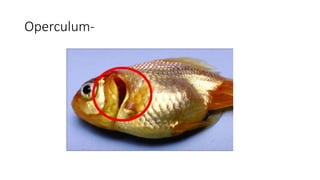
What is Operculum?
• The operculum is a
bony flap of skin over their gills that protects the gills
Operculum-
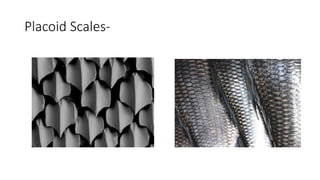
Placcoid Scales-
• Scales provide protection from the environment and from
predators.
• Fish scales are formed of bone from the deeper, or dermal,
skin layer.
• The elasmobranchs (e.g., sharks) have placoid scales, which
are bony, spiny projections with an enamel-like covering.
Placoid Scales-
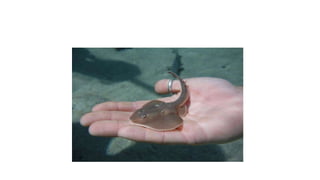
What is ovoviviparous?
By delaying birth after hatching, the offspring are more capable of
feeding and defending themselves when born.
They enter the environment in a more advanced stage of development
than oviparous young.
They can be of a larger size than similar animals that hatch from eggs
Oviparous-
• What are oviparous fish?
• Oviparous fish species experience external fecundation.
• This means that the female fish expels her eggs outside of her body,
whereby the male will fertilize them.
• These eggs can be deposited at the bottom of the ocean, on rocks or
algae or can be kept in the mouth or gill chambers of the fish.
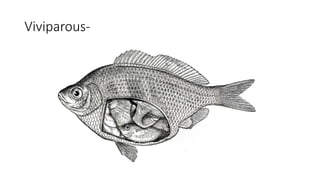
Viviparous-
• Viviparous fish are called those fish that do not lay eggs during
spawning
but give birth to live fry, already adapted to the environment.
But this process cannot be called live birth, as in higher animals.
Fry all the same for a long time are formed and grow in eggs located in
the abdomen of the mother.
Viviparous-
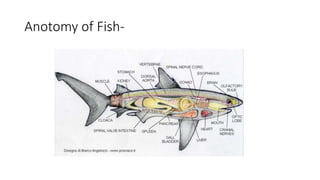
Anotomy of Fish-
Osteichthyes- carp,Tuna
Features-
• Aquatic
• Skeleton composed of bones
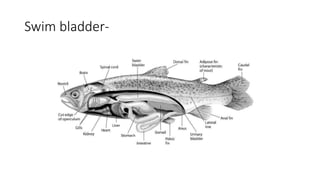
• Swim bladder for control byoyancy
what is byouancy?
Buoyancy Since fish live in an environment in which they need to move
in three dimensions,
buoyancy plays a significant role in determining a fish's ability to swim
efficiently.
Swim bladder-
Homocercal caudal fin-symmetrical externally
• Presence of operculum.
• Swim bladder for buoyancy.
• External fertilization,Some internal fertilization
• Most species are oviparous
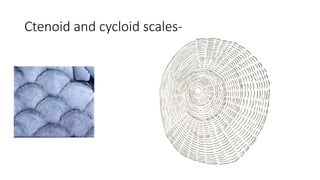
Ctenoid and cycloid scales-

biology description about phylum chordata.pptx

  • 1.
  • 2.
    What is notochord? •a longitudinal flexible rod of cells that in the lowest chordates (such as a lancelet or a lamprey) and in the embryos of the higher vertebrates forms the supporting axis of the body.
  • 3.
    Dorsal,hollow,Single nerve cordlocated dorsal to the notochord • The dorsal hollow nerve cord originates from an ectoderm that rolls into a hollow tube throughout development. In chordates, it lies dorsally (at the top of the animal) to the notochord.
  • 4.
    Pharyngeal slits- • Pharyngealslits are filter-feeding organs found among deuterostomes. • Pharyngeal slits are repeated openings that appear along the pharynx caudal to the mouth. • With this position, they allow for the movement of water in the mouth and out the pharyngeal slits
  • 5.
    A muscular tail- •A muscular tail that extends backwards behind the anus. In some chordates such as humans, this is only present in the embryonic stage.
  • 7.
    Characteristic features ofChordata- • Notochord • Nerve cord • Pharyngeal sits • Nuscular tail
  • 8.
  • 9.
    Chondrichthyes - • Chondrichthyesis a class that contains the cartilaginous fishes that have skeletons primarily composed of cartilage • Aquatic • Having Fins • Caudal fin heterocercal
  • 10.
    • heterocercal fin- a tail fin with unequal lobes in which the vertebral column turns upward into the larger lobe as in sharks • caudal fin, tail fin - the tail of fishes and some other aquatic vertebrates. • homocercal fin - symmetrical tail fin extending beyond the end of the vertebral column as in most bony fishes.
  • 11.
    Heterocercal fin vsHomocercal fin
  • 12.
    What is Operculum? •The operculum is a bony flap of skin over their gills that protects the gills
  • 13.
  • 14.
    Placcoid Scales- • Scalesprovide protection from the environment and from predators. • Fish scales are formed of bone from the deeper, or dermal, skin layer. • The elasmobranchs (e.g., sharks) have placoid scales, which are bony, spiny projections with an enamel-like covering.
  • 15.
  • 16.
    What is ovoviviparous? Bydelaying birth after hatching, the offspring are more capable of feeding and defending themselves when born. They enter the environment in a more advanced stage of development than oviparous young. They can be of a larger size than similar animals that hatch from eggs
  • 18.
    Oviparous- • What areoviparous fish? • Oviparous fish species experience external fecundation. • This means that the female fish expels her eggs outside of her body, whereby the male will fertilize them. • These eggs can be deposited at the bottom of the ocean, on rocks or algae or can be kept in the mouth or gill chambers of the fish.
  • 19.
    Viviparous- • Viviparous fishare called those fish that do not lay eggs during spawning but give birth to live fry, already adapted to the environment. But this process cannot be called live birth, as in higher animals. Fry all the same for a long time are formed and grow in eggs located in the abdomen of the mother.
  • 20.
  • 21.
  • 22.
  • 23.
    Features- • Aquatic • Skeletoncomposed of bones • Swim bladder for control byoyancy what is byouancy? Buoyancy Since fish live in an environment in which they need to move in three dimensions, buoyancy plays a significant role in determining a fish's ability to swim efficiently.
  • 24.
  • 25.
  • 26.
    • Presence ofoperculum. • Swim bladder for buoyancy. • External fertilization,Some internal fertilization • Most species are oviparous
  • 27.