Entrepreneurship
Development.
PERSONALITY
MODEL
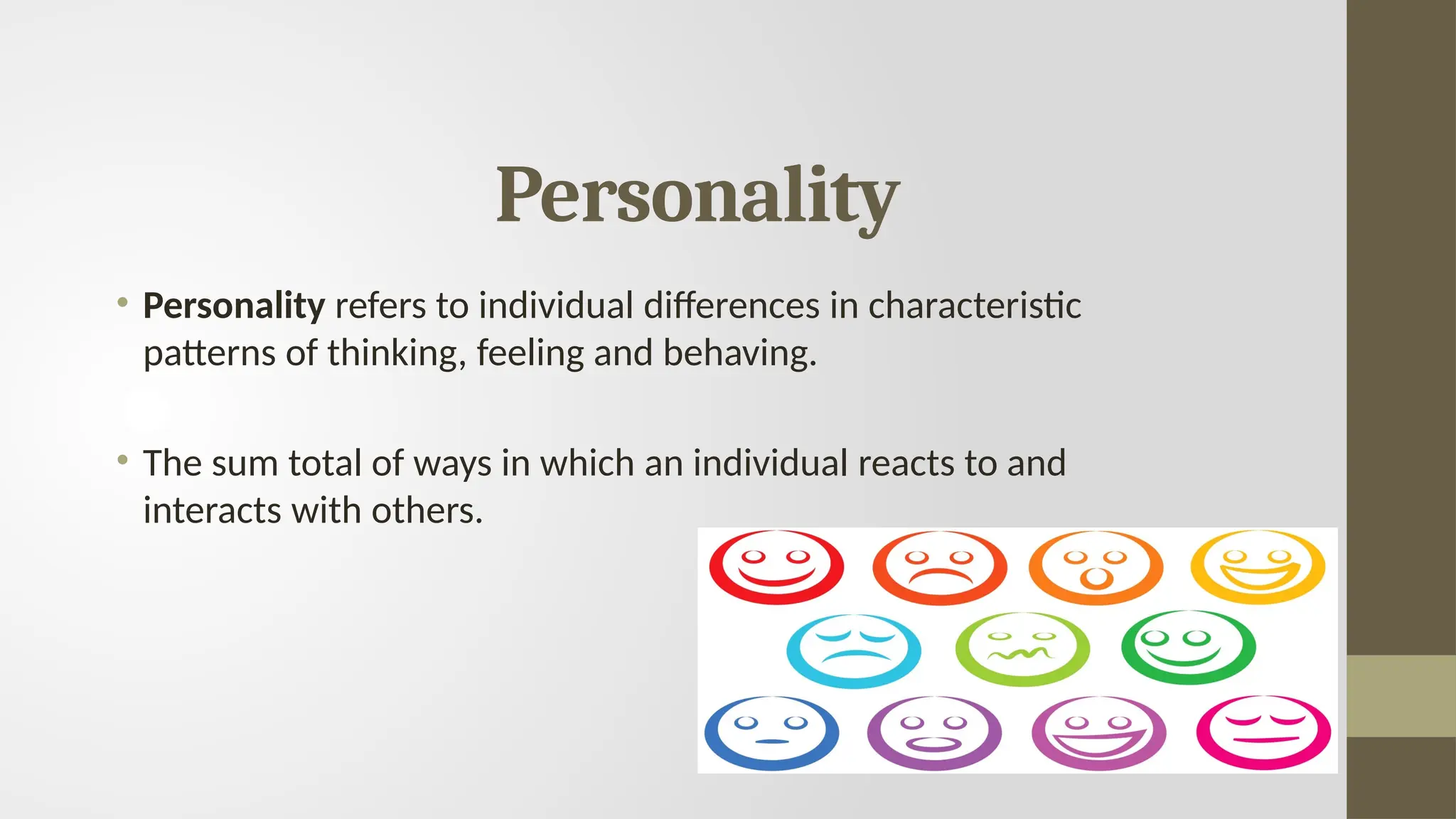
Personality
• Personality refers to individual differences in characteristic
patterns of thinking, feeling and behaving.
• The sum total of ways in which an individual reacts to and
interacts with others.
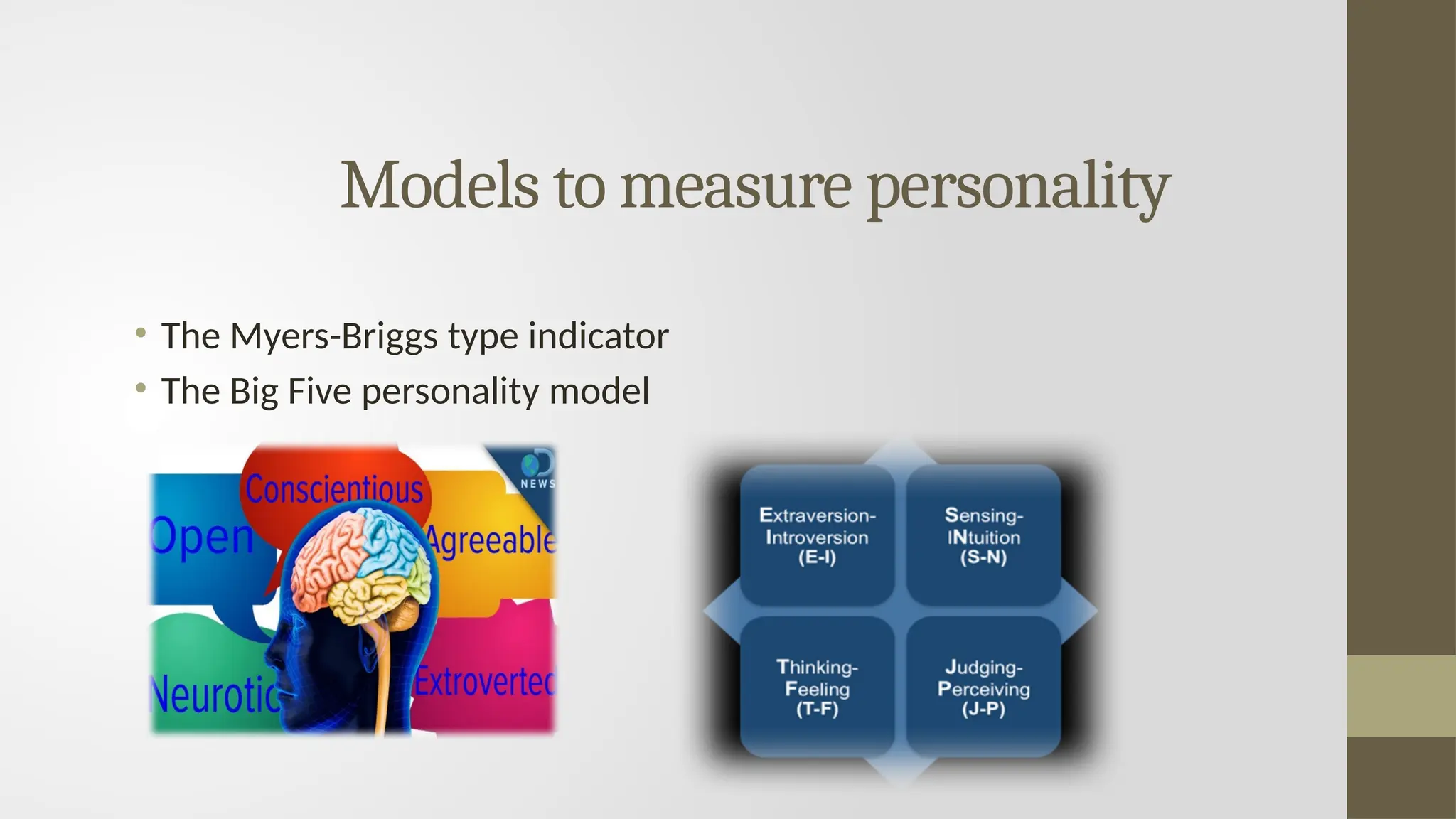
Models to measure personality
• The Myers-Briggs type indicator
• The Big Five personality model
The Big Five personality model
• The Big Five personality dimensions provide a very broad overview
of someone’s personality.
• Personality psychologists are interested in what differentiates one
person from another and why we behave the way that we do.
History of BFM
• The Big Five was originally derived in 1970.
• Asking thousands of people hundreds of questions and then
analyzing the data.
• In scientific circles, the Big Five is now the most widely accepted
• Using Big Five to study personality in terms of how it changes over
time and how it relates to other variables.
The Big Five personality model
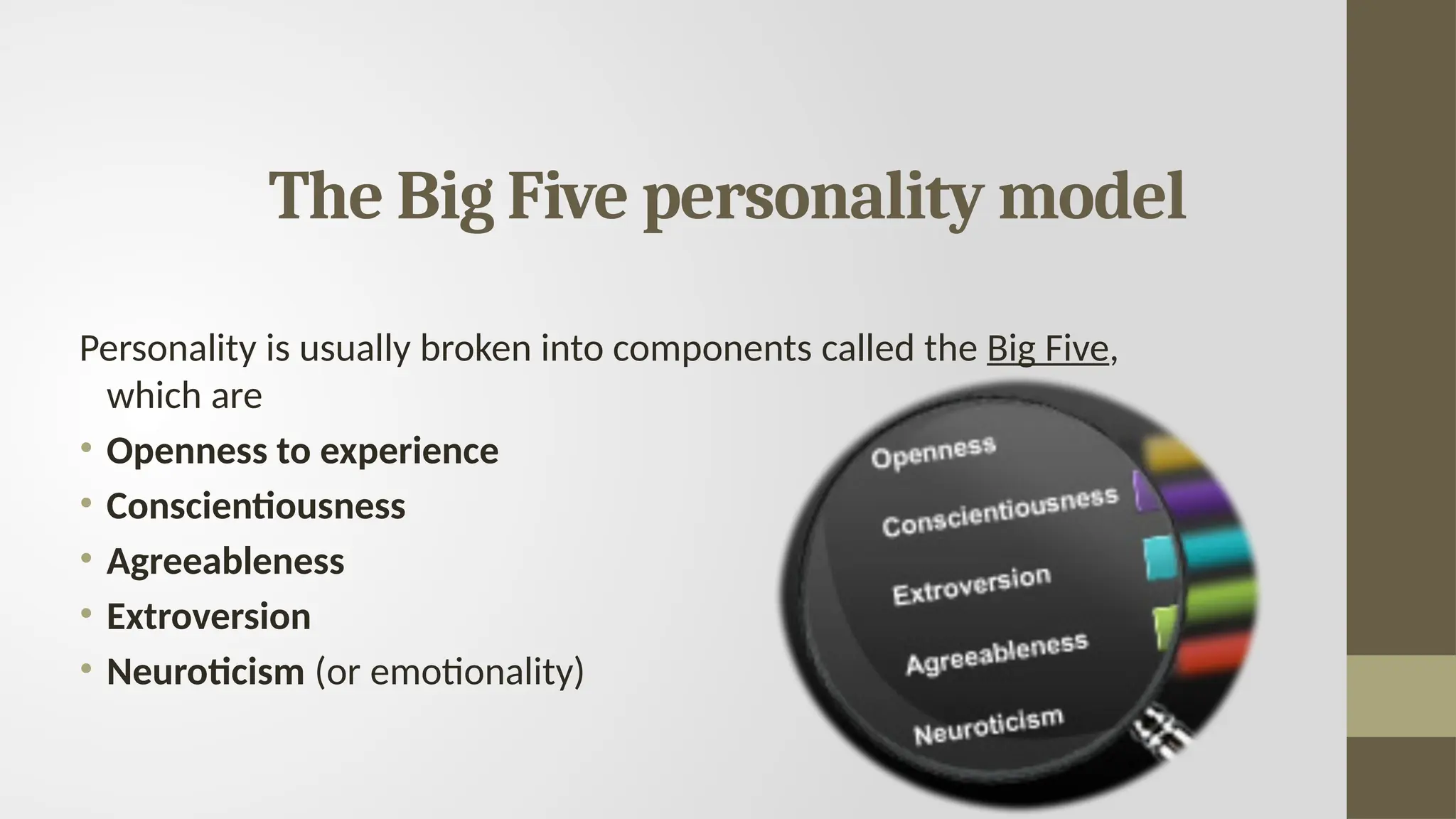
Personality is usually broken into components called the Big Five,
which are
• Openness to experience
• Conscientiousness
• Agreeableness
• Extroversion
• Neuroticism (or emotionality)
The Big Five personality model
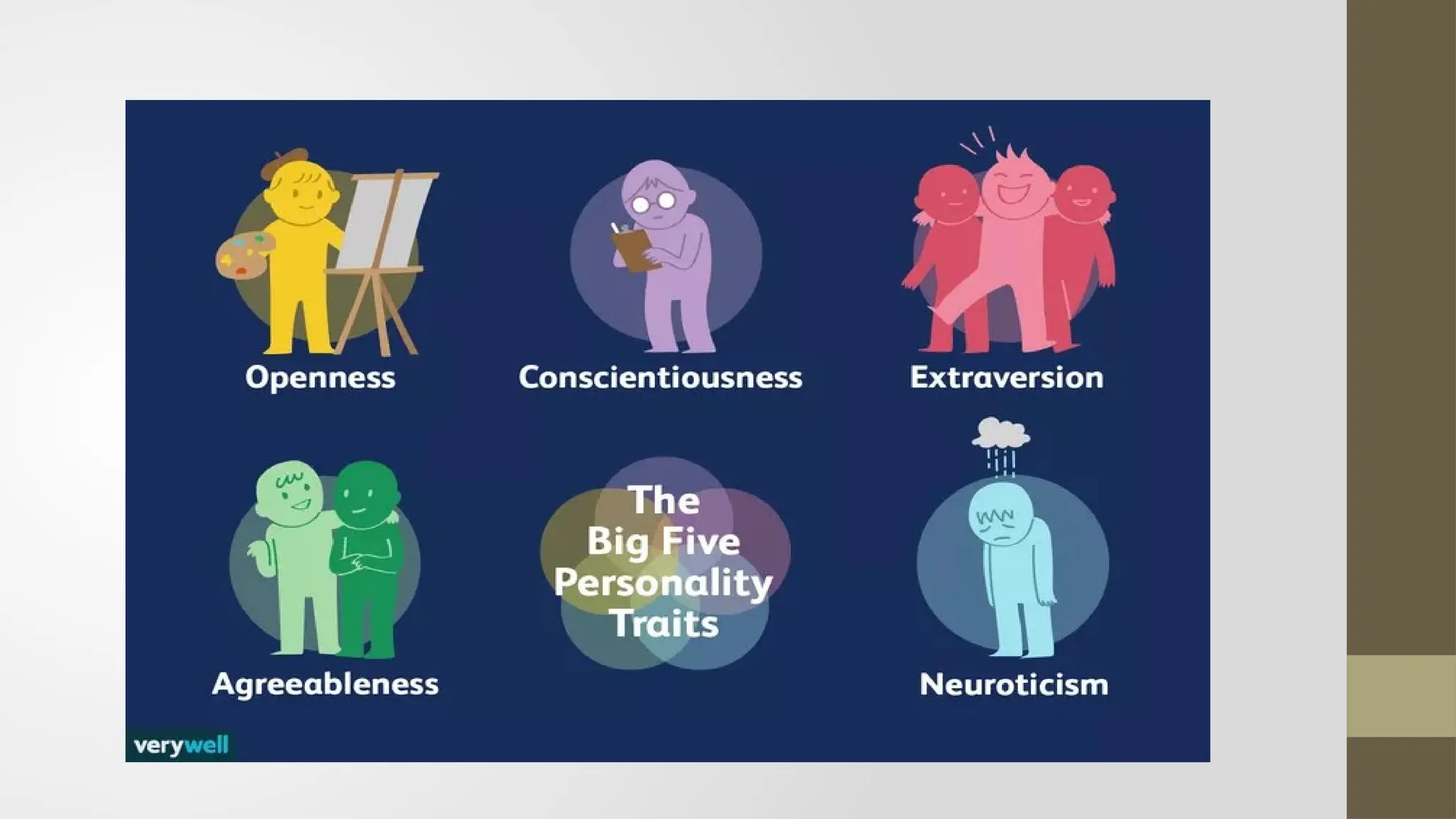
• Extraversion is sociability,
• agreeableness is kindness,
• openness is creativity and intrigue,
• conscientiousness is thoughtfulness, and
• neuroticism often involves sadness or emotional instability.
Openness to experience
It is one of the "Big Five" personality factors which
means being creative and open to new ideas. This
factor indicates how open mind a person is. They
have creative thinking and have
Flexible attitude.
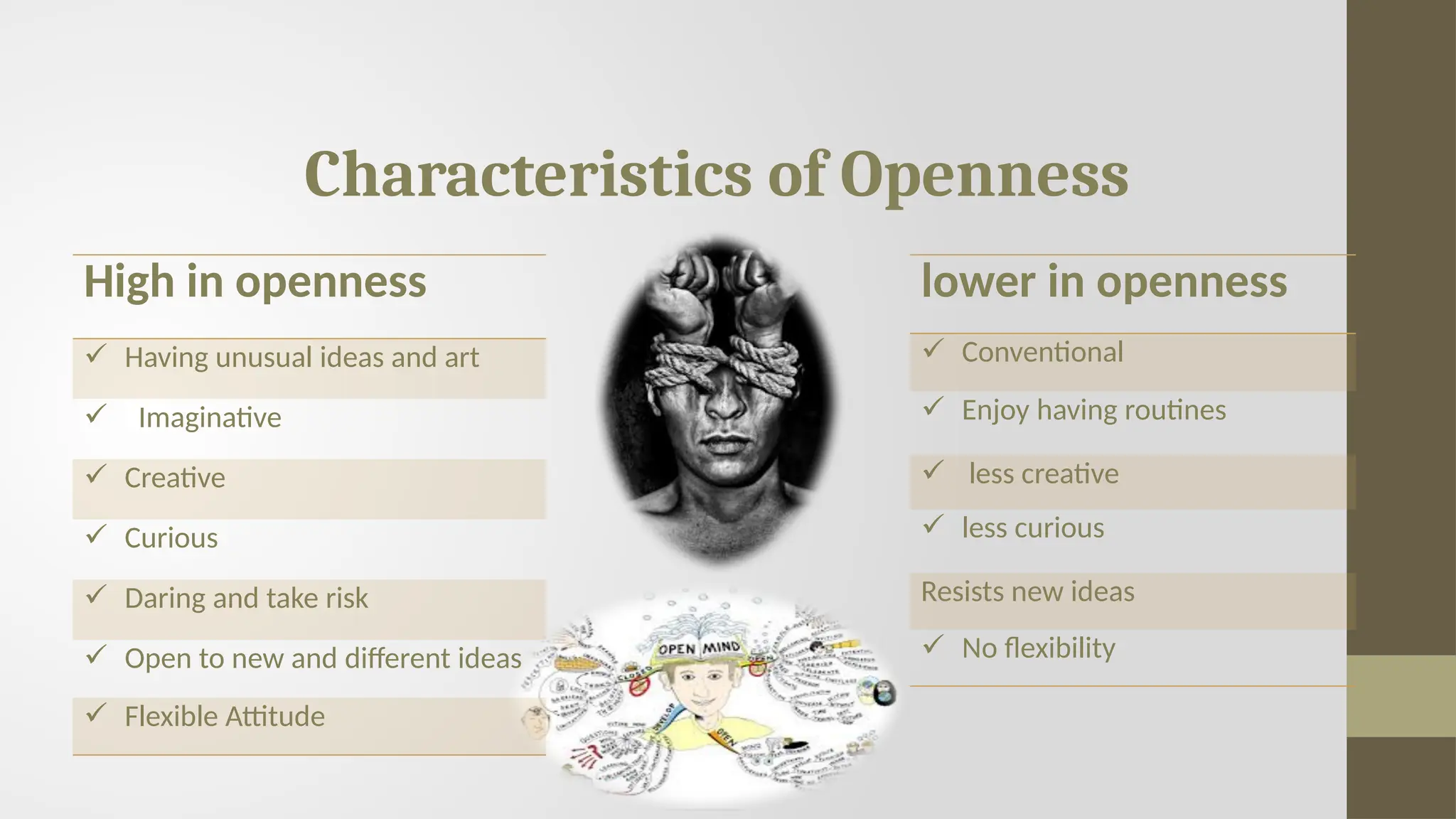
Characteristics of Openness
High in openness
 Having unusual ideas and art
 Imaginative
 Creative
 Curious
 Daring and take risk
 Open to new and different ideas
 Flexible Attitude
lower in openness
 Conventional
 Enjoy having routines
 less creative
 less curious
Resists new ideas
 No flexibility
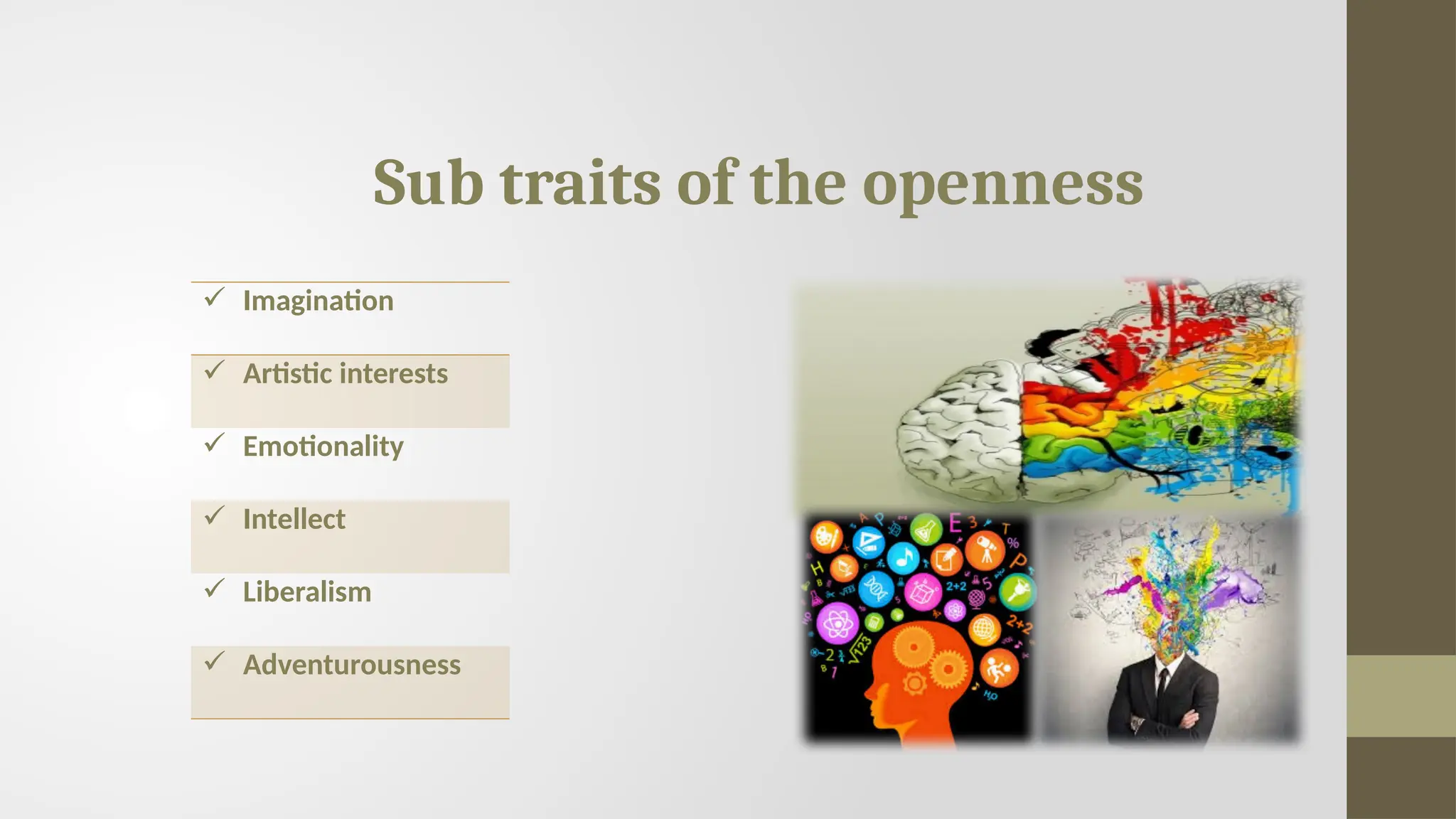
Sub traits of the openness
 Imagination
 Artistic interests
 Emotionality
 Intellect
 Liberalism
 Adventurousness
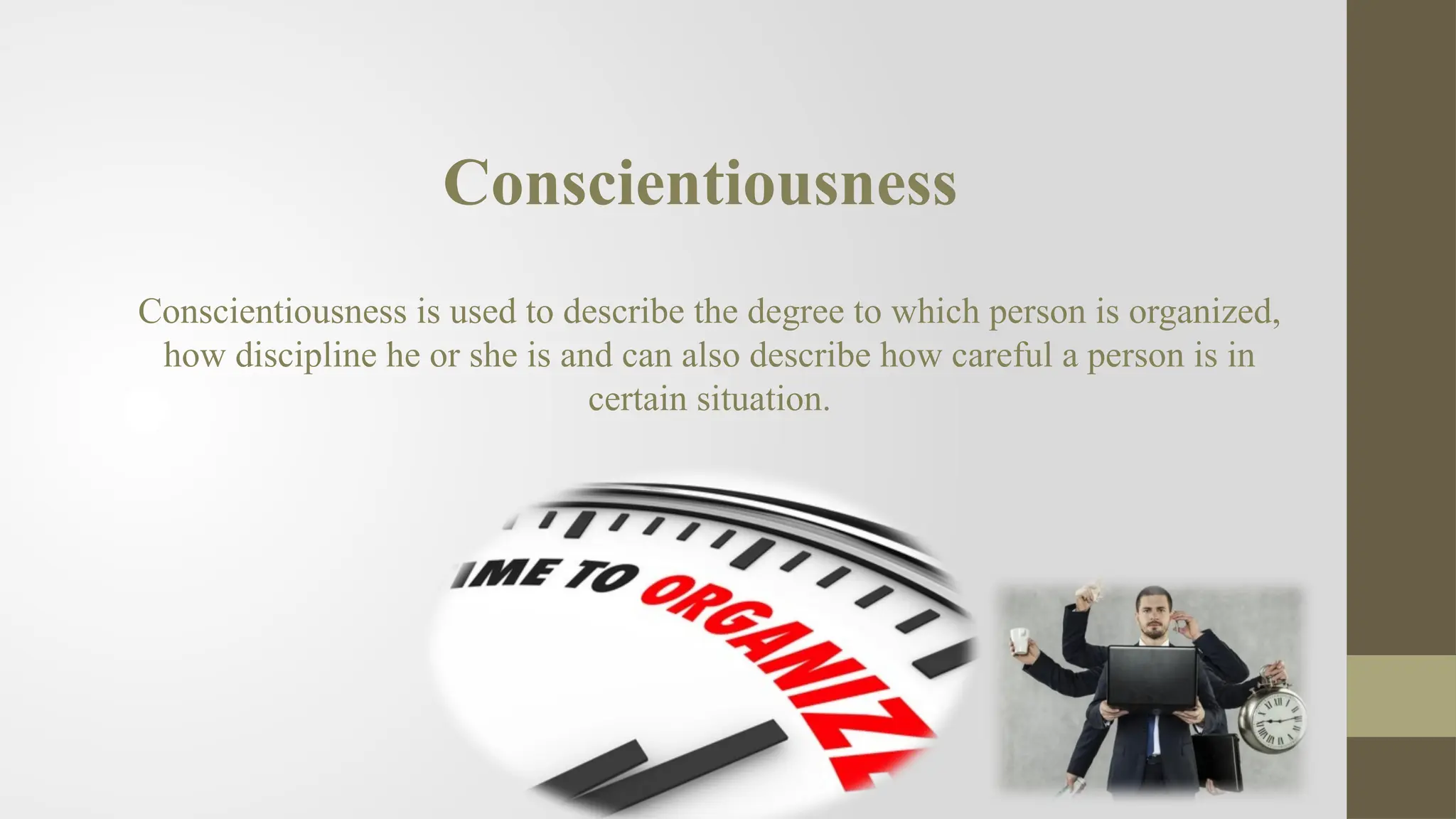
Conscientiousness
Conscientiousness is used to describe the degree to which person is organized,
how discipline he or she is and can also describe how careful a person is in
certain situation.
Characteristics of Conscientiousness
High level of conscientiousness:
 Hard working
 Deliberated (long & careful consideration)
 Neat and systematic
 Perfectionists
 Highly dependable
 Spends time preparing
 Finishes important tasks right away
 Pays attention to detail
 Enjoys having a set schedule
Low level of Conscientiousness:
 Less goal oriented
 Antisocial
 Criminal behavior
 Not very dependable
 Dislikes structure and schedules
 Makes messes and doesn't take care of things
 Fails to return things or put them back where
they belong
 Procrastinates important tasks
Sub traits of the conscientiousness
 Self efficacy
 Orderliness
 Dutifulness
 Achievement striving
 Self disciplined
 Cautiousness
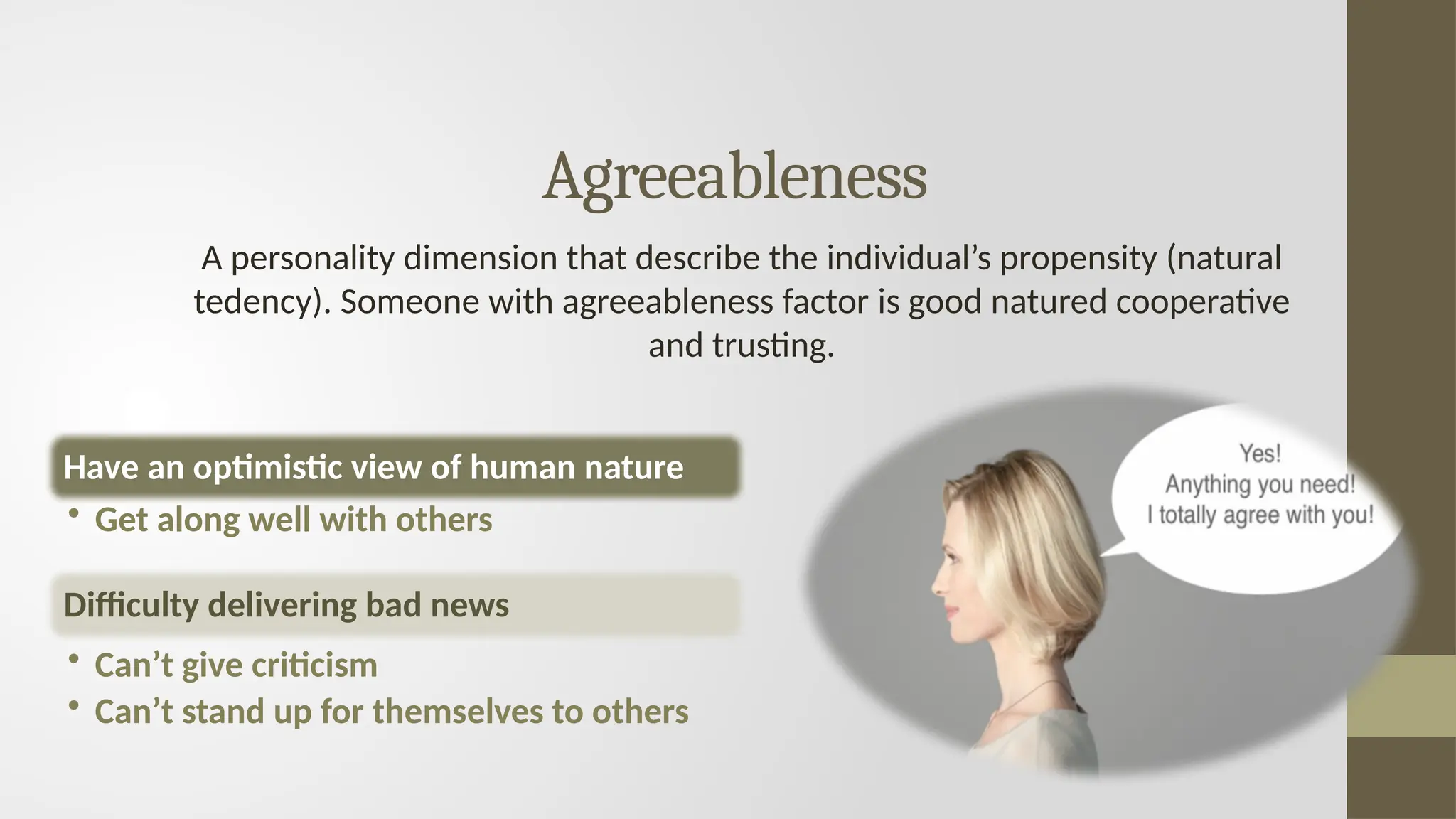
Agreeableness
A personality dimension that describe the individual’s propensity (natural
tedency). Someone with agreeableness factor is good natured cooperative
and trusting.
Have an optimistic view of human nature
• Get along well with others
Difficulty delivering bad news
• Can’t give criticism
• Can’t stand up for themselves to others
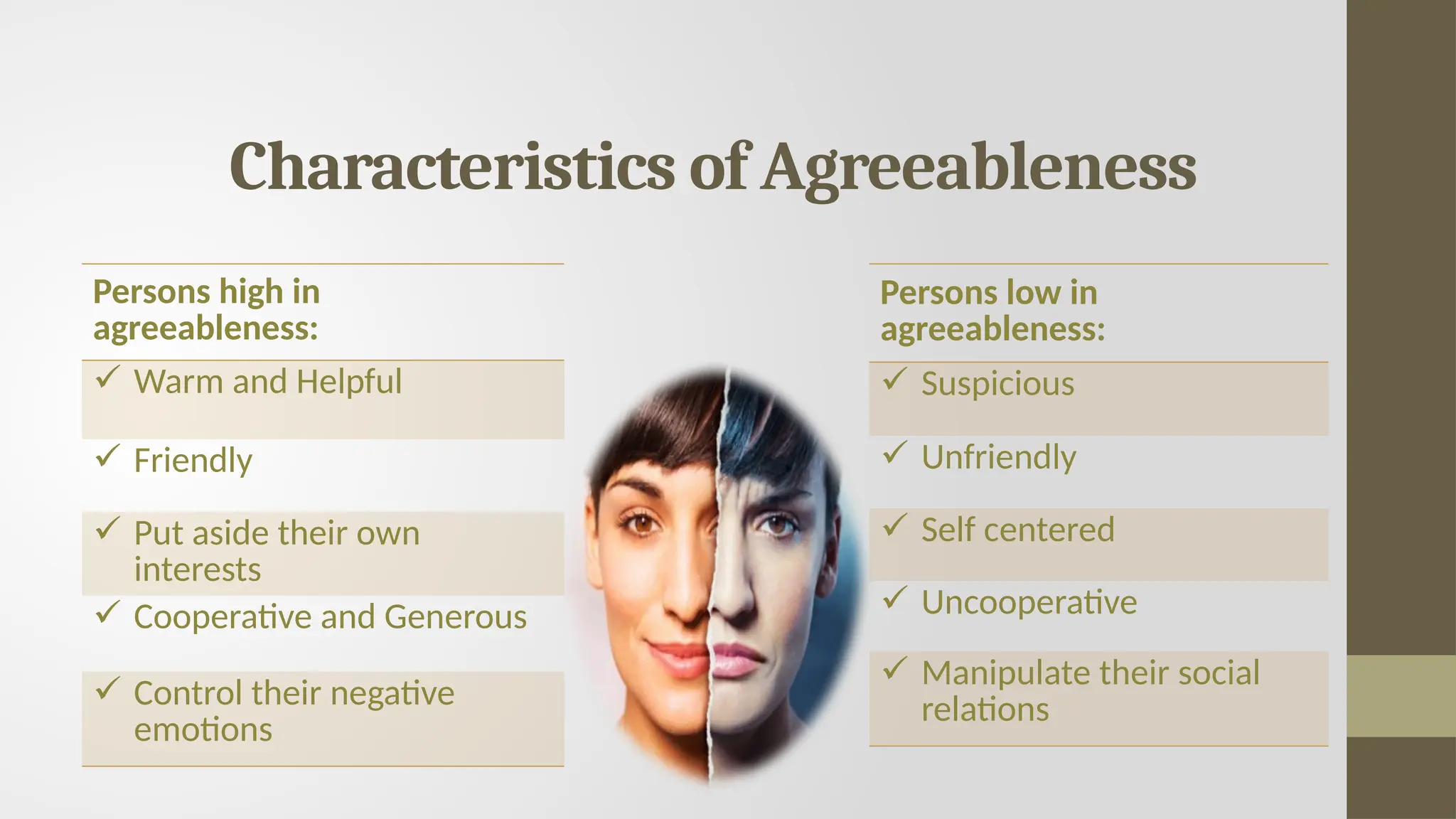
Characteristics of Agreeableness
Persons high in
agreeableness:
 Warm and Helpful
 Friendly
 Put aside their own
interests
 Cooperative and Generous
 Control their negative
emotions
Persons low in
agreeableness:
 Suspicious
 Unfriendly
 Self centered
 Uncooperative
 Manipulate their social
relations
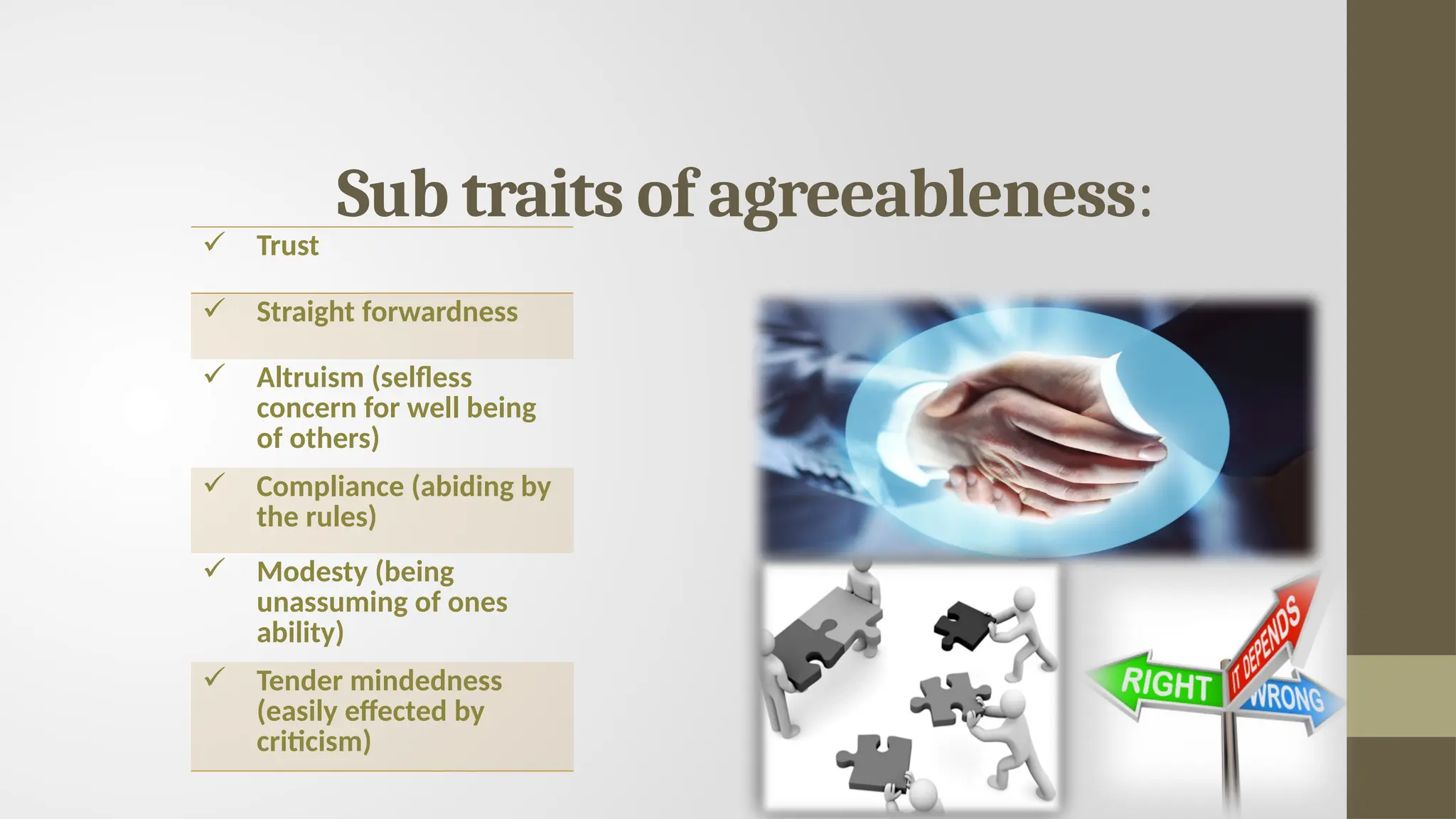
Sub traits of agreeableness:
 Trust
 Straight forwardness
 Altruism (selfless
concern for well being
of others)
 Compliance (abiding by
the rules)
 Modesty (being
unassuming of ones
ability)
 Tender mindedness
(easily effected by
criticism)
Extraversion
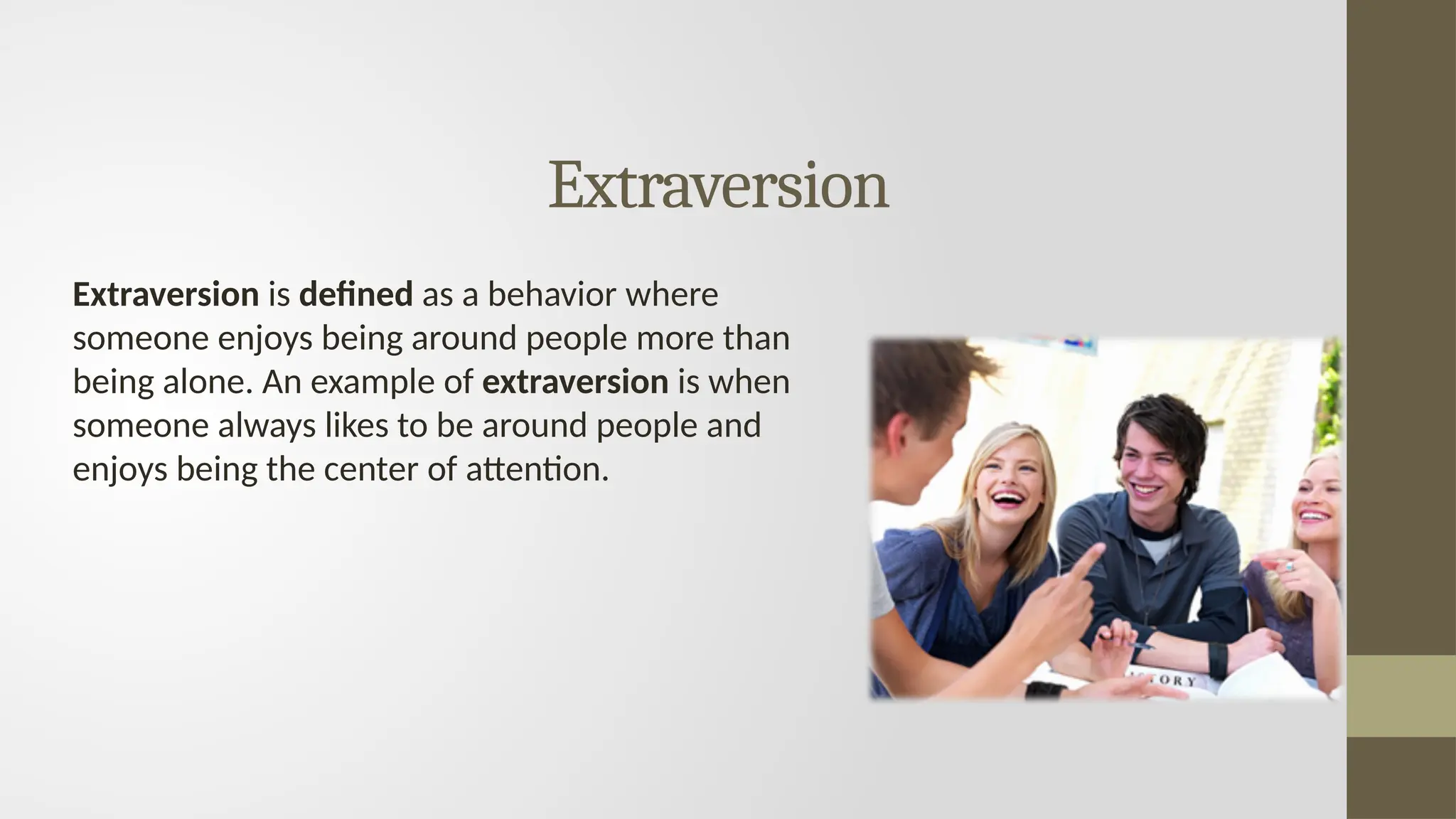
Extraversion is defined as a behavior where
someone enjoys being around people more than
being alone. An example of extraversion is when
someone always likes to be around people and
enjoys being the center of attention.
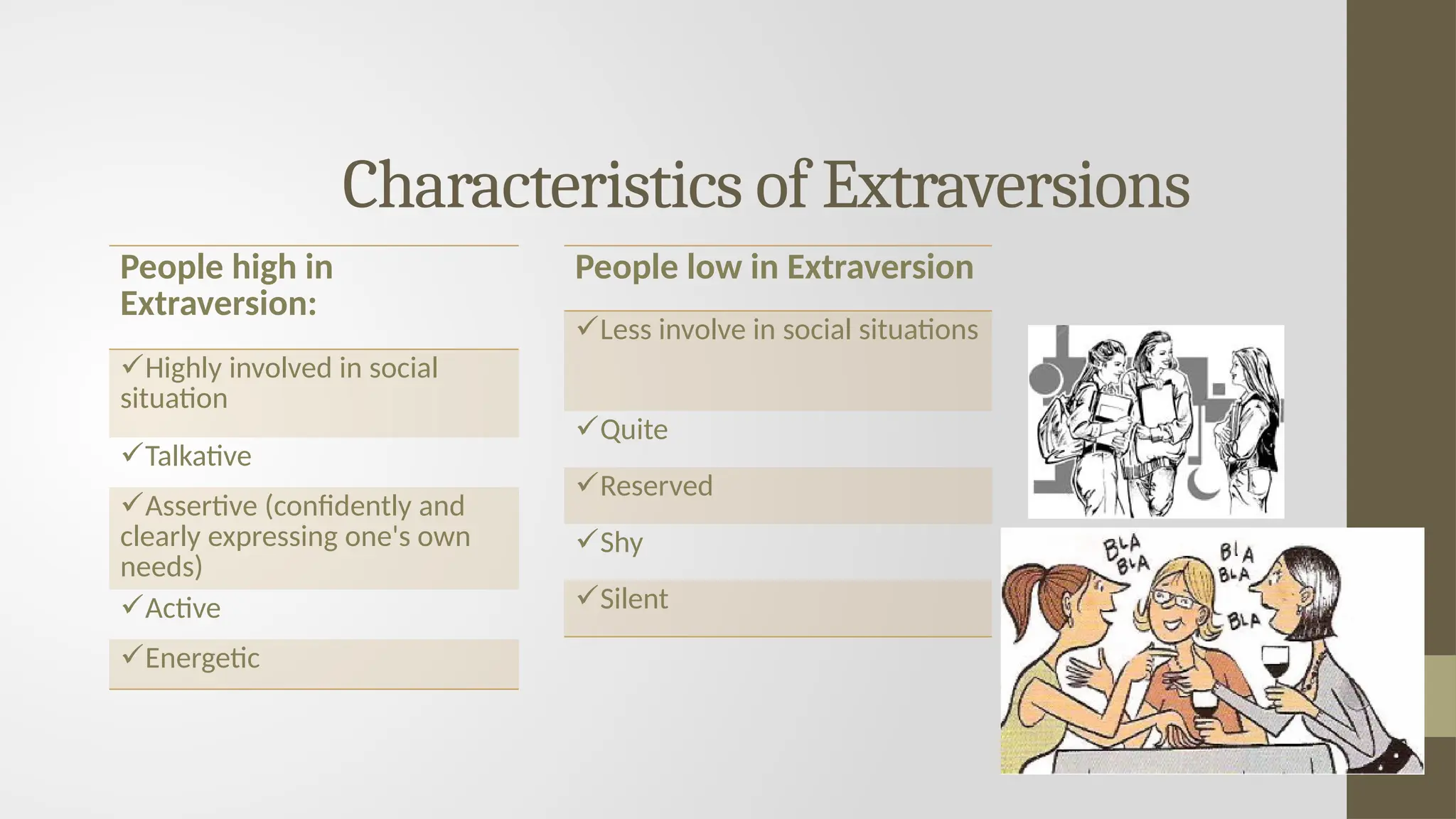
Characteristics of Extraversions
People high in
Extraversion:
Highly involved in social
situation
Talkative
Assertive (confidently and
clearly expressing one's own
needs)
Active
Energetic
People low in Extraversion
Less involve in social situations
Quite
Reserved
Shy
Silent
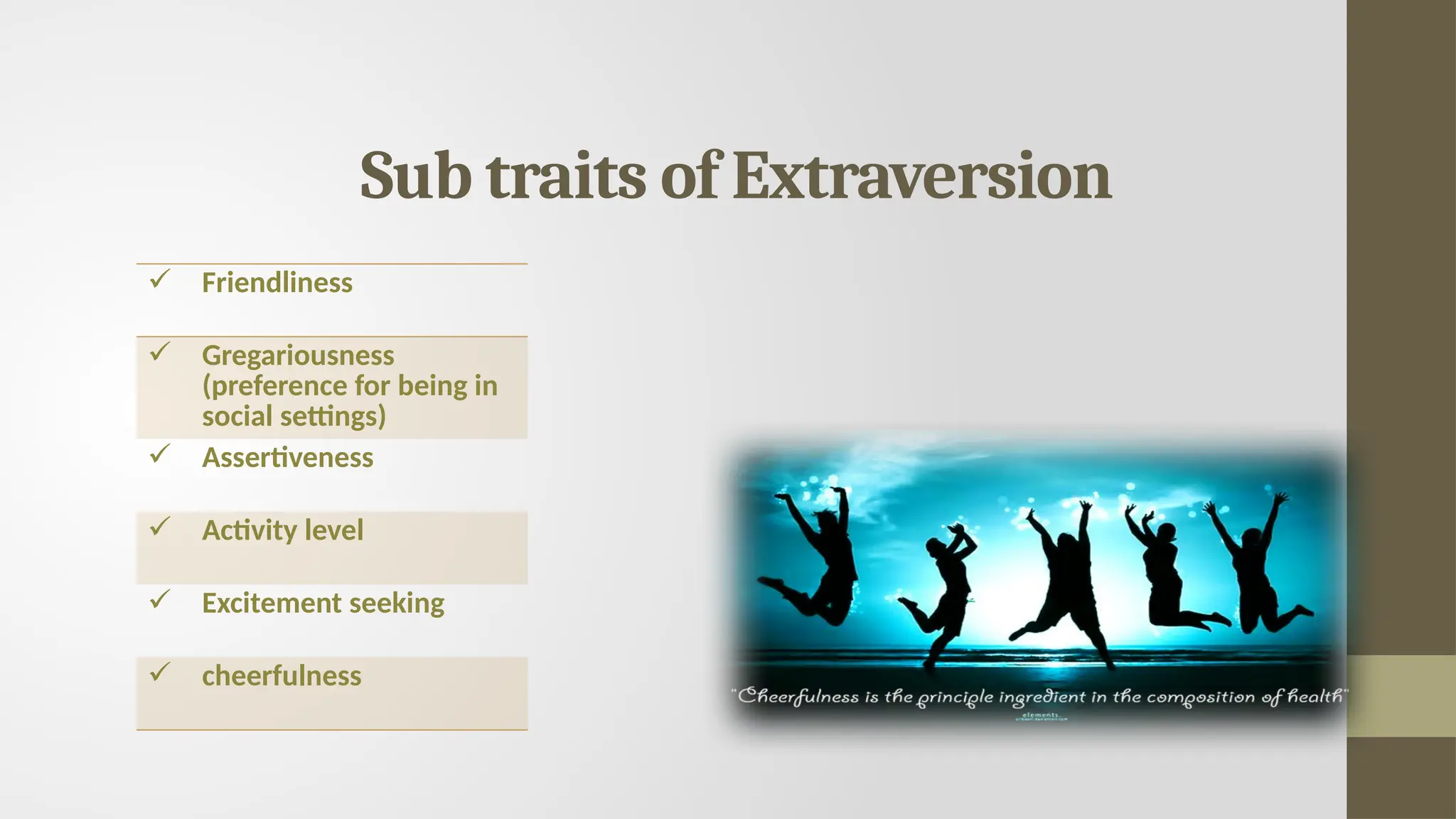
Sub traits of Extraversion
 Friendliness
 Gregariousness
(preference for being in
social settings)
 Assertiveness
 Activity level
 Excitement seeking
 cheerfulness
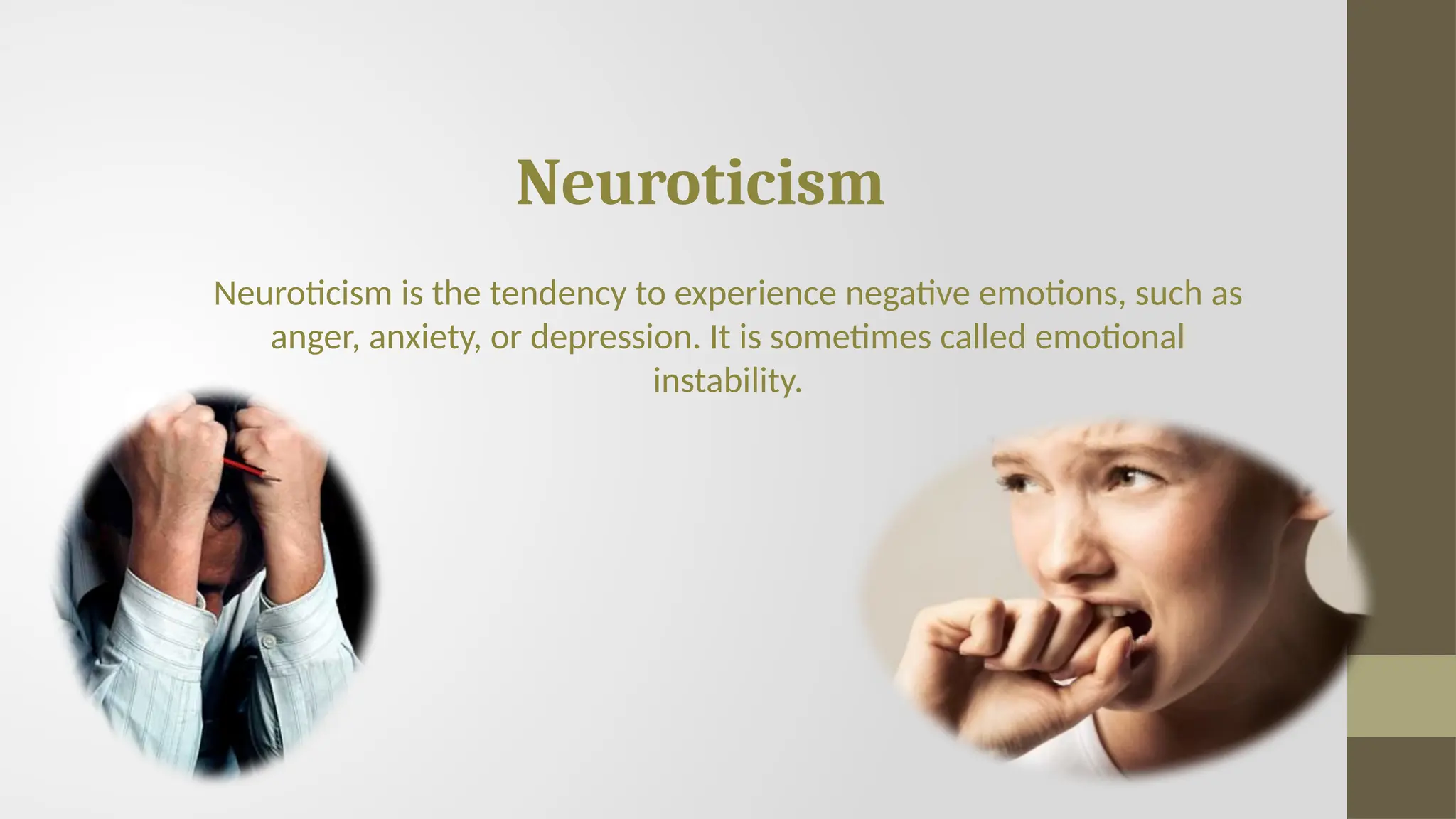
Neuroticism
Neuroticism is the tendency to experience negative emotions, such as
anger, anxiety, or depression. It is sometimes called emotional
instability.
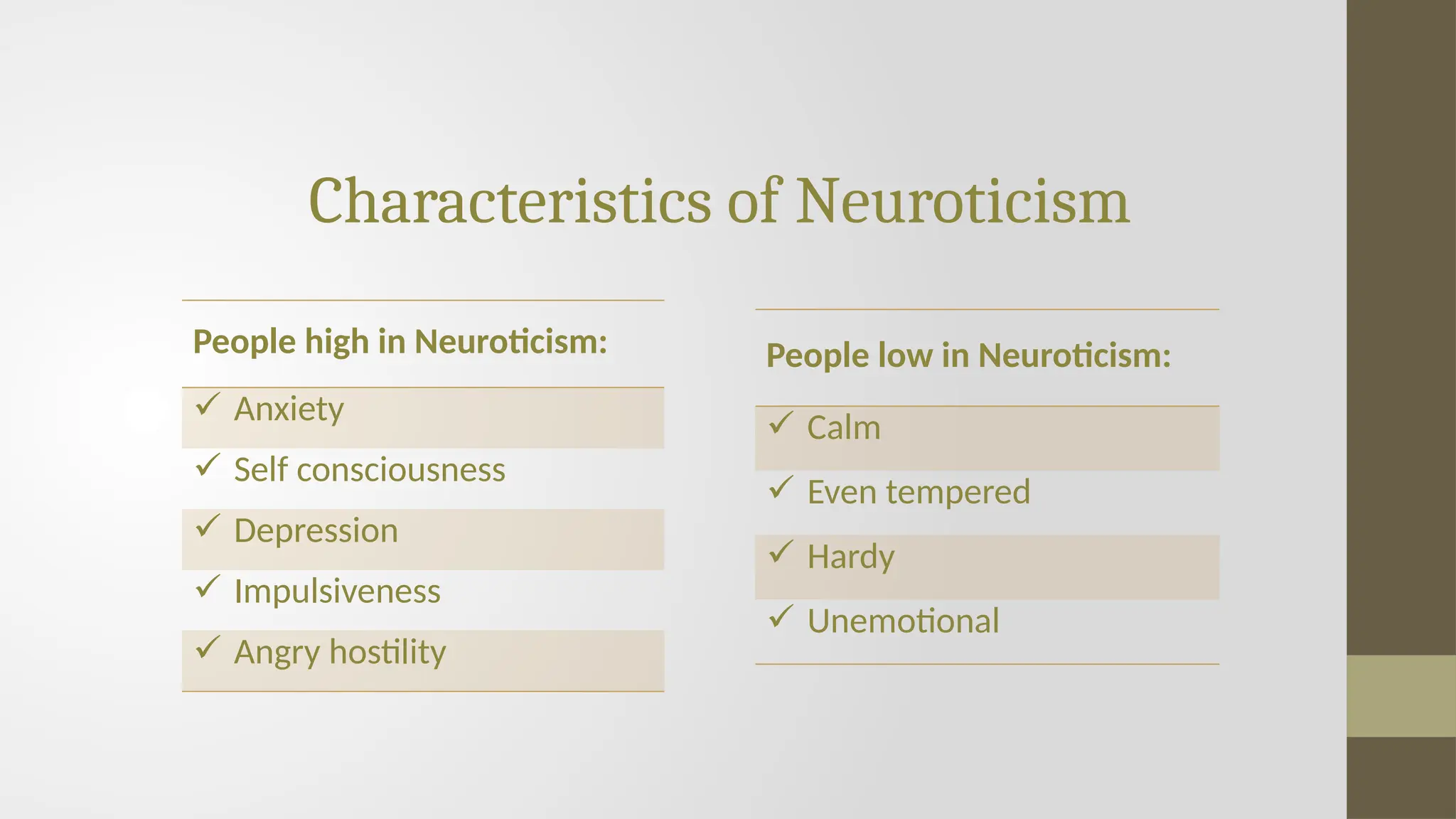
Characteristics of Neuroticism
People high in Neuroticism:
 Anxiety
 Self consciousness
 Depression
 Impulsiveness
 Angry hostility
People low in Neuroticism:
 Calm
 Even tempered
 Hardy
 Unemotional
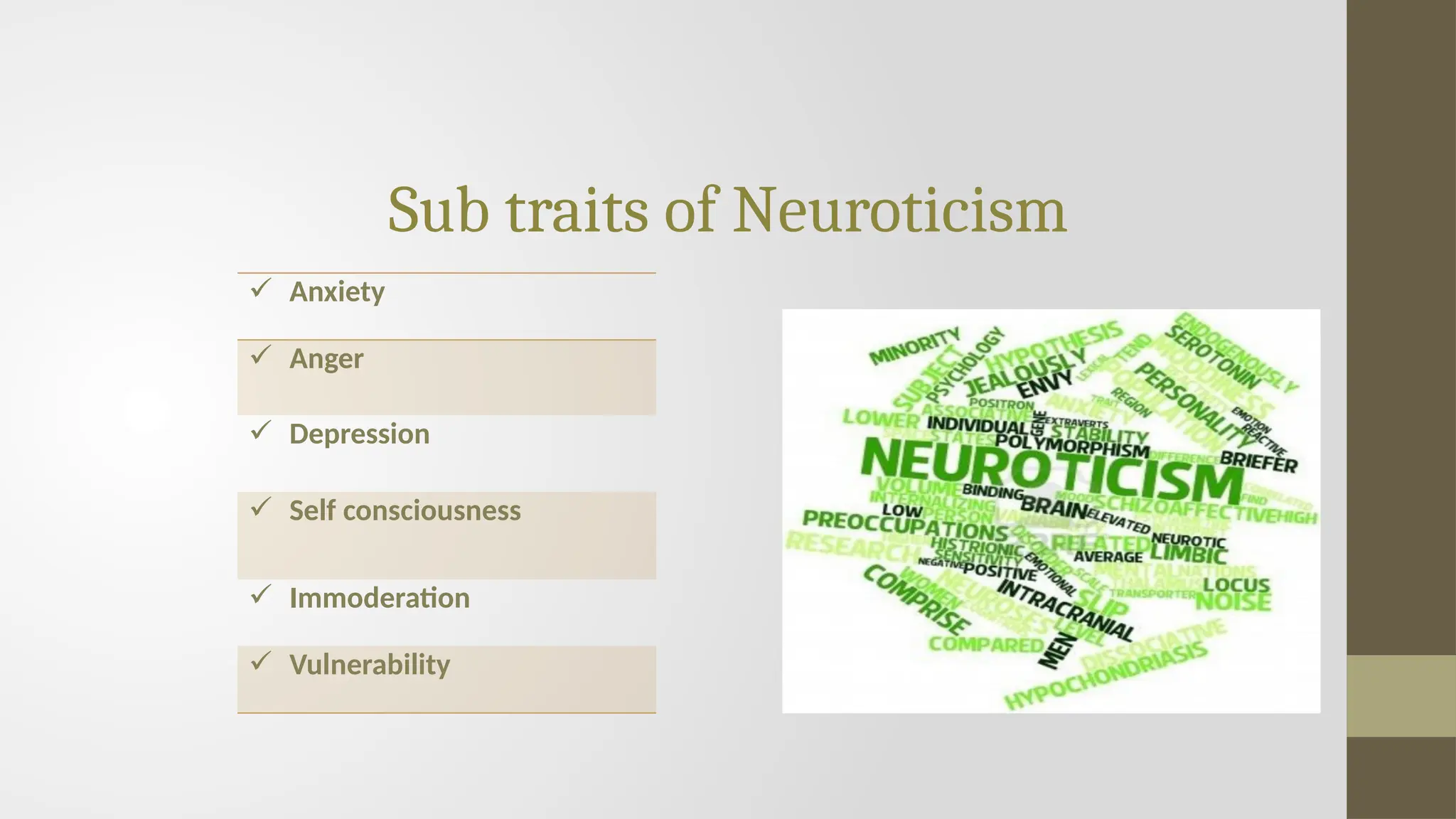
Sub traits of Neuroticism
 Anxiety
 Anger
 Depression
 Self consciousness
 Immoderation
 Vulnerability
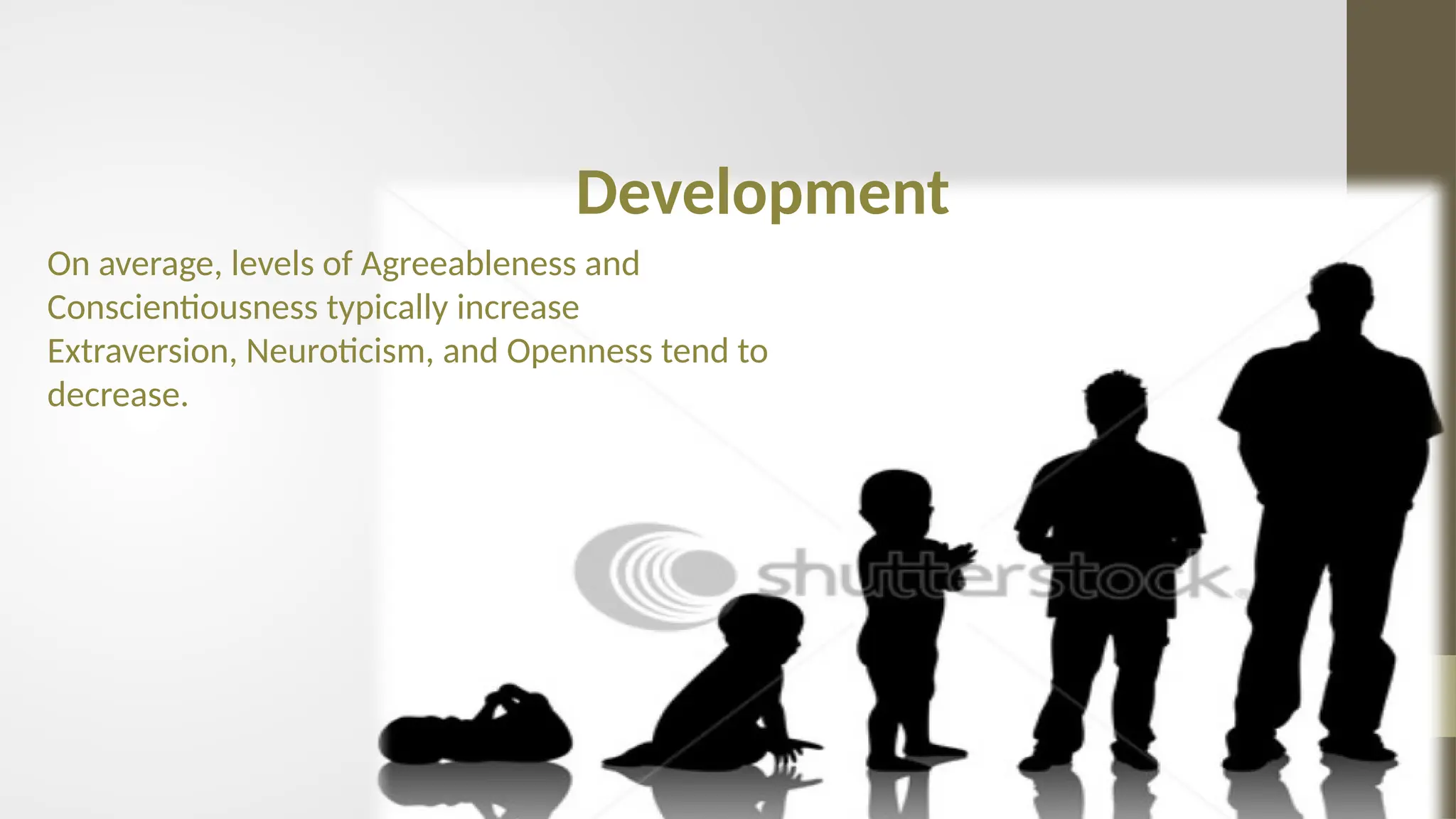
On average, levels of Agreeableness and
Conscientiousness typically increase
Extraversion, Neuroticism, and Openness tend to
decrease.
Development
Criticism
Limited scope
Methodological issue
Theoretical status
Cultural influences
responses
Thank You 
Any Question???

Big five Model in Entrepreneurship......

  • 1.
  • 2.
    Personality • Personality refersto individual differences in characteristic patterns of thinking, feeling and behaving. • The sum total of ways in which an individual reacts to and interacts with others.
  • 3.
    Models to measurepersonality • The Myers-Briggs type indicator • The Big Five personality model
  • 4.
    The Big Fivepersonality model • The Big Five personality dimensions provide a very broad overview of someone’s personality. • Personality psychologists are interested in what differentiates one person from another and why we behave the way that we do.
  • 5.
    History of BFM •The Big Five was originally derived in 1970. • Asking thousands of people hundreds of questions and then analyzing the data. • In scientific circles, the Big Five is now the most widely accepted • Using Big Five to study personality in terms of how it changes over time and how it relates to other variables.
  • 6.
    The Big Fivepersonality model Personality is usually broken into components called the Big Five, which are • Openness to experience • Conscientiousness • Agreeableness • Extroversion • Neuroticism (or emotionality)
  • 8.
    The Big Fivepersonality model • Extraversion is sociability, • agreeableness is kindness, • openness is creativity and intrigue, • conscientiousness is thoughtfulness, and • neuroticism often involves sadness or emotional instability.
  • 9.
    Openness to experience Itis one of the "Big Five" personality factors which means being creative and open to new ideas. This factor indicates how open mind a person is. They have creative thinking and have Flexible attitude.
  • 10.
    Characteristics of Openness Highin openness  Having unusual ideas and art  Imaginative  Creative  Curious  Daring and take risk  Open to new and different ideas  Flexible Attitude lower in openness  Conventional  Enjoy having routines  less creative  less curious Resists new ideas  No flexibility
  • 11.
    Sub traits ofthe openness  Imagination  Artistic interests  Emotionality  Intellect  Liberalism  Adventurousness
  • 12.
    Conscientiousness Conscientiousness is usedto describe the degree to which person is organized, how discipline he or she is and can also describe how careful a person is in certain situation.
  • 13.
    Characteristics of Conscientiousness Highlevel of conscientiousness:  Hard working  Deliberated (long & careful consideration)  Neat and systematic  Perfectionists  Highly dependable  Spends time preparing  Finishes important tasks right away  Pays attention to detail  Enjoys having a set schedule Low level of Conscientiousness:  Less goal oriented  Antisocial  Criminal behavior  Not very dependable  Dislikes structure and schedules  Makes messes and doesn't take care of things  Fails to return things or put them back where they belong  Procrastinates important tasks
  • 14.
    Sub traits ofthe conscientiousness  Self efficacy  Orderliness  Dutifulness  Achievement striving  Self disciplined  Cautiousness
  • 15.
    Agreeableness A personality dimensionthat describe the individual’s propensity (natural tedency). Someone with agreeableness factor is good natured cooperative and trusting. Have an optimistic view of human nature • Get along well with others Difficulty delivering bad news • Can’t give criticism • Can’t stand up for themselves to others
  • 16.
    Characteristics of Agreeableness Personshigh in agreeableness:  Warm and Helpful  Friendly  Put aside their own interests  Cooperative and Generous  Control their negative emotions Persons low in agreeableness:  Suspicious  Unfriendly  Self centered  Uncooperative  Manipulate their social relations
  • 17.
    Sub traits ofagreeableness:  Trust  Straight forwardness  Altruism (selfless concern for well being of others)  Compliance (abiding by the rules)  Modesty (being unassuming of ones ability)  Tender mindedness (easily effected by criticism)
  • 18.
    Extraversion Extraversion is definedas a behavior where someone enjoys being around people more than being alone. An example of extraversion is when someone always likes to be around people and enjoys being the center of attention.
  • 19.
    Characteristics of Extraversions Peoplehigh in Extraversion: Highly involved in social situation Talkative Assertive (confidently and clearly expressing one's own needs) Active Energetic People low in Extraversion Less involve in social situations Quite Reserved Shy Silent
  • 20.
    Sub traits ofExtraversion  Friendliness  Gregariousness (preference for being in social settings)  Assertiveness  Activity level  Excitement seeking  cheerfulness
  • 21.
    Neuroticism Neuroticism is thetendency to experience negative emotions, such as anger, anxiety, or depression. It is sometimes called emotional instability.
  • 22.
    Characteristics of Neuroticism Peoplehigh in Neuroticism:  Anxiety  Self consciousness  Depression  Impulsiveness  Angry hostility People low in Neuroticism:  Calm  Even tempered  Hardy  Unemotional
  • 23.
    Sub traits ofNeuroticism  Anxiety  Anger  Depression  Self consciousness  Immoderation  Vulnerability
  • 24.
    On average, levelsof Agreeableness and Conscientiousness typically increase Extraversion, Neuroticism, and Openness tend to decrease. Development
  • 25.
  • 26.
    Thank You  AnyQuestion???