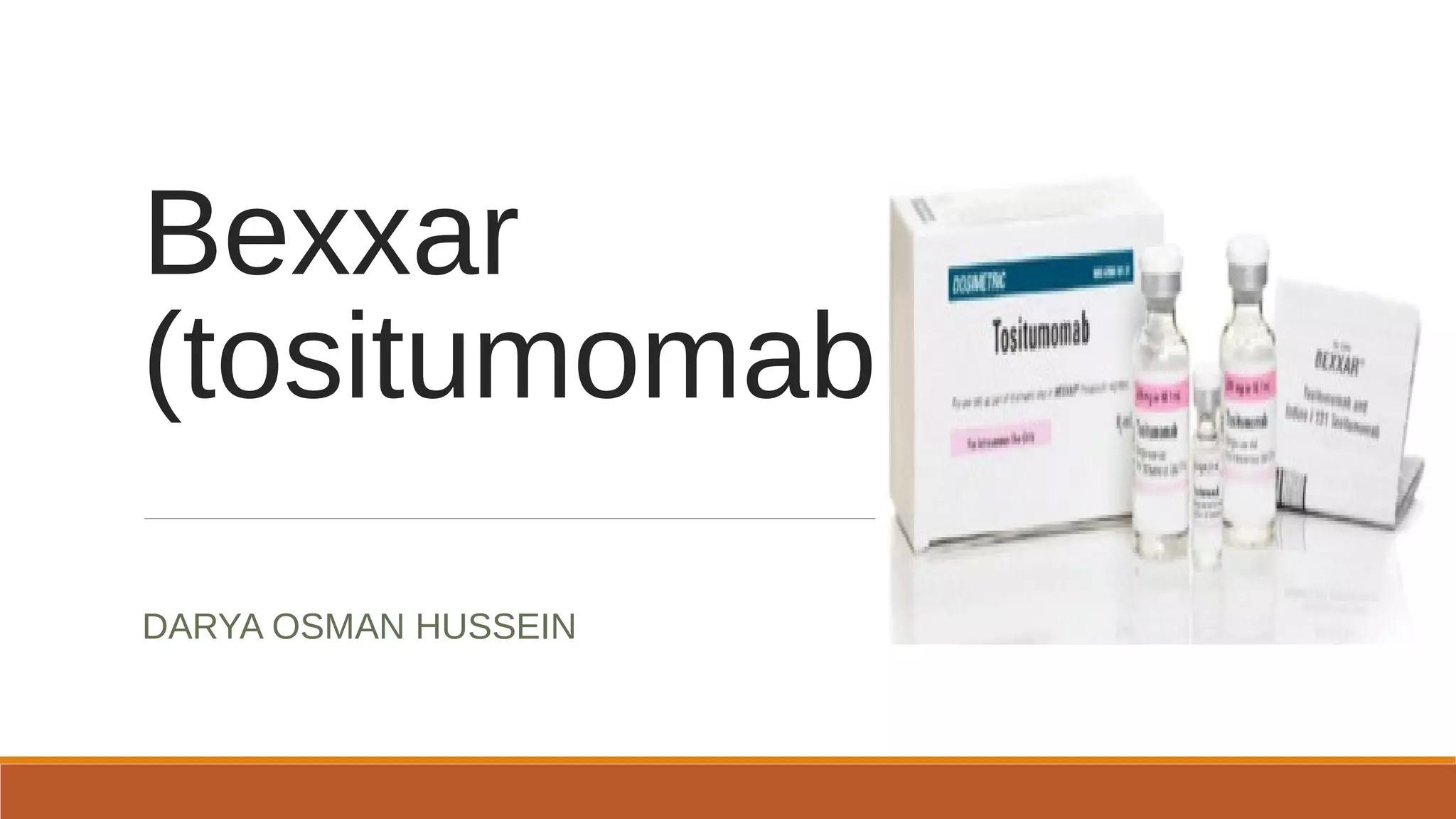
Bexxar
(tositumomab)
DARYA OSMAN HUSSEIN
GENERAL INFORMATION
Therapeutic class:
Antineoplastic agent
Pharmacologic class:
Monoclonal antibody
APPLICATION
Used alone or in combination with iodine I 131
Used to treat CD20-positive, relapsed or refractory non-Hodgkin's lymphoma
Not used for initial treatment of patients with CD20-positive NHL
Used only as a single course of treatment
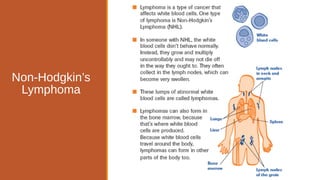
Non-Hodgkin’s
Lymphoma
MECHANISM OF ACTION
Binds to the CD20 (human B-lymphocyte restricted differentiation antigen) antigen
This antigen is found on >90% of B-cell NHL
Bexxar acts through:
Addition of ionizing radiation
Induction of apoptosis
Complement dependent cytotoxicity
Antibody-dependent cellular toxicity
DOSE
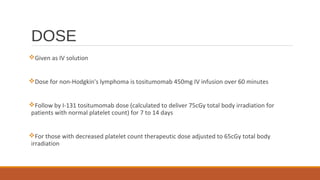
Given as IV solution
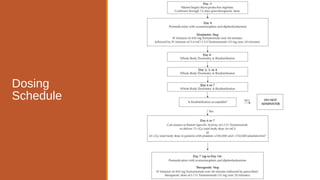
Dose for non-Hodgkin's lymphoma is tositumomab 450mg IV infusion over 60 minutes
Follow by I-131 tositumomab dose (calculated to deliver 75cGy total body irradiation for
patients with normal platelet count) for 7 to 14 days
For those with decreased platelet count therapeutic dose adjusted to 65cGy total body
irradiation
Dosing
Schedule
CLEARANCE
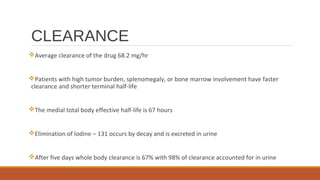
Average clearance of the drug 68.2 mg/hr
Patients with high tumor burden, splenomegaly, or bone marrow involvement have faster
clearance and shorter terminal half-life
The medial total body effective half-life is 67 hours
Elimination of Iodine – 131 occurs by decay and is excreted in urine
After five days whole body clearance is 67% with 98% of clearance accounted for in urine
Physical
Decay Chart
Iodine – 131
T ½ = 8.04 days
Storage requirements
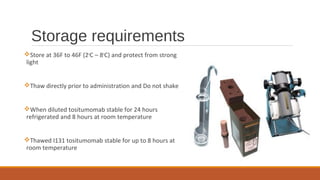
Store at 36F to 46F (2o
C – 8o
C) and protect from strong
light
Thaw directly prior to administration and Do not shake
When diluted tositumomab stable for 24 hours
refrigerated and 8 hours at room temperature
Thawed I131 tositumomab stable for up to 8 hours at
room temperature
Dose preparation and disposal
Must be prepared directly before administration
Unused portion and infusion set components must be
discarded according to laws regarding radioactive and
biohazardous waste
MONITORING
Monitor for infusion reactions
decreased rate by 50% for mild – moderate reactions
Interrupt infusion for serious reactions and resume at 50% of original if reaction resolves
Monitor for grade 3 or 4 cytopenias up to 3 months after treatment (primarily thrombocytopenia
and neutropenia
Life-long monitoring for hypothyroidism
PREGNANCY AND
BREASTFEEDING
Pregnancy
High risk to fetus in all trimesters
Males and females should used contraception to prevent
pregnancy during and for 12 months after stopping drug
Breastfeeding:
Harmful to infant
PRECAUTIONS
Serious allergic reactions (i.e. anaphylaxis – rash, itching,
fever, chills, light-headedness or dizziness, nausea, trouble
breathing or swelling of hands, face, mouth or throat)
Causes susceptibility to infection (because of temporary
decreased number of WBCs)
Bleeding (due to decreased number of platelets)
May increase chance of certain cancer types or thyroid
problems
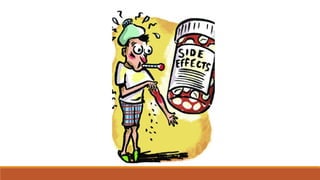
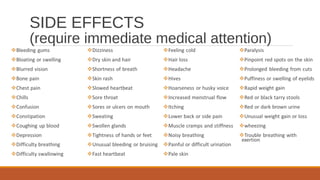
SIDE EFFECTS
(require immediate medical attention)
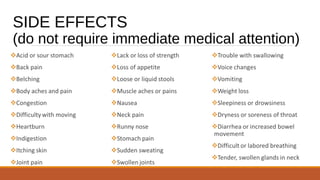
SIDE EFFECTS
(do not require immediate medical attention)
Bexxar

Bexxar

  • 1.
  • 2.
    GENERAL INFORMATION Therapeutic class: Antineoplasticagent Pharmacologic class: Monoclonal antibody
  • 3.
    APPLICATION Used alone orin combination with iodine I 131 Used to treat CD20-positive, relapsed or refractory non-Hodgkin's lymphoma Not used for initial treatment of patients with CD20-positive NHL Used only as a single course of treatment
  • 4.
  • 5.
    MECHANISM OF ACTION Bindsto the CD20 (human B-lymphocyte restricted differentiation antigen) antigen This antigen is found on >90% of B-cell NHL Bexxar acts through: Addition of ionizing radiation Induction of apoptosis Complement dependent cytotoxicity Antibody-dependent cellular toxicity
  • 6.
    DOSE Given as IVsolution Dose for non-Hodgkin's lymphoma is tositumomab 450mg IV infusion over 60 minutes Follow by I-131 tositumomab dose (calculated to deliver 75cGy total body irradiation for patients with normal platelet count) for 7 to 14 days For those with decreased platelet count therapeutic dose adjusted to 65cGy total body irradiation
  • 7.
  • 8.
    CLEARANCE Average clearance ofthe drug 68.2 mg/hr Patients with high tumor burden, splenomegaly, or bone marrow involvement have faster clearance and shorter terminal half-life The medial total body effective half-life is 67 hours Elimination of Iodine – 131 occurs by decay and is excreted in urine After five days whole body clearance is 67% with 98% of clearance accounted for in urine
  • 9.
    Physical Decay Chart Iodine –131 T ½ = 8.04 days
  • 10.
    Storage requirements Store at36F to 46F (2o C – 8o C) and protect from strong light Thaw directly prior to administration and Do not shake When diluted tositumomab stable for 24 hours refrigerated and 8 hours at room temperature Thawed I131 tositumomab stable for up to 8 hours at room temperature
  • 11.
    Dose preparation anddisposal Must be prepared directly before administration Unused portion and infusion set components must be discarded according to laws regarding radioactive and biohazardous waste
  • 12.
    MONITORING Monitor for infusionreactions decreased rate by 50% for mild – moderate reactions Interrupt infusion for serious reactions and resume at 50% of original if reaction resolves Monitor for grade 3 or 4 cytopenias up to 3 months after treatment (primarily thrombocytopenia and neutropenia Life-long monitoring for hypothyroidism
  • 13.
    PREGNANCY AND BREASTFEEDING Pregnancy High riskto fetus in all trimesters Males and females should used contraception to prevent pregnancy during and for 12 months after stopping drug Breastfeeding: Harmful to infant
  • 14.
    PRECAUTIONS Serious allergic reactions(i.e. anaphylaxis – rash, itching, fever, chills, light-headedness or dizziness, nausea, trouble breathing or swelling of hands, face, mouth or throat) Causes susceptibility to infection (because of temporary decreased number of WBCs) Bleeding (due to decreased number of platelets) May increase chance of certain cancer types or thyroid problems
  • 16.
  • 17.
    SIDE EFFECTS (do notrequire immediate medical attention)