β-ADRENOCEPTOR
MODULATION IN
THERAPEUTICS
By-Dr Amit Gupta
PG-1
Deptt of Pharmacology
Contents
• Introduction
• History
• Adrenergic receptors
• Receptor regulation
• Drugs for β-receptor modulation
• Conclusion
Introduction
• ANS is of vital importance for the well being of the
organisms
• ANS regulate the activities that are not under
voluntary control and that function below the level of
consciousness
• The efferent limb of ANS is anatomically divided into
sympathetic and parasympathetic system
• Many organs receive both sympathetic and
parasympathetic innervation and the two divisions are
functionally antagonistic in majority of cases
• Main function of sympathetic nervous system is
tackling stress and emergency whereas
parasympathetic part is associated with assimilation
of food and conservation of energy
History
• Elliot in 1905 suggested that sympathetic nerves
function by the release of adrenaline-like substance
• Dixon(1907) proposed vagus release a muscarine-like
substance
• Von Euler(1946) eventually showed sympathetic
transmitter was Noradrenaline
• Now, it is establishd NE is the principal transmitter of
most Sympathetic postganglionic fibres and of certain
tracts in CNS
• Epinephrine- adrenal medulla
• Dopamine-extrapyramidal system, mesocortical and
mesolimbic pathways
• Collectively these three amines are called as
Catecholamines
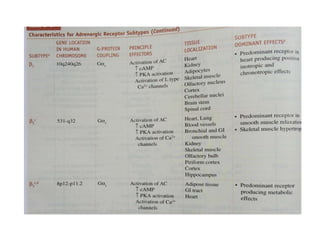
Adrenergic Receptors
• To understand diverse effects of the catecholamines and
related sympathomimetic agents, classification and
properties of different adrenergic receptors should be
known
• Ahlquist (1948) proposed designation α and β for
receptors on smooth muscle where catecholamines
produce excitatory and inhibitory responses respectively
• Exception is gut which is relaxed by activation of these
two receptors
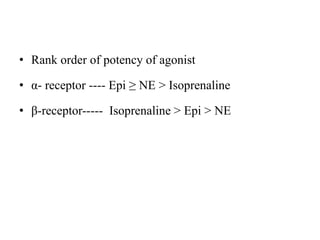
• Rank order of potency of agonist
• α- receptor ---- Epi ≥ NE ˃ Isoprenaline
• β-receptor----- Isoprenaline ˃ Epi ˃ NE
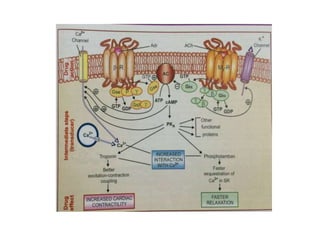
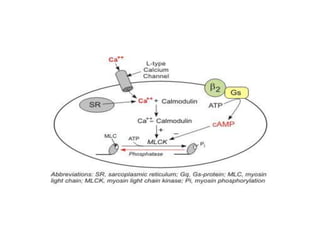
Receptor Regulation
• Responses that follow activation of all types of
adrenergic receptors result from G-protein mediated
effects
• β-receptor function by increasing production of
second messenger cAMP
• Exposure of catecholamine-sensitive cells and tissues
to adrenergic agonists causes a progressive decrease
in their capacity to respond to such agents
• Three process have considerable clinical significance
1. Desensitisation
2. Up and down regulation of receptors
3. Denervation supersensitivity
These phenomenon can limit the therapeutic efficacy
and duration of action of catecholamines and other
agents
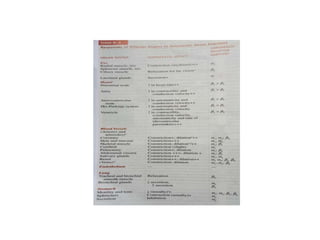
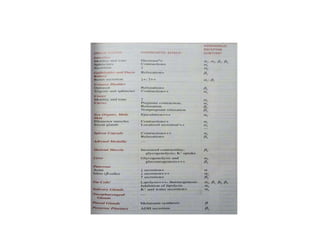
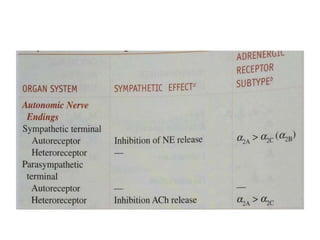
Responses of effector organs to autonomic
nerve impulses
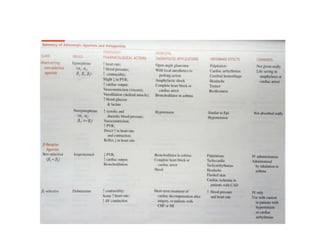
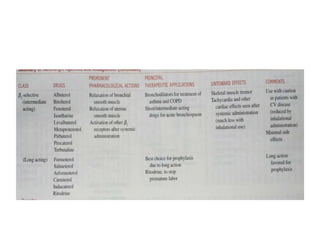
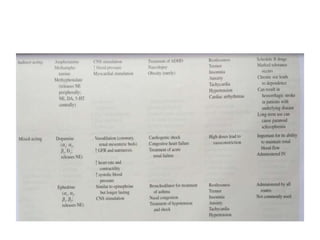
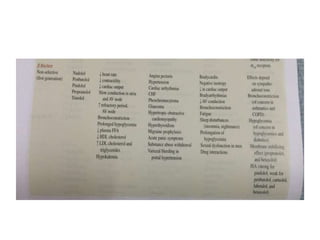
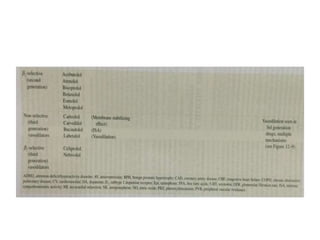
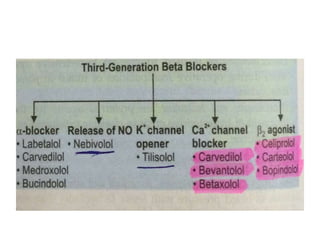
Drugs affecting β-adrenoceptor system in
therapeutics
Conclusion
REFERENCES
• Hager,A.(1981).Br.Med.Bull,37(3)287
• For various trial details (https://clinicaltrials.gov)
• HL sharma, KK sharma. Principles of Pharmacology. 2nd
ed.2011;p 901
• Katzung BG, Trevor AJ. Basics and clinical
pharmacology. 13th ed.McGraw Hill
education:2015;p664-5

Beta receptor modulation in therapeutics

  • 1.
  • 2.
    Contents • Introduction • History •Adrenergic receptors • Receptor regulation • Drugs for β-receptor modulation • Conclusion
  • 3.
    Introduction • ANS isof vital importance for the well being of the organisms • ANS regulate the activities that are not under voluntary control and that function below the level of consciousness • The efferent limb of ANS is anatomically divided into sympathetic and parasympathetic system
  • 4.
    • Many organsreceive both sympathetic and parasympathetic innervation and the two divisions are functionally antagonistic in majority of cases • Main function of sympathetic nervous system is tackling stress and emergency whereas parasympathetic part is associated with assimilation of food and conservation of energy
  • 5.
    History • Elliot in1905 suggested that sympathetic nerves function by the release of adrenaline-like substance • Dixon(1907) proposed vagus release a muscarine-like substance • Von Euler(1946) eventually showed sympathetic transmitter was Noradrenaline
  • 6.
    • Now, itis establishd NE is the principal transmitter of most Sympathetic postganglionic fibres and of certain tracts in CNS • Epinephrine- adrenal medulla • Dopamine-extrapyramidal system, mesocortical and mesolimbic pathways • Collectively these three amines are called as Catecholamines
  • 7.
    Adrenergic Receptors • Tounderstand diverse effects of the catecholamines and related sympathomimetic agents, classification and properties of different adrenergic receptors should be known • Ahlquist (1948) proposed designation α and β for receptors on smooth muscle where catecholamines produce excitatory and inhibitory responses respectively • Exception is gut which is relaxed by activation of these two receptors
  • 8.
    • Rank orderof potency of agonist • α- receptor ---- Epi ≥ NE ˃ Isoprenaline • β-receptor----- Isoprenaline ˃ Epi ˃ NE
  • 10.
    Receptor Regulation • Responsesthat follow activation of all types of adrenergic receptors result from G-protein mediated effects • β-receptor function by increasing production of second messenger cAMP
  • 13.
    • Exposure ofcatecholamine-sensitive cells and tissues to adrenergic agonists causes a progressive decrease in their capacity to respond to such agents • Three process have considerable clinical significance 1. Desensitisation 2. Up and down regulation of receptors
  • 14.
    3. Denervation supersensitivity Thesephenomenon can limit the therapeutic efficacy and duration of action of catecholamines and other agents
  • 15.
    Responses of effectororgans to autonomic nerve impulses
  • 20.
    Drugs affecting β-adrenoceptorsystem in therapeutics
  • 28.
  • 29.
    REFERENCES • Hager,A.(1981).Br.Med.Bull,37(3)287 • Forvarious trial details (https://clinicaltrials.gov) • HL sharma, KK sharma. Principles of Pharmacology. 2nd ed.2011;p 901 • Katzung BG, Trevor AJ. Basics and clinical pharmacology. 13th ed.McGraw Hill education:2015;p664-5