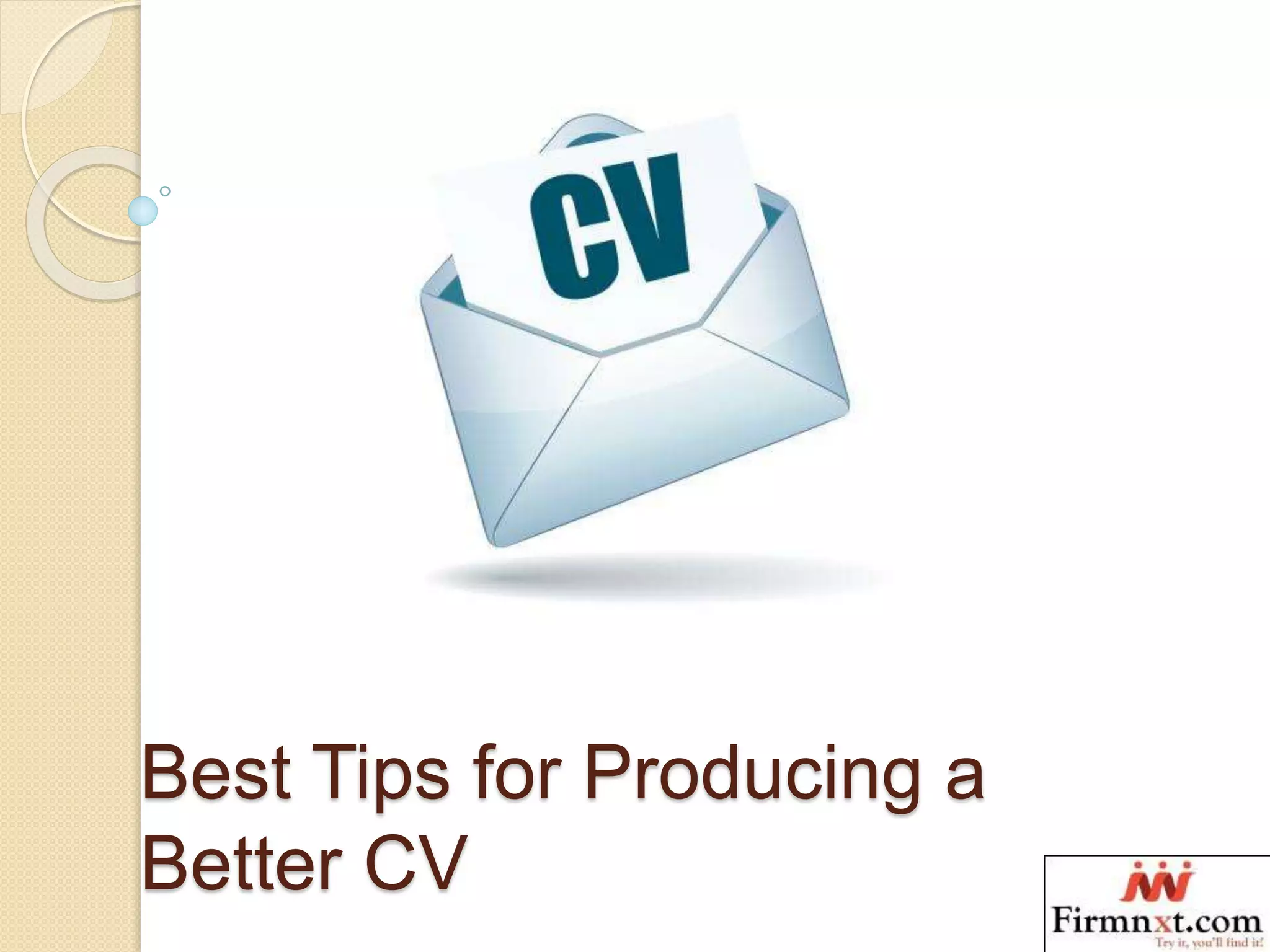
Best Tips for Producing a
Better CV
Keep It Short And Clear
 The most important information, such
as your key skills and recent
experience, needs to be near the top,
where it can be seen immediately.
 Your CV should normally be two
pages in length (unless you have a
very long career span or have a lot
of projects).
Make It Look Good
 Clear, attractive presentation is also
important if your CV is to stand out.
 Ensure that it's uncluttered, with key
points easy to spot.
 Use bullet points and keep the
sentences relatively short.
Most Recent First
 Put your employment history in
reverse chronological order, starting
with the most recent first.
 Avoid leaving any gaps, so if you've
had time out for some reason, do
mention this.
 Don't go into detail about positions
you held over 10 years ago.
Include Facts
 List your job duties beneath each
position.
 List your achievements,
responsibilities and results.
 Talk about results - what difference did
your presence make? Use numbers
for achievements wherever possible.
 Use the past tense for previous jobs
and the present tense for your current
job.
Not Too Many Lists
 Include specific skills, such as
administrative, functional or computing
skills, in a separate section in your CV.
 Don't relist them for every job you've
used them in.
 This is particularly so for IT work - lists
of tools and packages make dull
reading and won't make you stand out
from other people with the same
abilities.
Breathe Some Life Into It
 Remember the employer wants a
sense of the kind of person you are,
as well as what you can do.
 Do you rise to a challenge? With each
point you write, ask yourself "What
does this say about me?"
Be Accurate
 Always check for errors.
 Run a spelling and grammar check
and ask someone else to read it for
you.
 Else read it aloud.
 The employer isn't going to believe
you're a good communicator if your
CV is full of mistakes.
Best Tips for Producing a Better CV

Best Tips for Producing a Better CV

  • 1.
    Best Tips forProducing a Better CV
  • 2.
    Keep It ShortAnd Clear  The most important information, such as your key skills and recent experience, needs to be near the top, where it can be seen immediately.  Your CV should normally be two pages in length (unless you have a very long career span or have a lot of projects).
  • 3.
    Make It LookGood  Clear, attractive presentation is also important if your CV is to stand out.  Ensure that it's uncluttered, with key points easy to spot.  Use bullet points and keep the sentences relatively short.
  • 4.
    Most Recent First Put your employment history in reverse chronological order, starting with the most recent first.  Avoid leaving any gaps, so if you've had time out for some reason, do mention this.  Don't go into detail about positions you held over 10 years ago.
  • 5.
    Include Facts  Listyour job duties beneath each position.  List your achievements, responsibilities and results.  Talk about results - what difference did your presence make? Use numbers for achievements wherever possible.  Use the past tense for previous jobs and the present tense for your current job.
  • 6.
    Not Too ManyLists  Include specific skills, such as administrative, functional or computing skills, in a separate section in your CV.  Don't relist them for every job you've used them in.  This is particularly so for IT work - lists of tools and packages make dull reading and won't make you stand out from other people with the same abilities.
  • 7.
    Breathe Some LifeInto It  Remember the employer wants a sense of the kind of person you are, as well as what you can do.  Do you rise to a challenge? With each point you write, ask yourself "What does this say about me?"
  • 8.
    Be Accurate  Alwayscheck for errors.  Run a spelling and grammar check and ask someone else to read it for you.  Else read it aloud.  The employer isn't going to believe you're a good communicator if your CV is full of mistakes.