Jolynne Dziengel
ORG 536 – Contemporary Business Writing and
Communication
Colorado State University – Global Campus
Dr. Brian Neff
March 2, 2014
Communication is the backbone to a
successful business. Businesses must
be able to communicate globally with
customers, employees, and suppliers.
Lets take a look at the top business
writing and communication practices!
Effective

Communication

• Understand how information flows

within organization
• Understand best uses of oral and
written communication
• Understand communication barriers
 Different reference points
 Lack of language skills
 Distractions
Ethical

Communication

• Are you being ethical? Ask yourself

these questions:

 Is the action legal?
 How would the other side see the issue?
 What are the alternate solutions?
 Can the issue be discussed with a trusted
source?
 How would you feel if your friends or family
learned of your actions?
Goals

of ethical communication

• Abide by the law
• Tell the truth
• Be objective
• Communicate clearly
• Use inclusive language
• Give credit where credit is due
Create

effective teams:

Keep groups small
Team must agree on a purpose
Team must agree on procedures
Members must be respectful of others
Members should demonstrate effective
communication techniques
• Encourage collaboration not competition
•
•
•
•
•
Tips

for conducting successful
meetings:
• Start on time
• Only schedule necessary meetings
• Invite only necessary participants
• Participants should arrive early, be

prepared, contribute respectively and
don’t interrupt others
Basics

of good listening skills:

• Control external & internal distractions
• Be an active communicator/participant
• Separate facts from opinions
• Don’t interrupt others
• Ask clarifying questions
• Paraphrase information received
• Take notes to improve retention
Individual

qualities that show
professionalism
• Speak clearly and concisely
• Written correspondence must have

proper grammar and sentence
structure
• Be mindful of personal email names
and social networking site content
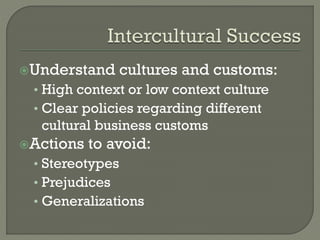
Understand

cultures and customs:

• High context or low context culture
• Clear policies regarding different

cultural business customs
Actions

to avoid:

• Stereotypes
• Prejudices
• Generalizations
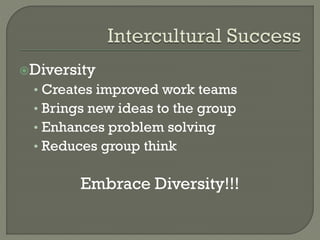
Diversity

• Creates improved work teams
• Brings new ideas to the group
• Enhances problem solving
• Reduces group think

Embrace Diversity!!!
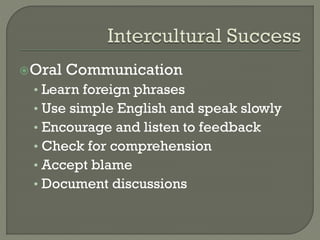
Oral

Communication

• Learn foreign phrases
• Use simple English and speak slowly
• Encourage and listen to feedback
• Check for comprehension
• Accept blame
• Document discussions
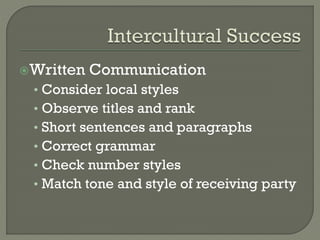
Written

Communication

• Consider local styles
• Observe titles and rank
• Short sentences and paragraphs
• Correct grammar
• Check number styles
• Match tone and style of receiving party
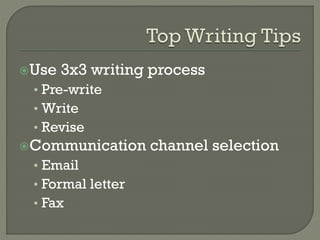
Use

3x3 writing process

• Pre-write
• Write
• Revise
Communication

• Email
• Formal letter
• Fax

channel selection
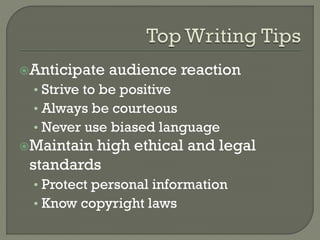
Anticipate

audience reaction

• Strive to be positive
• Always be courteous
• Never use biased language
Maintain

high ethical and legal
standards
• Protect personal information
• Know copyright laws
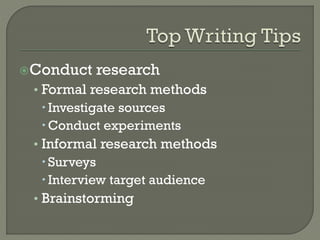
Conduct

research

• Formal research methods
 Investigate sources
 Conduct experiments
• Informal research methods
 Surveys
 Interview target audience
• Brainstorming
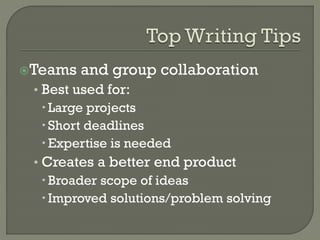
Teams

and group collaboration

• Best used for:
 Large projects
 Short deadlines
 Expertise is needed
• Creates a better end product
 Broader scope of ideas
 Improved solutions/problem solving
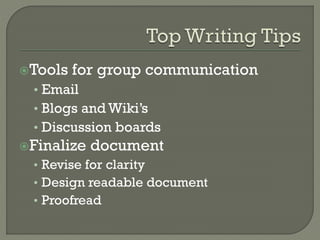
Tools

for group communication

• Email
• Blogs and Wiki’s
• Discussion boards
Finalize

document

• Revise for clarity
• Design readable document
• Proofread
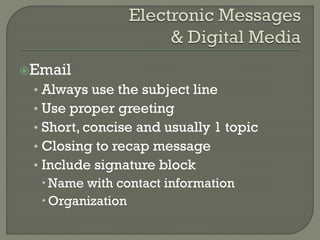
Email

• Always use the subject line
• Use proper greeting
• Short, concise and usually 1 topic
• Closing to recap message
• Include signature block
 Name with contact information
 Organization
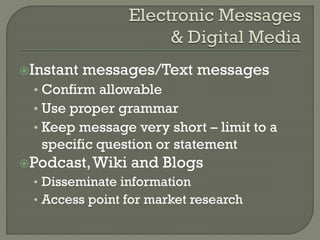
Instant

messages/Text messages

• Confirm allowable
• Use proper grammar
• Keep message very short – limit to a

specific question or statement
Podcast, Wiki

and Blogs

• Disseminate information
• Access point for market research
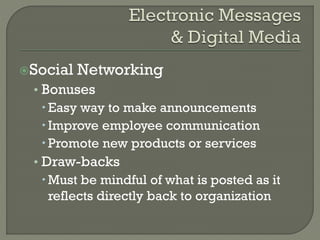
Social

Networking

• Bonuses
 Easy way to make announcements
 Improve employee communication
 Promote new products or services
• Draw-backs
 Must be mindful of what is posted as it
reflects directly back to organization
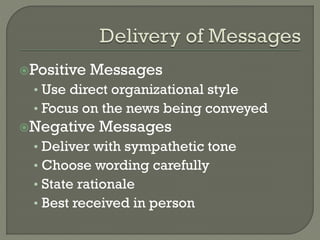
Positive

Messages

• Use direct organizational style
• Focus on the news being conveyed
Negative

Messages

• Deliver with sympathetic tone
• Choose wording carefully
• State rationale
• Best received in person
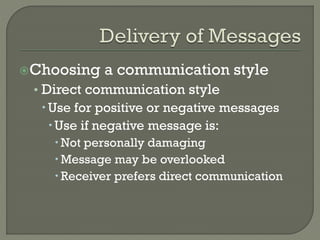
Choosing

a communication style

• Direct communication style
 Use for positive or negative messages
 Use if negative message is:
 Not personally damaging
 Message may be overlooked
 Receiver prefers direct communication
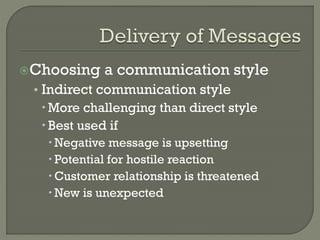
Choosing

a communication style

• Indirect communication style
 More challenging than direct style
 Best used if
 Negative message is upsetting
 Potential for hostile reaction
 Customer relationship is threatened
 New is unexpected
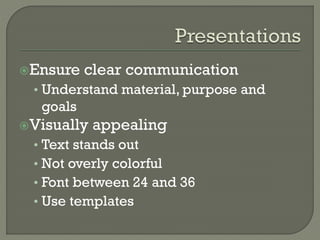
Ensure

clear communication

• Understand material, purpose and

goals
Visually

appealing

• Text stands out
• Not overly colorful
• Font between 24 and 36
• Use templates
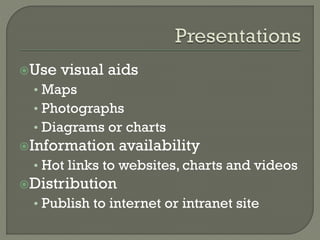
Use

visual aids

• Maps
• Photographs
• Diagrams or charts
Information

availability

• Hot links to websites, charts and videos
Distribution

• Publish to internet or intranet site
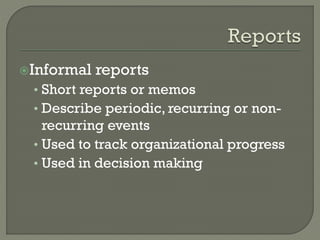
Informal

reports

• Short reports or memos
• Describe periodic, recurring or non-

recurring events
• Used to track organizational progress
• Used in decision making
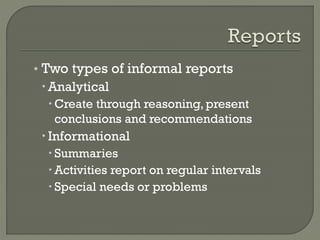
• Two types of informal reports
 Analytical
 Create through reasoning, present
conclusions and recommendations
 Informational
 Summaries
 Activities report on regular intervals
 Special needs or problems
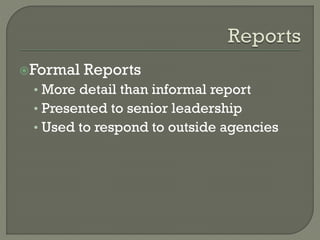
Formal

Reports

• More detail than informal report
• Presented to senior leadership
• Used to respond to outside agencies
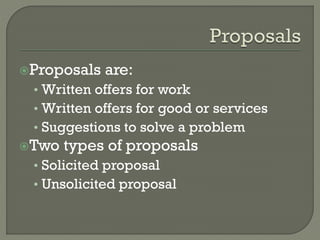
Proposals

are:

• Written offers for work
• Written offers for good or services
• Suggestions to solve a problem
Two

types of proposals

• Solicited proposal
• Unsolicited proposal
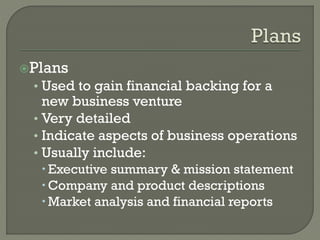
Plans

• Used to gain financial backing for a

new business venture
• Very detailed
• Indicate aspects of business operations
• Usually include:
 Executive summary & mission statement
 Company and product descriptions
 Market analysis and financial reports
 Slide

presentation can be found at:
www.Slideshare.net

 Questions

or comments?

Best Practices in Business Writing and Communication by Jolynne Dziengel

  • 1.
    Jolynne Dziengel ORG 536– Contemporary Business Writing and Communication Colorado State University – Global Campus Dr. Brian Neff March 2, 2014
  • 2.
    Communication is thebackbone to a successful business. Businesses must be able to communicate globally with customers, employees, and suppliers. Lets take a look at the top business writing and communication practices!
  • 3.
    Effective Communication • Understand howinformation flows within organization • Understand best uses of oral and written communication • Understand communication barriers  Different reference points  Lack of language skills  Distractions
  • 4.
    Ethical Communication • Are youbeing ethical? Ask yourself these questions:  Is the action legal?  How would the other side see the issue?  What are the alternate solutions?  Can the issue be discussed with a trusted source?  How would you feel if your friends or family learned of your actions?
  • 5.
    Goals of ethical communication •Abide by the law • Tell the truth • Be objective • Communicate clearly • Use inclusive language • Give credit where credit is due
  • 6.
    Create effective teams: Keep groupssmall Team must agree on a purpose Team must agree on procedures Members must be respectful of others Members should demonstrate effective communication techniques • Encourage collaboration not competition • • • • •
  • 7.
    Tips for conducting successful meetings: •Start on time • Only schedule necessary meetings • Invite only necessary participants • Participants should arrive early, be prepared, contribute respectively and don’t interrupt others
  • 8.
    Basics of good listeningskills: • Control external & internal distractions • Be an active communicator/participant • Separate facts from opinions • Don’t interrupt others • Ask clarifying questions • Paraphrase information received • Take notes to improve retention
  • 9.
    Individual qualities that show professionalism •Speak clearly and concisely • Written correspondence must have proper grammar and sentence structure • Be mindful of personal email names and social networking site content
  • 10.
    Understand cultures and customs: •High context or low context culture • Clear policies regarding different cultural business customs Actions to avoid: • Stereotypes • Prejudices • Generalizations
  • 11.
    Diversity • Creates improvedwork teams • Brings new ideas to the group • Enhances problem solving • Reduces group think Embrace Diversity!!!
  • 12.
    Oral Communication • Learn foreignphrases • Use simple English and speak slowly • Encourage and listen to feedback • Check for comprehension • Accept blame • Document discussions
  • 13.
    Written Communication • Consider localstyles • Observe titles and rank • Short sentences and paragraphs • Correct grammar • Check number styles • Match tone and style of receiving party
  • 14.
    Use 3x3 writing process •Pre-write • Write • Revise Communication • Email • Formal letter • Fax channel selection
  • 15.
    Anticipate audience reaction • Striveto be positive • Always be courteous • Never use biased language Maintain high ethical and legal standards • Protect personal information • Know copyright laws
  • 16.
    Conduct research • Formal researchmethods  Investigate sources  Conduct experiments • Informal research methods  Surveys  Interview target audience • Brainstorming
  • 17.
    Teams and group collaboration •Best used for:  Large projects  Short deadlines  Expertise is needed • Creates a better end product  Broader scope of ideas  Improved solutions/problem solving
  • 18.
    Tools for group communication •Email • Blogs and Wiki’s • Discussion boards Finalize document • Revise for clarity • Design readable document • Proofread
  • 19.
    Email • Always usethe subject line • Use proper greeting • Short, concise and usually 1 topic • Closing to recap message • Include signature block  Name with contact information  Organization
  • 20.
    Instant messages/Text messages • Confirmallowable • Use proper grammar • Keep message very short – limit to a specific question or statement Podcast, Wiki and Blogs • Disseminate information • Access point for market research
  • 21.
    Social Networking • Bonuses  Easyway to make announcements  Improve employee communication  Promote new products or services • Draw-backs  Must be mindful of what is posted as it reflects directly back to organization
  • 22.
    Positive Messages • Use directorganizational style • Focus on the news being conveyed Negative Messages • Deliver with sympathetic tone • Choose wording carefully • State rationale • Best received in person
  • 23.
    Choosing a communication style •Direct communication style  Use for positive or negative messages  Use if negative message is:  Not personally damaging  Message may be overlooked  Receiver prefers direct communication
  • 24.
    Choosing a communication style •Indirect communication style  More challenging than direct style  Best used if  Negative message is upsetting  Potential for hostile reaction  Customer relationship is threatened  New is unexpected
  • 25.
    Ensure clear communication • Understandmaterial, purpose and goals Visually appealing • Text stands out • Not overly colorful • Font between 24 and 36 • Use templates
  • 26.
    Use visual aids • Maps •Photographs • Diagrams or charts Information availability • Hot links to websites, charts and videos Distribution • Publish to internet or intranet site
  • 27.
    Informal reports • Short reportsor memos • Describe periodic, recurring or non- recurring events • Used to track organizational progress • Used in decision making
  • 28.
    • Two typesof informal reports  Analytical  Create through reasoning, present conclusions and recommendations  Informational  Summaries  Activities report on regular intervals  Special needs or problems
  • 29.
    Formal Reports • More detailthan informal report • Presented to senior leadership • Used to respond to outside agencies
  • 30.
    Proposals are: • Written offersfor work • Written offers for good or services • Suggestions to solve a problem Two types of proposals • Solicited proposal • Unsolicited proposal
  • 31.
    Plans • Used togain financial backing for a new business venture • Very detailed • Indicate aspects of business operations • Usually include:  Executive summary & mission statement  Company and product descriptions  Market analysis and financial reports
  • 32.
     Slide presentation canbe found at: www.Slideshare.net  Questions or comments?