BENEFITS AND 
CHALLENGES OF USING 
OPEN EDUCATIONAL 
RESOURCES 
Matt Green, IT Instructor WCTC
The Benefits of using 
OERs 
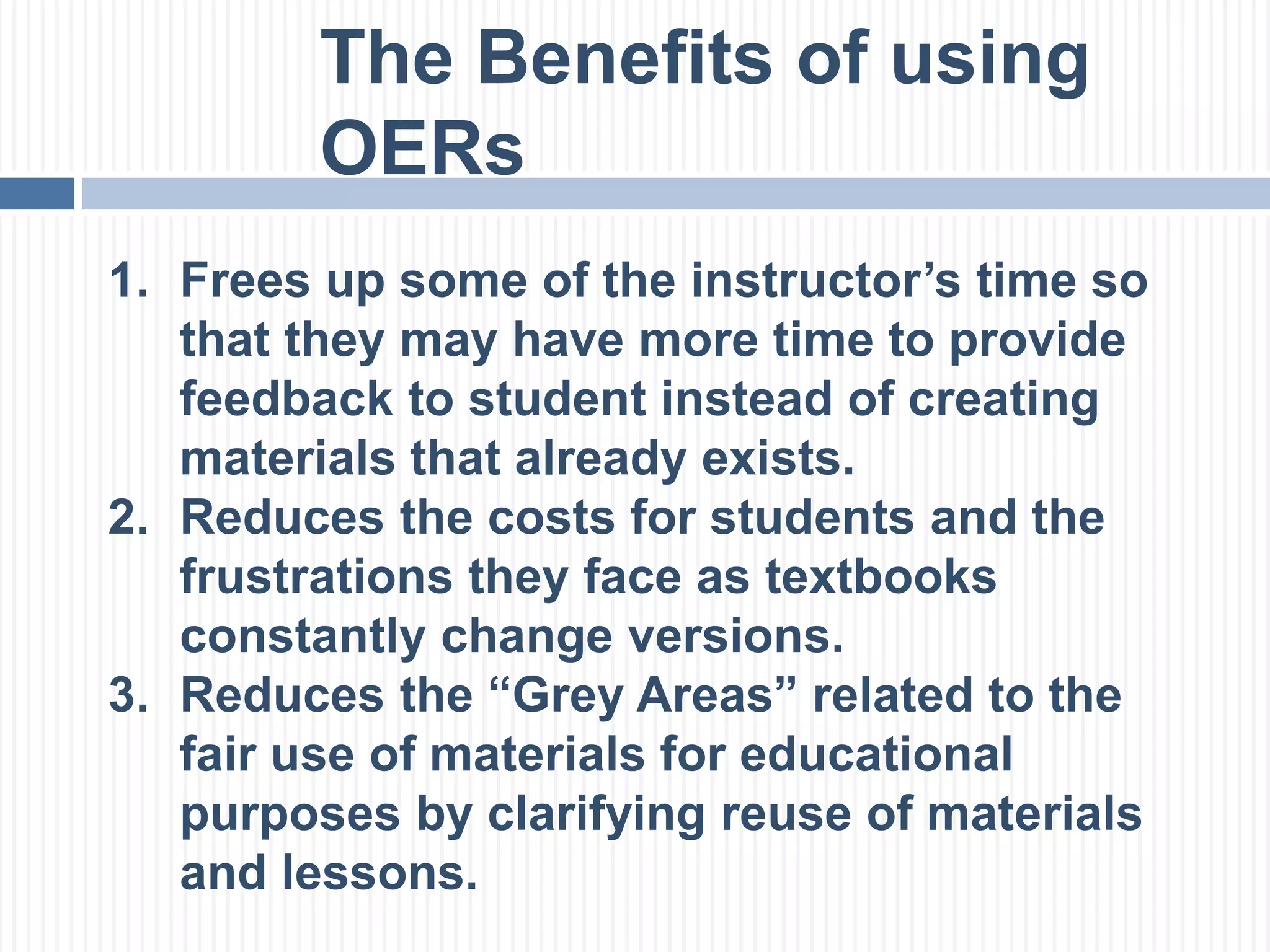
1. Frees up some of the instructor’s time so 
that they may have more time to provide 
feedback to student instead of creating 
materials that already exists. 
2. Reduces the costs for students and the 
frustrations they face as textbooks 
constantly change versions. 
3. Reduces the “Grey Areas” related to the 
fair use of materials for educational 
purposes by clarifying reuse of materials 
and lessons.
The Benefits of using 
OERs 
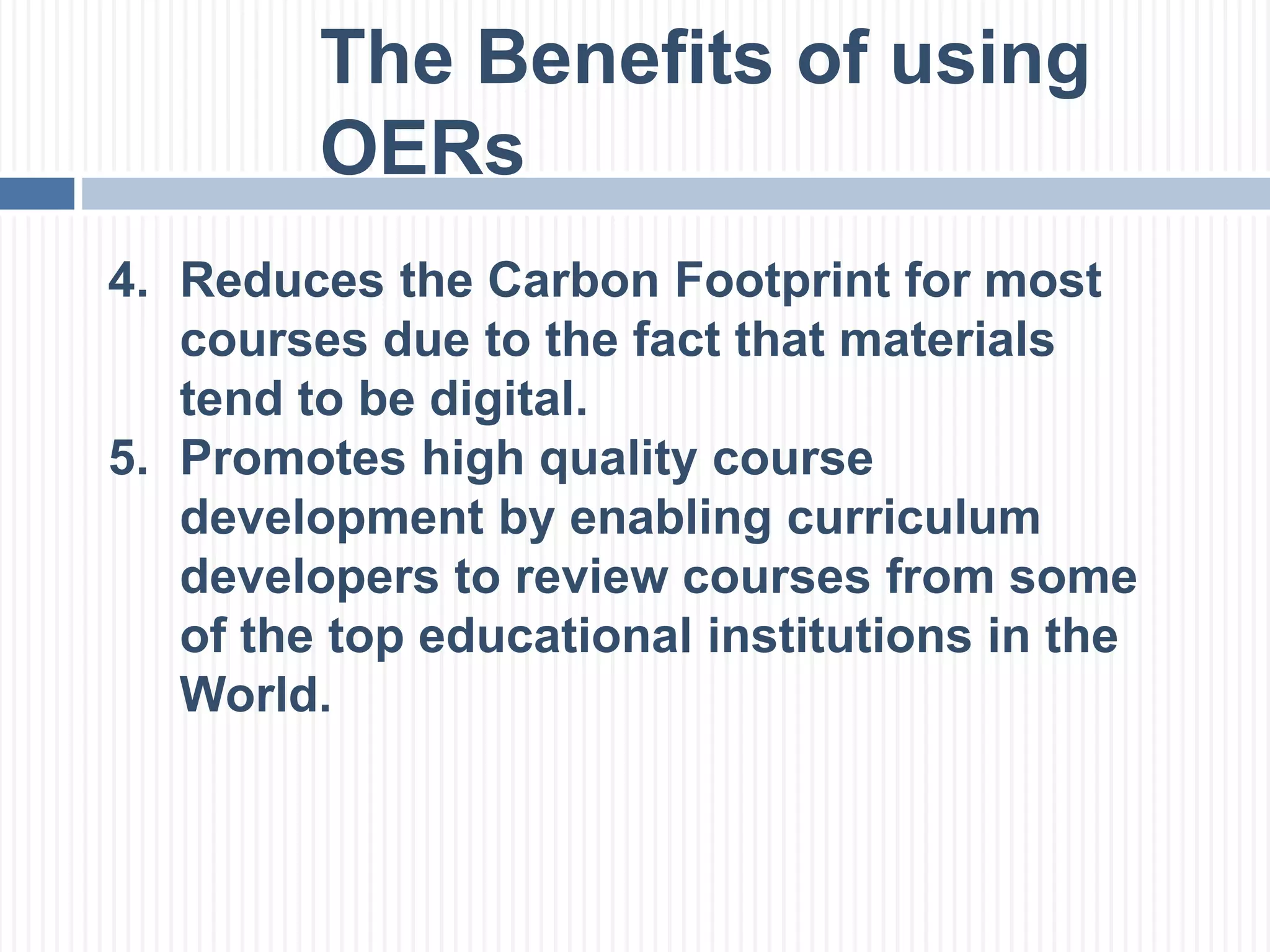
4. Reduces the Carbon Footprint for most 
courses due to the fact that materials 
tend to be digital. 
5. Promotes high quality course 
development by enabling curriculum 
developers to review courses from some 
of the top educational institutions in the 
World.
The Challenges of using 
OERs 
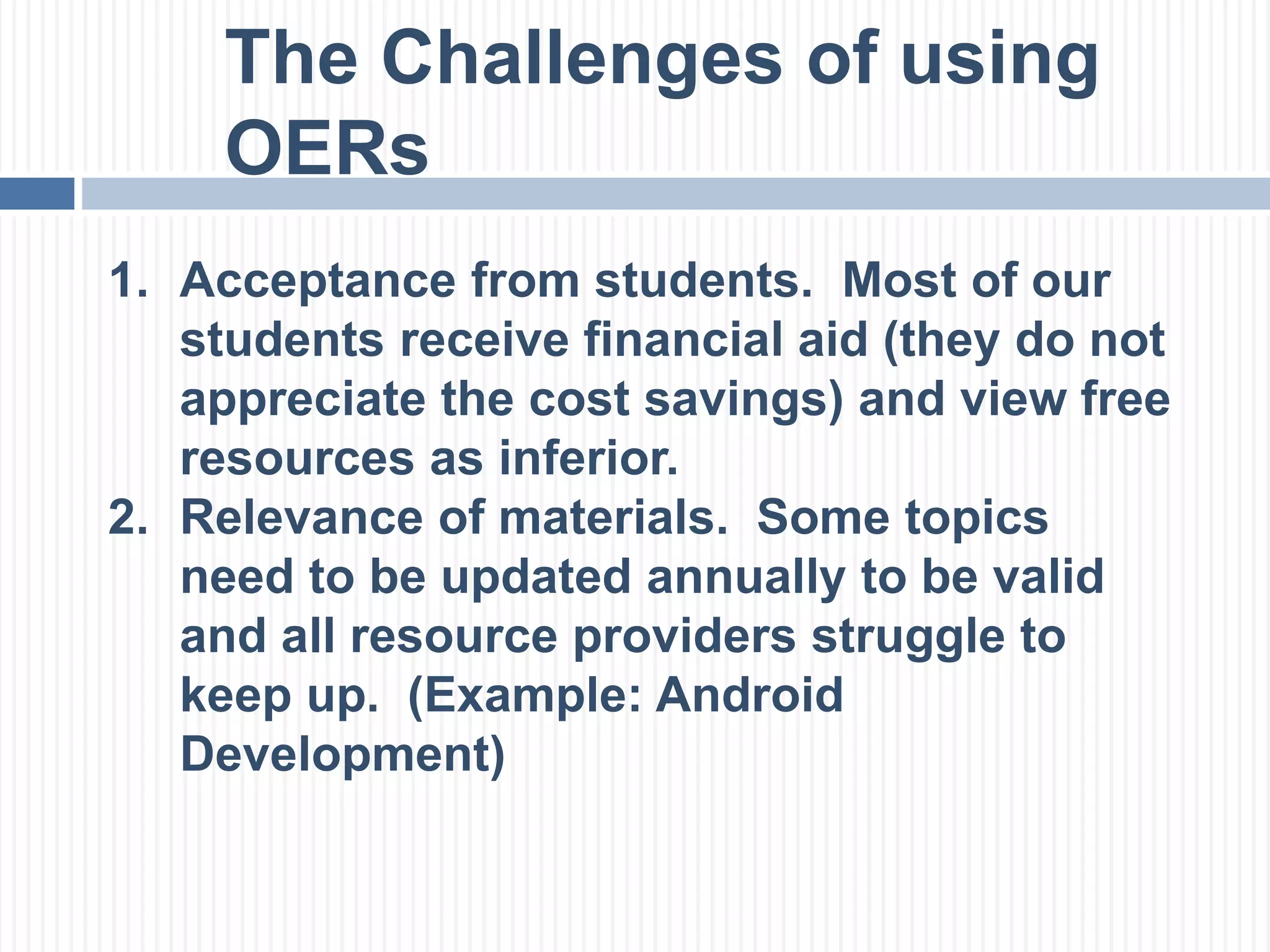
1. Acceptance from students. Most of our 
students receive financial aid (they do not 
appreciate the cost savings) and view free 
resources as inferior. 
2. Relevance of materials. Some topics 
need to be updated annually to be valid 
and all resource providers struggle to 
keep up. (Example: Android 
Development)
The Challenges of using 
OERs 
3. Quality of Lessons and materials. Most 
textbooks are reviewed by editors and 
subject mater experts. While several OER 
providers provide some editing and 
review, there is less controls then a 
quality textbook. 
4. Lack of motivation to develop. Many 
faculty supplemented their income by 
writing textbooks in the past. While many 
efforts to create OERs are grant funded, 
the amount paid is not much of an 
incentive to create Open Materials.
The Challenges of using 
OERs 
5. Lack of integration with LMS. Few OERs 
are SCRUM compliant. This is changing 
(TAACCCT funded materials will need to 
be SCRUM compliant) but as SCRUM 
compliant components are built it will 
take even more resources to keep 
resources current.

Benefits and challenges of using open educational resources

  • 1.
    BENEFITS AND CHALLENGESOF USING OPEN EDUCATIONAL RESOURCES Matt Green, IT Instructor WCTC
  • 2.
    The Benefits ofusing OERs 1. Frees up some of the instructor’s time so that they may have more time to provide feedback to student instead of creating materials that already exists. 2. Reduces the costs for students and the frustrations they face as textbooks constantly change versions. 3. Reduces the “Grey Areas” related to the fair use of materials for educational purposes by clarifying reuse of materials and lessons.
  • 3.
    The Benefits ofusing OERs 4. Reduces the Carbon Footprint for most courses due to the fact that materials tend to be digital. 5. Promotes high quality course development by enabling curriculum developers to review courses from some of the top educational institutions in the World.
  • 4.
    The Challenges ofusing OERs 1. Acceptance from students. Most of our students receive financial aid (they do not appreciate the cost savings) and view free resources as inferior. 2. Relevance of materials. Some topics need to be updated annually to be valid and all resource providers struggle to keep up. (Example: Android Development)
  • 5.
    The Challenges ofusing OERs 3. Quality of Lessons and materials. Most textbooks are reviewed by editors and subject mater experts. While several OER providers provide some editing and review, there is less controls then a quality textbook. 4. Lack of motivation to develop. Many faculty supplemented their income by writing textbooks in the past. While many efforts to create OERs are grant funded, the amount paid is not much of an incentive to create Open Materials.
  • 6.
    The Challenges ofusing OERs 5. Lack of integration with LMS. Few OERs are SCRUM compliant. This is changing (TAACCCT funded materials will need to be SCRUM compliant) but as SCRUM compliant components are built it will take even more resources to keep resources current.

Editor's Notes

  • #3 Decision Structures Conditional Operators if while Simple I-O for Ternary Operator Switch Classes - Encapsulation Object Oriented Concepts Encapsulation Declaration Constructor this Method Calls Overloading Inheritance super overriding
  • #4 Decision Structures Conditional Operators if while Simple I-O for Ternary Operator Switch Classes - Encapsulation Object Oriented Concepts Encapsulation Declaration Constructor this Method Calls Overloading Inheritance super overriding
  • #5 Decision Structures Conditional Operators if while Simple I-O for Ternary Operator Switch Classes - Encapsulation Object Oriented Concepts Encapsulation Declaration Constructor this Method Calls Overloading Inheritance super overriding
  • #6 Decision Structures Conditional Operators if while Simple I-O for Ternary Operator Switch Classes - Encapsulation Object Oriented Concepts Encapsulation Declaration Constructor this Method Calls Overloading Inheritance super overriding
  • #7 Decision Structures Conditional Operators if while Simple I-O for Ternary Operator Switch Classes - Encapsulation Object Oriented Concepts Encapsulation Declaration Constructor this Method Calls Overloading Inheritance super overriding