MEETING GROWING GLOBAL DEMAND BY BALANCING
ENVIRONMENTAL RESPONSIBILITY, ECONOMIC OPPORTUNITY
AND SOCIAL DILIGENCE THROUGHOUT THE SUPPLY CHAIN.
Committed to a journey of
continuous improvement
Greenhouse
gas emissions
2%
Water
use
3%
Emissions
to soil
7%
Energy
use
2%
Occupational
illnesses and
accidents
32%
Emissions
to water
10%
Resource
consumption
2%
Beef Sustainability
Ec
onomic
Environm
ental
Social
Future opportunities to further increase sustainability:
Source: Beef Industry Sustainability Lifecycle Assessment, funded by the beef checkoff
Reduce
food
waste
Continue to increase
waste water recovery
and biogas capture
Further adoption
of water efficient
irrigation systems
Continue to optimize
nutrient application
to soil and crop yields
Explore additional
packing alternatives to
reduce inputs
Increased use of
precision farming
techniques
Improvements
in crop
yields
Improved genetics,
health and nutrition
for cattle
Improved
implementation of
right-sized packaging
Increased use of
biogas capture
and conversion
How was sustainability improved?
percent more food
needed to feed a
growing
population
Now 2050
70%
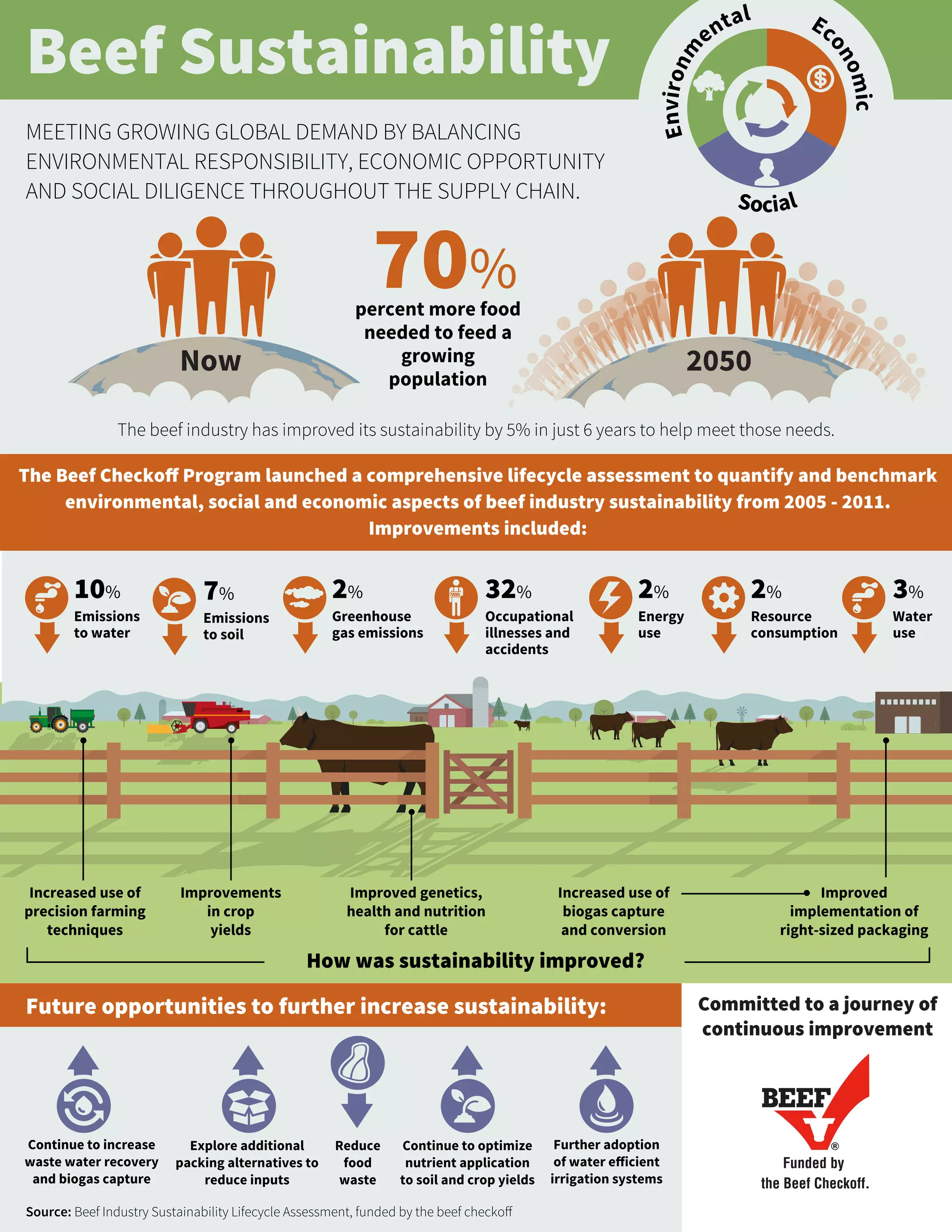
The Beef Checkoff Program launched a comprehensive lifecycle assessment to quantify and benchmark
environmental, social and economic aspects of beef industry sustainability from 2005 - 2011.
Improvements included:
The beef industry has improved its sustainability by 5% in just 6 years to help meet those needs.

Beef Sustainability

  • 1.
    MEETING GROWING GLOBALDEMAND BY BALANCING ENVIRONMENTAL RESPONSIBILITY, ECONOMIC OPPORTUNITY AND SOCIAL DILIGENCE THROUGHOUT THE SUPPLY CHAIN. Committed to a journey of continuous improvement Greenhouse gas emissions 2% Water use 3% Emissions to soil 7% Energy use 2% Occupational illnesses and accidents 32% Emissions to water 10% Resource consumption 2% Beef Sustainability Ec onomic Environm ental Social Future opportunities to further increase sustainability: Source: Beef Industry Sustainability Lifecycle Assessment, funded by the beef checkoff Reduce food waste Continue to increase waste water recovery and biogas capture Further adoption of water efficient irrigation systems Continue to optimize nutrient application to soil and crop yields Explore additional packing alternatives to reduce inputs Increased use of precision farming techniques Improvements in crop yields Improved genetics, health and nutrition for cattle Improved implementation of right-sized packaging Increased use of biogas capture and conversion How was sustainability improved? percent more food needed to feed a growing population Now 2050 70% The Beef Checkoff Program launched a comprehensive lifecycle assessment to quantify and benchmark environmental, social and economic aspects of beef industry sustainability from 2005 - 2011. Improvements included: The beef industry has improved its sustainability by 5% in just 6 years to help meet those needs.