tonnes of plastic enter the
ocean every year,
by the year 2050, there could
be more plastic in the ocean
than fish.
Ellen MacArthur Foundation
11 million
Marine organisms could
ingest plastics mistaking
them for food, leading to
blockage and death.
www.takatakasolutions.com
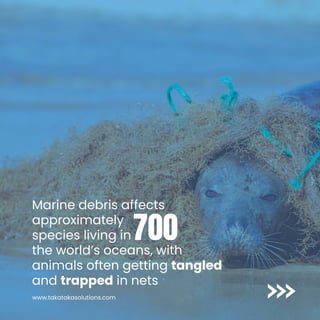
Marine debris affects
approximately
species living in
the world’s oceans, with
animals often getting tangled
and trapped in nets
700
www.takatakasolutions.com
Phytoplankton, the ocean's primary
producers, utilize CO2 and water
through photosynthesis to generate
carbohydrates. However, laboratory
studies indicate that phytoplankton
can be adversely affected by
exposure to microplastics
www.takatakasolutions.com
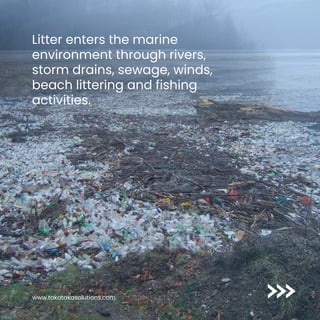
Litter enters the marine
environment through rivers,
storm drains, sewage, winds,
beach littering and fishing
activities.
www.takatakasolutions.com
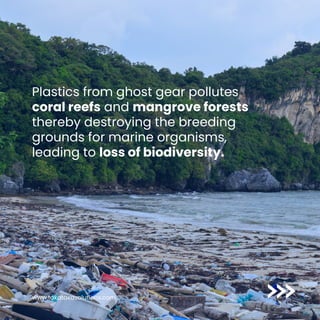
Plastics from ghost gear pollutes
coral reefs and mangrove forests
thereby destroying the breeding
grounds for marine organisms,
leading to loss of biodiversity.
www.takatakasolutions.com
Choking of the coastline by
plastics not only affects marine
life but also impacts the sources
of livelihood for many coastal
families relying on Tourism
www.takatakasolutions.com

be just.pdf

  • 1.
    tonnes of plasticenter the ocean every year, by the year 2050, there could be more plastic in the ocean than fish. Ellen MacArthur Foundation 11 million
  • 2.
    Marine organisms could ingestplastics mistaking them for food, leading to blockage and death. www.takatakasolutions.com
  • 3.
    Marine debris affects approximately speciesliving in the world’s oceans, with animals often getting tangled and trapped in nets 700 www.takatakasolutions.com
  • 4.
    Phytoplankton, the ocean'sprimary producers, utilize CO2 and water through photosynthesis to generate carbohydrates. However, laboratory studies indicate that phytoplankton can be adversely affected by exposure to microplastics www.takatakasolutions.com
  • 5.
    Litter enters themarine environment through rivers, storm drains, sewage, winds, beach littering and fishing activities. www.takatakasolutions.com
  • 6.
    Plastics from ghostgear pollutes coral reefs and mangrove forests thereby destroying the breeding grounds for marine organisms, leading to loss of biodiversity. www.takatakasolutions.com
  • 7.
    Choking of thecoastline by plastics not only affects marine life but also impacts the sources of livelihood for many coastal families relying on Tourism www.takatakasolutions.com