BBC Campaign Research
Who is BBC?
• BBC is known as the ‘British Broadcasting
Corporation’ It is a company founded by
John Reith in the year 1922 in London, it
provides the public access to news and
other forms of entertainment it is exclusive
to the British community apart from the
BBC Worldwide channel which is aired
internationally where other countries and
nations can still view the news from
offshore away from the British territory.
Overall the company is well known across the
UK and it is internationally known to some
countries across the world.
The Three principles of
BBC
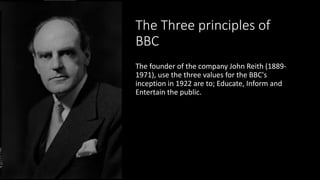
The founder of the company John Reith (1889-
1971), use the three values for the BBC's
inception in 1922 are to; Educate, Inform and
Entertain the public.
BBC History (1920’s)
• During the 1920’s the
BBC is born and radio
was broadcasted for the
first time and it all
started on London, the
radio talks aired for a
few hours on each day.
• Back in the day
Television broadcasting
was experimental, there
were no rules or
regulations as radio and
television weren’t heard
much from the public
then.
BBC History
(1930’s)
• During that time starting from 1932 the Broadcasting house opens for the first time.
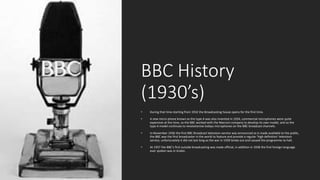
• A new micro phone known as the type A was also invented in 1934, commercial microphones were quite
expensive at the time, so the BBC worked with the Marconi company to develop its own model, and so the
type A model continues to revolutionise todays microphones on the BBC broadcast channels.
• In November 1936 the first BBC Broadcast television service was announced as Is made available to the public,
the BBC was the first broadcaster in the world to feature and provide a regular ‘high definition’ television
service, unfortunately it did not last long as the war in 1939 broke out and caused the programme to halt.
• At 1937 the BBC’s first outside broadcasting was made official, in addition in 1938 the first foreign language
ever spoken was in Arabic.
BBC History 1940’s
• The 1940’s was a historic moment for the BBC
broadcast, in 1948 the interest of television
grew, the first news broadcast happened for the
first time.
• The first ever broadcasted Olympics have been
announced for the public, at the time this was
the most advanced Televised programmed to
be broadcasted by the BBC.
• It was launched just before world war 2 but in
1949 it was revived and finally aired, the big
change happened in the modern format, in
1954 a Met officer interpreted the map in
vision. George Cowling was the BBC's first
'weatherman'.
BBC History 1950’s
• More programs started to air such as The Archers and of course Democracy also first
aired, live coverage was first discussed in 1944, there have been experiments that have
been successful, but it cannot be seen by the public until 1989.
• In 1952 a machine named VERA was the first British tape recorder that was developed
for the BBC company, this commercially successful American Ampex machine was aired
by ITV in May 1957.
BBC History 1960’s
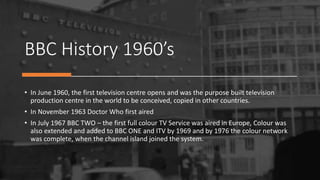
• In June 1960, the first television centre opens and was the purpose built television
production centre in the world to be conceived, copied in other countries.
• In November 1963 Doctor Who first aired
• In July 1967 BBC TWO – the first full colour TV Service was aired in Europe, Colour was
also extended and added to BBC ONE and ITV by 1969 and by 1976 the colour network
was complete, when the channel island joined the system.
BBC History 1970’s
• January 1970, In January The open
university comes to air for
education.
• January 1979 – Life On Earth – the
nation is hooked Although natural
history programmes had been
seen before, it wasn't until David
Attenborough started this epic
series that the genre really took
off.
BBC History 1980’s
• July 1981 – The Wedding of Prince Charles and
Lady Diana Spencer, had an audience of 750 million
making this the most popular programme to
broadcast.
• January 1982 – The BBC Microcomputer is
launched, this computer inspired many children to
use this software as it was easier for them to use.
• In 1983 – Breakfast Time – the UK’s first breakfast
TV service was first aired on early hours in the
morning.
• February 1985 – EastEnders had become the BBC’s
most watched programme, the episode on
Christmas Day in 1986 gained a record audience of
30 million viewers.
BBC History 1990’s
• September 1995 – DAB was promoted heavily by the BBC,
and as a result, it was taken up more rapidly in the UK than
anywhere else in Europe.
• November 1997 – The BBC News 24 Channel became the
BBC’s News 24, and was the second 24 hours news service
in Britain.
• In December 1997 – bbc.co.uk is launched as an online
service for the first time.
• September 1998 - The first digital TV Channel aired, BBC
choice in cluded the BBC's first daily sports show, as well as
extended coverage of music and sporting events.
BBC History 2000’s
• May 2004 – The original show ‘Come
Dancing’ ran between 1949 and 1998 returns
as strictly come dancing.
• July 2007 –BBC iPlayer was the first streaming
service made by the BBC.
• September 2007 – The BBC Pacific Quay
opened for the first time officially by the
Prime Minister (Back then).
• In November 2008 – The red button feature
extends television viewing and gives viewers
the ability to answer quiz questions and read
background programme information etc.
BBC History 2010’s
• September 2010 – The Super Hi-Vision
(SHV) was first broadcasted from London
to Tokyo from BBC, many people have
argue that watching an SHV broadcast is
just like being at a live event.
• August 2012 – The London 2012 Olympics
was aired for the first time, it was also
marked as the first truly digital games.
This mirrored the BBC's record Olympic
TV reach, with over 51.9m viewers in the
UK.
• October 2012 – BBC Radio Player was
launched as the new dedicated home for
BBC radio.

BBC Campaign Research.pptx

  • 1.
  • 2.
    Who is BBC? •BBC is known as the ‘British Broadcasting Corporation’ It is a company founded by John Reith in the year 1922 in London, it provides the public access to news and other forms of entertainment it is exclusive to the British community apart from the BBC Worldwide channel which is aired internationally where other countries and nations can still view the news from offshore away from the British territory. Overall the company is well known across the UK and it is internationally known to some countries across the world.
  • 3.
    The Three principlesof BBC The founder of the company John Reith (1889- 1971), use the three values for the BBC's inception in 1922 are to; Educate, Inform and Entertain the public.
  • 4.
    BBC History (1920’s) •During the 1920’s the BBC is born and radio was broadcasted for the first time and it all started on London, the radio talks aired for a few hours on each day. • Back in the day Television broadcasting was experimental, there were no rules or regulations as radio and television weren’t heard much from the public then.
  • 5.
    BBC History (1930’s) • Duringthat time starting from 1932 the Broadcasting house opens for the first time. • A new micro phone known as the type A was also invented in 1934, commercial microphones were quite expensive at the time, so the BBC worked with the Marconi company to develop its own model, and so the type A model continues to revolutionise todays microphones on the BBC broadcast channels. • In November 1936 the first BBC Broadcast television service was announced as Is made available to the public, the BBC was the first broadcaster in the world to feature and provide a regular ‘high definition’ television service, unfortunately it did not last long as the war in 1939 broke out and caused the programme to halt. • At 1937 the BBC’s first outside broadcasting was made official, in addition in 1938 the first foreign language ever spoken was in Arabic.
  • 6.
    BBC History 1940’s •The 1940’s was a historic moment for the BBC broadcast, in 1948 the interest of television grew, the first news broadcast happened for the first time. • The first ever broadcasted Olympics have been announced for the public, at the time this was the most advanced Televised programmed to be broadcasted by the BBC. • It was launched just before world war 2 but in 1949 it was revived and finally aired, the big change happened in the modern format, in 1954 a Met officer interpreted the map in vision. George Cowling was the BBC's first 'weatherman'.
  • 7.
    BBC History 1950’s •More programs started to air such as The Archers and of course Democracy also first aired, live coverage was first discussed in 1944, there have been experiments that have been successful, but it cannot be seen by the public until 1989. • In 1952 a machine named VERA was the first British tape recorder that was developed for the BBC company, this commercially successful American Ampex machine was aired by ITV in May 1957.
  • 8.
    BBC History 1960’s •In June 1960, the first television centre opens and was the purpose built television production centre in the world to be conceived, copied in other countries. • In November 1963 Doctor Who first aired • In July 1967 BBC TWO – the first full colour TV Service was aired in Europe, Colour was also extended and added to BBC ONE and ITV by 1969 and by 1976 the colour network was complete, when the channel island joined the system.
  • 9.
    BBC History 1970’s •January 1970, In January The open university comes to air for education. • January 1979 – Life On Earth – the nation is hooked Although natural history programmes had been seen before, it wasn't until David Attenborough started this epic series that the genre really took off.
  • 10.
    BBC History 1980’s •July 1981 – The Wedding of Prince Charles and Lady Diana Spencer, had an audience of 750 million making this the most popular programme to broadcast. • January 1982 – The BBC Microcomputer is launched, this computer inspired many children to use this software as it was easier for them to use. • In 1983 – Breakfast Time – the UK’s first breakfast TV service was first aired on early hours in the morning. • February 1985 – EastEnders had become the BBC’s most watched programme, the episode on Christmas Day in 1986 gained a record audience of 30 million viewers.
  • 11.
    BBC History 1990’s •September 1995 – DAB was promoted heavily by the BBC, and as a result, it was taken up more rapidly in the UK than anywhere else in Europe. • November 1997 – The BBC News 24 Channel became the BBC’s News 24, and was the second 24 hours news service in Britain. • In December 1997 – bbc.co.uk is launched as an online service for the first time. • September 1998 - The first digital TV Channel aired, BBC choice in cluded the BBC's first daily sports show, as well as extended coverage of music and sporting events.
  • 12.
    BBC History 2000’s •May 2004 – The original show ‘Come Dancing’ ran between 1949 and 1998 returns as strictly come dancing. • July 2007 –BBC iPlayer was the first streaming service made by the BBC. • September 2007 – The BBC Pacific Quay opened for the first time officially by the Prime Minister (Back then). • In November 2008 – The red button feature extends television viewing and gives viewers the ability to answer quiz questions and read background programme information etc.
  • 13.
    BBC History 2010’s •September 2010 – The Super Hi-Vision (SHV) was first broadcasted from London to Tokyo from BBC, many people have argue that watching an SHV broadcast is just like being at a live event. • August 2012 – The London 2012 Olympics was aired for the first time, it was also marked as the first truly digital games. This mirrored the BBC's record Olympic TV reach, with over 51.9m viewers in the UK. • October 2012 – BBC Radio Player was launched as the new dedicated home for BBC radio.