Teacher: Mauricio Torres                        Student: ……………………………..
Grade: 9thE.G.B.                                Section: ……………………………………
Subject: Social Studies                         Date: ....................... 2012
Activity: Reading Material


                        Battle of Thermopylae


Overview:Landbattlethatwas a heroic stand bySpartansthatfought off
anoverwhelmingPersianadvance,
enablingtheremainingGreekstomobilizetheirforces     and     minimizetheirlosses.
ThePersianschosetopursuetheGreeksthrough a narrowmountainpass, whereonly a
handful                     of                     Spartanswereneededtodefend.
TheSpartansfoughtonlongaftertheyweredoomedto die, and theyallfell in battle,
partlybecause a traitorshowedthePersians a back passagethroughthemountains.


TheGeography, a key role:
Thermopylaeis a narrowpassontheeastcoast of central
GreecebetweentheKallídhromonmassif and theGulf of Maliakós, about 85 miles
(136 kilometers) northwest of Athens (Athína). In ancient times
itscliffswerebythe sea, butsilting has widenedthedistanceto more than a mile.
Itsname, meaning “hotgates,”
isderivedfromitsnearbyhotsulfurspringsthathavewater of…


                             Whatis a Phalanx?
                             Itis a rectangular massmilitaryformation,
                             usuallycomposedentirely of heavy
                             infantryarmedwithspears, pikes, sarissas, or
                             similar weapons.

                             Theyusedshieldsto block othersfromgetting in.
                             Theymarched forward as oneentity,
                             crushingopponents.


Chain of Events:
TheGreeksheardthatthePersianswerecoming.
Theydisagreedaboutwhatto                      do.
Differentcitiesmadedifferentdecisions.    Thebes,
whichwasclosertothePersians,
madeanalliancewiththePersians.             Argos
decidedtoremain neutral. TheSpartans and
CorinthianswantedtoabandonnorthernGreece and
onlydefendsouthernGreece         (wheretheywere).
ButtheAtheniansinsistedthattheyshould         try
todefendnorthernGreece at thepass of Thermopylae. TheSpartans             and
Corinthians, whodidn'twanttoseemcowardly, finallyagreedto try it.

So    theAthenians,    theSpartans,   theCorinthians,  theThebans,    and
someothersoldiersfromsmallercitiesallmarchednorthtoThermopylaeto try to
stop thePersians. Theygotthere and set up barricades. ThePersiansattacked,
butforseveraldaystheycouldnotgetthroughthepass.
TheGreekswerehappythattheir plan wasworking.


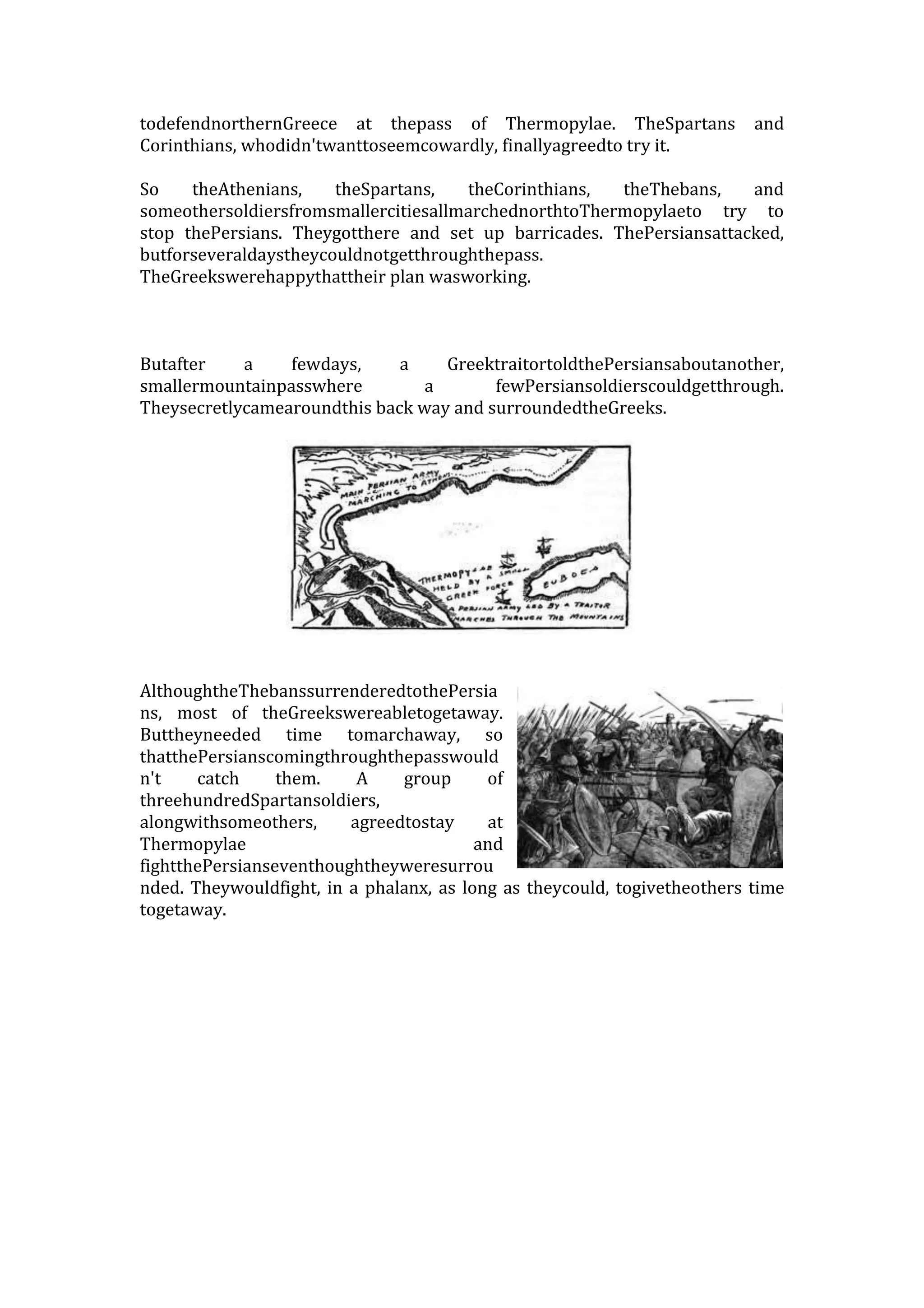
Butafter    a    fewdays,     a    GreektraitortoldthePersiansaboutanother,
smallermountainpasswhere         a       fewPersiansoldierscouldgetthrough.
Theysecretlycamearoundthis back way and surroundedtheGreeks.


AlthoughtheThebanssurrenderedtothePersia
ns, most of theGreekswereabletogetaway.
Buttheyneeded time tomarchaway, so
thatthePersianscomingthroughthepasswould
n't    catch     them.    A    group      of
threehundredSpartansoldiers,
alongwithsomeothers,     agreedtostay     at
Thermopylae                              and
fightthePersianseventhoughtheyweresurrou
nded. Theywouldfight, in a phalanx, as long as theycould, togivetheothers time
togetaway.

Battle of Thermopylae

  • 1.
    Teacher: Mauricio Torres Student: …………………………….. Grade: 9thE.G.B. Section: …………………………………… Subject: Social Studies Date: ....................... 2012 Activity: Reading Material Battle of Thermopylae Overview:Landbattlethatwas a heroic stand bySpartansthatfought off anoverwhelmingPersianadvance, enablingtheremainingGreekstomobilizetheirforces and minimizetheirlosses. ThePersianschosetopursuetheGreeksthrough a narrowmountainpass, whereonly a handful of Spartanswereneededtodefend. TheSpartansfoughtonlongaftertheyweredoomedto die, and theyallfell in battle, partlybecause a traitorshowedthePersians a back passagethroughthemountains. TheGeography, a key role: Thermopylaeis a narrowpassontheeastcoast of central GreecebetweentheKallídhromonmassif and theGulf of Maliakós, about 85 miles (136 kilometers) northwest of Athens (Athína). In ancient times itscliffswerebythe sea, butsilting has widenedthedistanceto more than a mile. Itsname, meaning “hotgates,” isderivedfromitsnearbyhotsulfurspringsthathavewater of… Whatis a Phalanx? Itis a rectangular massmilitaryformation, usuallycomposedentirely of heavy infantryarmedwithspears, pikes, sarissas, or similar weapons. Theyusedshieldsto block othersfromgetting in. Theymarched forward as oneentity, crushingopponents. Chain of Events: TheGreeksheardthatthePersianswerecoming. Theydisagreedaboutwhatto do. Differentcitiesmadedifferentdecisions. Thebes, whichwasclosertothePersians, madeanalliancewiththePersians. Argos decidedtoremain neutral. TheSpartans and CorinthianswantedtoabandonnorthernGreece and onlydefendsouthernGreece (wheretheywere). ButtheAtheniansinsistedthattheyshould try
  • 2.
    todefendnorthernGreece at thepassof Thermopylae. TheSpartans and Corinthians, whodidn'twanttoseemcowardly, finallyagreedto try it. So theAthenians, theSpartans, theCorinthians, theThebans, and someothersoldiersfromsmallercitiesallmarchednorthtoThermopylaeto try to stop thePersians. Theygotthere and set up barricades. ThePersiansattacked, butforseveraldaystheycouldnotgetthroughthepass. TheGreekswerehappythattheir plan wasworking. Butafter a fewdays, a GreektraitortoldthePersiansaboutanother, smallermountainpasswhere a fewPersiansoldierscouldgetthrough. Theysecretlycamearoundthis back way and surroundedtheGreeks. AlthoughtheThebanssurrenderedtothePersia ns, most of theGreekswereabletogetaway. Buttheyneeded time tomarchaway, so thatthePersianscomingthroughthepasswould n't catch them. A group of threehundredSpartansoldiers, alongwithsomeothers, agreedtostay at Thermopylae and fightthePersianseventhoughtheyweresurrou nded. Theywouldfight, in a phalanx, as long as theycould, togivetheothers time togetaway.