the basketball court is the playing surface, consisting of a
rectangular floor, with baskets at each end. In professional
or organized basketball, especially when played indoors, it
is usually made out of a wood, often maple, and highly
polished and completed with a 10 foot rim.
Basketball courts come in different sizes. In
the National Basketball Association (NBA), the court is
94 by 50 feet (28.7 by 15.2 m). Under International
Basketball Federation (FIBA) rules, the court is slightly
smaller, measuring 28 by 15 meters (91.9 by 49.2 ft). In
amateur basketball, court sizes vary widely.
Free Throw Lane
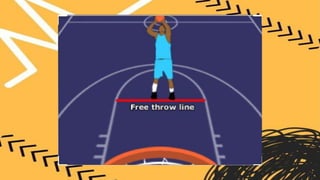
The free throw lane is a rectangle in a team's front court and used to
line up players during a free throw. The standard free throw lane is
19 feet long by 12 feet wide. The player shooting the free throw
stands at the top of the lane, while other players stand in marked
spots along each side of the lane. On offense, players may not stand
in the lane for more than three seconds unless they are making a
move to the basket with the ball. In the NBA, defensive players may
not be in the lane for more than three seconds unless they are
actively guarding an offensive player. The free throw lane is
sometimes referred to as the “paint” or the “key.”
Three-Point Line
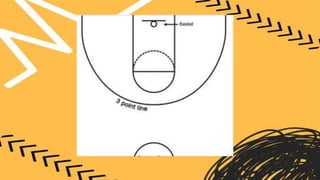
The three-point line is a semicircle that surrounds the basket
area on each team's side of the court. Players who stand behind
the line and make a field goal are given three points instead of
the standard two points for a regular field goal. In high school
and women's college basketball, the three-point line is 19 feet 9
inches from the center of the basketball hoop. In men's college
basketball, the line is 20 feet 9 inches away. In the NBA, it
stands 23 feet 9 inches from the hoop at the top of the arc and
22 feet at the sidelines.
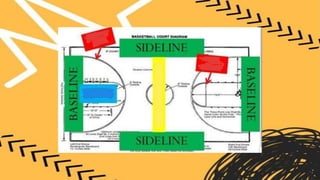
Sidelines and Baselines
The sidelines and baselines of a basketball court mark the
outside boundaries for out-of-bounds purposes. The sidelines
run the length of the court and the baselines are behind each
basket. All standard basketball courts measure 50 feet in
width. For high school, the court length is 84 feet, while in
college and the NBA it is 94 feet long.
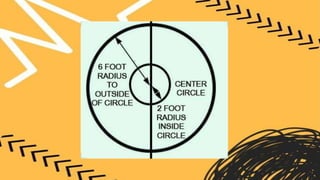
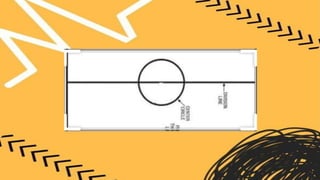
Center Jump Circle
The center jump circle is where the game action starts and has a
radius of 6 feet. All players other than the two jumpers must stand
outside the circle until the ball is tipped. The center jump circle is
not used at any other point in the game other than the opening tip
and if a tip is needed to start an overtime period. Two jump circles
located at the free throw line are used in the NBA for held ball
situations.
Division Line
The division line is a line running the width of the middle court
that divides it into two equal sections. In high school and college,
a team has 10 seconds to get the ball across the division line,
also known as the halfcourt line. In the NBA, the time
requirement is eight seconds.
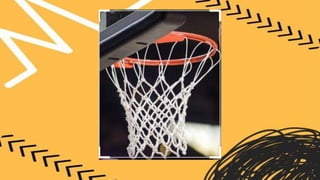
Basket
The basket -- one on each end of the floor -- is made up of a
backboard and a ring that holds a net, which is designed to
check the ball as it passes through the basket. The standard
basketball backboard is 72 inches wide and is positioned 4 feet
inside the baseline. The hoop, or ring, stands 10 feet off the
floor and is 18 inches in diameter.
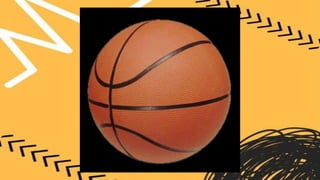
The official size of the basketball used by the NBA is 29.5
inches in circumference. That's the same size used
throughout men's college and high
school basketball leagues. The WNBA uses a slightly
smaller ball, measuring 28.5 inches in circumference.
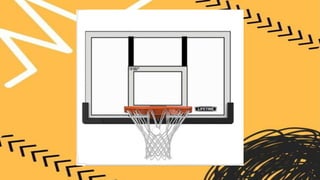
A backboard is a piece of basketball equipment. It is a raised
vertical board with an attached basket consisting of a net
suspended from a hoop. It is made of a flat, rigid piece of, often
Plexiglas or tempered glass which also has the properties of
safety glass when accidentally shattered.
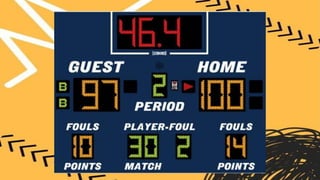
a large board that displays the score in
a game or contest
a similar board that also displays
each batsman's score, and
manystatistics and pieces
of information
Basketball = facilities and equipment

Basketball = facilities and equipment

  • 3.
    the basketball courtis the playing surface, consisting of a rectangular floor, with baskets at each end. In professional or organized basketball, especially when played indoors, it is usually made out of a wood, often maple, and highly polished and completed with a 10 foot rim.
  • 4.
    Basketball courts comein different sizes. In the National Basketball Association (NBA), the court is 94 by 50 feet (28.7 by 15.2 m). Under International Basketball Federation (FIBA) rules, the court is slightly smaller, measuring 28 by 15 meters (91.9 by 49.2 ft). In amateur basketball, court sizes vary widely.
  • 7.
    Free Throw Lane Thefree throw lane is a rectangle in a team's front court and used to line up players during a free throw. The standard free throw lane is 19 feet long by 12 feet wide. The player shooting the free throw stands at the top of the lane, while other players stand in marked spots along each side of the lane. On offense, players may not stand in the lane for more than three seconds unless they are making a move to the basket with the ball. In the NBA, defensive players may not be in the lane for more than three seconds unless they are actively guarding an offensive player. The free throw lane is sometimes referred to as the “paint” or the “key.”
  • 9.
    Three-Point Line The three-pointline is a semicircle that surrounds the basket area on each team's side of the court. Players who stand behind the line and make a field goal are given three points instead of the standard two points for a regular field goal. In high school and women's college basketball, the three-point line is 19 feet 9 inches from the center of the basketball hoop. In men's college basketball, the line is 20 feet 9 inches away. In the NBA, it stands 23 feet 9 inches from the hoop at the top of the arc and 22 feet at the sidelines.
  • 11.
    Sidelines and Baselines Thesidelines and baselines of a basketball court mark the outside boundaries for out-of-bounds purposes. The sidelines run the length of the court and the baselines are behind each basket. All standard basketball courts measure 50 feet in width. For high school, the court length is 84 feet, while in college and the NBA it is 94 feet long.
  • 13.
    Center Jump Circle Thecenter jump circle is where the game action starts and has a radius of 6 feet. All players other than the two jumpers must stand outside the circle until the ball is tipped. The center jump circle is not used at any other point in the game other than the opening tip and if a tip is needed to start an overtime period. Two jump circles located at the free throw line are used in the NBA for held ball situations.
  • 15.
    Division Line The divisionline is a line running the width of the middle court that divides it into two equal sections. In high school and college, a team has 10 seconds to get the ball across the division line, also known as the halfcourt line. In the NBA, the time requirement is eight seconds.
  • 17.
    Basket The basket --one on each end of the floor -- is made up of a backboard and a ring that holds a net, which is designed to check the ball as it passes through the basket. The standard basketball backboard is 72 inches wide and is positioned 4 feet inside the baseline. The hoop, or ring, stands 10 feet off the floor and is 18 inches in diameter.
  • 20.
    The official sizeof the basketball used by the NBA is 29.5 inches in circumference. That's the same size used throughout men's college and high school basketball leagues. The WNBA uses a slightly smaller ball, measuring 28.5 inches in circumference.
  • 23.
    A backboard isa piece of basketball equipment. It is a raised vertical board with an attached basket consisting of a net suspended from a hoop. It is made of a flat, rigid piece of, often Plexiglas or tempered glass which also has the properties of safety glass when accidentally shattered.
  • 26.
    a large boardthat displays the score in a game or contest a similar board that also displays each batsman's score, and manystatistics and pieces of information