Basics of Land Use Planning
• Land is all of those resources that are naturally endowed – on top of the ground, beneath
it and above it.
• Land is the single resource on which all life depends
• Where portions of land can be privately owned it is referred to as real estate or real
property that is identifiable by means of boundary markers which are legally enforced.
• Land is also an asset that can be transferred under guarantees enforced by the legal
system of the state.
Land as a resource
• “Land use” is the term used to describe the human use of land.
• It represents the economic and cultural activities (e.g., agricultural, residential, industrial,
mining, and recreational uses) that are practiced at a given place.
• Public and private lands frequently represent very different uses. For example, publicly
owned lands – uses like recreational areas can be found; while privately owned lands –
commercial/ residential development.
Land Use
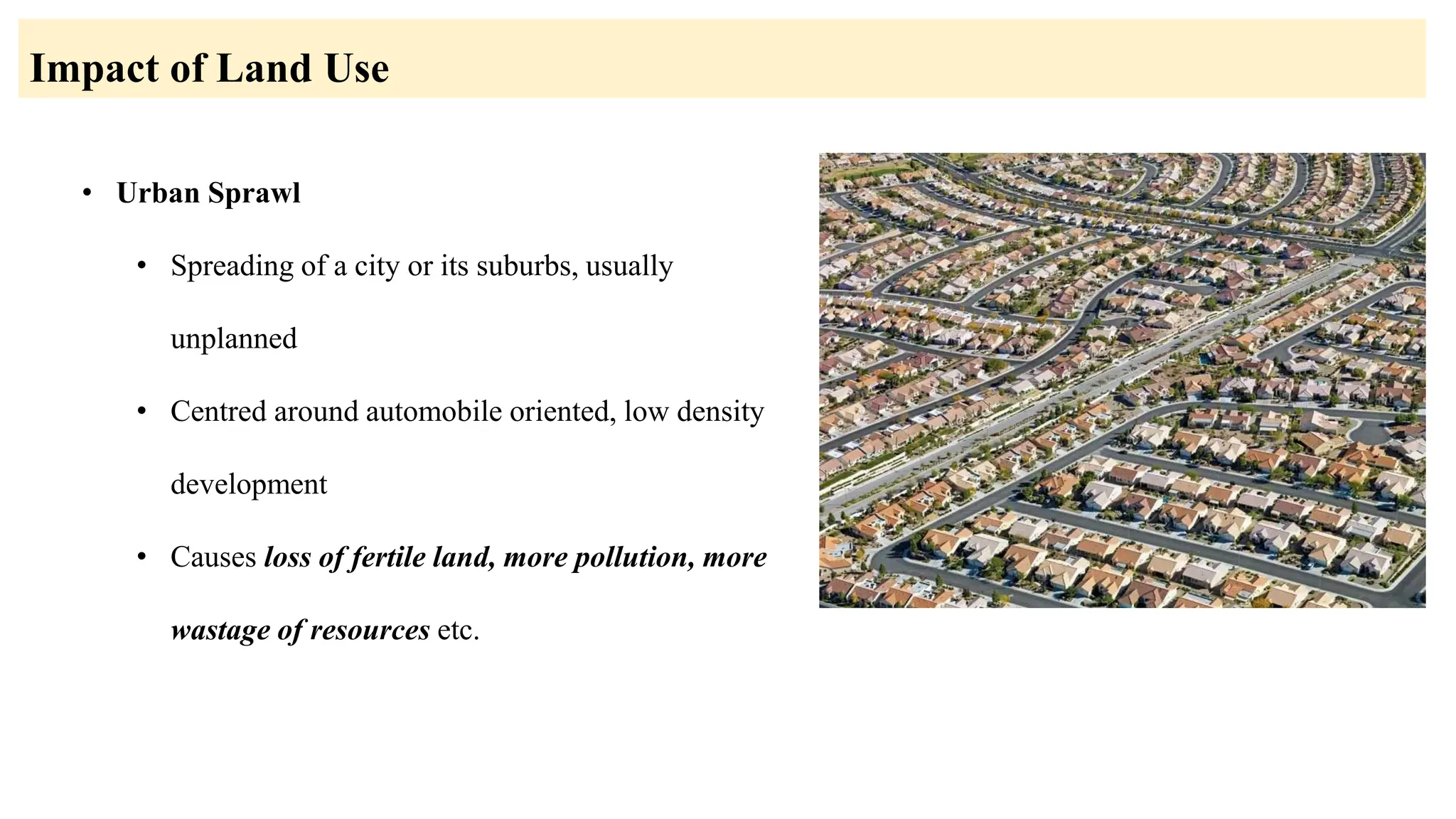
• Urban Sprawl
• Spreading of a city or its suburbs, usually
unplanned
• Centred around automobile oriented, low density
development
• Causes loss of fertile land, more pollution, more
wastage of resources etc.
Impact of Land Use
• Loss of farmland
• Increased need for irrigation
• Increased soil erosion
• Instability in crop production
• Reduction in prime agricultural land
Issues associated with Unplanned Land Use
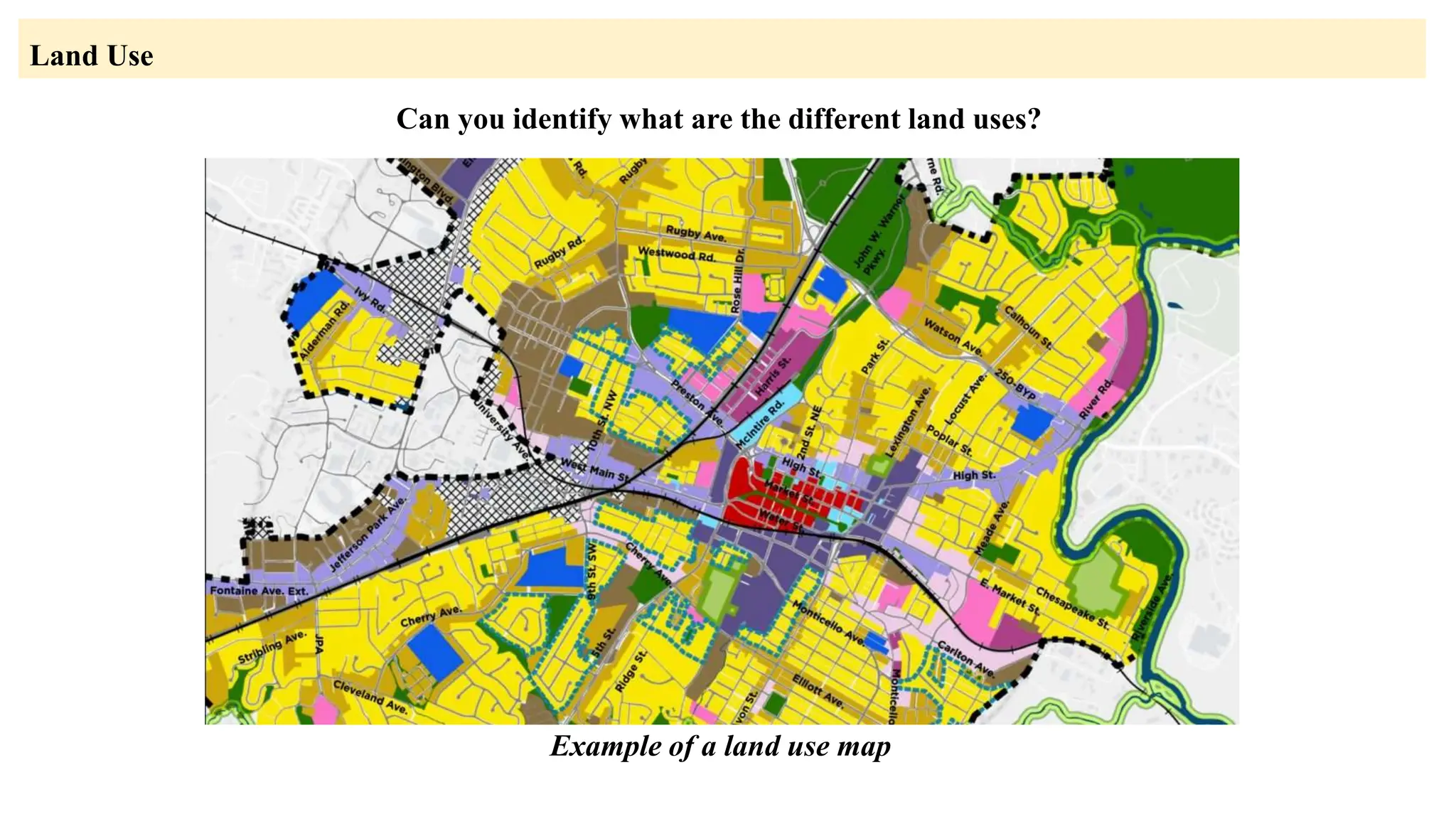
Land Use
Example of a land use map
Can you identify what are the different land uses?

Basics of Land Use Planning and effects of unplanned development

  • 1.
    Basics of LandUse Planning
  • 2.
    • Land isall of those resources that are naturally endowed – on top of the ground, beneath it and above it. • Land is the single resource on which all life depends • Where portions of land can be privately owned it is referred to as real estate or real property that is identifiable by means of boundary markers which are legally enforced. • Land is also an asset that can be transferred under guarantees enforced by the legal system of the state. Land as a resource
  • 3.
    • “Land use”is the term used to describe the human use of land. • It represents the economic and cultural activities (e.g., agricultural, residential, industrial, mining, and recreational uses) that are practiced at a given place. • Public and private lands frequently represent very different uses. For example, publicly owned lands – uses like recreational areas can be found; while privately owned lands – commercial/ residential development. Land Use
  • 4.
    • Urban Sprawl •Spreading of a city or its suburbs, usually unplanned • Centred around automobile oriented, low density development • Causes loss of fertile land, more pollution, more wastage of resources etc. Impact of Land Use
  • 5.
    • Loss offarmland • Increased need for irrigation • Increased soil erosion • Instability in crop production • Reduction in prime agricultural land Issues associated with Unplanned Land Use
  • 6.
    Land Use Example ofa land use map Can you identify what are the different land uses?