PRESENTED BY G7PRESENTED BY G7
MEMBERSMEMBERS REGREG
1.TWIBANIRE JEAN DE DIEU1.TWIBANIRE JEAN DE DIEU 217023665217023665
2. MAYUYA ATHANASE2. MAYUYA ATHANASE 217033482217033482
3.MUKESHIMANA BEATRICE3.MUKESHIMANA BEATRICE 217064876217064876
4.NDAYISABA EMMANUEL4.NDAYISABA EMMANUEL 217170641217170641
5.DUSABIMANA LEONCIE5.DUSABIMANA LEONCIE 217065090217065090
6.NKURUNZIZA THARCISSE6.NKURUNZIZA THARCISSE 217006957217006957
7.MURWANASHYAKA FABIEN7.MURWANASHYAKA FABIEN 217188850217188850
8.MUKANDAYISENGA BERNADETTE8.MUKANDAYISENGA BERNADETTE 217053181217053181
MICROBIOLOGYMICROBIOLOGY Date 06/04/2017Date 06/04/2017
ANIMAL VIRUS assignmentANIMAL VIRUS assignment
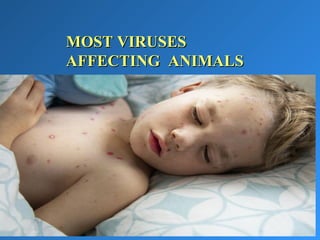
MOST VIRUSESMOST VIRUSES
AFFECTING ANIMALSAFFECTING ANIMALS
INTRODUCTIONS
Definition of a VirusDefinition of a Virus
Sub microscopic entity consisting of a single
nucleic acid surrounded by a protein coat and
capable of replication only within the living cells of
bacteria, animals or plants.
Or A virus is a non-cellular particle
made up of genetic material and protein
that can invade living cells.
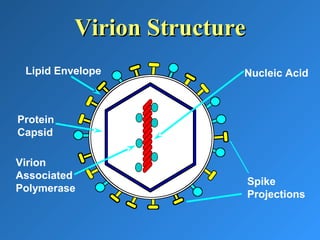
Virion StructureVirion Structure
Nucleic Acid
Spike
Projections
Protein
Capsid
Lipid Envelope
Virion
Associated
Polymerase
Viruses in cattleViruses in cattle
• Bluetongue virus, BRSV,
Classical swine fever virus,
Foot-and-mouth disease
virus, Lumpy skin disease
virus, PPRV, Poliovirus,
PRRSV, Rinderpest virus,
Sheep and goat pox virus,
Swine influenza virus, Swine
vesicular disease virus,
Vesicular stomatitis virus,
African swine fever virus,
Influenza viruses, Human
rhinovirus, and RSV
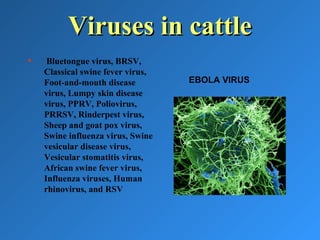
EBOLA VIRUS
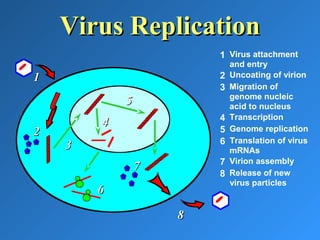
Virus ReplicationVirus Replication
1 Virus attachment
and entry
11 2 Uncoating of virion
22
3 Migration of
genome nucleic
acid to nucleus
33
4 Transcription
5 Genome replication
44
55
6 Translation of virus
mRNAs
66
7 Virion assembly
77
8 Release of new
virus particles
88
Different types of virusDifferent types of virus
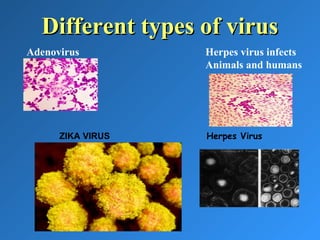
Adenovirus Herpes virus infects
Animals and humans
Herpes VirusZIKA VIRUS
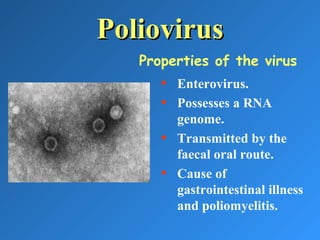
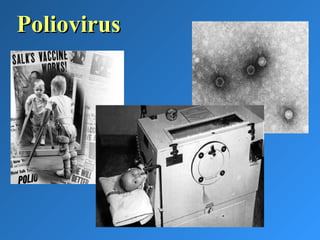
PoliovirusPoliovirus
• Enterovirus.
• Possesses a RNA
genome.
• Transmitted by the
faecal oral route.
• Cause of
gastrointestinal illness
and poliomyelitis.
Properties of the virus
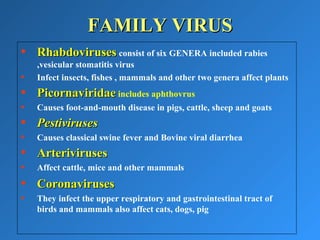
FAMILY VIRUSFAMILY VIRUS
• RhabdovirusesRhabdoviruses consist of six GENERA included rabies
,vesicular stomatitis virus
• Infect insects, fishes , mammals and other two genera affect plants
• PicornaviridaePicornaviridae includes aphthovrus
• Causes foot-and-mouth disease in pigs, cattle, sheep and goats
• PestivirusesPestiviruses
• Causes classical swine fever and Bovine viral diarrhea
• ArterivirusesArteriviruses
• Affect cattle, mice and other mammals
• CoronavirusesCoronaviruses
• They infect the upper respiratory and gastrointestinal tract of
birds and mammals also affect cats, dogs, pig
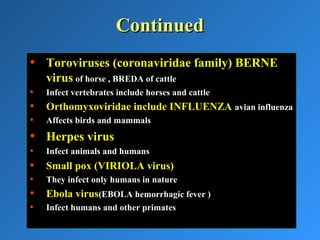
ContinuedContinued
• Toroviruses (coronaviridae family) BERNEToroviruses (coronaviridae family) BERNE
virusvirus of horse , BREDA of cattle
• Infect vertebrates include horses and cattle
• Orthomyxoviridae include INFLUENZAOrthomyxoviridae include INFLUENZA avian influenza
• Affects birds and mammals
• Herpes virusHerpes virus
• Infect animals and humans
• Small pox (VIRIOLA virus)Small pox (VIRIOLA virus)
• They infect only humans in nature
• Ebola virusEbola virus(EBOLA hemorrhagic fever )
• Infect humans and other primates
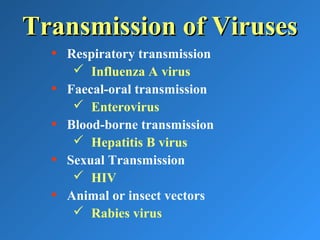
Transmission of VirusesTransmission of Viruses
• Respiratory transmission
 Influenza A virus
• Faecal-oral transmission
 Enterovirus
• Blood-borne transmission
 Hepatitis B virus
• Sexual Transmission
 HIV
• Animal or insect vectors
 Rabies virus
PoliovirusPoliovirus
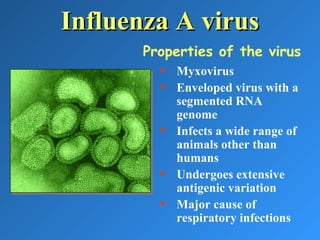
Influenza A virusInfluenza A virus
• Myxovirus
• Enveloped virus with a
segmented RNA
genome
• Infects a wide range of
animals other than
humans
• Undergoes extensive
antigenic variation
• Major cause of
respiratory infections
Properties of the virus
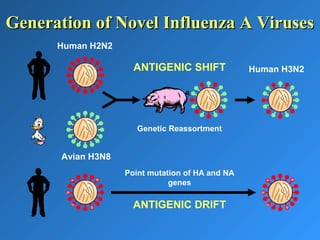
Point mutation of HA and NA
genes
ANTIGENIC DRIFT
ANTIGENIC SHIFT
Genetic Reassortment
Human H3N2
Avian H3N8
Human H2N2
Generation of Novel Influenza A VirusesGeneration of Novel Influenza A Viruses
REFERENCESREFERENCES
1. http://www.highveld.com/virology/animal-viruses.html
2. http://www.who.int/zoonoses/diseases/animal_influenza/en/
3. https://www.khanacademy.org/science/biology/biology-of-viruses/virus-biology/a/animal-viruse
4. http://www.zapmeta.ws/ws?q=virus%20diseases%20in%20animals&asid=ws_gc11_01&mt=b&
5. https://www.google.com/search?
q=animal+virus+replication+cycle&client=firefox-
b&tbm=isch&tbo=u&source=univ&sa=X&ved=0ahUKEwi1_Ky87a3TAh
UFxRQKHRBlAvAQsAQIVw&biw=1366&bih=657
6. http://www.bbc.com/earth/story/20150327-ten-scary-diseases-of-animals
7. https://www.boundless.com/biology/textbooks/boundless-biology-
textbook/viruses-21/virus-infections-and-hosts-137/animal-viruses-554-
11765/
8. https://www.youtube.com/watch?v=cR96DVBpjYI
9. http://www.epizone-eu.net/en/Home/Animal-diseases.htm
10. https://www.youtube.com/watch?v=s8jhJXgC-bk

Basics knowledge about virus

  • 1.
    PRESENTED BY G7PRESENTEDBY G7 MEMBERSMEMBERS REGREG 1.TWIBANIRE JEAN DE DIEU1.TWIBANIRE JEAN DE DIEU 217023665217023665 2. MAYUYA ATHANASE2. MAYUYA ATHANASE 217033482217033482 3.MUKESHIMANA BEATRICE3.MUKESHIMANA BEATRICE 217064876217064876 4.NDAYISABA EMMANUEL4.NDAYISABA EMMANUEL 217170641217170641 5.DUSABIMANA LEONCIE5.DUSABIMANA LEONCIE 217065090217065090 6.NKURUNZIZA THARCISSE6.NKURUNZIZA THARCISSE 217006957217006957 7.MURWANASHYAKA FABIEN7.MURWANASHYAKA FABIEN 217188850217188850 8.MUKANDAYISENGA BERNADETTE8.MUKANDAYISENGA BERNADETTE 217053181217053181 MICROBIOLOGYMICROBIOLOGY Date 06/04/2017Date 06/04/2017 ANIMAL VIRUS assignmentANIMAL VIRUS assignment
  • 2.
    MOST VIRUSESMOST VIRUSES AFFECTINGANIMALSAFFECTING ANIMALS INTRODUCTIONS
  • 3.
    Definition of aVirusDefinition of a Virus Sub microscopic entity consisting of a single nucleic acid surrounded by a protein coat and capable of replication only within the living cells of bacteria, animals or plants. Or A virus is a non-cellular particle made up of genetic material and protein that can invade living cells.
  • 4.
    Virion StructureVirion Structure NucleicAcid Spike Projections Protein Capsid Lipid Envelope Virion Associated Polymerase
  • 5.
    Viruses in cattleVirusesin cattle • Bluetongue virus, BRSV, Classical swine fever virus, Foot-and-mouth disease virus, Lumpy skin disease virus, PPRV, Poliovirus, PRRSV, Rinderpest virus, Sheep and goat pox virus, Swine influenza virus, Swine vesicular disease virus, Vesicular stomatitis virus, African swine fever virus, Influenza viruses, Human rhinovirus, and RSV EBOLA VIRUS
  • 6.
    Virus ReplicationVirus Replication 1Virus attachment and entry 11 2 Uncoating of virion 22 3 Migration of genome nucleic acid to nucleus 33 4 Transcription 5 Genome replication 44 55 6 Translation of virus mRNAs 66 7 Virion assembly 77 8 Release of new virus particles 88
  • 7.
    Different types ofvirusDifferent types of virus Adenovirus Herpes virus infects Animals and humans Herpes VirusZIKA VIRUS
  • 8.
    PoliovirusPoliovirus • Enterovirus. • Possessesa RNA genome. • Transmitted by the faecal oral route. • Cause of gastrointestinal illness and poliomyelitis. Properties of the virus
  • 9.
    FAMILY VIRUSFAMILY VIRUS •RhabdovirusesRhabdoviruses consist of six GENERA included rabies ,vesicular stomatitis virus • Infect insects, fishes , mammals and other two genera affect plants • PicornaviridaePicornaviridae includes aphthovrus • Causes foot-and-mouth disease in pigs, cattle, sheep and goats • PestivirusesPestiviruses • Causes classical swine fever and Bovine viral diarrhea • ArterivirusesArteriviruses • Affect cattle, mice and other mammals • CoronavirusesCoronaviruses • They infect the upper respiratory and gastrointestinal tract of birds and mammals also affect cats, dogs, pig
  • 10.
    ContinuedContinued • Toroviruses (coronaviridaefamily) BERNEToroviruses (coronaviridae family) BERNE virusvirus of horse , BREDA of cattle • Infect vertebrates include horses and cattle • Orthomyxoviridae include INFLUENZAOrthomyxoviridae include INFLUENZA avian influenza • Affects birds and mammals • Herpes virusHerpes virus • Infect animals and humans • Small pox (VIRIOLA virus)Small pox (VIRIOLA virus) • They infect only humans in nature • Ebola virusEbola virus(EBOLA hemorrhagic fever ) • Infect humans and other primates
  • 11.
    Transmission of VirusesTransmissionof Viruses • Respiratory transmission  Influenza A virus • Faecal-oral transmission  Enterovirus • Blood-borne transmission  Hepatitis B virus • Sexual Transmission  HIV • Animal or insect vectors  Rabies virus
  • 12.
  • 13.
    Influenza A virusInfluenzaA virus • Myxovirus • Enveloped virus with a segmented RNA genome • Infects a wide range of animals other than humans • Undergoes extensive antigenic variation • Major cause of respiratory infections Properties of the virus
  • 14.
    Point mutation ofHA and NA genes ANTIGENIC DRIFT ANTIGENIC SHIFT Genetic Reassortment Human H3N2 Avian H3N8 Human H2N2 Generation of Novel Influenza A VirusesGeneration of Novel Influenza A Viruses
  • 15.
    REFERENCESREFERENCES 1. http://www.highveld.com/virology/animal-viruses.html 2. http://www.who.int/zoonoses/diseases/animal_influenza/en/ 3.https://www.khanacademy.org/science/biology/biology-of-viruses/virus-biology/a/animal-viruse 4. http://www.zapmeta.ws/ws?q=virus%20diseases%20in%20animals&asid=ws_gc11_01&mt=b& 5. https://www.google.com/search? q=animal+virus+replication+cycle&client=firefox- b&tbm=isch&tbo=u&source=univ&sa=X&ved=0ahUKEwi1_Ky87a3TAh UFxRQKHRBlAvAQsAQIVw&biw=1366&bih=657 6. http://www.bbc.com/earth/story/20150327-ten-scary-diseases-of-animals 7. https://www.boundless.com/biology/textbooks/boundless-biology- textbook/viruses-21/virus-infections-and-hosts-137/animal-viruses-554- 11765/ 8. https://www.youtube.com/watch?v=cR96DVBpjYI 9. http://www.epizone-eu.net/en/Home/Animal-diseases.htm 10. https://www.youtube.com/watch?v=s8jhJXgC-bk

Editor's Notes

  • #4 What is a virus “Sub microscopic entities consisting of a single nucleic acid surrounded by a protein coat and capable of replication only within the living cells of bacteria, animals or plants.”[1] The key features of this definition are as follows:              Single type of nucleic acid – either DNA or RNA but not both              Replication of the virus only with a living cell – they are obligate intracellular parasites. These characteristics are typical for ALL viruses whether they infect bacteria, plants or animals. [1] Adapted from Collins English Dictionary
  • #5          This overhead shows the standard features found in some (but not all) viruses.          A virus particle is essentially a piece of nucleic acid surrounded by a protein coat.          The protein coat (i.e. the capsid) is a delivery system for transferring the virus genome from one cell to another. The protein serves to:      Provide protection to the nucleic acid against the environment - e.g. nucleases etc.      Function in receptor recognition - targeting a virus to a susceptible host and cell type.          Surrounding this coat there may be a lipid envelope - this envelope is derived from one of the cell membranes and is not determined by the virus. There may be some modification to the lipid composition induced during virus maturation.          Inserted into the lipid envelope there are usually virus proteins which are present as spike projections - these are normally glycoproteins. Due to restrictions on the coding size of many virus genomes the capsid of the virion is made up of repeating subunits, which coat the virus genomic nucleic acid. The redundancy also allows for the fact that if there is an inactivation of part of the capsid the virus does not completely lose its infectivity For example the poliovirus RNA (7kb) can specific at most 250,000 Daltons of protein altogether (some must be used for replication) but the poliovirus virion capsid weighs 6 x 10⁶ Daltons. Genomic Nucleic Acid Viruses only possess a single type of genomic nucleic acid – either DNA or RNA but not both. This nucleic acid can be in a variety of physicla forms that can be used as a valuable classification feature.
  • #6 1.1.         Virion Types          The majority of viruses fall within one of two basic structures:      Helical virions      Icosahedral virions          The features of each of these are described in the following. 1.1.1.      Helical Virions          Common form of structure in which the capsomeres wrap around the nucleic acid to produce a helix. In plant viruses this helix may be “naked” whereas in the case of viruses infecting animals all viruses have an envelope surrounding the capsid structure.          The diameter of the helical capsid is determined by the characteristics of the capsomeres and the length of the nucleic acid molecule determines the length of the helix. 1.1.2.      Icosahedral Virions          The only closed shell that can be made with repeating capsomeres is an icosahedron. The simplest icosahedron is a regular solid with 12 vertices and 20 triangular faces - to make this shell there must be sixty identical protomers (i.e. 3 per face)[2].          Larger viruses have a more complex virion. Each triangular face of the icosahedron is divided into six half-triangles. The corners of the inscribed faces are solid lines; those of the basic faces are dashed lines. Monomers are arranged in pentons around the fivefold axis and in hexons around the threefold axis. In the case of poliovirus each of the sixty subunits is made up of three monomers VP1, VP2 and VP3.          In higher order capsids still the proteins located at the pentons and hexons are distinct proteins - for example in adenovirus the hexons contain three protomers rather than six as in the basic icosahedron.          Icosahedral particles may exist as either naked or enveloped virions. [1] Naked viruses with helical virions (e.g. plant viruses) are more tightly packed. [2] The smallest and simplest virions made up of 60 identical subunits are that of satellite tobacco mosaic virus. Possess a short RNA (~1600 bases) with just one gene that encoding the capsid protein. This virus can only replicate in cells already infected by tobacco necrosis virus. This virus is referred to as a satellite virus. 1.1.1.      Complex virions Not all viruses fall within these two simple categories and two examples will be given of so-called complex virions.
  • #7 There are many variations on the virus replication and this diagram illustrates some of the basic features of the cycle. 1.             Attachment and entry: viruses recognise specific structures on the cell surface (referred to as virus receptors), which target the virus to specific cell types and tissue. This is one of the primary determinants for which tissues are infected by a particular virus. The receptor is a normal component of the cell, which the virus has hijacked for the infection process. 2.             Uncoating: The virion breaks open and releases the virus genome nucleic acid into the host cell cytoplasm. Further replication may take place in the cytoplasm or the nucleic acid may migrate to the cell’s nucleus. 3.             Transcription: Virus mRNA is produced using either cellular enzymes or virus-coded enzymes. 4.             Genome replication: This stage can take place in either the cytoplasm or nucleus of the infected cell. Depending on the size of the virus genome the enzymes involved in genome replication may be encoded by either the virus itself or the host cell. 5.             Translation: This stage uses the host cell machinery - ribosomes and enzymes etc. Various proteins are synthesised - structural - only in virion - and non-structural - detected only in the virus-infected cell. 6.             Virion Assembly: The newly formed virus proteins and genomic nucleic acid assemble to produce the new virus particles. 7.             Virion release: Various strategies are available for the release of the progeny virus from the infected cell depending on the particular virus group. The virus may bud through the cell membrane at which time it picks up the envelope surrounding the virus particle OR the virus may simply cause lysis of the cell resulting in cell death and the release of progeny virus particles.
  • #8 Cell death – Cytopathic effect          This is the end result of many lytic virus infections in which the cell is killed following virus infection. This end result of virus infection is the cause of cpe found in cell culture systems infected with lytic viruses. The form of virus-induced cpe can take many forms ranging from the lysis of the cell to a fusion event with the formation of syncytia. Persistent infection          The outcome of some virus infections is not cell death but the development of a persistent (or chronic) virus infection. This differs from the transformation of cells (described below) since in many cases the cells appear similar (or identical) to the uninfected parental cell line. The cells may continue to grow in culture and release infectious virus.          These infections are characterised by the virus normally being lytic but under specific situations (e.g. host cell type) the virus establishes a chronic or persistent infection. Latent Infection          The capacity of herpes virus to establish a latent infection is essentially another form of persistent infection. In this case the virus is not actually replicating but lying dormant in the host cell Transformation          A transformed cell in vitro or a tumour developing in vivo is essentially a cell-type, which shows no control over its cell division with unregulated growth.
  • #9 Enterovirus. Possesses a RNA genome. Transmitted by the faecal oral route. Cause of gastrointestinal illness and poliomyelitis.
  • #12          As with many infections viruses can be transmitted between susceptible individuals by a variety of means. The details provided related mainly to viruses infecting humans.          Many animal viruses do not remain infectious for very long outside the host.      Respiratory: Influenza A virus (and rhinovirus). Transmission in the form of aerosols during coughing and sneezing. The viruses are fairly sensitive to drying and their transmission is highest when individuals are in close contact.      Faecal-oral: Enteroviruses (e.g. poliovirus) A lot of viruses are excreted in faeces following high levels of replication in the gut.      Blood borne: Hepatitis B (and HIV). Transferred through contaminated blood products or via shared needles with drug abuse.      Sexual transmission: (HIV) Animal/insect vector: Rabies. In many instances the virus infection is a specific pathogen of the animal and is not normally transmitted to humans by any other means.
  • #13          A human virus infection that is largely controlled by vaccination and is likely to be fully eradicated in the next few years. The infection here is associated with infantile paralysis affecting the lower limbs but in severe cases there can be paralysis of the muscles controlling respiration.
  • #14 Influenza A virus is the second acute infection to be discussed. Myxovirus Enveloped virus with a segmented RNA genome Infects a wide range of animals other than humans Undergoes extensive antigenic variation Major cause of respiratory infections