Basic First Aid
Seizures/Convulsions
 Seizures: mild to severe
 brief blackouts, involuntary movements, sudden falls
 periods of confused behavior
 involuntary muscle contractions.
 Grand Mal seizures
 uncontrollable muscle movements (jerking or spasms)
 Rigidity
 loss of consciousness
 loss of bladder and/or bowel control
 breathing that stops temporarily.
Seizures/Convulsions
 Stay with the person – consider calling 911
 Protect the person from injury
 Move all furniture or equipment that is nearby
 Do not hold or restrain the person
 Do not put anything in the person’s mouth
 Loosen clothing
 Roll the person on his/her side
 After the seizure activity has stopped:
 Perform rescue breathing if person is blue or not breathing (if CPR
certified)
 If breathing, lay person on side
FAINTING
 Pale, sweaty, slow pulse
 Lay person on back with head to the side
and legs elevated
 DO NOT give anything by mouth
 If person doesn’t wake up right away, call
911
Choking
 Partial airway obstruction with good air
exchange
 Forceful cough
 Wheezing in between breaths
*Stay with the person and encourage them to
cough
Choking
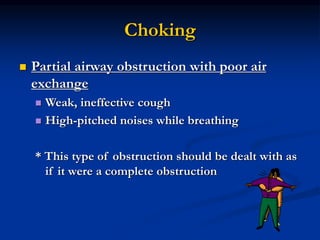
 Partial airway obstruction with poor air
exchange
 Weak, ineffective cough
 High-pitched noises while breathing
* This type of obstruction should be dealt with as
if it were a complete obstruction
Choking
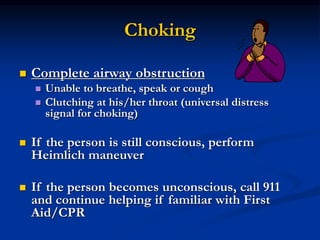
 Complete airway obstruction
 Unable to breathe, speak or cough
 Clutching at his/her throat (universal distress
signal for choking)
 If the person is still conscious, perform
Heimlich maneuver
 If the person becomes unconscious, call 911
and continue helping if familiar with First
Aid/CPR
Heimlich Maneuver
Major Bleeding: Direct Pressure
 Use a sterile dressing or clean cloth
 Fold to form pad
 Apply pressure directly over wound
 Fasten with bandage; knot over wound
 If bleeding continues, add second
pressure dressing
Bleeding: Pressure Points
Apply pressure where artery lies near
skin over bone.
Bleeding: Pressure Points
 Use pressure point closest to wound,
between wound and heart
 Superficial arteries: use flat surface of
several fingers
 Femoral artery, use heel of one hand
Tourniquet
Absolute last resort
in controlling
bleeding:
Life or the limb
Once a
tourniquet is
applied, it is not
to be removed ,
only by a doctor
Cuts
 Apply pressure with a clean cloth, elevation
 Can be cleaned better when bleeding stops
 Large and deep: seek medical attention
 Maintain pressure
 Minor cuts
 Soap and water, peroxide
 cover with antibiotic ointment and dressing.
 If cut may need sutures, seek medical care as
soon as possible
 Consider “Super Glue”
Works on People, Too!
Abrasions
 Must get wound clean
 Hold pressure with or without
“numbing” medicine till bleeding stops
 Clean wound with soap and water in 1 -2
hours
 Wrap in dry bandage
 Clean at least twice a day till healed
Puncture Wounds
 DO NOT remove large
objects such as knives or
sticks, call 911
 For minor wounds, wash
with soap and water
 Remove splinters?
 Antibiotic ointment
 Bandage
 The person may need a
tetanus booster injection
Stinging Insects
 Remove the stinger with the scraping motion of a
fingernail
 DO NOT pull the stinger out
 Put a cold compress on the bite
 Hydrocortisone cream
 Benadryl
 Check for allergies
 If hives, paleness, weakness, nausea, vomiting, tightness
in chest, breathing difficulty, or collapse occur, call 911.
 For spider bites, call the Poison Control Center or
hospital
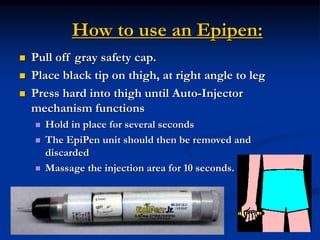
EpiPen
How to use an Epipen:
 Pull off gray safety cap.
 Place black tip on thigh, at right angle to leg
 Press hard into thigh until Auto-Injector
mechanism functions
 Hold in place for several seconds
 The EpiPen unit should then be removed and
discarded
 Massage the injection area for 10 seconds.
Blisters
 Leave intact
 Puncture under clean conditions
Cleanse area, hands, needle
Puncture near edge
Antibiotic ointment and bandage
EYE Injuries
 DON’T RUB!!!
 Wash out (chemicals, dirt)
 Patch or compress or keep closed
 Send the person directly to an
emergency room.
NOSEBLEEDS
 With person sitting,
squeeze nostrils
together between
thumb and index
finger for 10 minutes
 Ice on forehead
 If bleeding persists,
seek medical
attention– but
maintain pressure
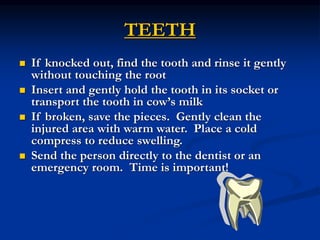
TEETH
 If knocked out, find the tooth and rinse it gently
without touching the root
 Insert and gently hold the tooth in its socket or
transport the tooth in cow’s milk
 If broken, save the pieces. Gently clean the
injured area with warm water. Place a cold
compress to reduce swelling.
 Send the person directly to the dentist or an
emergency room. Time is important!
Major Fractures
 Other injuries – major accident
 Broken skin, major deformity
Heavy bleeding
Loss of circulation
 Neck, head, hip, pelvis, upper leg
Major Fractures
 Stop any bleeding
 Immobilize
Splint
Don’t try to re-align
 Treat for shock
Head down
Legs up?
Dislocations
 Don't delay medical care
 Don't move the joint
 Nerves, blood vessels and ligaments
 Put ice on the injured joint
Fractures and Sprains: PRICE
 P-- protect the injured limb from further
injury by not using the joint
 R-- rest the injured limb
 I-- ice the area
 C-- compress the area with an elastic wrap
or bandage
 E-- elevate the injured limb whenever
possible to help prevent or limit swelling
Sunburn
 Avoidance
 Cover up: hats, sleeves
 Sunscreen
 Cool bath or shower
 Leave blisters intact
 Tylenol, Advil, Solarcaine
Heat Illness
 AVOID The Problem
 DRINK even if not “thirsty”
Lotsof clear urine
 Heat Cramps: rest, cool down, DRINK
 Heat Exhaustion = threatened Heatstroke
 Nausea, faint
 Pale, clammy & cool
 Give fluids, active cooling
 Heatstroke  Call 911
 Hot, shock, unconscious

Basic_First_Aid.ppt

  • 1.
  • 2.
    Seizures/Convulsions  Seizures: mildto severe  brief blackouts, involuntary movements, sudden falls  periods of confused behavior  involuntary muscle contractions.  Grand Mal seizures  uncontrollable muscle movements (jerking or spasms)  Rigidity  loss of consciousness  loss of bladder and/or bowel control  breathing that stops temporarily.
  • 3.
    Seizures/Convulsions  Stay withthe person – consider calling 911  Protect the person from injury  Move all furniture or equipment that is nearby  Do not hold or restrain the person  Do not put anything in the person’s mouth  Loosen clothing  Roll the person on his/her side  After the seizure activity has stopped:  Perform rescue breathing if person is blue or not breathing (if CPR certified)  If breathing, lay person on side
  • 4.
    FAINTING  Pale, sweaty,slow pulse  Lay person on back with head to the side and legs elevated  DO NOT give anything by mouth  If person doesn’t wake up right away, call 911
  • 5.
    Choking  Partial airwayobstruction with good air exchange  Forceful cough  Wheezing in between breaths *Stay with the person and encourage them to cough
  • 6.
    Choking  Partial airwayobstruction with poor air exchange  Weak, ineffective cough  High-pitched noises while breathing * This type of obstruction should be dealt with as if it were a complete obstruction
  • 7.
    Choking  Complete airwayobstruction  Unable to breathe, speak or cough  Clutching at his/her throat (universal distress signal for choking)  If the person is still conscious, perform Heimlich maneuver  If the person becomes unconscious, call 911 and continue helping if familiar with First Aid/CPR
  • 8.
  • 9.
    Major Bleeding: DirectPressure  Use a sterile dressing or clean cloth  Fold to form pad  Apply pressure directly over wound  Fasten with bandage; knot over wound  If bleeding continues, add second pressure dressing
  • 10.
    Bleeding: Pressure Points Applypressure where artery lies near skin over bone.
  • 11.
    Bleeding: Pressure Points Use pressure point closest to wound, between wound and heart  Superficial arteries: use flat surface of several fingers  Femoral artery, use heel of one hand
  • 12.
    Tourniquet Absolute last resort incontrolling bleeding: Life or the limb Once a tourniquet is applied, it is not to be removed , only by a doctor
  • 13.
    Cuts  Apply pressurewith a clean cloth, elevation  Can be cleaned better when bleeding stops  Large and deep: seek medical attention  Maintain pressure  Minor cuts  Soap and water, peroxide  cover with antibiotic ointment and dressing.  If cut may need sutures, seek medical care as soon as possible  Consider “Super Glue”
  • 14.
  • 15.
    Abrasions  Must getwound clean  Hold pressure with or without “numbing” medicine till bleeding stops  Clean wound with soap and water in 1 -2 hours  Wrap in dry bandage  Clean at least twice a day till healed
  • 17.
    Puncture Wounds  DONOT remove large objects such as knives or sticks, call 911  For minor wounds, wash with soap and water  Remove splinters?  Antibiotic ointment  Bandage  The person may need a tetanus booster injection
  • 18.
    Stinging Insects  Removethe stinger with the scraping motion of a fingernail  DO NOT pull the stinger out  Put a cold compress on the bite  Hydrocortisone cream  Benadryl  Check for allergies  If hives, paleness, weakness, nausea, vomiting, tightness in chest, breathing difficulty, or collapse occur, call 911.  For spider bites, call the Poison Control Center or hospital
  • 19.
  • 20.
    How to usean Epipen:  Pull off gray safety cap.  Place black tip on thigh, at right angle to leg  Press hard into thigh until Auto-Injector mechanism functions  Hold in place for several seconds  The EpiPen unit should then be removed and discarded  Massage the injection area for 10 seconds.
  • 21.
    Blisters  Leave intact Puncture under clean conditions Cleanse area, hands, needle Puncture near edge Antibiotic ointment and bandage
  • 22.
    EYE Injuries  DON’TRUB!!!  Wash out (chemicals, dirt)  Patch or compress or keep closed  Send the person directly to an emergency room.
  • 23.
    NOSEBLEEDS  With personsitting, squeeze nostrils together between thumb and index finger for 10 minutes  Ice on forehead  If bleeding persists, seek medical attention– but maintain pressure
  • 24.
    TEETH  If knockedout, find the tooth and rinse it gently without touching the root  Insert and gently hold the tooth in its socket or transport the tooth in cow’s milk  If broken, save the pieces. Gently clean the injured area with warm water. Place a cold compress to reduce swelling.  Send the person directly to the dentist or an emergency room. Time is important!
  • 25.
    Major Fractures  Otherinjuries – major accident  Broken skin, major deformity Heavy bleeding Loss of circulation  Neck, head, hip, pelvis, upper leg
  • 26.
    Major Fractures  Stopany bleeding  Immobilize Splint Don’t try to re-align  Treat for shock Head down Legs up?
  • 27.
    Dislocations  Don't delaymedical care  Don't move the joint  Nerves, blood vessels and ligaments  Put ice on the injured joint
  • 28.
    Fractures and Sprains:PRICE  P-- protect the injured limb from further injury by not using the joint  R-- rest the injured limb  I-- ice the area  C-- compress the area with an elastic wrap or bandage  E-- elevate the injured limb whenever possible to help prevent or limit swelling
  • 29.
    Sunburn  Avoidance  Coverup: hats, sleeves  Sunscreen  Cool bath or shower  Leave blisters intact  Tylenol, Advil, Solarcaine
  • 30.
    Heat Illness  AVOIDThe Problem  DRINK even if not “thirsty” Lotsof clear urine  Heat Cramps: rest, cool down, DRINK  Heat Exhaustion = threatened Heatstroke  Nausea, faint  Pale, clammy & cool  Give fluids, active cooling  Heatstroke  Call 911  Hot, shock, unconscious