PRESENTED BY ; SHIVANI PRAJAPATI
CONTENT
1. INTRODUCTION
2. CASE LAW
3. BASIC STRUCTURE INGREDIENT
INTRODUCTION
 Article 13 & 368
 theory of basic structure has a background rooted
in the right to property.
 stages in Basic Structure Theory
 Pre-Kesavananda position
 Kesavananda Decision
 Post-Kesavananda
CASES BEFORE KESHAVANANDA
1) Shankari Prasad v. Union of India (AIR 1951)
2) Sajjan Singh v. State of Rajasthan (AIR 1965)
3) Golak Nath v. State of Punjab (AIR 1967 SC
1643)
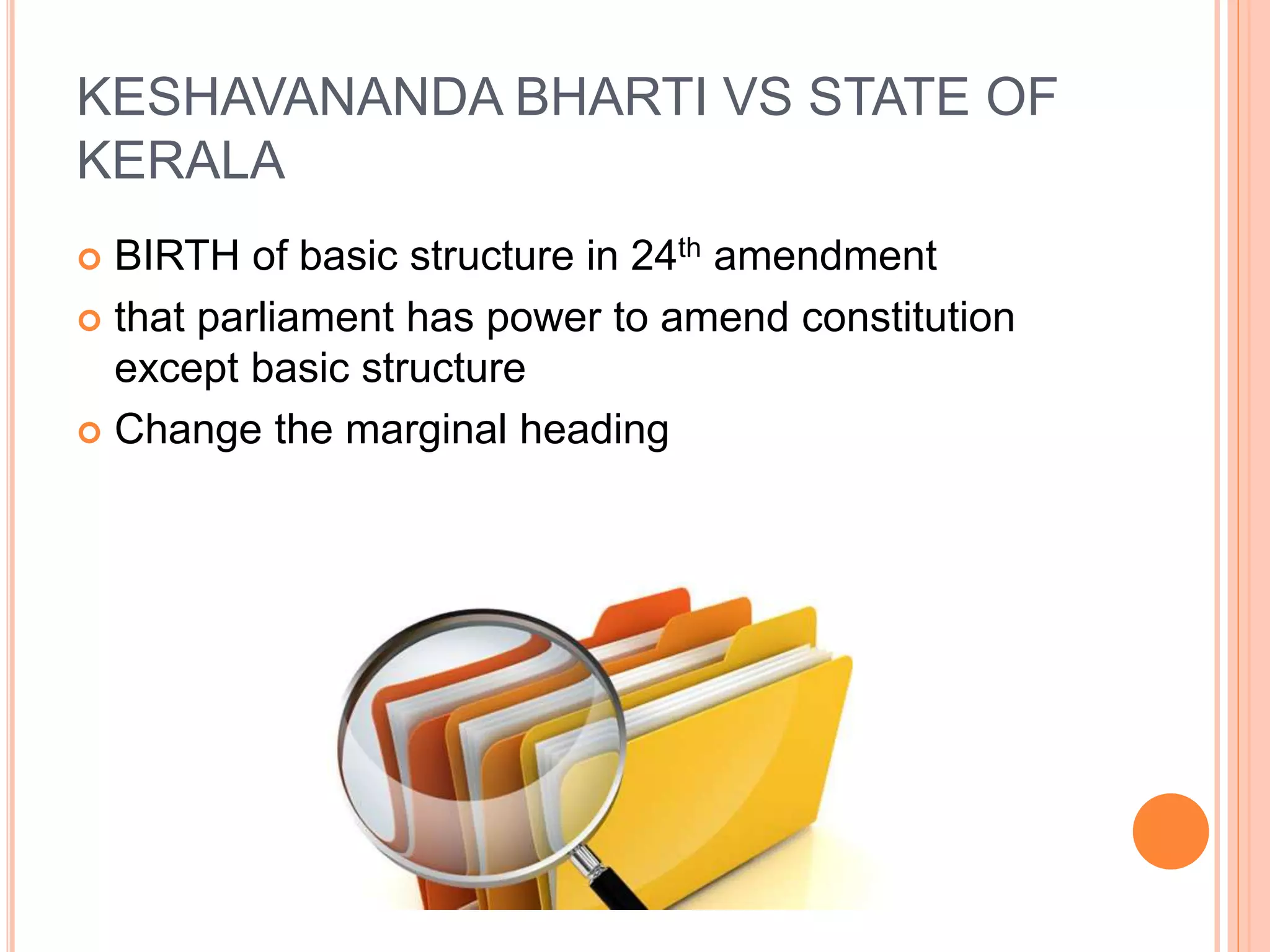
KESHAVANANDA BHARTI VS STATE OF
KERALA
 BIRTH of basic structure in 24th amendment
 that parliament has power to amend constitution
except basic structure
 Change the marginal heading
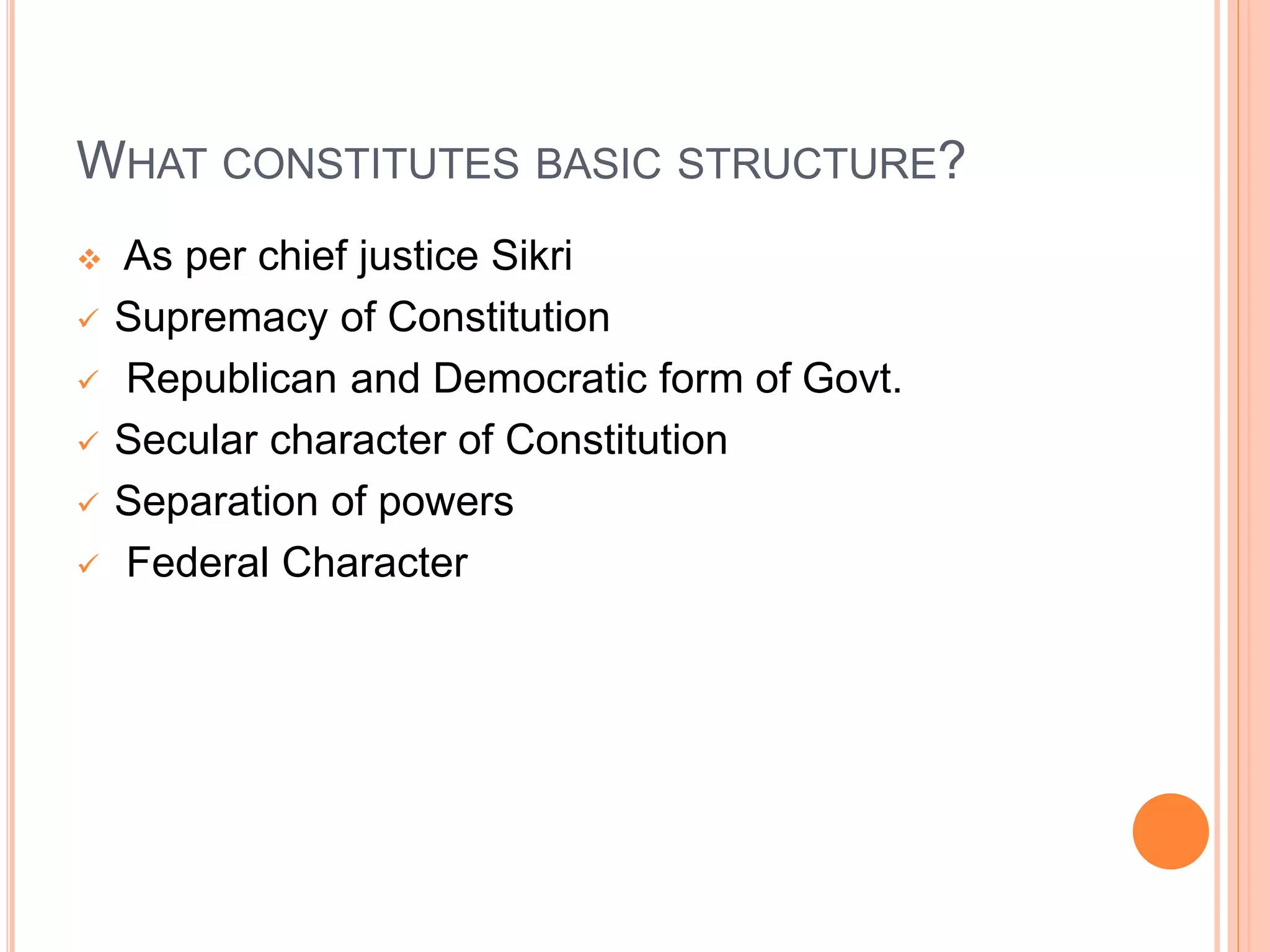
WHAT CONSTITUTES BASIC STRUCTURE?
 As per chief justice Sikri
 Supremacy of Constitution
 Republican and Democratic form of Govt.
 Secular character of Constitution
 Separation of powers
 Federal Character
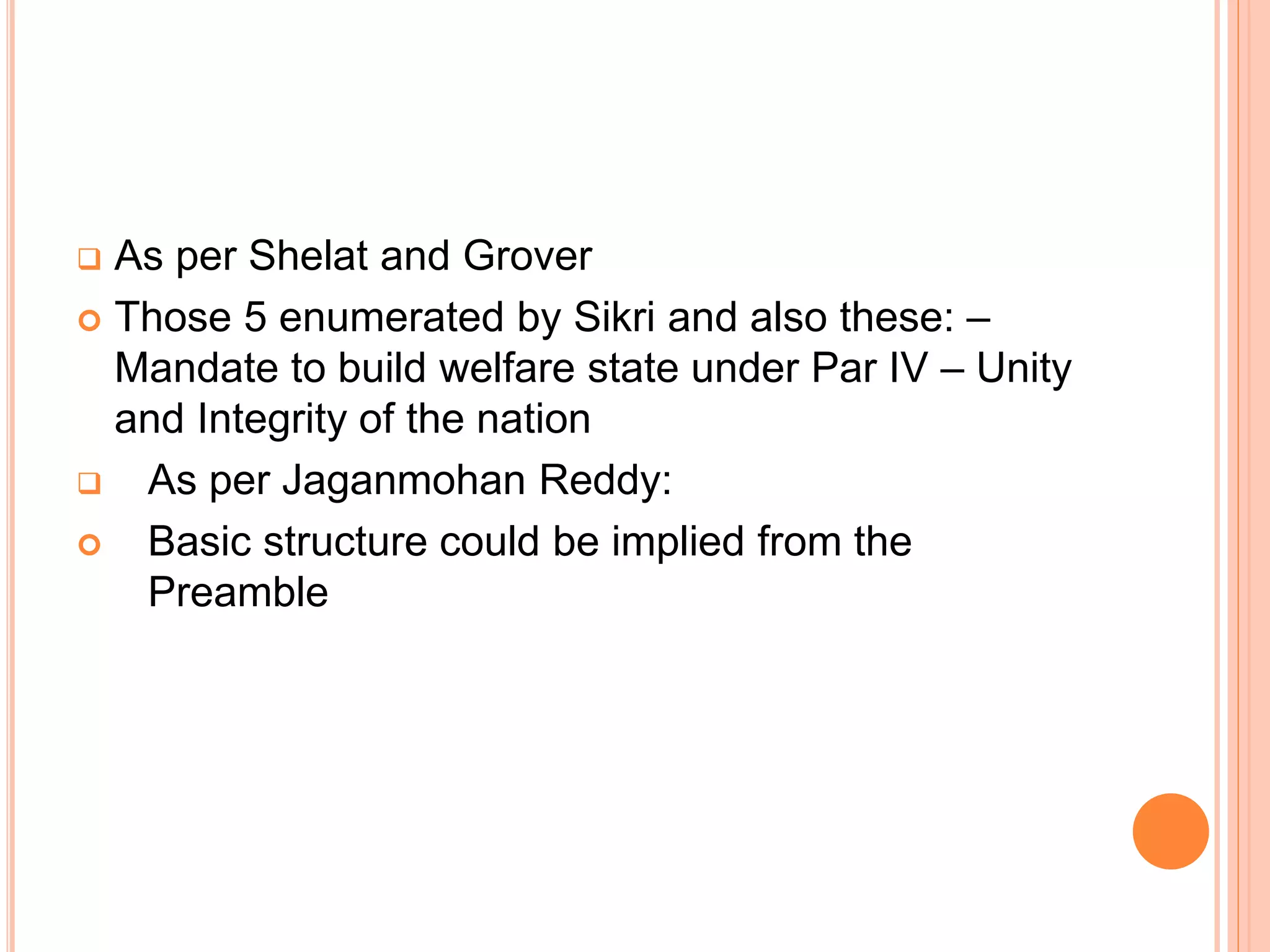
 As per Shelat and Grover
 Those 5 enumerated by Sikri and also these: –
Mandate to build welfare state under Par IV – Unity
and Integrity of the nation
 As per Jaganmohan Reddy:
 Basic structure could be implied from the
Preamble
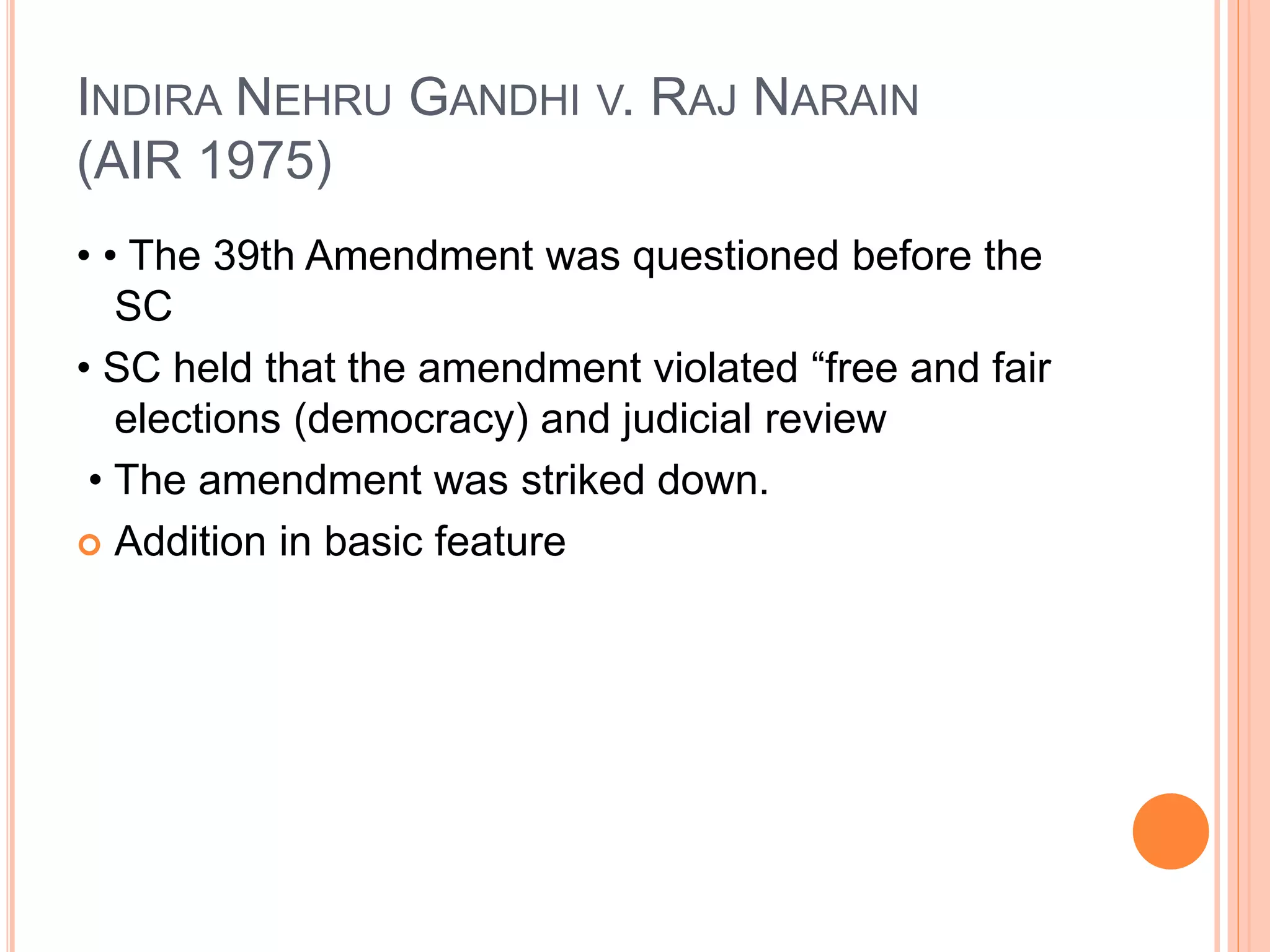
INDIRA NEHRU GANDHI V. RAJ NARAIN
(AIR 1975)
• • The 39th Amendment was questioned before the
SC
• SC held that the amendment violated “free and fair
elections (democracy) and judicial review
• The amendment was striked down.
 Addition in basic feature
MINERVA MILLS V. UNION OF INDIA AIR 1980
SC 1789
• Held that, whenever there is a conflict between FR
and DPSP, harmony should be created between the
both
• Such harmony between FRs and DPSP is a basic
feature of Indian Constitution
CONCLUSION
Various scholars say that due to this doctrine, the
supremacy of Constitution has been preserved And
also, fundamental rights have been protected.
Basic structure

Basic structure

  • 1.
    PRESENTED BY ;SHIVANI PRAJAPATI
  • 2.
    CONTENT 1. INTRODUCTION 2. CASELAW 3. BASIC STRUCTURE INGREDIENT
  • 3.
    INTRODUCTION  Article 13& 368  theory of basic structure has a background rooted in the right to property.  stages in Basic Structure Theory  Pre-Kesavananda position  Kesavananda Decision  Post-Kesavananda
  • 4.
    CASES BEFORE KESHAVANANDA 1)Shankari Prasad v. Union of India (AIR 1951) 2) Sajjan Singh v. State of Rajasthan (AIR 1965) 3) Golak Nath v. State of Punjab (AIR 1967 SC 1643)
  • 5.
    KESHAVANANDA BHARTI VSSTATE OF KERALA  BIRTH of basic structure in 24th amendment  that parliament has power to amend constitution except basic structure  Change the marginal heading
  • 6.
    WHAT CONSTITUTES BASICSTRUCTURE?  As per chief justice Sikri  Supremacy of Constitution  Republican and Democratic form of Govt.  Secular character of Constitution  Separation of powers  Federal Character
  • 7.
     As perShelat and Grover  Those 5 enumerated by Sikri and also these: – Mandate to build welfare state under Par IV – Unity and Integrity of the nation  As per Jaganmohan Reddy:  Basic structure could be implied from the Preamble
  • 8.
    INDIRA NEHRU GANDHIV. RAJ NARAIN (AIR 1975) • • The 39th Amendment was questioned before the SC • SC held that the amendment violated “free and fair elections (democracy) and judicial review • The amendment was striked down.  Addition in basic feature
  • 9.
    MINERVA MILLS V.UNION OF INDIA AIR 1980 SC 1789 • Held that, whenever there is a conflict between FR and DPSP, harmony should be created between the both • Such harmony between FRs and DPSP is a basic feature of Indian Constitution
  • 10.
    CONCLUSION Various scholars saythat due to this doctrine, the supremacy of Constitution has been preserved And also, fundamental rights have been protected.