ADVANCEMENT &
APPLICATION OF
EMBEDDED SYSTEM IN
HEALTH
Presented by
S. ABINAYA
K. BHUVANESHWARI
M. LAKSHITA
III rd year ECE
ARUNAI ENGINEERING COLLEGE
Guide/ Mentor
Mr. A. Elangovan
Assistant professor
AGENDA
 LIGHTENING THE MINIATURES
 TYPES OF HEALTHCARE
 CAPSULE ENDOSCOPY
 FIGHT AGAINST INSULIN
 LOW COST OXIMETER
 EMBEDDED DEVICE AGAINST
CARDIAC ARREST
 CONTROLLING GLUCOSE BY CGM
 EMBEDDED SYSTEM IN
RECOVERING THE HEART BEAT
THE POWER OF EMBEDDED IN
MEDICAL FIELD
LIGTHENING THE
MINIATURES
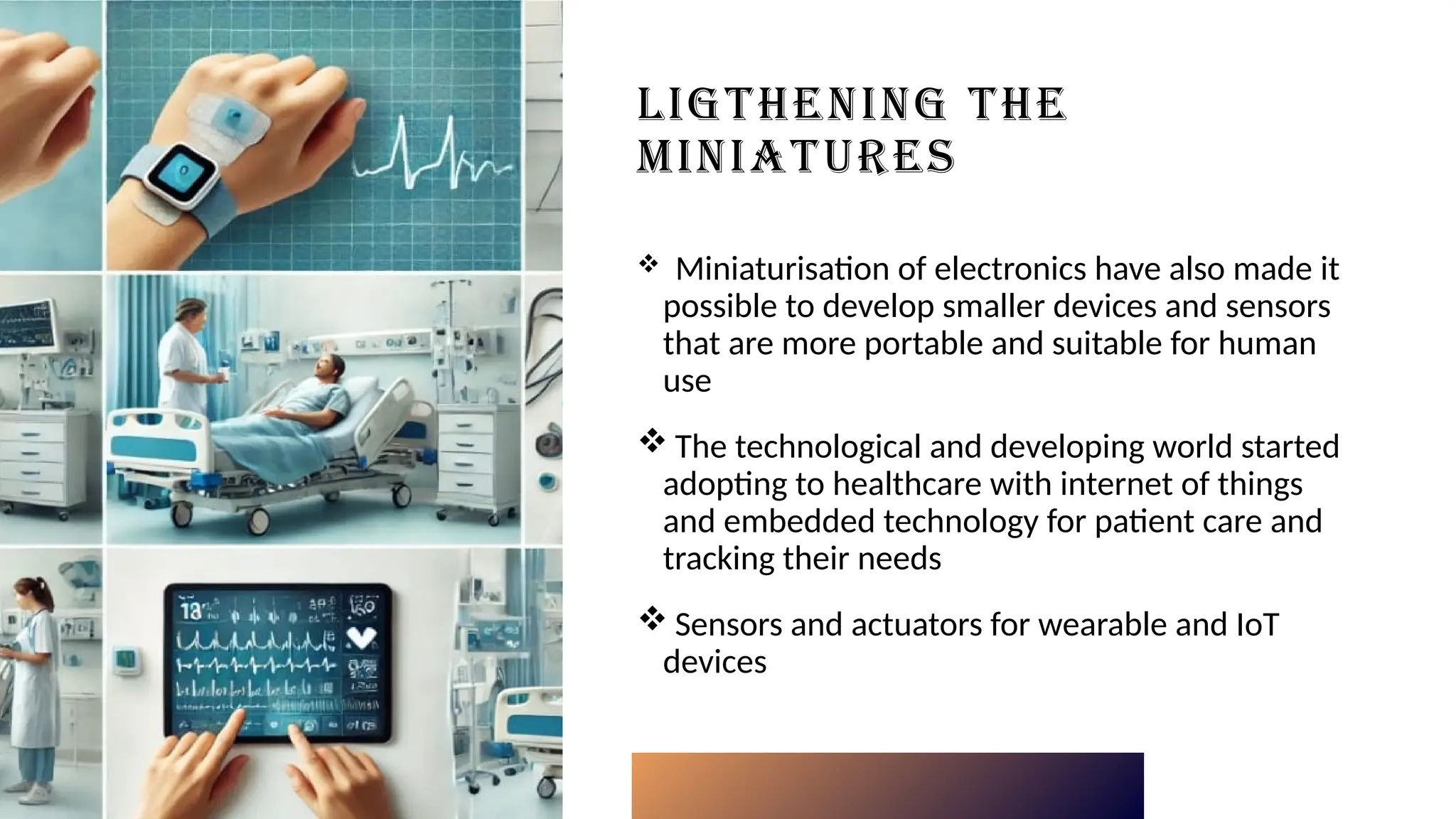
 Miniaturisation of electronics have also made it
possible to develop smaller devices and sensors
that are more portable and suitable for human
use
 The technological and developing world started
adopting to healthcare with internet of things
and embedded technology for patient care and
tracking their needs
 Sensors and actuators for wearable and IoT
devices
TYPES OF
HEALTHCARE
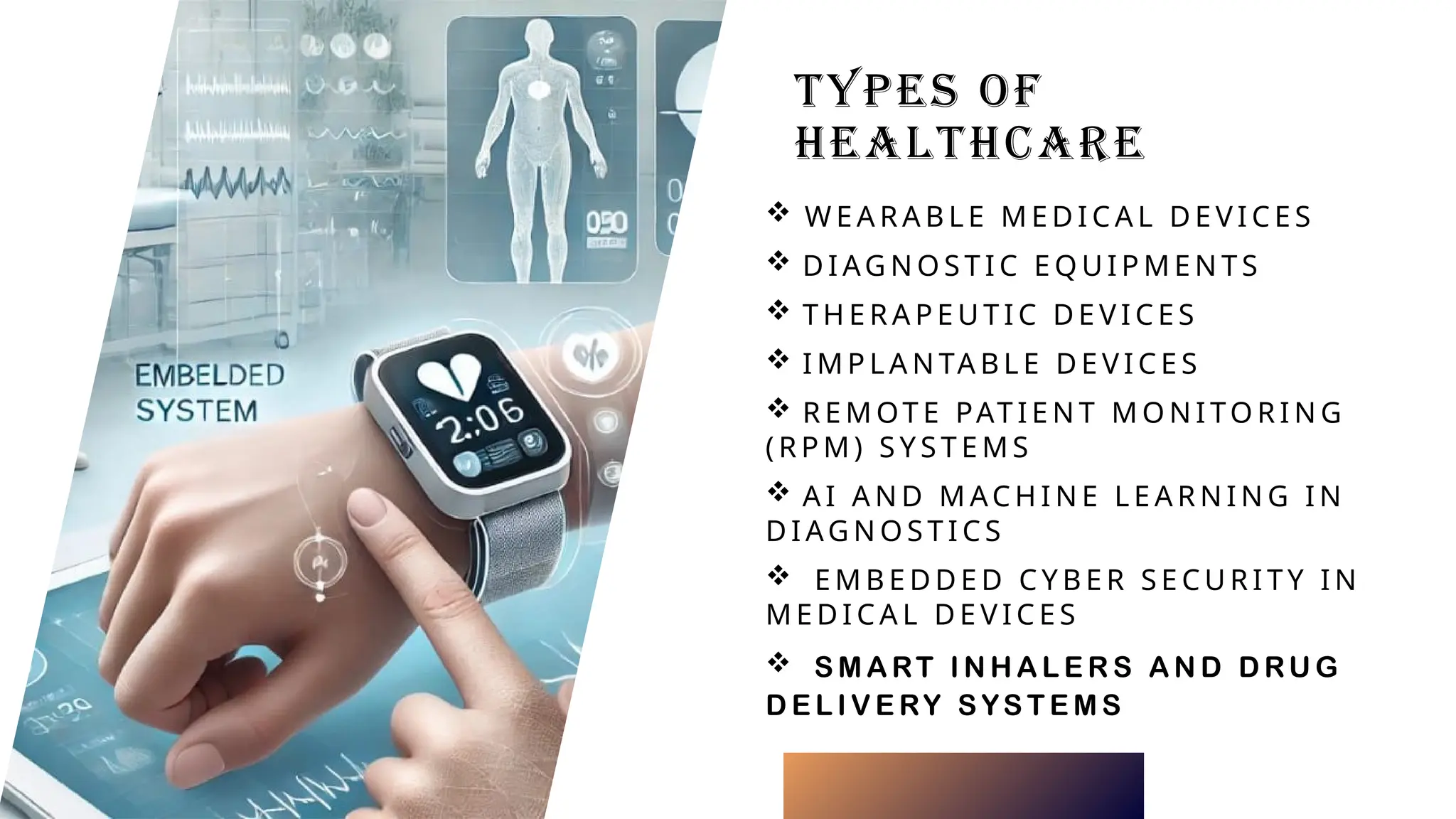
 W E A R A B L E M E D I C A L D E V I C E S
 D I AG N O S T I C E Q U I P M E N T S
 T H E R A P E U T I C D E V I C E S
 I M P L A N TA B L E D E V I C E S
 R E M OT E PAT I E N T M O N I TO R I N G
( R P M ) S Y S T E M S
 A I A N D M AC H I N E L E A R N I N G I N
D I AG N O S T I C S
 E M B E D D E D C Y B E R S E C U R I T Y I N
M E D I C A L D E V I C E S
 S M A RT I N H A L E R S A N D D RU G
D E L I V E RY S YS T E M S
CAPSULE ENDOSCOPY
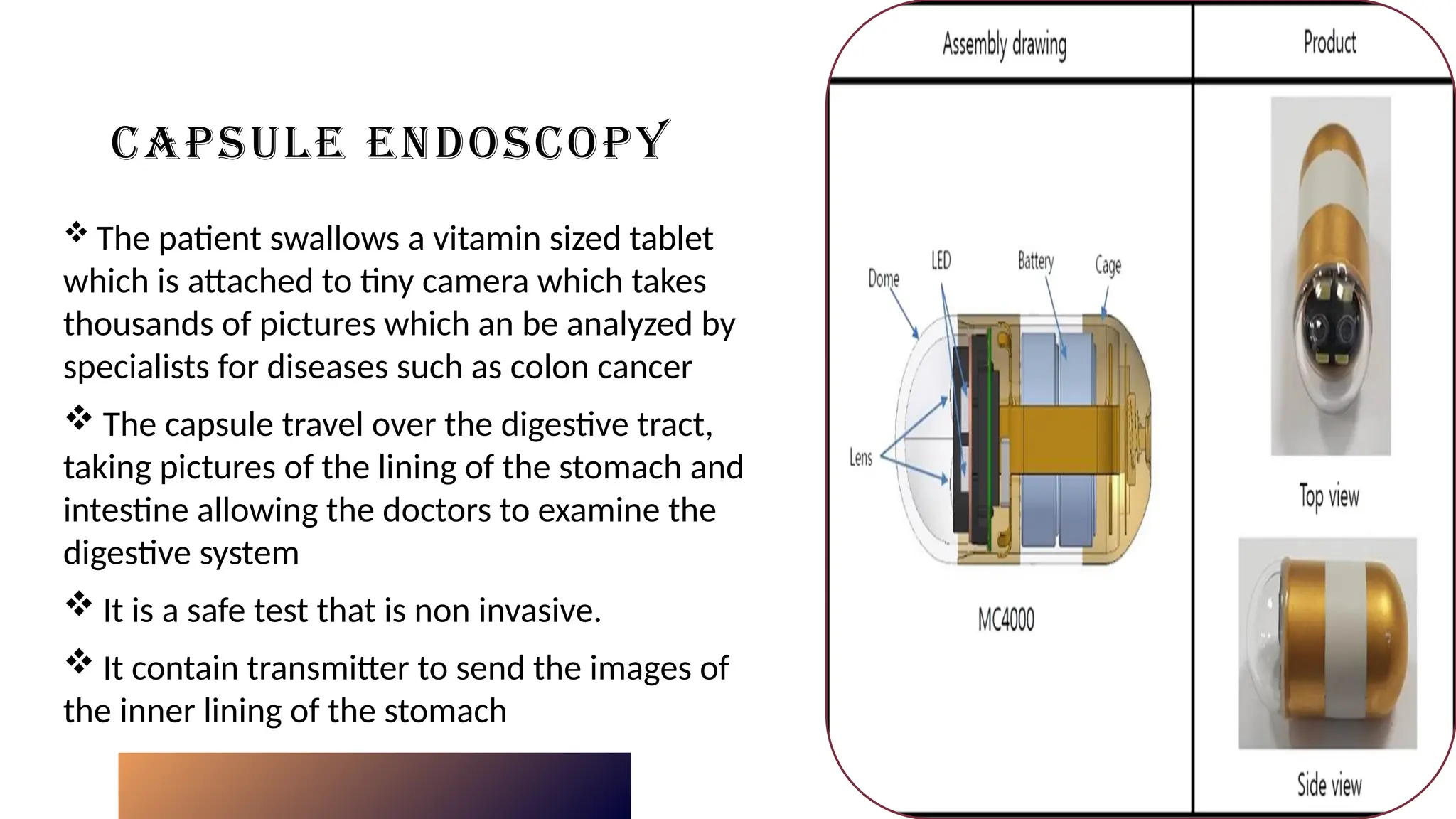
 The patient swallows a vitamin sized tablet
which is attached to tiny camera which takes
thousands of pictures which an be analyzed by
specialists for diseases such as colon cancer
 The capsule travel over the digestive tract,
taking pictures of the lining of the stomach and
intestine allowing the doctors to examine the
digestive system
 It is a safe test that is non invasive.
 It contain transmitter to send the images of
the inner lining of the stomach
Click icon to add picture
FIGHT AGAINST INSULIN
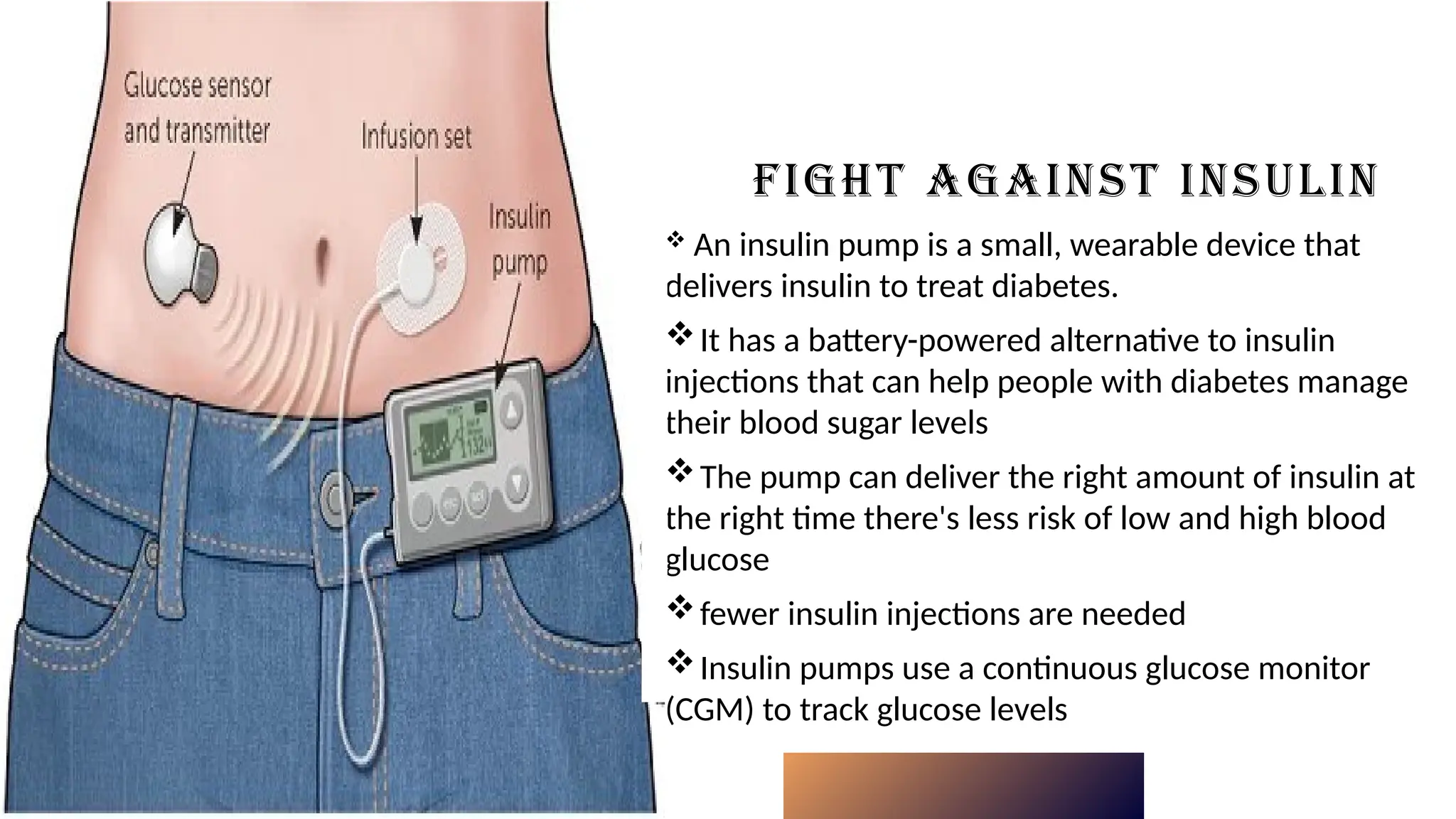
 An insulin pump is a small, wearable device that
delivers insulin to treat diabetes.
It has a battery-powered alternative to insulin
injections that can help people with diabetes manage
their blood sugar levels
The pump can deliver the right amount of insulin at
the right time there's less risk of low and high blood
glucose
fewer insulin injections are needed
Insulin pumps use a continuous glucose monitor
(CGM) to track glucose levels
Click icon to add picture
LOW COST OXIMETER
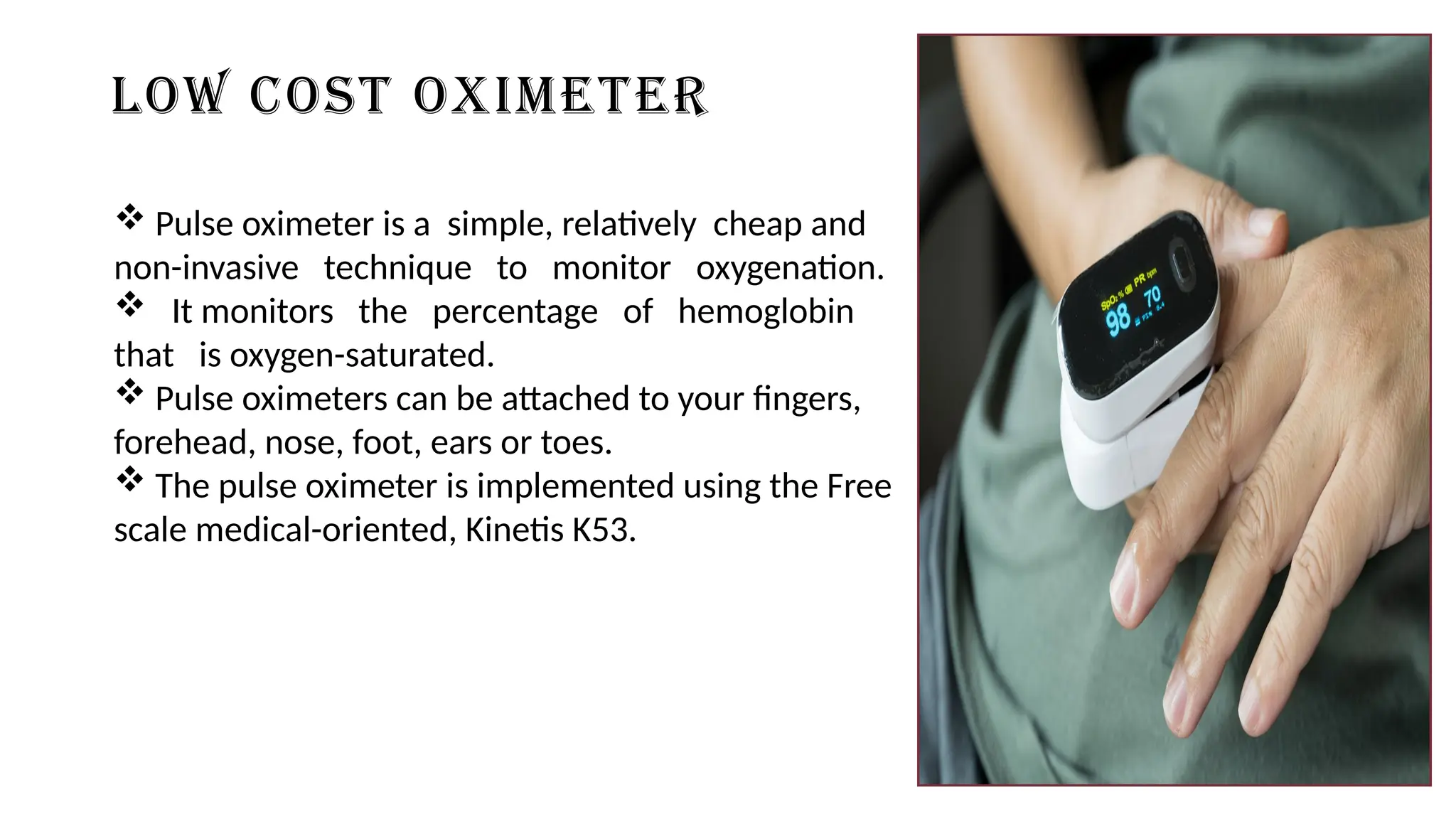
 Pulse oximeter is a simple, relatively cheap and
non-invasive technique to monitor oxygenation.
 It monitors the percentage of hemoglobin
that is oxygen-saturated.
 Pulse oximeters can be attached to your fingers,
forehead, nose, foot, ears or toes.
 The pulse oximeter is implemented using the Free
scale medical-oriented, Kinetis K53.
EMBEDDED DEVICE AGAINST
CARDIAC ARREST
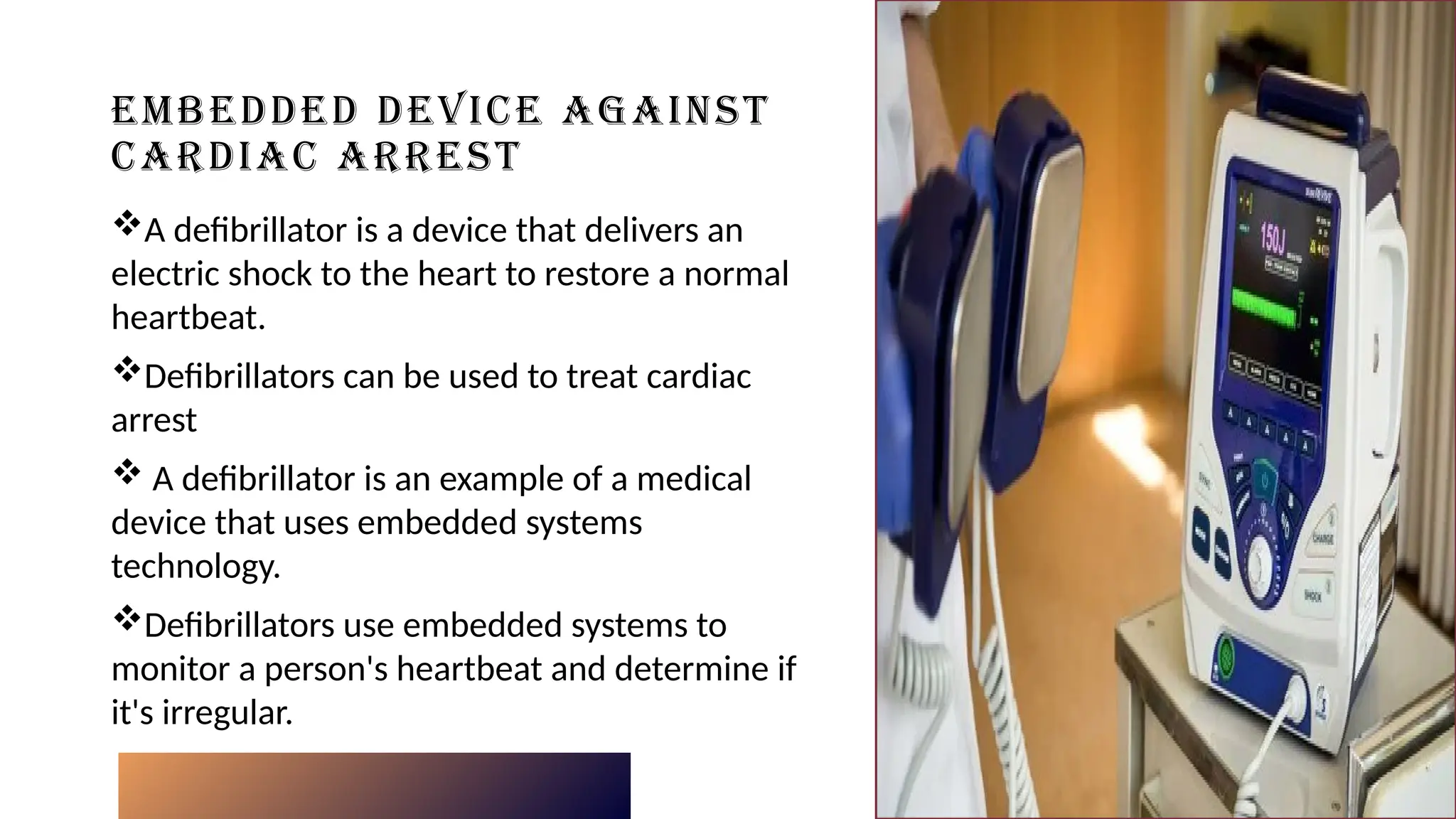
A defibrillator is a device that delivers an
electric shock to the heart to restore a normal
heartbeat.
Defibrillators can be used to treat cardiac
arrest
 A defibrillator is an example of a medical
device that uses embedded systems
technology.
Defibrillators use embedded systems to
monitor a person's heartbeat and determine if
it's irregular.
Click icon to add picture
CONTROLLING GLUCOSE
USING CGM
Click icon to add picture
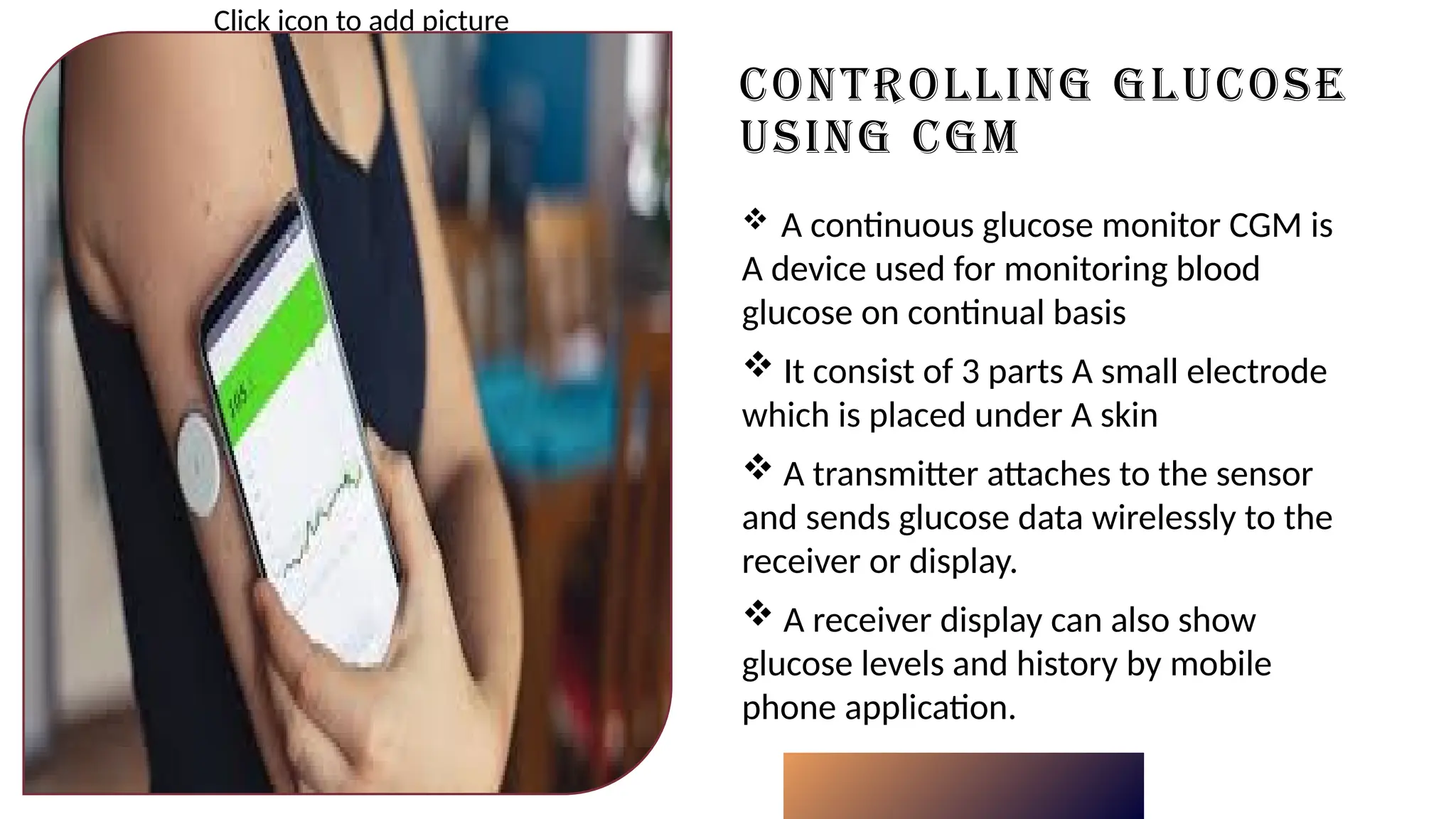
 A continuous glucose monitor CGM is
A device used for monitoring blood
glucose on continual basis
 It consist of 3 parts A small electrode
which is placed under A skin
 A transmitter attaches to the sensor
and sends glucose data wirelessly to the
receiver or display.
 A receiver display can also show
glucose levels and history by mobile
phone application.
EMBEDDED SYSTEM IN RECOVERING THE
HEART BEAT
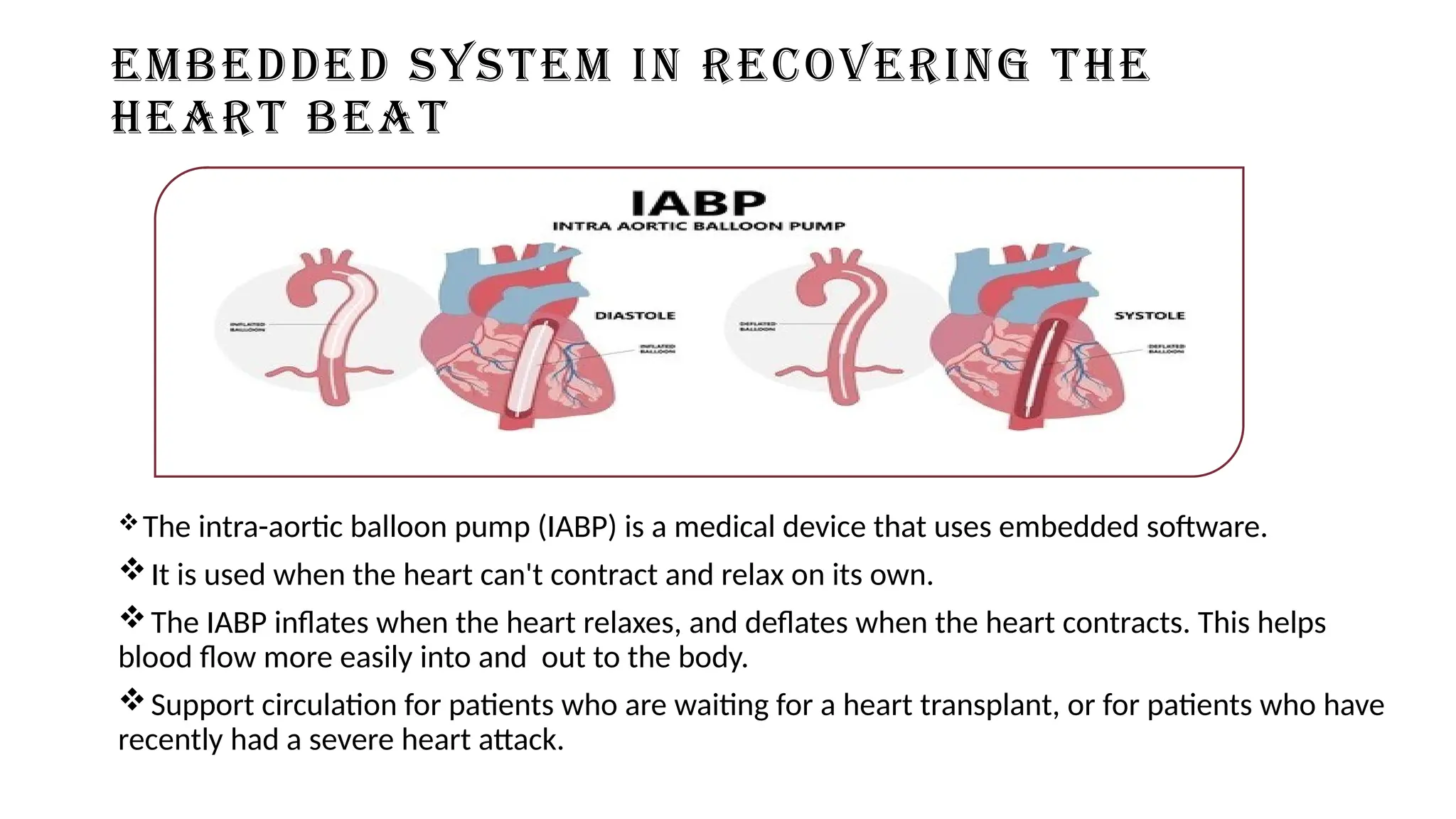
The intra-aortic balloon pump (IABP) is a medical device that uses embedded software.
It is used when the heart can't contract and relax on its own.
The IABP inflates when the heart relaxes, and deflates when the heart contracts. This helps
blood flow more easily into and out to the body.
Support circulation for patients who are waiting for a heart transplant, or for patients who have
recently had a severe heart attack.
CHALLENGES IN HEALTHCARE WITH
EMBEDDED
 Data security
 Privacy
 Reliability
 Battery Life & Power
 Scalability
 Interoperability
REGULATORY AND COMPLIANCE
STANDARDS
 HEALTHCARE REGULATION: Understanding FDA
guidelines, ISO standards, and HIPPA compliance for
medical embedded systems
 SAFTETY AND TESTING: Importance of thorough
testing for medical-grade embedded devices to ensure
patient safety
 QUALITY ASSURANCE : The role of quality standards
like ISO 13485 in ensuring consistent and safe device
manufacturing.
CONCLUSION
The benefits of implementing the technology of embedded (hardware
and software) into medical Diagnostics and treatment are clear. That the
treatment which could only be provided manually by practitioners now can be
done by machines too that is with the patients 24 hours. Instead of sending mail
carrier we can use fast telecom network. Also, using embedded
technology allows the physician to obtain medical information about a
patient. Physicians can view the medical reports on an embedded
software. The benefits mentioned above are just some examples of how the
embedded systems make a difference to both the patient as well as the
medical staff. Future of embedded system technology in the medical sector is
bright. The fact is real that the medical field will always be looking for new
treatment and diagnostic tools.
THANK YOU

BASIC PRESENTATION ABOUT EMBEDDED SYSTEM.pptx

  • 1.
    ADVANCEMENT & APPLICATION OF EMBEDDEDSYSTEM IN HEALTH Presented by S. ABINAYA K. BHUVANESHWARI M. LAKSHITA III rd year ECE ARUNAI ENGINEERING COLLEGE Guide/ Mentor Mr. A. Elangovan Assistant professor
  • 2.
    AGENDA  LIGHTENING THEMINIATURES  TYPES OF HEALTHCARE  CAPSULE ENDOSCOPY  FIGHT AGAINST INSULIN  LOW COST OXIMETER  EMBEDDED DEVICE AGAINST CARDIAC ARREST  CONTROLLING GLUCOSE BY CGM  EMBEDDED SYSTEM IN RECOVERING THE HEART BEAT
  • 3.
    THE POWER OFEMBEDDED IN MEDICAL FIELD
  • 4.
    LIGTHENING THE MINIATURES  Miniaturisationof electronics have also made it possible to develop smaller devices and sensors that are more portable and suitable for human use  The technological and developing world started adopting to healthcare with internet of things and embedded technology for patient care and tracking their needs  Sensors and actuators for wearable and IoT devices
  • 5.
    TYPES OF HEALTHCARE  WE A R A B L E M E D I C A L D E V I C E S  D I AG N O S T I C E Q U I P M E N T S  T H E R A P E U T I C D E V I C E S  I M P L A N TA B L E D E V I C E S  R E M OT E PAT I E N T M O N I TO R I N G ( R P M ) S Y S T E M S  A I A N D M AC H I N E L E A R N I N G I N D I AG N O S T I C S  E M B E D D E D C Y B E R S E C U R I T Y I N M E D I C A L D E V I C E S  S M A RT I N H A L E R S A N D D RU G D E L I V E RY S YS T E M S
  • 6.
    CAPSULE ENDOSCOPY  Thepatient swallows a vitamin sized tablet which is attached to tiny camera which takes thousands of pictures which an be analyzed by specialists for diseases such as colon cancer  The capsule travel over the digestive tract, taking pictures of the lining of the stomach and intestine allowing the doctors to examine the digestive system  It is a safe test that is non invasive.  It contain transmitter to send the images of the inner lining of the stomach Click icon to add picture
  • 7.
    FIGHT AGAINST INSULIN An insulin pump is a small, wearable device that delivers insulin to treat diabetes. It has a battery-powered alternative to insulin injections that can help people with diabetes manage their blood sugar levels The pump can deliver the right amount of insulin at the right time there's less risk of low and high blood glucose fewer insulin injections are needed Insulin pumps use a continuous glucose monitor (CGM) to track glucose levels Click icon to add picture
  • 8.
    LOW COST OXIMETER Pulse oximeter is a simple, relatively cheap and non-invasive technique to monitor oxygenation.  It monitors the percentage of hemoglobin that is oxygen-saturated.  Pulse oximeters can be attached to your fingers, forehead, nose, foot, ears or toes.  The pulse oximeter is implemented using the Free scale medical-oriented, Kinetis K53.
  • 9.
    EMBEDDED DEVICE AGAINST CARDIACARREST A defibrillator is a device that delivers an electric shock to the heart to restore a normal heartbeat. Defibrillators can be used to treat cardiac arrest  A defibrillator is an example of a medical device that uses embedded systems technology. Defibrillators use embedded systems to monitor a person's heartbeat and determine if it's irregular. Click icon to add picture
  • 10.
    CONTROLLING GLUCOSE USING CGM Clickicon to add picture  A continuous glucose monitor CGM is A device used for monitoring blood glucose on continual basis  It consist of 3 parts A small electrode which is placed under A skin  A transmitter attaches to the sensor and sends glucose data wirelessly to the receiver or display.  A receiver display can also show glucose levels and history by mobile phone application.
  • 11.
    EMBEDDED SYSTEM INRECOVERING THE HEART BEAT The intra-aortic balloon pump (IABP) is a medical device that uses embedded software. It is used when the heart can't contract and relax on its own. The IABP inflates when the heart relaxes, and deflates when the heart contracts. This helps blood flow more easily into and out to the body. Support circulation for patients who are waiting for a heart transplant, or for patients who have recently had a severe heart attack.
  • 12.
    CHALLENGES IN HEALTHCAREWITH EMBEDDED  Data security  Privacy  Reliability  Battery Life & Power  Scalability  Interoperability
  • 13.
    REGULATORY AND COMPLIANCE STANDARDS HEALTHCARE REGULATION: Understanding FDA guidelines, ISO standards, and HIPPA compliance for medical embedded systems  SAFTETY AND TESTING: Importance of thorough testing for medical-grade embedded devices to ensure patient safety  QUALITY ASSURANCE : The role of quality standards like ISO 13485 in ensuring consistent and safe device manufacturing.
  • 14.
    CONCLUSION The benefits ofimplementing the technology of embedded (hardware and software) into medical Diagnostics and treatment are clear. That the treatment which could only be provided manually by practitioners now can be done by machines too that is with the patients 24 hours. Instead of sending mail carrier we can use fast telecom network. Also, using embedded technology allows the physician to obtain medical information about a patient. Physicians can view the medical reports on an embedded software. The benefits mentioned above are just some examples of how the embedded systems make a difference to both the patient as well as the medical staff. Future of embedded system technology in the medical sector is bright. The fact is real that the medical field will always be looking for new treatment and diagnostic tools.
  • 15.