BASIC MEDICATION CONCEPTS.
OBJECTIVES
Bythe end of the module the learner should;
i. Utilise concepts in medication in assistance of patient care.
ii. Utilise knowledge of common drugs to assist in patient care
2.
PHARMACOLOGY
It is thescience of drugs, which includes their preparation, use and
effects’.
Broader definition of pharmacology is 'the study of the effects of
chemical substances on living tissues‘
In nursing practice at times you diagnose and treat minor illnesses
and are involved in the prescribing of medications.
When administering drugs you must detect early signs and symptoms
of toxicity, adverse reactions and drug interactions as well as
therapeutic responses.
3.
BASIC PHARMACOLOGY
• Thisinvolves the study of how drugs interact with biological
systems,mechanisms of action,therapeutic effects,side effects and
body responses to medication.
• The following concepts are key in pharmacology;
Drug classification
Drugs are classified according to their chemical structure mechanisms
of action and therapeutic uses common drug categories include
analgesics,antibiotics,anti hypertensive,antipyretic,antihistamines etc.
4.
CONTINUATION...
Pharmacosmetics-refers to howthe body affects a drug over time.It
has 4 main processes;
i. Absorption-how a drug enters the blood stream.
ii. Distribution-how a drug spreads through out the body tissues and
thuds.
iii. Metabolism-conversion of drug into active or inactive form.This
takes place in the liver.
iv. Excreation-elimination of the drug from the body especially through
the kidneys.
5.
CONTINUATION...
Pharmacodynamics-involves the studyof biochemicals and
physiological effects of drugs and their mechanism of action checks
on how drugs affect the body.
Dosage and administration-helps understand proper dosages for
different populations,rout of administration and how these factors
influence drug effects and safety.
Side effects and drug interactions-one needs to be aware of potential
side effects and adverse effects that a drug may cause and how
drugs,interact with one another,leading to enhanced or diminished
effects.
6.
CONTINUATION..
Therapeutic index-a measureof drugs safety,calculated as the ratio
between the toxic dose and therapeutic dose.A higher therapeutic
index indicates greater safety.
Principles of prescribing-which includes considerations like patients
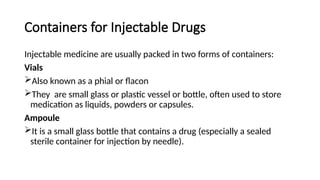
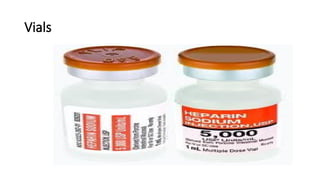
condition,understanding pharmacological properties of the drug,and
potential risks and benefits.
7.
1. The Pharmacyand Poisons Act: Chapter
244 of the Laws of Kenya, 1989
This act makes better provision of:
Control of professional pharmacies
Trade in drugs and poisons
Defines many terminologies in pharmacy which include:
a) Drug: Any Medicine preparation or therapeutic substance
b) Poison: Any drug included in the poison list
8.
CONTINUATION...
c)Advertisement: Any announcementmade orally or by means of
producing or transmitting light or sound
d) Authorized practitioner/seller of poison: A person lawfully carrying
out business or pharmacy in accordance with provision of Act 244.
Must be a registered pharmacist where certificate of registration is
displayed
e) Dispensing: Supplying medicine or poison in accordance with
prescription
9.
CONT...
Legal Requirements ofa Prescription
Prescription should be in written form
Should have the name and address of the person taking the drug
Should be signed and dated by the person who wrote it
Should be complete, specifying the medicine and dosage to be supplied
If prepared by a dentist, should have words for dental treatment e.g. “for
dental use only”
Should have the name and address of the person to whom the drug will
be delivered
10.
CONT...
2. The NarcoticDrugs and Psychotropic Substances (Control) Act, 1994 [Dangerous
Drugs Act (DDA)]
This is an Act of Parliament to make provision with respect to the control of the
possession of, and trafficking in, narcotic drugs and psychotropic substances and
cultivation of certain plants, to provide for forfeiture of property derived from, or used
in, illicit traffic narcotic drugs and psychotropic substances and for connected purposes.
Psychotropic medication include:
Narcotics
Antidepressants
Stimulants
Hallucinogens
11.
CONT...
It classifies thedrugs based on their potential for abuse and dependence:
Schedule I
They have the highest potential for abuse
There is no acceptable medical use. They are not kept in health facilities
e.g. Bhang, Cocaine, Heroine
Schedule II
They have a high potential for abuse
Have severe dependence e.g. Morphine, Pethidine
12.
CONT...
Schedule III
They havea lower potential for abuse than II
Have moderate dependence e.g. sedatives, stimulants
Schedule IV
They have a low potential for abuse
Have limited dependence e.g. ant – anxiety agents, non – narcotic analgesics
Schedule V
They have a limited potential for abuse
They are not kept under double lock and key e.g. codeine
13.
CONT...
Schedule III
They havea lower potential for abuse than II
Have moderate dependence e.g. sedatives, stimulants
Schedule IV
They have a low potential for abuse
Have limited dependence e.g. ant – anxiety agents, non – narcotic analgesics
Schedule V
They have a limited potential for abuse
They are not kept under double lock and key e.g. codeine
14.
CONT...
Controlled drugs mustbe stored in a double lock and key (locked
container or cupboard within a locked cupboard)
These cupboards should not be used for any other purposes (for
example, storing valuables)
Details of doses given to each patient must be recorded in cardex,
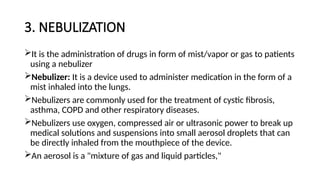
together with the signature of the nurse giving the dose and the
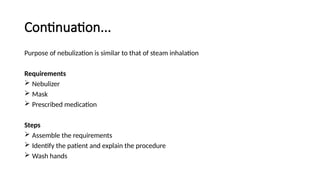
person checking it
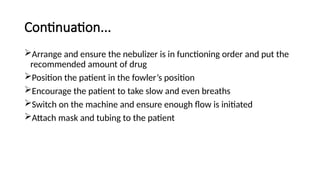
Any drug wasted must be recorded and signed for
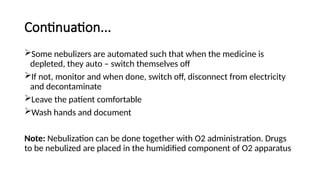
15.
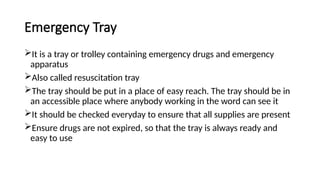
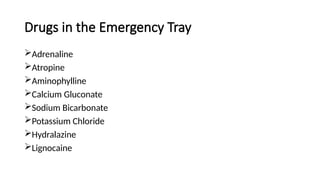
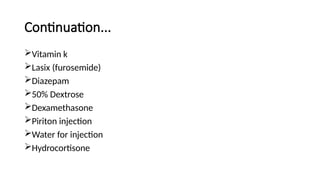
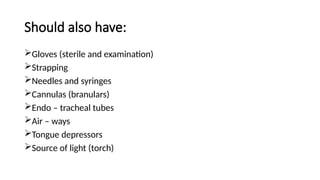
CONT...
Controlled drug booksmust be kept for two years following the last
entry date
All dangerous drugs are automatically contained in Schedule 1
At the end of every shift, they should be counted and recorded. This
should be done by incoming nurse
Only a registered licensed nurse or pharmacist should be allowed to
add new stock to the inventory
16.
CONT...
Procedure for AdministeringControlled Drugs
Requirements
They are similar to other drugs but have additions like the controlled drugs
register, keys for DDA cupboard and 2 nurses
Steps
Arrange equipment on a trolley
Wash hands together with the assistant
Both nurses read the prescription as they confirm doctor’s signature, date,
time, dosage and route of administration
17.
CONT...
Open the cupboard,DDA cupboard/container and remove the DDA
register
Remove all stock of drugs and count, counterchecking with the stock
book
Get the dose to be given and place on a tray and enter remaining
stock in the register
Enter the patient’s details in the register but don’t sign
Lock the DDA cupboard
Prepare the drug accordingly
18.
CONT...
Call the patientand countercheck patient’s details including the dose
and time
Administer the drug and leave the patient comfortable
Thank the patient
Walk back to the DDA cupboard, record time and dose given and sign
The witness (2nd
nurse) counter signs
Record the patient’s notes and cardex then return the DDA register
and lock the cupboard
19.
CONT...
ANTIBIOTICS
Good stock recordingof antibiotics is done because:
They are expensive
When misused they cause resistance
The following guidelines should therefore be adhered to:
After administration of antibiotics, the nurse should enter the details of the patient in the
antibiotics book
Enter all antibiotics used during a session should be recorded in the antibiotics book
The antibiotics book should be balanced
All borrowed and received antibiotics should be entered in the book and any missing drugs
should be recorded
20.
LOCAL REGULATIONS.
Local regulationsare devised by individual hospitals and are meant to
protect their staff, particularly the student nurse during training:
Any dangerous drugs should be checked by a registered/enrolled
nurse
Only a small quantity should be kept in the ward
The stock should be checked regularly
The drug keys should be on the person who is in charge of the ward
or the deputy
21.
CONT...
Ampoules containing differentdrugs should be stored separately
Drugs should not be transferred from one bottle to another
Out of date drugs and those brought in by patients should be
returned immediately to the dispensary
Drug bottles must be labeled by a pharmacist
22.
DRUG STANDARDS.
They arethe yardsticks by which drug preparations are judged.
Medicines vary in their purity, strength, bioavailability, efficacy and
safety or toxicity.
Purity
Standards of purity, rarely require that the substance in question be
100% drug chemical. They do, however, specify the type and
concentration of extraneous substances allowed to be present in the
drug product.
23.
CONT...
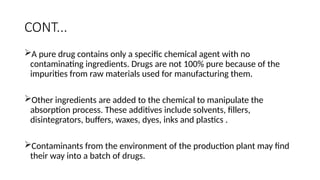
A pure drugcontains only a specific chemical agent with no
contaminating ingredients. Drugs are not 100% pure because of the
impurities from raw materials used for manufacturing them.
Other ingredients are added to the chemical to manipulate the
absorption process. These additives include solvents, fillers,
disintegrators, buffers, waxes, dyes, inks and plastics .
Contaminants from the environment of the production plant may find
their way into a batch of drugs.
24.
CONT...
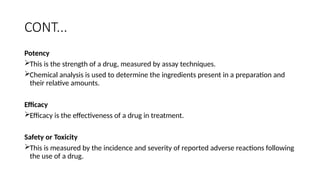
Potency
This is thestrength of a drug, measured by assay techniques.
Chemical analysis is used to determine the ingredients present in a preparation and
their relative amounts.
Efficacy
Efficacy is the effectiveness of a drug in treatment.
Safety or Toxicity
This is measured by the incidence and severity of reported adverse reactions following
the use of a drug.
25.
CONT...
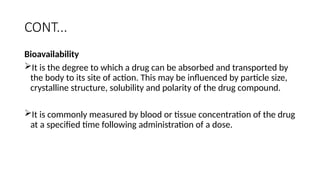
Bioavailability
It is thedegree to which a drug can be absorbed and transported by
the body to its site of action. This may be influenced by particle size,
crystalline structure, solubility and polarity of the drug compound.
It is commonly measured by blood or tissue concentration of the drug
at a specified time following administration of a dose.
26.
DRUGS NAME/NOMENCLATURE
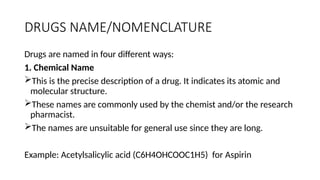
Drugs arenamed in four different ways:
1. Chemical Name
This is the precise description of a drug. It indicates its atomic and
molecular structure.
These names are commonly used by the chemist and/or the research
pharmacist.
The names are unsuitable for general use since they are long.
Example: Acetylsalicylic acid (C6H4OHCOOC1H5) for Aspirin
27.
CONT...
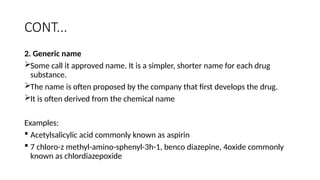
2. Generic name
Somecall it approved name. It is a simpler, shorter name for each drug
substance.
The name is often proposed by the company that first develops the drug.
It is often derived from the chemical name
Examples:
Acetylsalicylic acid commonly known as aspirin
7 chloro-z methyl-amino-sphenyl-3h-1, benco diazepine, 4oxide commonly
known as chlordiazepoxide
28.
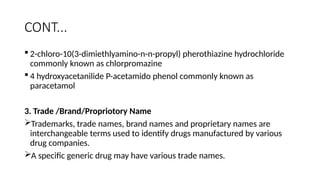
CONT...
2-chloro-10(3-dimiethlyamino-n-n-propyl) pherothiazinehydrochloride
commonly known as chlorpromazine
4 hydroxyacetanilide P-acetamido phenol commonly known as
paracetamol
3. Trade /Brand/Propriotory Name
Trademarks, trade names, brand names and proprietary names are
interchangeable terms used to identify drugs manufactured by various
drug companies.
A specific generic drug may have various trade names.
29.
CONT...
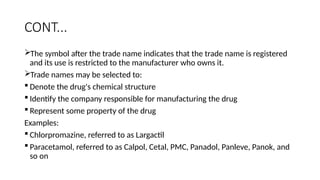
The symbol afterthe trade name indicates that the trade name is registered
and its use is restricted to the manufacturer who owns it.
Trade names may be selected to:
Denote the drug's chemical structure
Identify the company responsible for manufacturing the drug
Represent some property of the drug
Examples:
Chlorpromazine, referred to as Largactil
Paracetamol, referred to as Calpol, Cetal, PMC, Panadol, Panleve, Panok, and
so on
30.
CONT...
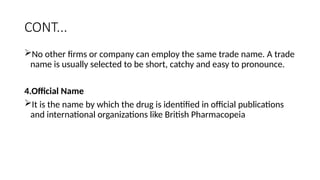
No other firmsor company can employ the same trade name. A trade
name is usually selected to be short, catchy and easy to pronounce.
4.Official Name
It is the name by which the drug is identified in official publications
and international organizations like British Pharmacopeia
31.
CLASSIFICATION OF DRUGS
Drugsmay be classified in many ways.
Drugs with similar characteristics are often grouped together in
families
One substance may belong to more than one family depending on
the classification used for instance, aspirin, which is an analgesic,
antipyretic, and anti-inflammatory drug.
A drug may be designated by:
32.
CONT...
A drug maybe designated by:
a) Chemical derivation, e.g. heavy metals, xanthines, steroids, phenothiazines, barbiturates
b) Mechanism of action, e.g. central nervous system depressant, anti-cholinergic, anti-
inflammatory, antacid.
c) System they act on, e.g. cardiac, respiratory
d) Physiologic action, e.g. diuretic
e) Therapeutic effect, e.g. anticonvulsant, analgesic
33.
DRUG EFFECTS
1. DesiredTherapeutic Effects
The desired therapeutic effects should indicate the mechanism of
action of the drug.
For example, an analgesic is for pain relief, accomplished by central
nervous system depression inhibition of inflammation.
You must therefore understand how medication affects body function
in order to make sound judgments about which medication to use
34.
CONT...
2. Side Effects
Theyare physiological effects exerted by the chemical that are not related
to the desired therapeutic effect.
Note: All drugs have side effects. The number and range of side effects
may indicate the relative toxicity of a given medication.
Adverse reactions include any undesirable effect apparent in the recipient.
They may be opposite to the desired effect, allergic or extraneous.
Idiosyncratic are unusual effects seen in some patients due to individual
differences. They refers to the tendency within the individual to react
unfavorably to certain substances.
35.
CONT...
3. Toxic Effects
Theyare excessive drug effects. They tend to be exaggerations of therapeutic
or side effects. For example, toxicity from a central nervous system
depressant used for sedation may induce a coma.
The margin of safety between therapeutic and toxic doses varies greatly.
Note: Any substance that is physiologically potent enough to produce
therapeutic effects is potentially harmful to the body at certain circumstances.
Toxic symptoms could appear in clients receiving appropriate dosages. This is
because drug response, metabolism and excretion vary from person to person
36.
CONT...
4. Contraindications
These arereasons that make it inadvisable to prescribe a particular drug
They are conditions or symptoms that alert you to the potential dangers of the
drug.
You MUST always decline to administer any drug that you believe will cause harm
to the client. In such cases, let the physician administer the drug personally.
In such a situation, there are legal implications and this is the reason for the
decision not to administer the drug.
37.
FACTORS THAT INFLUENCEDOSAGES
The usual dosage must be included for each method of administration.
Dosages require adjustment due to certain factors:
a) Body mass: Drug dosages are mostly calculated as per kilo of body
weight.
b) Nutritional status
c) Pathologic condition
d) Patients' ability to metabolize and excrete the drug
e) Age: The extremes of age that is, children and adults over 60 years
require smaller doses than the normal adult dose.
38.
CONT...
f) Route: Theroute by which the drug may be given varies and the drug
dosage may also vary according to the route of administration.
g) Assimilation: The assimilation of drugs given orally is fairly slow, thus
the oral dose is large, whereas any drug injected into the blood stream
acts immediately and dosage is proportionately smaller.
Note: When you notice any unusual dosages, you should verify and
clarify with the doctor and refuse to carry out an order that, in your
judgment, will result in harm to the patient.
39.
FACTORS THAT INFLUENCEDOSAGE OF
DRUGS.
Drugs interactions- Concurrent use of other medications can alter
drug’s metabolism and effectiveness thus leading to dosage
adjustment.
Route of administration --eg oral , intravenous, topical affects how
quickly and effectively the drug acts in the body.
Type of disease—Certain conditions like kidney or liver failure can
impact drug clearance and may require adjustments on dosages
Patient’s characteristics--weight, age, sex and overall health can
affect metabolism of drugs.
40.
CONT..
Pharmaceutics---This refers tothe process of absorption, distribution,
metabolism and excretion of drugs once they are taken. This can vary
between individuals impacting the effective dose.
Drug formulation--eg tablets, injection, syrup can affect bio availability
(use and storage of drug once in the blood stream) and overall
effectiveness.
Environmental factors--Lifestyle factors like diet, exercises and
exposure to toxins can influence drug metabolism and action.
Genetic factors---Genetic variations can influence drug metabolisms
(pharmacological) and efficacy leading to individualized dosing.
41.
Elimination
The efficiency ofelimination affects the efficacy and potential for
toxicity of a given medication.
Many drugs are deactivated by microsomal enzymes in the liver and
excreted by the kidneys.
Always adhere to procedures that promote accurate identification of
drugs before administering them to patients.
42.
Route of DrugAdministration
The route of administration is dependent on the time at which the
effect is required.
It is also dependent upon the method most suitable to the drug
prescribed.
There are two broad categories of routes:
43.
Continuation...
1. Enteral Route:The desired effect is systemic (non-local), drug is given
via the digestive tract. This includes Oral, buccal, sublingual, GIT and Rectal
routes. Where possible, oral administration is preferred.
2. Parenteral Route (Injection): The desired effect is systemic, drug is given
by routes other than the digestive tract. This can be done in several ways
including intra – dermally (dermis), subcutaneously (subcutaneous layer),
intramuscularly (muscle), intravenously (vein), intra – arterial (artery), intra
– osseous (bone marrow), intra – cerebral (brain parenchyma), intra –
cerebroventricular (cerebral ventricular system) and intra – thecal (spinal)
Continuation...
Oral Route:
The medicationis administered through the mouth and swallowed in tablet,
liquid or powder form.
They are commonly referred to as per oral (PO).
Advantages
Convenient - can be self- administered, pain free, easy to take
Absorption - takes place along the whole length of the GI tract
Cheap - compared to most other parenteral route
Most preferred route
46.
Continuation...
Disadvantages
Destruction of drugsby gastric acid and digestive juices
Effect too slow for emergencies
Unpleasant taste of some drugs
Unable to use in unconscious patient
Can irritate the mouth or cause discoloration
Not appropriate for patients with oral thrush
Not appropriate for vomiting patient
47.
Continuation...
Sublingual Route:
The medicationis placed under the tongue where it is allowed to dissolve on its own
without chewing till it is absorbed. e.g. adalat (antihypertensive drug)
Advantages
Rapid absorption
Drug stability
Avoid first-pass effect
Disadvantages
Inconvenient
Small doses
Unpleasant taste of some drugs
48.
Continuation...
Buccal Route:
The drugis placed between the gums and the cheek until it is
dissolves and gets absorbed.
Patient is instructed not to chew or swallow. e.g. miconazole
49.
GIT Route:
Drugs aregiven via tubes inserted from external into lower GIT:
Nose – stomach: Nasogastric tube (NGT)
Nose – jejunum: Nasojejuno tube
Opening directly to the stomach: Gastrostomy tube
The medication should be in solid or liquid form or powder form and
mixed with liquid
If in tablet form, obtain physician’s order before crushing. Never
crush coated drugs.
50.
Rectal Route:
Medications includesuppositories or enema.
Suppositories should be kept well and lubricated before insertion to
reduce discomfort
Suitable for unconscious patients and children and for nauseous or
vomiting patients
Easy to terminate exposure
Absorption may be variable
Good for drugs affecting the bowel such as laxatives
Irritating drugs contraindicated
51.
PARENTERAL ROUTE
Advantages
More effectivesince they by pass metabolism
Suitable for drugs that can be digested by digestive enzymes, not
absorbed by digestive system or those that are too irritant (anti –
cancer)
Dosage is more accurate
The therapeutic effect is fast: 15–30 seconds for IV, 3–5 minutes for
IM and subcutaneous
52.
Continuation...
100% bioavailability
One injectioncan be formulated to last days or even months, e.g.,
Depo-Provera, a birth control shot that works for three months
IV can deliver continuous medication, e.g., morphine for patients in
continuous pain, or saline drip for people needing fluids
Suitable for all patients even the unconscious, uncooperative and
critically ill
53.
Disadvantages
Painful
Increased risk ofinfection
Require skills to administer hence patients are not able to self-
administer
Onset of action is quick, facilitating a greater risk of addiction and
overdose when injecting drugs of abuse
Belonephobia, the fear of needles and injection.
54.
Continuation...
If needles areshared, there is risk of HIV and other infectious
diseases
It is the most dangerous route of administration because it bypasses
most of the body's natural defenses, exposing the user to health
problems such as hepatitis, abscesses, infections, and undissolved
particles or additives/contaminants
If not done properly, potentially fatal air boluses (bubbles) can occur.
Need for strict asepsis
55.
Containers for InjectableDrugs
Injectable medicine are usually packed in two forms of containers:
Vials
Also known as a phial or flacon
They are small glass or plastic vessel or bottle, often used to store
medication as liquids, powders or capsules.
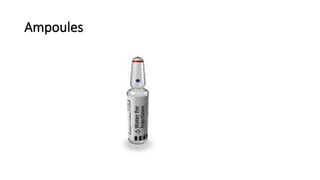
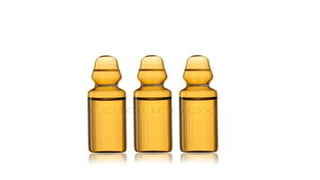
Ampoule
It is a small glass bottle that contains a drug (especially a sealed
sterile container for injection by needle).
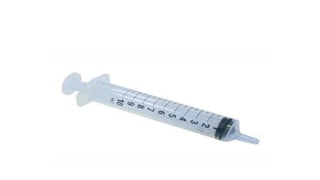
SYRINGES
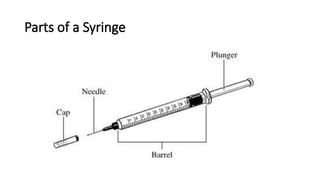
A syringe isa simple pump consisting of a plunger that fits tightly in a
tube.
The plunger can be pulled and pushed along inside a cylindrical tube
(called a barrel), allowing the syringe to take in and expel a liquid or
gas through an orifice at the open end of the tube.
The open end of the syringe may be fitted with a hypodermic needle,
a nozzle, or tubing to help direct the flow into and out of the barrel.
Syringes are often used to administer injections, insert intravenous
drugs into the bloodstream and to draw blood or other tissue fluid
62.
Continuation...
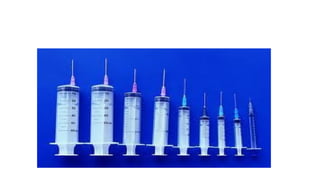
They are availablein different sizes
They consist of three parts: Barrel, Plunger and Tip
There are special syringes
Solo shots: They withdraw only a specific amount and have automatic
closure once the amount has been reached
Insulin syringe: They are used specifically to administer insulin and are
calibrated in units
Cartilages: These contain premeasured type of medication
BCG syringe: Used to administer BCG (Bacillus Calmette–Guérin) vaccine
and are calibrated in smaller units
NEEDLES
It has threeparts:
1. Needle hilt: The part that attaches to the tip of the syringe
2. Shaft: The elongated region
3. Bevel: The extreme end with visible lumen
The size is referred to as gauge. The smaller the number of gauge, the
larger the lumen
67.
Continuation...
Other routes ofdrug administration include:
a) Local or Topical Route
Drugs are used locally on the skin (epicutaneous) or in the eye, ear,
nose or vagina. Substance is applied directly where its action is desired
1. Vaginal Route:
Medications administered by this route are pessaries or creams
This involves use of an applicator to place or position the drug in the
vagina
The medication melts and it is absorbed via vaginal mucosa
68.
Continuation...
2. Skin/transdermal/dermal
Medications areapplied on the skin by painting, rubbing, dusting,
applying with a moist dressing, by use of patches, soaking a body in
solution or giving medicated bath
Those drugs mostly act locally hence have less or no systemic effect
3. Ocular/ Eye/ Ophthalmic Medication
They are in either semi – solid or liquid form
69.
Principles of OphthalmicAdministration
Never put any medication directly to the pupil. It is very sensitive and
it can be irritated and cause pain to the patient
Never allow patients to share medicine
Use medication only for the affected eye
When applying on both eyes, take care not to spread infection
Applicator should not touch any part of the eye
70.
3. Otic/ EarAdministration:
Otic dosage forms are applied to the ear canal and are used for the
treatment of infection, inflammation and/or pain.
They may be formulated as aqueous or non-aqueous solutions and
contain one (or more than one) category of therapeutic agent, e.g.
local anesthetics (benzocaine), steroids (prednisolone sodium
phosphate, hydrocortisone), antimicrobial agents ( chloramphenicol),
in addition to agents that soften ear wax (e.g. carbamide
peroxide).Can be given from a squeeze bottle or a dropper
Never insert the tip of the dropper into the inner ear or touch any
part of the ear with it
71.
4. Nasal Administration:
Itprovides a rapid systemic delivery of therapeutic agents (whilst
avoiding first-pass metabolism).
Examples include the treatment of migraine (ergot alkaloids,
sumatriptin), diabetes insipidus (desmopressin), prostate
cancer/endometriosis (gonadotrophin analogues) and smoking
cessation (nicotine).
72.
b) Inhalation (PulmonaryRoute)
Drugs are gaseous and volatile agents and aerosols inhaled as vapor or sprays
e.g. asthma medications
Advantages
Rapid onset of action due to rapid access to circulation. Fastest method, 7-
10 seconds for the drug to reach the brain
It allows the dose to be controlled more effectively
User can titrate (regulate the amount of drug they are receiving)
Disadvantages
Its a slower route of action, it has to be taken into the lungs, and then
travels to the systemic circulation from there.
73.
Forms of Drugs
Broadlyclassified to solids, liquids, semi – solids and gaseous form
SOLIDS
Tablet: They are usually cylindrical in shape and are used for oral
administration
Caplets: A tablet in oval shape
74.
Continuation...
Capsule: Medication enclosedin a gelatinous material/ shell. Can be
powder form, gel etc. It is colored to aid in identification. They
dissolve in GIT
Lozanges: They melt in the mouth e.g. vicks kingo
Pill: Used to refer to capsule, tablets and caplets though the real pill
is round in shape
75.
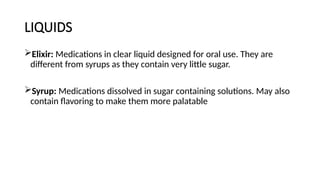
LIQUIDS
Elixir: Medications inclear liquid designed for oral use. They are
different from syrups as they contain very little sugar.
Syrup: Medications dissolved in sugar containing solutions. May also
contain flavoring to make them more palatable
76.
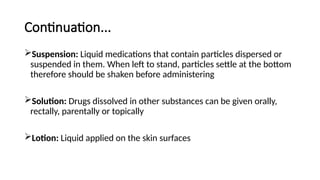
Continuation...
Suspension: Liquid medicationsthat contain particles dispersed or
suspended in them. When left to stand, particles settle at the bottom
therefore should be shaken before administering
Solution: Drugs dissolved in other substances can be given orally,
rectally, parentally or topically
Lotion: Liquid applied on the skin surfaces
77.
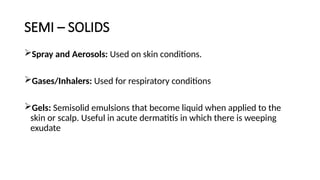
SEMI – SOLIDS
Sprayand Aerosols: Used on skin conditions.
Gases/Inhalers: Used for respiratory conditions
Gels: Semisolid emulsions that become liquid when applied to the
skin or scalp. Useful in acute dermatitis in which there is weeping
exudate
78.
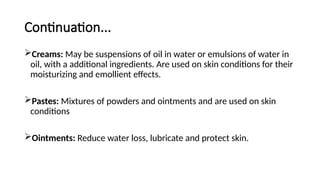
Continuation...
Creams: May besuspensions of oil in water or emulsions of water in
oil, with a additional ingredients. Are used on skin conditions for their
moisturizing and emollient effects.
Pastes: Mixtures of powders and ointments and are used on skin
conditions
Ointments: Reduce water loss, lubricate and protect skin.
79.
Drug Administration
Administration involvesall activities related to safe drug use which are
key nursing responsibilities include:
Assessing the risk to a patient of a new drug order
Delivering the drug dose to the proper body tissues
Assessing the patient's response to drug therapy
Treatment of adverse reactions to drugs
Consultation with the doctor about adjusting the prescribed regimen
Educating the patient about the proper use of drug substances
80.
Continuation...
The nurse administeringthe drug should know the name, dose,
preparation, route of administration, side effects and therapeutic
effects of the drug
She should know the condition of the patient and the suitability of
that medication at that given time
81.
GUIDELINES FOR SAFEDRUG USE
Pay attention during the procedure
Read the label carefully and compare with the treatment sheet
Appropriate container should be used to measure medication
Always chart drugs immediately after giving, never before
Never give drugs from unlabeled containers
Be familiar with commonly used abbreviations
Observe five (5) rights of drug administration
82.
Five Rights (5Rs)of Drug Administration
Accuracy in drug administration depends on five factors:
The right drug
The right dose
The right patient
The right route and the right time
83.
1. THE RIGHTDRUG
To ensure that you have used the right drug, you must check and double
check the package label and the cardex and the treatment sheet.
You MUST prepare the medications you give yourself and do not
administer drugs prepared by someone else.
You should recheck the order, the label and the treatment sheet if a
client questions the medication. A mentally alert client will notice a
change in medication or mention problems that have arisen from the
medication.
Do not ignore statements or questions regarding medication from a
client.
84.
Precautions when administeringmedicine
All doses are best prepared from the original container
Medicines should not be prepared in the dark. Good illumination is
necessary for positive identification
Caution clients about the use of non labeled pillboxes
Do not to mix supplies of several tablets or capsule in a single container
Make sure you check medication labels when removed from the shelf,
before pouring or measuring and when returning to the shelf
Note: The person who administers the medication is the one held
responsible.
85.
2. THE RIGHTPATIENT/CLIENT
Ensure that the right client receives the right drug.
Drugs should only be given to the person for whom they are prescribed or
recommended for.
If the patient is wearing an identification bracelet, check the client's name
on their identification bracelet with the name on the treatment sheet.
If the patient is conscious and sane, simply call out the patient's name.
This check is essential to avoid errors.
Stay there until the patient swallows the drug if oral to ensure they do not
default
Never leave drug trolleys un - attended
86.
3. THE RIGHTDOSE
To obtain the right dose, you must carefully measure the medicine.
Use the proper technique for pouring solid drugs such as capsules
and tablets in order to minimize handling of the drugs.
Pour the medication into the container's cap, and then transfer the
required number of units in the dose from the cap to the medication
cup/spoon.
If you require half of a tablet, a scored tablet may be cut into two
pieces with a knife edge/scalpel (small tablets) or folded in clean
paper and broken with the fingers (large tablets).
87.
Continuation...
Do not attemptto split non scored tablets or to divide the dose of a single
capsule.
When you split tablets, give the two halves in successive doses, so that any
deviation from the prescribed dose due to uneven breakage is leveled out as
quickly as possible.
Do not break all the tablets available and mix the halves.
Liquids should be measured in a container with a scale that provides a mark
for the required dose, for example, plastic or glass medicine measures or
spoons.
Note: If the dose ordered is not right for the patient, consult with the physician
before administering
88.
4. THE RIGHTTIME
Administer all drugs at the right time
A +/ -30 minutes allowance is acceptable
Be conversant with the hospital policy of drug administration
Note: Under normal circumstances the right time for drug administration
is not indicated by the doctor. The doctor only indicates the number of
times a day a drug is to be given. For example, the doctor might state:
The hourly interval between doses
The relation of the dose to the client's activity patterns, such as, before
or after meals, on rising or retiring or every 4 hours, 6 hours or 12 hours
89.
5. RIGHT ROUTE
Theright route must be used for drug delivery.
Most medicines are taken orally or by topical application.
Ensure that the client understands how the drug is to be taken.
Sublingual or chewable tablets should not be swallowed whole.
Crush oral drugs, if swallowing is difficult or if they are to be taken in
liquid form.
Demonstrate to the client procedures for application of topical drugs.
90.
Continuation...
Always check thedoctor's orders and the cardex or treatment sheet
to verify the medication route.
Alert the doctor if the route is not in accord with that which is
recommended for the drug preparation.
Note: Giving medication by the wrong route can cause death. The
person who administers the drug is held responsible.
91.
MEDICATION ERRORS
Medication errorscontinue to be a serious problem in many health
institutions despite the elaborate rituals used in administering drugs.
Errors are determined in relation to the five rights of correct
administration.
Common errors include a wrong drug, an incorrect dose, the wrong
patient, the wrong route used, drug given at the wrong time and the
incompatibility of conversion factors used in calculating doses.
92.
Continuation...
They may ariseat any step in the process from the physician's order
to the delivery of the dose to the patient.
Incase an Error occurs:
Report an error immediately it occurs. This helps to protect both the
patient and the nurse.
Fast reporting of medication errors means that emergency measures
can be taken and undesirable complications may be prevented.
93.
RECORDING AND PRESCRIBINGOF DRUG
Medical Instructions should be written by the doctor, except in areas
where there is none like in health centers or dispensaries.
Telephone Medical Instructions and verbal Medical Instructions are
ONLY permitted under certain circumstances e.g. if the physician is
scrubbed up for a surgical procedure, the Medical Instructions may be
written by a nurse, provided it is countersigned by the doctor as soon
as possible.
If any part of the order appears inappropriate, contact the doctor to
correct any mistakes that may have been made.
94.
Continuation...
Drug orders shouldalways include:
The name of the patient
The name of the drug
The dose
The route of administration
The frequency or timing
Always ask the doctor to verify the route desired if no route has been specified.
The handwriting of many doctors may not legible. If there is doubt about any
element of a drug order, oral verification must be sought from the doctor
involved.
95.
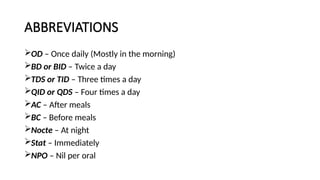
ABBREVIATIONS
OD – Oncedaily (Mostly in the morning)
BD or BID – Twice a day
TDS or TID – Three times a day
QID or QDS – Four times a day
AC – After meals
BC – Before meals
Nocte – At night
Stat – Immediately
NPO – Nil per oral
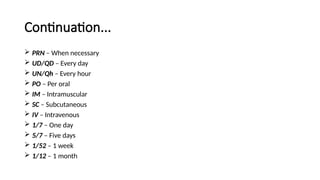
96.
Continuation...
PRN –When necessary
UD/QD – Every day
UN/Qh – Every hour
PO – Per oral
IM – Intramuscular
SC – Subcutaneous
IV – Intravenous
1/7 – One day
5/7 – Five days
1/52 – 1 week
1/12 – 1 month
97.
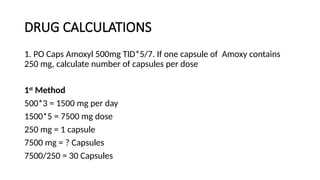
DRUG CALCULATIONS
1. POCaps Amoxyl 500mg TID*5/7. If one capsule of Amoxy contains
250 mg, calculate number of capsules per dose
1st
Method
500*3 = 1500 mg per day
1500*5 = 7500 mg dose
250 mg = 1 capsule
7500 mg = ? Capsules
7500/250 = 30 Capsules
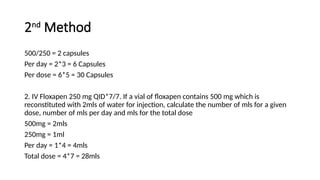
98.
2nd
Method
500/250 = 2capsules
Per day = 2*3 = 6 Capsules
Per dose = 6*5 = 30 Capsules
2. IV Floxapen 250 mg QID*7/7. If a vial of floxapen contains 500 mg which is
reconstituted with 2mls of water for injection, calculate the number of mls for a given
dose, number of mls per day and mls for the total dose
500mg = 2mls
250mg = 1ml
Per day = 1*4 = 4mls
Total dose = 4*7 = 28mls
Steps
Counter – checkthe medicine with the treatment sheet
Identify the patient and explain the procedure to the patient
Wash hands
Put on gloves and goggles if necessary
Clean eyes using cotton balls one for each eye
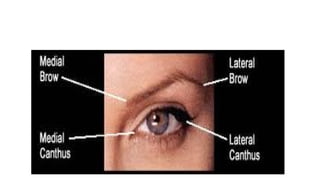
Wipe from medial canthus to the lateral canthus to avoid infection of
the lacrimal ducts
If the eyes have dried secretions, place a damp cloth/ cotton ball for a
few minutes to loosen them
101.
Continuation...
Ask the patientto lie in supine position or tilt the head if seated. This
position facilitates instillation of medication
With tissue / wash towel resting below the lower lid, gently press down
the bony orbit retracting the lower lid using the thumb or forefinger. This
exposes the conjunctiva sac allowing proper administration.
Giving Eye Drops
Check the bottle to ensure it is the right medication for the patient
Ask the patient to look up, this reduces blinking reflexes and lifts cornea
away
102.
Continuation...
Instill the prescribeddrops into the center of the inverted lower lid,
then press gently in the inner canthus. This blocks the lacrimal glands
hence protects the drug from entering into it.
Instruct the patient to close the eyes and apply gentle pressure on
the eyelids. This helps to distribute the medicine
Wipe off any excess medication using cotton wool
Remove gloves and wash hands
Return medication to their proper store then document
103.
Application of Ointment
Beforeadministration wipe the tube with a clean cotton ball and
discard some little ointment. This preserves/ensures sterility of the
drug
Apply ointment inside the lower lid from inner to outer canthers
Do not touch the eye with the tip
Ask the patient to blink several times to aid in distribution of the
medicine
Use cotton ball or tissue to wipe away any excess medication
Continuation...
Put on gloves
Askthe patient to lie on the side with the affected ear uppermost
Remove excess drainage with a dry wipe but if there are dry
secretions, use a damp warm wash cloth
Expose the ear canal by adjusting the ear lobes. For adults pull ear
lobes back and out, for children straighten back and for infants
straighten down and back
Hold the dropper above the opening of the external auditory meatus
107.
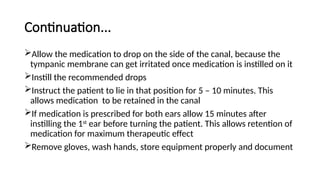
Continuation...
Allow the medicationto drop on the side of the canal, because the
tympanic membrane can get irritated once medication is instilled on it
Instill the recommended drops
Instruct the patient to lie in that position for 5 – 10 minutes. This
allows medication to be retained in the canal
If medication is prescribed for both ears allow 15 minutes after
instilling the 1st
ear before turning the patient. This allows retention of
medication for maximum therapeutic effect
Remove gloves, wash hands, store equipment properly and document
108.
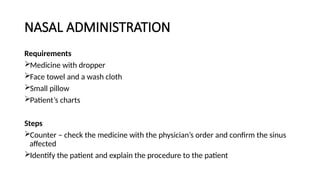
NASAL ADMINISTRATION
Requirements
Medicine withdropper
Face towel and a wash cloth
Small pillow
Patient’s charts
Steps
Counter – check the medicine with the physician’s order and confirm the sinus
affected
Identify the patient and explain the procedure to the patient
109.
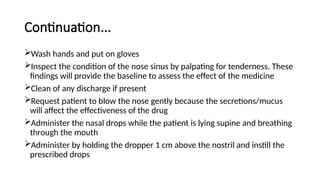
Continuation...
Wash hands andput on gloves
Inspect the condition of the nose sinus by palpating for tenderness. These
findings will provide the baseline to assess the effect of the medicine
Clean of any discharge if present
Request patient to blow the nose gently because the secretions/mucus
will affect the effectiveness of the drug
Administer the nasal drops while the patient is lying supine and breathing
through the mouth
Administer by holding the dropper 1 cm above the nostril and instill the
prescribed drops
110.
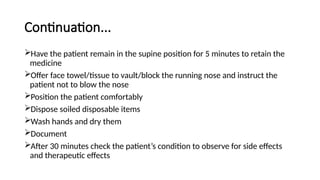
Continuation...
Have the patientremain in the supine position for 5 minutes to retain the
medicine
Offer face towel/tissue to vault/block the running nose and instruct the
patient not to blow the nose
Position the patient comfortably
Dispose soiled disposable items
Wash hands and dry them
Document
After 30 minutes check the patient’s condition to observe for side effects
and therapeutic effects
111.
Storage and Handlingof Drugs
Guidelines
All drugs storage facilities should be lockable and should remain
locked while not in use
All medicine should have a clear label
Controlled drugs should be kept under double lock and key
Drugs close to expiry should be used first
New stock should never be mixed with old stock
All medicine should be kept in accordance with the manufacturers’
instructions
112.
PRESERVATION
Drug substances requirecareful storage and handling to maintain their
safety and potency.
All drugs must be kept in a special place and secured from access by
unauthorized persons.
Storage areas should be kept clean, orderly, cool and dry. This is because
chemical deterioration is enhanced by heat, moisture and light. Water
dissolves solid drugs and heat melts the waxy bases of suppositories and
ointment.
Protect sterile substances from bacterial contamination. Inspect stocks
periodically, and discard any drugs whose recommended shelf life has
expired or that have changed in appearance.
113.
CONTAINERS
Drugs are bestkept in their original containers. Note that copying
labeling may result in transcription errors. Use original containers that
protect their contents e.g. light sensitive compounds are packed in
amber bottles or in containers that filter out much of the harmful
radiation.
Do not transfer sterile substances from container to container as it
increases the probability of contamination. Protect the label from
soiling to ensure it remains legible.
Note: Safe drug use requires that medicines have clear, accurate labels
at all times.
114.
DISPENSING /SUPPLY
There arethree systems
1. Stock Supply
Nurse orders large number quantity of medication and keeps them in the ward in a
drug cup – board.
An inventory book is kept for this medication
It is ideal for drugs that are used often and for emergency drugs
2. Self – administration system
The drug is kept by the patient who may be instructed on how to take or the nurse
administers them
This system is used only under physician’s prescription
115.
Continuation...
3. Unit dose
Theward receives only a 24 hour dose for short – term medications,
for a few days or long – term medication
Drugs are issued to a specific patient hence bear the patient’s name
116.
Drug Interactions
This iswhen an interactant chemical modifies the therapeutic results
that are anticipated with a drug. The interactant may be:
Another drug
Some combination of drugs
Natural or artificial chemical components of the diet
Pollutant chemicals from the environment
Endogenous body chemical
Chemicals used for diagnostic laboratory tests
117.
Continuation...
Chances of adrug interaction increase with the number of drugs the
patient is taking or when the patient consults more than one
physician and a variety of medications are prescribed.
Drug interactions are varied. They may be beneficial or detrimental,
and may vary from person to person.
They may be of major clinical significance or of no clinical
significance.
They may affect absorption, distribution metabolism or excretion of
drugs.
118.
Drug Reactions
ADVERSE REACTIONS
Adversereactions to drugs vary in the length of time to develop.
Some become apparent immediately, others appear weeks or months
later.
They may range from mild to catastrophic in severity.
They can affect any tissue or organ.
119.
TOXIC REACTIONS
Note: Anyphysiologically active drug has the potential to cause an
undesirable reaction that may induce illness in the recipient.
Hence there is no useful drug that is completely devoid of toxic
potential.
120.
ALLERGIC REACTIONS
They arethe result of the body's immunologic response to a drug
following previous exposure to that same drug.
Allergic reactions do not occur during the first exposure to a drug.
Account for up to 10% of all drug reactions.
May be triggered by the drug in its unchanged form, by a drug
metabolic, or by inert ingredients used in drug manufacture.
121.
Continuation...
IDIOSYNCRATIC REACTIONS
They aredefined as genetically determined, unexpected responses to
a drug.
The response may take the form of extreme sensitivity to low doses
or extreme insensitivity to high doses to the drug.
CHAIN REACTIONS
Medications are often added to a regimen to control side effects of
other drugs.
This can initiate a chain reaction
122.
Continuation...
CUMULATIVE REACTIONS
Drugs accumulatein the body whenever the dosage exceeds the amount the body
can eliminate through metabolism or excretion.
This can result to reaction
TOLERANCE AND DEPENDENCE
Habitual use of drugs may create a tolerance to the drug in use, as well as other
related drugs.
This can also produce physical dependence.
The dependent individual will develop signs and symptoms of illness when the drug
is withdrawn..
123.
DRUGS SIDE EFFECTS
Side effects are also referred to as adverse effects.
Side effects are unintended and undesired reactions to medications.
They occur alongside therapeutic effects of a drug.
They are usually manageable and not severely harmful.
They vary in severity and type and type depending on the drug,
dosage and individual patient factors.
They are not life threatening .
It may not require discontinuation of medication but can affect
quality of life.
124.
COMMON SIDE EFFECTS
Gastrointestinal system; nausea, vomiting, diarrhoea, constipation, dry
mouth etc
Central nervous system; dizziness, drowsiness, headaches, agitation,
other drugs can cause sedation or cognitive impairment.
Skin reactions; rashes, itching, o photo sensitivity (sensitivity to
sunlight) can occur with certain medications
Respiratory issues; some drugs may cause shortness of breath, or
changes in respiratory rates.
Cardiovascular effects; Some drugs can affect heart rate or blood
pressure leading to palpitations, hypertension or hypo tension.
125.
COMMON SIDE EFFECTSOF DRUGS Cont....
Hormonal effects; Some drugs can lead to weight gain or loss, mood
changes or changes in libido especially family planning commodities.
Allergic reactions;these may range from mild skin rashes to severe
anaphylaxis.
Liver and kidney effects;some drugs can cause elevated liver
enzymes,impaired kidney functions that may require close monitoring
and close adjustments.
Long term effects-these may develop with prolonged use like
dependency,tolerance or organ damage.
126.
ADVERSE REACTIONS;
Often referredto as Adverse Drug Reactions(ADRS) are harmful or
unintended responses to a medication that occur at normal doses.They
are serious risk to health and safety.
They may be unpredictable and at times can lead to serious
consequences eg severe allergic reaction(anaphylaxis),liver
damage.They may be life threatening.
ADRs can be severe,requiring immediate medical attention,lead to
hospitalization or result in lasting harm.
They may necessitate discontinuation of the drug.
127.
C0NTINUATION...
• While alladverse reactions can be considered as side effects not all
side effects,not all side effects are adverse reactions.
• It is important for patients to communicate and report any side
effects or adverse drug reactions to their HC provider for proper
management and safety.
• Anaphylaxis-triggered by peanuts ,free nuts,shellfish eggs,insect
stings,medications and latex.
• Wheezing,difficult breathing,swollen face,threat or tongue,rapid weak
pulse,skin reactions,nausea,vomiting,diarrhoea,dizziness,fainting.
128.
Inhalation
Is the actof breathing in
It is also used as a route of drug administration through which a
substance in the form of gas, vapor or powder is administered
Inhaler (puffer): A medical device used for delivering medication into
the body via the lungs. It is mainly used in the treatment of asthma
and Chronic Obstructive Pulmonary Disease (COPD)
129.
TYPES OF INHALERS
1.Metered-dose inhalers (MDI)
An inhaler that delivers precise and premeasured dose of medication
It is the most common type of inhaler.
The aerosolized medication is drawn into the lungs by continuing to
inhale deeply before holding the breath for 10 seconds to allow the
aerosol to settle onto the walls of the bronchial and other airways of
the lung.
130.
Continuation...
2. Dry powderinhalers (DPI)
Release a metered or device-measured dose of powdered medication
that is inhaled through a DPI device.
2. Nebulizers
They supply the medication as an aerosol created from an aqueous
formulation.
131.
MODES OF INHALATIONTHERAPY
1. STEAM INHALATION
Warm moist air is directed towards the mucous membranes of the upper
respiratory tract.
Purpose
To loosen a dry cough or congestion and secretions for easier expectoration
To relieves irritation and congestion.
To sooth the respiratory tract by reducing inflammation hence promoting
comfort
To deliver medication
To relieve bronchospasm
132.
Continuation...
Indications
Pneumonia
Asthma
Bronchitis
Requirements
A tray containing
Steam kettle
Jug with hot water
Thermometer
Safety pin for making a tent
A stool to place the kettle on
133.
Continuation...
Preparation
Assemble the equipment
Identifythe patient and explain the procedure
Position the patient comfortably and screen the bed
Wash your hands
Important considerations
Check inhalation frequently
Be careful to not burn patient
Be very careful when treating children
134.
Steps
Fill the kettlewith hot water to reach just below the spout and add
medication if desired. Medications like menthol and benzoin can be
added to give more relief or soothing effect
Connect the kettle to electricity if possible to keep the water boiling
Prepare a tent by draping the bed with bed sheets and by securing
them with a safety pin. Ensure there are no gaps. An umbrella can be
used.
Direct the kettle spout towards the tent
Provide the patient with a sputum bowl and encourage him/her to
cough and expectorate
135.
Continuation...
If a kettleis to be used without a tent, use a small room and ensure
the door and all windows are closed and have a thermometer kept in
the room
The steam can also be directed to the patient's mouth or nose via a
cone covering the spout of the kettle. This should last for 30-60
minutes, two or three times a day
Alternatively, a jug can be filled with hot water and covered with a
towel. The patient is then instructed to inhale through the towel
A basin of boiled water can be used instead of a jug/kettle for adults
136.
2. NELSON INHALER
Itis a special kettle which can be used to conduct steam inhalation
Requirements
A tray containing:
Nelson inhaler
2 towels
Gauze swabs
Water
Benzoin
Menthol
137.
Steps
Assemble the requirements
Identifythe patient and explain the procedure and wash your hands
Assist the patient to sit and position him/her comfortably
Fill the inhaler with hot water to just below the spout and cork firmly.
Benzoin or menthol can be added
Wrap gauze around the mouth piece and wrap the inhaler with 2
towels to insulate heat and prevent burning the patient
138.
Continuation...
A pillow canbe placed on the laps of the patient and the inhaler placed
on it. In such cases, the pillow should be covered with a small mackintosh
Instruct the patient to place lips at the mouth piece of the inhaler and to
inhale through the mouth and exhale through the nostrils
Continue until the water cools
Never leave the patient alone when using the nelson inhaler
When done, leave the patient comfortable. Give the patient a sputum
bowl
Clear, decontaminate and document
139.
3. NEBULIZATION
It isthe administration of drugs in form of mist/vapor or gas to patients
using a nebulizer
Nebulizer: It is a device used to administer medication in the form of a
mist inhaled into the lungs.
Nebulizers are commonly used for the treatment of cystic fibrosis,
asthma, COPD and other respiratory diseases.
Nebulizers use oxygen, compressed air or ultrasonic power to break up
medical solutions and suspensions into small aerosol droplets that can
be directly inhaled from the mouthpiece of the device.
An aerosol is a "mixture of gas and liquid particles,"
140.
Continuation...
Purpose of nebulizationis similar to that of steam inhalation
Requirements
Nebulizer
Mask
Prescribed medication
Steps
Assemble the requirements
Identify the patient and explain the procedure
Wash hands
141.
Continuation...
Arrange and ensurethe nebulizer is in functioning order and put the
recommended amount of drug
Position the patient in the fowler’s position
Encourage the patient to take slow and even breaths
Switch on the machine and ensure enough flow is initiated
Attach mask and tubing to the patient
142.
Continuation...
Some nebulizers areautomated such that when the medicine is
depleted, they auto – switch themselves off
If not, monitor and when done, switch off, disconnect from electricity
and decontaminate
Leave the patient comfortable
Wash hands and document
Note: Nebulization can be done together with O2 administration. Drugs
to be nebulized are placed in the humidified component of O2 apparatus
143.
Emergency Tray
It isa tray or trolley containing emergency drugs and emergency
apparatus
Also called resuscitation tray
The tray should be put in a place of easy reach. The tray should be in
an accessible place where anybody working in the word can see it
It should be checked everyday to ensure that all supplies are present
Ensure drugs are not expired, so that the tray is always ready and
easy to use
Should also have:
Gloves(sterile and examination)
Strapping
Needles and syringes
Cannulas (branulars)
Endo – tracheal tubes
Air – ways
Tongue depressors
Source of light (torch)
![CONT...
2. The Narcotic Drugs and Psychotropic Substances (Control) Act, 1994 [Dangerous
Drugs Act (DDA)]
This is an Act of Parliament to make provision with respect to the control of the
possession of, and trafficking in, narcotic drugs and psychotropic substances and
cultivation of certain plants, to provide for forfeiture of property derived from, or used
in, illicit traffic narcotic drugs and psychotropic substances and for connected purposes.
Psychotropic medication include:
Narcotics
Antidepressants
Stimulants
Hallucinogens](https://image.slidesharecdn.com/basicmedicationconcepts1-251204172107-8a7c0c07/85/BASIC-MEDICATION-CONCEPTS-1-pptx-lecture-10-320.jpg)